
Reviewed by a Psychology Postgraduate (MA)
In short: anxious attachment in relationships keeps the attachment alarm on high alert, so a delayed reply or a brief message can feel like distance or rejection. The mind then fills the silence with worst-case stories, which fuels anxious attachment texting, repeated checking and reassurance seeking.
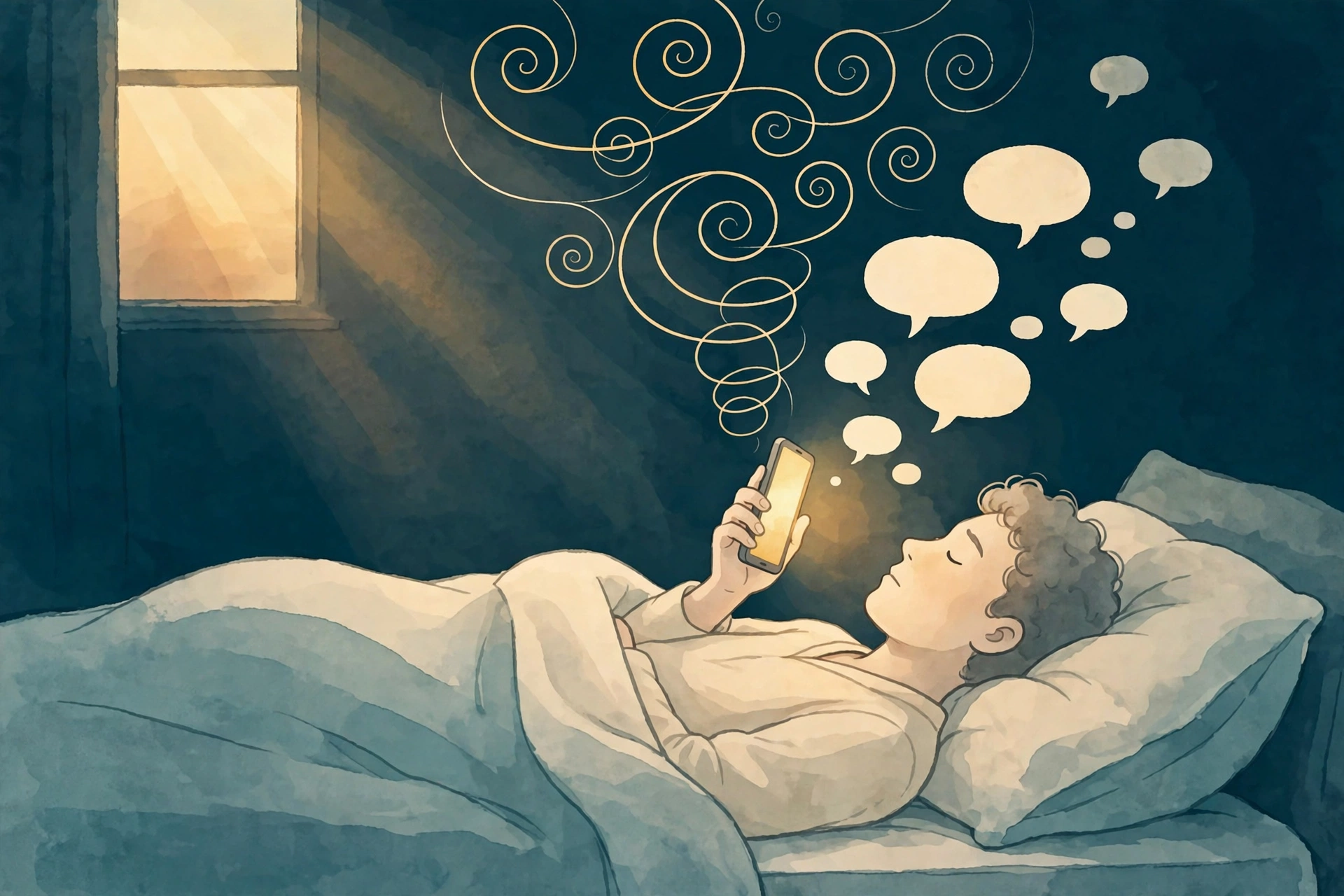
It’s 9:47 PM. You sent the text at 9:14 — casual, breezy, three drafts in the making. Delivered. Read 9:15. You’ve checked twice. They’re posting on Instagram — alive, on their phone, just… not replying to you.
By 10:30 the story has written itself: they’re annoyed. You’re too much. You said the wrong thing. Maybe you should apologize preemptively. Maybe — the thought lands like a stone — maybe this is how it starts ending.
The reply comes at 11:02: “haha sorry was in the shower!!” The relief is so physical it embarrasses you. Nothing was wrong — but your body went through a breakup in 108 minutes.
If that scene feels less like a story and more like last Tuesday, you may be living with what psychologists call anxious attachment — and understanding it changes everything about those 108 minutes.
A Quick Tour of Attachment Theory
In the 1950s and 60s, British psychiatrist John Bowlby proposed that the bond between a baby and its caregiver isn’t just about food or comfort — it’s the blueprint for how we handle closeness for the rest of our lives. His colleague Mary Ainsworth later tested this with the famous “Strange Situation” experiment, watching how toddlers reacted when their mother briefly left the room and returned.
Some children were upset when mom left but easily comforted when she came back: secure. Some barely reacted and avoided mom on return: avoidant. And some were distraught when she left, but then couldn’t be soothed when she returned — clinging and pushing away at once: anxious (researchers call this style “anxious-preoccupied”).
Those patterns don’t evaporate at eighteen — adults carry their own versions. If you learned early that closeness was unpredictable — sometimes warm, sometimes withdrawn — your nervous system learned a lesson it never forgot: pay close attention, because love might disappear without warning.
You didn’t choose this. It’s wiring, not character.
Your Attachment System Is an Alarm — Yours Is Turned Up
Think of your attachment system as a smoke detector for relationships. Everyone has one. In securely attached people, it stays quiet unless there’s actual smoke — a real fight, a genuine betrayal.
In anxious attachment, the detector is oversensitive. Researchers Mario Mikulincer and Phillip Shaver describe this as a hyperactivating strategy: the mind stays on high alert for any sign of distance, and when it spots something ambiguous — a short reply, a canceled plan, a distracted tone — it doesn’t file it under “probably nothing.” It files it under threat and sounds the alarm.
That’s why a delayed text doesn’t feel like a delayed text — it feels like evidence. Your brain is running its training: scan for rejection, assume the worst, act fast to close the distance.
The Protest Behaviors That Backfire
Attachment researchers call what anxiously attached people do when the alarm rings protest behaviors: bids to pull the other person closer that usually do the opposite.
- Texting twice (or five times) because the first text “didn’t sound right”
- The “are we okay?” check-in that needs to happen daily
- Over-apologizing for things the other person hadn’t noticed
- Testing them: going quiet to see if they notice, then feeling worse when they don’t respond the way you hoped
- Replaying conversations for the exact sentence where it “went wrong”
Take Daniel, 31 — a composite of a pattern I hear constantly. His girlfriend takes four hours to reply during her workday. He knows she’s busy. He has been told he’s busy, repeatedly, kindly. But every afternoon follows the same script: the worry builds, he sends a “just checking in :)” that is not just checking in, she replies warmly but briefly, and he spends the evening auditing her warmth like an accountant looking for fraud. The reassurance lands — for about twenty minutes. Then the doubt creeps back, and he needs another hit.
This is the cruelest part of anxious attachment: reassurance is a drug with a short half-life. Each dose soothes, then wears off, then the craving returns stronger. Psychologists who study reassurance-seeking find the same loop across anxiety research: the relief teaches your brain that the alarm was right to ring — see, we only survived because we checked — so the alarm gets louder next time.
And the partner, on the receiving end of the fifth “are you mad at me?” this week, starts to withdraw — not because they stopped caring, but because they feel policed. The withdrawal looks exactly like the abandonment you feared. The prophecy fulfills itself.
Why Ambiguity Hurts More Than Bad News
Here’s something worth knowing: for the anxiously attached brain, not knowing is worse than knowing something bad. A clear “I’m upset because X” can be dealt with. Silence cannot — so the mind fills it, and it never fills it with the boring truth (“they fell asleep,” “their phone died,” “they’re bad at texting”).
Psychologists call the broader tendency the negativity bias: ambiguous information gets interpreted in the most threatening way. Pair that with a mind-reading habit — I just know they’re pulling away — and you get a person who can turn “ok” into an obituary for a relationship.
Take Maya, 26, another composite. Her situationship replies “sounds good” to her dinner suggestion. Two words. She spends forty minutes analyzing them. No exclamation mark — is he unenthusiastic? He usually writes “sounds good!” — the missing punctuation becomes a data point. She drafts a casual follow-up, deletes it, drafts an honest one (“are you actually excited about Thursday?”), deletes that too, and finally sends nothing — then lies awake rehearsing Thursday’s conversation. Thursday arrives. He is delighted to see her. None of it was real — except the exhaustion.
The Good News: Attachment Patterns Can Shift
Attachment isn’t a tattoo. Long-running studies following people over years and decades find that attachment styles are relatively stable but absolutely capable of change. Psychologists even have a term for it: earned security. People with anxious patterns can and do become more secure, usually through some combination of a stable relationship with a consistent partner, friendships that prove reliable, and learning to regulate the alarm rather than obey it.
Note what doesn’t earn security: finding the perfect partner who never triggers you. That’s outsourcing the alarm to someone else’s behavior — and no human can text fast enough, forever. Security has to be built inside, or it isn’t security at all. It’s surveillance with better branding.
What Actually Helps: Calming the Alarm
You can’t uninstall the attachment system. But you can turn down its sensitivity — and stop treating every ping as a five-alarm fire.
1. Name the alarm instead of obeying it. When the spiral starts, say to yourself — out loud if you can: “This is my attachment alarm, not information.” It’s the same labeling move psychologists recommend for anxious thoughts generally: you’re not arguing with the fear (“they’re definitely not mad”), which your brain won’t believe anyway. You’re changing your relationship to it. The thought is weather; you are the sky. Weather passes.
2. The 24-hour rule for “are we okay?” texts. Write the check-in text. Get it out of your head. Then don’t send it — give it until tomorrow. If you still genuinely need to ask in 24 hours, ask once, kindly. Nine times out of ten, the alarm will have quieted on its own, and you’ll be spared the particular shame of rereading a triple-text the next morning. The urge is the symptom, not the instruction.
3. Keep an evidence file. Your anxious brain keeps a highlight reel of every delayed reply and canceled plan. Start a competing document: every time they showed up, remembered something you said, chose you. When the alarm rings, read it. You’re correcting a sampling error: a brain that only collects threats will only ever conclude it’s under threat.
4. Say the need once, clearly, instead of testing for it. Protest behaviors are encrypted requests. “Are you mad at me?” really means “I need to feel close to you right now.” Try sending the decoded version, once: “I’ve been feeling a bit insecure this week — a quick call would really steady me.” One clear ask beats ten anxious tests. Secure people still need reassurance sometimes; they just ask for it directly — and can tolerate hearing “not right now.”
5. Soothe the body before you touch the phone. The alarm is physiological — racing heart, tight chest, restless hands. It will not be reasoned with while it’s ringing. Walk around the block. Splash cold water on your face. Breathe out slowly for twice as long as you breathe in. Then, and only then, decide whether a reply is needed. Most 9:47 PM emergencies dissolve by 10:15 without a single message sent.
6. Build more than one anchor. When one person’s replies are your entire emotional weather system, every cloud is a hurricane. Friendships, work you care about, a body that moves, a craft you’re learning — these aren’t distractions. They’re the ballast that keeps one delayed text from capsizing your whole evening. The less your nervous system depends on a single source of safety, the quieter the alarm gets.
✓ KEY TAKEAWAYS
- Anxious attachment is an oversensitive alarm for disconnection — not neediness or a character flaw, but a protection pattern your nervous system learned.
- Reassurance works like a drug with a short half-life: each hit teaches the alarm it was right to ring, so the craving returns stronger.
- Calm the body before touching the phone, use the 24-hour rule for “are we okay?” texts, and say the need directly once instead of testing for it.
- Security is built inside — through small, repeated experiences of surviving the alarm — not by finding a partner who never triggers you.
Frequently Asked Questions About Anxious Attachment in Relationships
Q: Why do I overthink texts so much?
A: Because ambiguous messages leave room for interpretation, and an oversensitive attachment alarm tends to fill that gap with the most threatening reading, as described in the article. A short reply is often about timing or mood, not a verdict on the relationship.
Q: Does needing reassurance mean I am too needy?
A: No. The article frames reassurance seeking as a protest behaviour, a bid for closeness when the alarm rings. It can still strain a relationship if it happens often, which is why naming the need once, clearly, is presented as a kinder alternative.
Q: Why does reassurance help only for a short time?
A: Each reassuring reply calms the alarm briefly, but it can also teach the brain that checking was necessary. That is why the article compares reassurance to a drug with a short half-life, and why repeated checking can make the craving return stronger.
Q: Can anxious attachment patterns change?
A: Yes, the article says attachment patterns are relatively stable but capable of change, using the term earned security. Small repeated experiences of calming the alarm, rather than finding a partner who never triggers it, are presented as the way security is built.
TRY IT NOW
Reframe the Text
A 2-minute interactive exercise. Take an ambiguous text like the ones in this article and practice finding the balanced read — before the spiral starts.
Start the exercise →A Final Thought
Here’s the reframe worth keeping: anxious attachment isn’t neediness, clinginess, or “too much.” It’s a protection system that learned its job where closeness felt unreliable — and it’s still doing that job, diligently, decades later, at 9:47 PM over a text message.
Humans are a bonding species; needing people is the feature, not the bug. The goal is to need people without being terrorized by the space between messages — to let the alarm inform you without letting it govern you.
You don’t need a faster-replying partner. You need a quieter alarm. And alarms, unlike people, can actually be recalibrated.
This article is for educational purposes only and is not a substitute for professional advice, diagnosis, or treatment. If relationship anxiety is persistent and affecting your daily life, consider speaking with a licensed mental health professional.
Related reading: How to Heal Anxious Attachment: 7 Psychology-Backed Steps for the full path toward earned security — plus How to Stop Overthinking: What Psychology Actually Says Works and Overthinking Every Conversation: Why You Replay What You Said.