
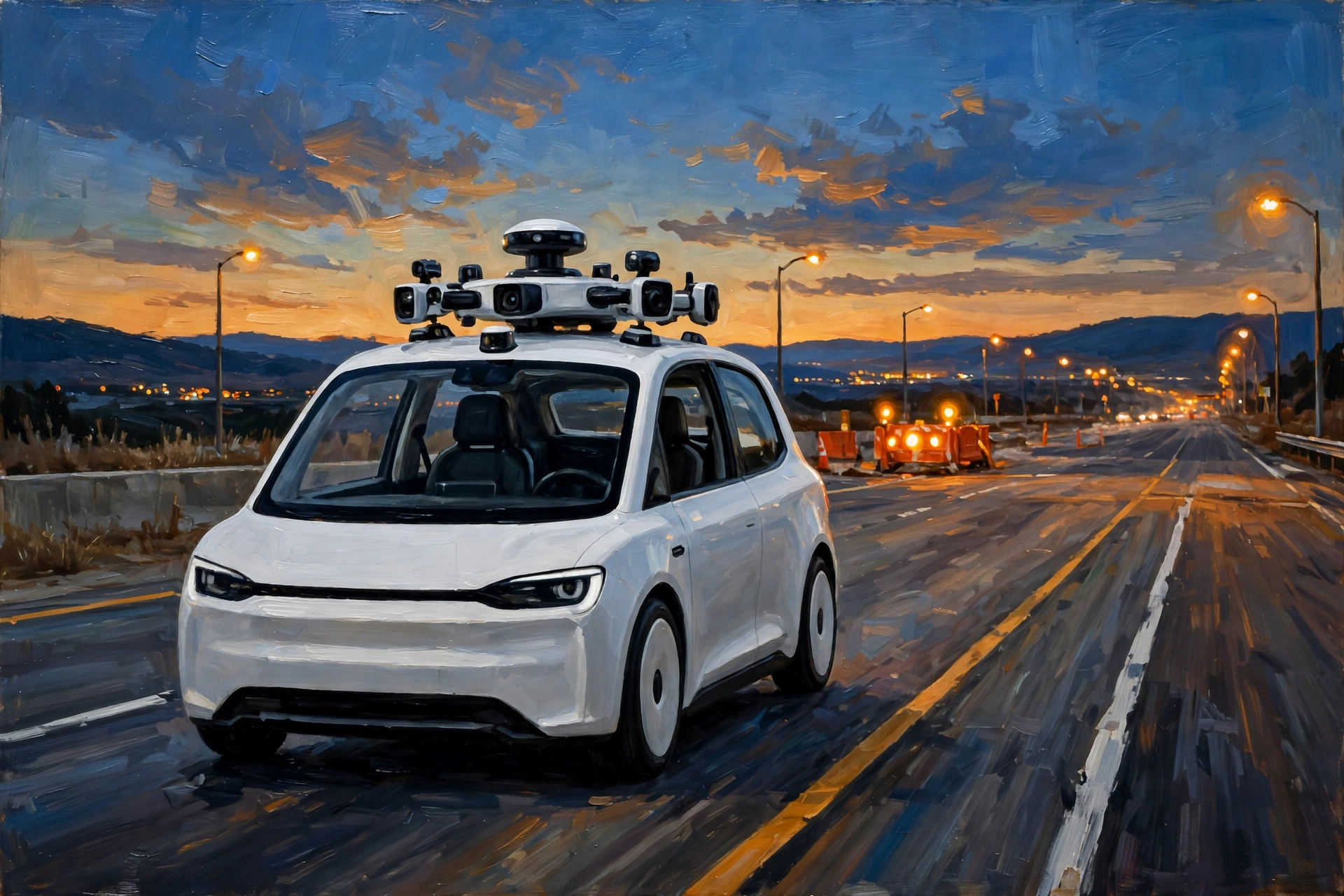
Waymo Just Pulled Its Robotaxis Off US Freeways: The Psychology of Trusting a Driverless Car
Reviewed by a Psychology Postgraduate (MA)
Picture yourself in the back seat of a car with no driver, the steering wheel turning itself as you merge onto a freeway. For a growing number of Americans, that became an ordinary commute — until November 2026, when the whole experiment hit the brakes. Waymo robotaxi psychology is the question on everyone’s mind: why does a driverless car that makes one mistake feel so much scarier than a human driver who makes a hundred?
Here is the short answer. We judge machines by a harsher standard than people, we feel safer holding the wheel ourselves, and one vivid failure outweighs pages of safety data. Understanding those biases explains why this story hit a nerve.
What Happened With Waymo and the Freeway Ban?
On 11 November 2026, California’s Department of Motor Vehicles banned Waymo’s driverless cars from the state’s freeways, saying they posed “an imminent hazard to public safety.” The trigger: on 5 November 2026, three Waymo robotaxis drove into an active construction closure on US Route 101 near Burlingame, California.
This was the second time in 2026 that Waymo had suspended highway service over roadwork struggles, after a May–June 2026 pause that led to a recall of roughly 3,800 vehicles for software updates. Freeway passenger rides had only begun in November 2025. Then, on Tuesday 17 November 2026, Waymo went further, voluntarily pausing freeway rides in all US markets. Street rides continue in the 15 metropolitan areas where Waymo operates. The DMV ban stays until Waymo demonstrates “effective corrective actions,” with no timeline given; the US National Highway Traffic Safety Administration is in contact with both the DMV and Waymo, and a UK debut is now not expected until 2027, according to Auto Express.
Why Does One Robot Mistake Feel Worse Than Many Human Ones?
One robot mistake feels worse than many human ones because of algorithm aversion, documented in a 2015 study by Dietvorst, Simmons, and Massey: people lose confidence in an algorithm after seeing it err, even when it still outperforms humans — while forgiving the same mistakes from a person.
Algorithm aversion is the tendency to abandon a machine or formula after it makes a mistake, even when it remains more accurate than human judgement. A human driver who drifts toward a construction cone is careless or tired — flaws we recognise. A robotaxi that does the same thing feels like proof the system is broken at its core. Three cars entered a construction zone, no one was reported hurt, yet the story travelled the world in hours — because it confirmed a fear people already carried.
Why Do We Feel Safer Holding the Wheel Ourselves?
Why do we feel safer holding the wheel ourselves? Because perceived control changes how risky something feels, regardless of the actual danger. Risk researcher Paul Slovic found that risks we choose and control feel far smaller than risks imposed on us — even when the numbers say otherwise.
Driving is the perfect example. Behind the wheel, you are in charge: you can brake, swerve, slow down, pull over. That agency is deeply calming, even though human drivers cause more than 40,000 US road deaths a year. In the back of a robotaxi, your hands are empty and your only job is to trust. There is a second layer: when you drive, you can explain every decision to yourself in real time, but a robotaxi’s decisions are invisible — so when it slows down for no reason you can see, your brain fills the gap with a story, and rarely a reassuring one. Uncertainty plus no control is a recipe for anxiety, the same spiral that how to stop overthinking everything describes.
Pause and ask yourself: When did you last trust a machine with something important — a navigation app, a medical result? Did one mistake change how you felt about it? What would it take for you to trust it again?
Why Does This Story Stick in Our Minds So Easily?
Why does this story stick in our minds so easily? Because of the availability heuristic — our habit of judging how dangerous something is by how easily an example comes to mind. A vivid image beats a spreadsheet every time.
The availability heuristic, first described by Amos Tversky and Daniel Kahneman in 1973, explains why we overestimate the danger of dramatic events and underestimate the danger of ordinary ones. Negativity bias adds weight: our brains give bad news more attention than good news. So a single report of a robotaxi failure outweighs months of uneventful rides. Supporters cite millions of rider-only miles; critics cite the construction zone, the recall, and the ban. Both sides point at real facts — but only one side has a story you can picture in seconds. It is the same pattern behind brain rot and attention psychology: the mind follows what is vivid, not what is representative.
Waymo Robotaxi Psychology: Can Trust in Driverless Cars Be Rebuilt?
Can trust in driverless cars be rebuilt? Yes, but slowly, and only through visible evidence rather than reassurance. What restores confidence is a track record: consistent, incident-free performance people can see. Waymo’s voluntary pause is, in trust terms, a sensible move: pausing freeway rides in every market signals the company is treating the problem seriously, and visible, costly action rebuilds confidence faster than words. But trust in automation is asymmetric: slow to build, quick to break, and it breaks fastest when the failure looks like a basic competence error. The same applies to our own judgement: under stress, the mind narrows to the threat — a pattern choking under pressure research describes well.
How Can You Think More Clearly About Robotaxi Safety?
A few habits help — for this, and for any new technology that asks for your trust.
1. Ask for the base rate, not just the story. Look for the rate of incidents per mile driven, for robotaxis and for human drivers, from the same source. A single vivid incident is information; the rate is the context.
2. Separate the feeling from the fact. Feeling uneasy in a driverless car is real information about your comfort, not a verdict on the technology. Name the feeling — usually the loss of control — and then look at the evidence separately.
3. Watch what happens next. The most useful question after a ban is what changes: software updates, new testing, independent verification. A company that shows its work earns trust faster.
4. Give yourself a small, reversible test. If you are curious but nervous, try a short daytime ride on familiar streets. Small exposures let your nervous system gather its own evidence, one calm ride at a time.
5. Notice when the news cycle is doing your thinking. If your opinion swings with each headline, the availability heuristic is running the show. Step back, check a reliable source, and decide what you actually believe — especially when signs of burnout from constant alarming news are already draining your attention.
Frequently asked questions
Why did California ban Waymo from freeways?
California’s Department of Motor Vehicles banned Waymo’s driverless cars from state freeways on 11 November 2026, calling them “an imminent hazard to public safety” after three robotaxis drove into a construction closure on US Route 101 on 5 November 2026.
Are Waymo robotaxis still running?
Yes, on ordinary city streets in the 15 metropolitan areas where Waymo operates. Only freeway rides are paused, voluntarily in all US markets since 17 November 2026.
Why do people distrust driverless cars more than human drivers?
Research points to algorithm aversion, the loss of perceived control, the availability heuristic, and negativity bias.
Try it on our site
New technology stirs up real feelings, and naming them makes them easier to handle. Try the Thought Reframe to untangle a worry about driverless cars, and use Name Your Feeling to pin down whether what you feel is anxiety or excitement. The Daily Tracker shows how news like this affects your mood, and the Mind Check-Ins give you a quick read on how you are doing.
Related reading: Choking Under Pressure: Why Your Brain Freezes at the Worst Moment · How to Stop Overthinking Everything · AI Chatbots and Mental Health: What the Research Really Says
Key Takeaways
- California banned Waymo’s driverless cars from freeways on 11 November 2026 after three robotaxis entered a construction closure; Waymo paused all US freeway rides on 17 November 2026.
- Waymo robotaxi psychology is driven by algorithm aversion: we forgive human drivers but treat one machine error as proof the whole system is broken.
- Perceived control shapes risk: holding the wheel feels safe, while riding in a driverless car feels risky because control is invisible.
- The availability heuristic and negativity bias make one vivid robotaxi failure stick in memory far longer than uneventful rides.
- Trust in automation is rebuilt through visible action, not reassurance — which is why Waymo’s pause and recall matter more than any statement.
This article is educational only — not therapy, diagnosis, or medical advice. If you are struggling, consider speaking with a licensed professional. In crisis, call or text 988 in the United States, the Suicide and Crisis Lifeline; in the UK and Ireland, Samaritans is available on 116 123.