
Harry Styles’ NYC Confrontation Explained: The Psychology of Celebrity Boundaries and Parasocial Entitlement
Reviewed by a Psychology Postgraduate (MA)
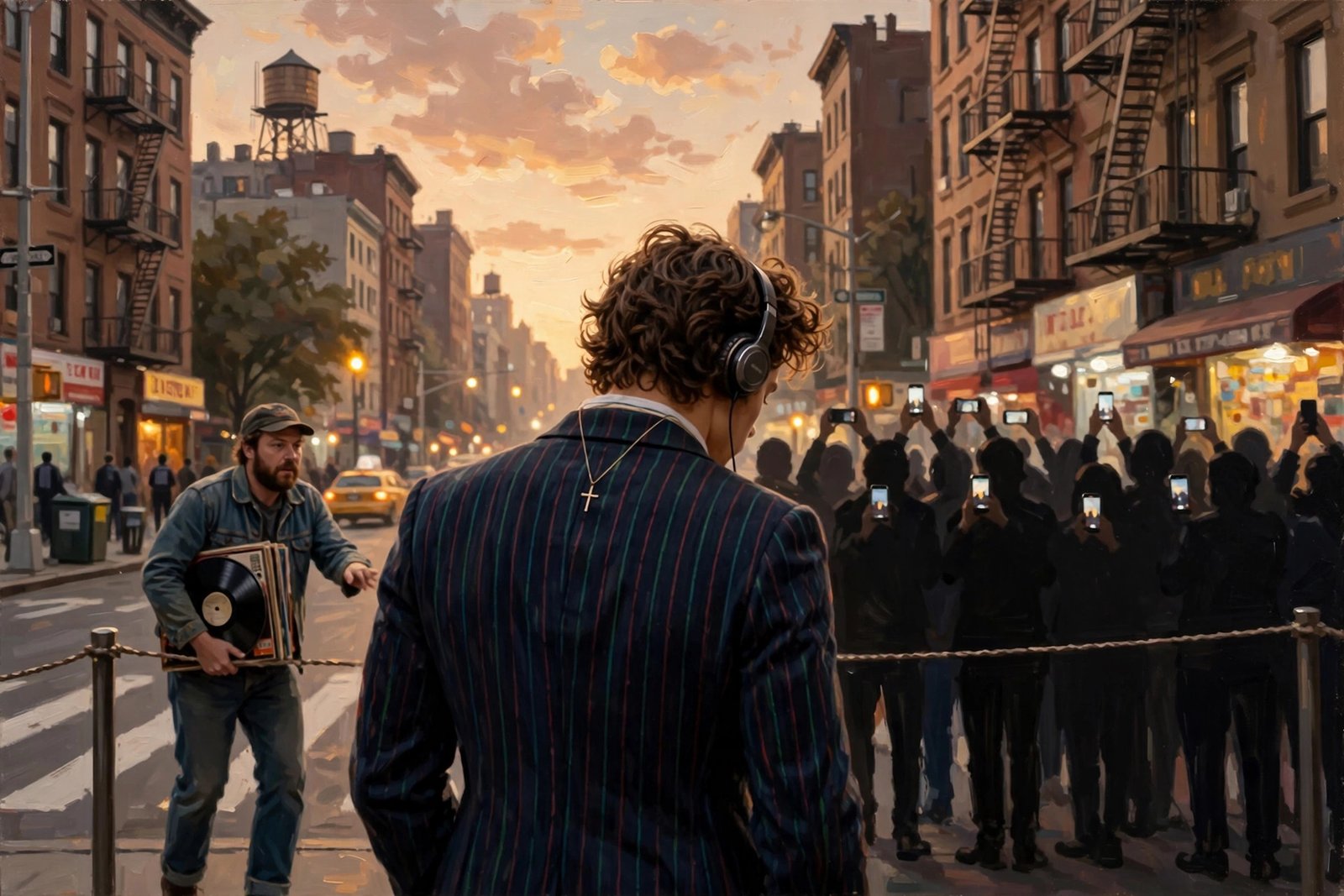
The Harry Styles NYC confrontation happened on October 22, 2026, when Harry Styles was walking through New York City with his head down and his headphones in — the universal city signal for “leave me alone.” A man carrying a stack of records, including Styles’ 2019 vinyl album Fine Line, ignored it. He trailed the 32-year-old singer and his bodyguard for several blocks, pressing for an autograph. Styles finally turned, confronted him directly, raised his voice, and warned him to back off and respect his personal space. Security stepped in, and Styles left in a vehicle. The whole exchange was filmed by a bystander and exploded across X (Khel Ja, October 23, 2026). Why does a fan chasing an autograph feel like a confrontation — and what is the psychology of parasocial entitlement that made the man follow him in the first place?
Short answer: Harry Styles confronted a fan in New York City after the man followed him for several blocks seeking an autograph, ignoring clear boundary signals. The psychology is parasocial entitlement: a one-sided bond that makes a fan feel owed access, while the star experiences the thousandth small erosion of personal space. The context matters: Styles is in New York for a multi-night “Together, Together” concert residency at Madison Square Garden beginning October 26 and running through October 31. He is one of the most recognisable pop stars on earth — which, to the man with the vinyl stack, apparently meant he was public property for the afternoon. But watch the clip and the real story is the gap between two psychologies: one person experiencing a thrilling encounter with a hero, another experiencing being hunted down a street.
What is parasocial entitlement?
Parasocial entitlement is the belief that a one-sided emotional bond with a celebrity creates a two-sided obligation — that the star owes you their time, attention, or gratitude.
The parasocial relationship itself is normal: psychologist Donald Horton coined the term in 1956 for the one-way bonds audiences form with media figures. You know Harry’s lyrics, his interviews, his mannerisms — your brain, which did not evolve to distinguish “person I have seen a thousand times on screens” from “person I know,” files him under friend. Entitlement is where the healthy bond curdles: the fan’s brain completes the equation “I love him, he would want to meet me” without ever consulting the other half of it. The man in New York was not chasing a stranger. In his head, he was finally meeting someone who already mattered to him — and could not understand why the feeling was not mutual.
Why did following him for blocks feel normal to the fan?
Because desire narrows attention — and the fan’s goal crowded out every signal that said stop.
Psychologists call this goal shielding: once a goal locks in (“get the autograph”), the brain actively suppresses competing information — the headphones, the averted eyes, the quickened pace, the bodyguard. Each of those was a boundary signal. None of them registered, because registration was not the job; the job was the signature. Add the sunk-cost effect — he had already followed for two blocks, so turning back would “waste” the chase — and you get a person behaving like a character in a heist film while genuinely believing he is being friendly. From the outside it looks like harassment. From the inside it felt like persistence.
Pause and ask yourself
Think of the last time you wanted something badly — an answer, a favour, a reply. How many “no” signals did you walk past before you noticed them? What finally made you stop?
Why did Styles snap in the Harry Styles NYC confrontation — and was he wrong to?
He was not snapping at one man. He was snapping at the thousandth erosion of a boundary — and boundary violations accumulate.
Every famous person lives inside what psychologists might call a consent deficit: thousands of people feel entitled to pieces of them daily — photos, touches, signatures, conversations — and each individual request seems small. But the nervous system does not do per-person accounting; it does totals. Being followed for blocks while trying to disappear into a city street is a textbook trigger for the fight-or-flight response: pursuit, no exit, an audience filming. Styles’ reaction — direct, loud, firm — was the assertive end of the boundary spectrum, not the aggressive one. He named the behaviour, stated the need, and left. That is what healthy boundary-setting looks like when polite signals have already failed. The headphones were the polite version. Nobody listened.
Why do we film confrontations instead of helping?
Because the bystander with a phone is playing a different game — content, not compassion.
The person filming across the street captured the entire exchange “for the internet to dissect,” as reports put it. This is the bystander effect upgraded for the creator era: diffusion of responsibility (“someone else will step in”) fused with an incentive to document (“this will get views”). Filming a celebrity confrontation has social currency — you become the source, the clip, the story. Nobody in that frame was thinking about Styles’ afternoon. They were thinking about their feed. It is the same attention economy that made the autograph valuable, pointed back at the moment itself: everything becomes content, including someone’s boundary being crossed.
How do you admire someone without entitled behaviour?
By keeping the admiration on your side of the boundary — three rules that work for celebrities and for everyone else.
1. Consent is the whole game. A person in public is not a person consenting. Headphones in, head down, walking fast — that is a no. Accept the first no and you never become the story.
2. Do not pursue. Following someone who is moving away from you is the clearest boundary signal there is. One approach, one ask, one graceful exit if it is declined — that is fandom. The second block is something else.
3. Remember the totals. You are one person having one exciting moment; they are one person having their thousandth today. Multiply your request by ten thousand before deciding it is small.
The deeper fix is internal: enjoy the parasocial bond for what it is — a genuine source of comfort and joy — without cashing it in for access. You can love the music without owning the musician.
Frequently asked questions
What happened with Harry Styles in New York?
On October 22, 2026, Styles confronted a man who had followed him and his bodyguard for several blocks in NYC seeking an autograph, warning him to back off and respect his personal space. A bystander’s clip went viral on X (October 2026).
Why is Harry Styles in New York?
He is in the city for a multi-night “Together, Together” residency at Madison Square Garden, running October 26–31, 2026.
What is parasocial entitlement?
The belief that a one-sided emotional bond with a public figure obligates them to give you time or access. The parasocial relationship is normal; the entitlement is where it turns harmful.
Is it wrong to ask a celebrity for an autograph?
No — one polite ask in an appropriate moment is fine. It becomes entitlement when you ignore no-signals, pursue, or treat refusal as an insult.
Key Takeaways
- On October 22, 2026, Harry Styles confronted an autograph hunter who had followed him for blocks through NYC, ignoring headphones and averted eyes — the polite boundary signals.
- Parasocial entitlement is the belief that a one-sided bond creates a two-sided obligation; the fan’s brain filed Styles under “friend” without consulting him.
- Goal shielding explains the pursuit: a locked-in goal suppresses every “stop” signal until the signature is the only thing visible.
- Styles’ direct response was assertive boundary-setting, not aggression — the polite signals had already failed.
- The bystander filmed for content: the creator-era bystander effect turns someone else’s boundary moment into your clip.
Try it on our site
Boundaries are a skill — practice yours:
- Boundaries check-in — where are your lines, and are they holding?
- Name Your Feeling — name it before it drives
- Challenge the Thought — test the story you are telling yourself
Related reading: Parasocial Relationships: Why We Feel Close to People We Have Never Met · The Psychology of Taylor Swift: Reinvention and Narrative Identity
Educational content only — not therapy, diagnosis, or professional advice. If you are struggling, consider speaking with a licensed mental health professional. In the US, the 988 Suicide and Crisis Lifeline is available 24/7 by call or text.