
Kilauea Is About to Erupt Again — and the Waiting Is the Hardest Part
Reviewed by a Psychology Postgraduate (MA)
The Kilauea volcano eruption now forecast for 19–22 November 2026 is the strangest kind of news: an eruption that has not happened yet, on a mountain visibly getting ready. The summit is swelling, the ground is tilting, and the US Geological Survey says lava fountains are likely within days. For the people watching, on the Big Island and on livestreams thousands of miles away, the hardest part is not the lava. It is the waiting.
That is the short answer underneath this story: waiting for a known threat with an unknown start time is one of the most stressful states the brain can sit in. Psychologists call it anticipatory anxiety: it tends to feel worse than the event itself, because the brain cannot plan around a date that keeps moving.
What does the Kilauea volcano eruption forecast mean?
Here is what is happening, according to the USGS Hawaiian Volcano Observatory (HVO) daily update of Tuesday 17 November 2026, 8:31 a.m. Hawaii time. The eruption at Kilauea’s summit crater, Halemaumau, is paused since episode 56 ended on 5 November. But the summit is reinflating as magma refills the chamber beneath it, and HVO forecasts the next lava-fountaining episode, episode 57, for 19–22 November 2026.
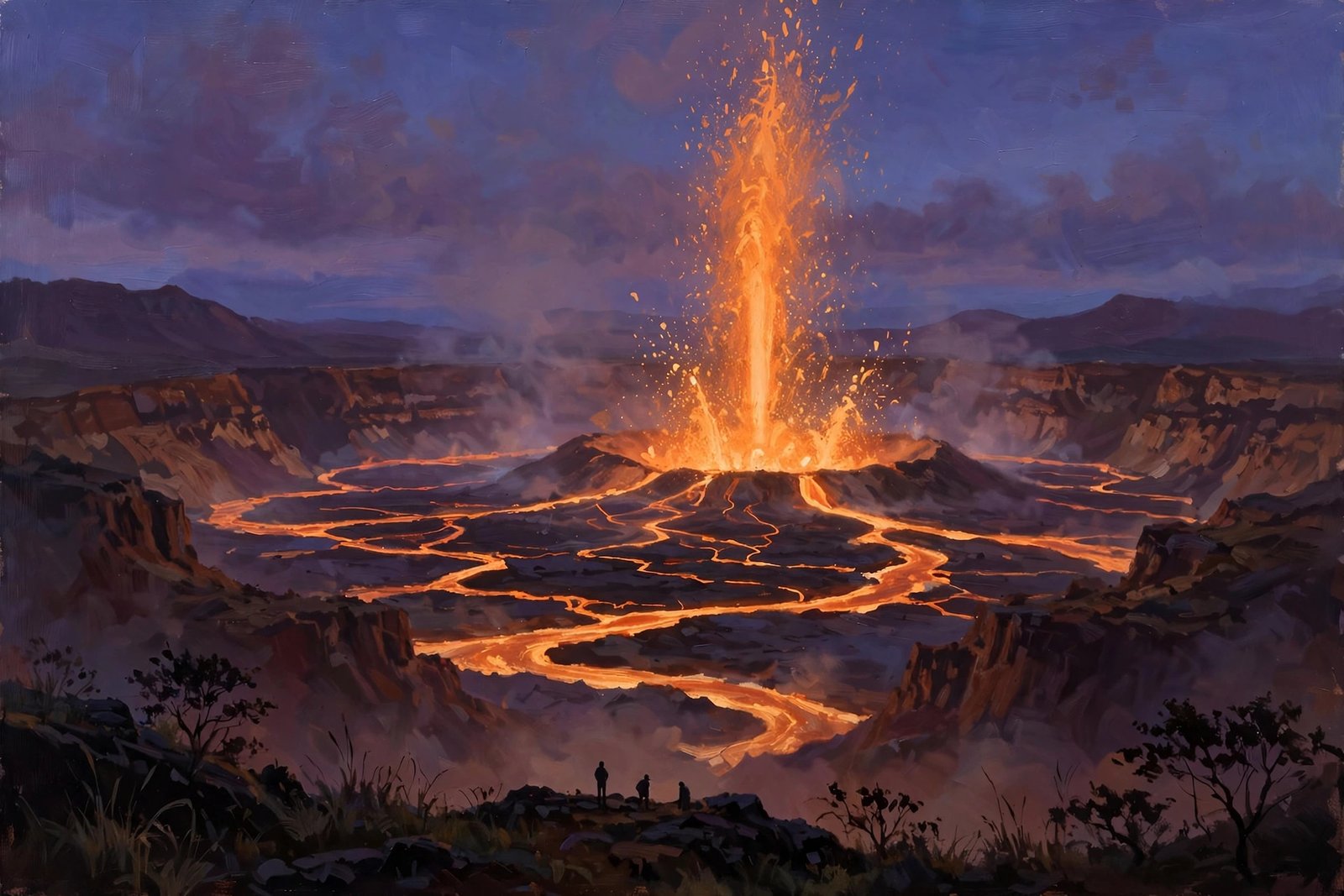
Episode 56 is why people are paying such close attention. On 5 November 2026, between 12:10 p.m. and 6:01 p.m. Hawaii time, the north vent threw lava about 660 feet (200 metres) into the air for nearly six hours, with a plume rising to 18,000 feet. Kilauea has erupted in episodes like this since 23 December 2024, and 56 completed episodes are the most ever recorded for this kind of episodic fountaining.
Two details matter. First, the forecast window is a window, not a timetable: HVO has already moved it twice as inflation slowed, from 16–21 November to 17–22, and now to 19–22 November. Second, all of the lava so far has stayed inside Halemaumau crater, in a closed area of Hawaii Volcanoes National Park. The volcano is at Alert Level ADVISORY and Aviation Color Code YELLOW — the lowest rungs of the warning scale — so no communities are in the path of lava right now.
What is anticipatory anxiety?
Anticipatory anxiety is the dread that builds while you wait for something bad that might happen, at a time you cannot pin down. It differs from fear, which spikes when the danger is right in front of you. Anticipation stretches the stress out over days, and the body stays half-braced the whole time.
The engine behind it is intolerance of uncertainty — how unbearable a person finds “not knowing” itself. Research by Mark Freeston and colleagues, and a large body of work since, shows that people high in intolerance of uncertainty do not just worry about bad outcomes; they worry about the gap itself. A forecast for “19–22 November” is a perfect trigger: the brain keeps running the same simulation — what if it starts tonight — without ever getting the relief of an answer.
In laboratory studies of waiting, people consistently rate the wait as worse than the outcome, even when the outcome is unpleasant. The volcano watchers refreshing the USGS page at midnight are living that finding in real time.
Pause and ask yourself: When you check the news about Kilauea, do you feel calmer afterwards, or just more alert? If the check leaves you more on edge than before, the checking itself is the habit to notice, not the volcano.
Why do we find eruptions so hard to look away from?
Part of the pull is awe. Psychologists Dacher Keltner and Jonathan Haidt defined awe in 2003 as the feeling of meeting something vast that the mind cannot quite fit into its existing categories — a mountain throwing fire 660 feet into the sky qualifies. Awe feels good and small at the same time: people report feeling humbled, connected, and oddly calm afterwards. That is why a meteor shower can quiet a crowd, and why eruption livestreams draw viewers with no connection to Hawaii.
The other part is morbid curiosity, and it is just as normal. Research on why people slow down at accidents or seek out disaster footage points to a drive to learn about threats from a safe distance. Psychologist Paul Rozin called the milder version “benign masochism”: enjoying a scary movie or a volcano livestream precisely because the fear is real enough to feel and safe enough to survive.
The trouble starts when the watching stops being a choice. Disaster footage is engineered to hold attention, and the same doomscrolling loop that keeps people refreshing storm trackers applies here: each refresh promises certainty and delivers a little more suspense, so the nervous system never gets the all-clear.
How does a forecast window change the way we feel?
A four-day window does something specific to the mind: it turns a vague threat into a countdown. Deadlines focus attention, but a countdown to something you cannot control focuses it without giving it anywhere useful to go. Each day the eruption does not start feels like a small broken promise, quietly raising the tension. The same machinery runs while waiting for test results or a job answer — and overthinking is often just anticipatory anxiety with a to-do list attached.
For the people who live near Kilauea, the psychology is different, and heavier: they are managing a real risk with incomplete information, not watching a spectacle. Studies of communities near active volcanoes — in Hawaii, Iceland, and around Mount Merapi in Indonesia — find a pattern called the “normalcy bias”: after years of alerts that came to nothing, residents gradually stop preparing, because the brain files the volcano under background noise. The antidote is routine, not more fear: a go-bag packed once, alerts from one official source, a plan that does not need remaking every time the ground swells.
What can you do while you wait?
Whether you are in Hilo or in Ohio, the principles are the same — and they apply well beyond volcanoes, to the climate anxiety and disaster anxiety filling so much of the news. The goal is not to stop caring. It is to stop the waiting from running your day.
- Check once, from one official source: the USGS Hawaiian Volcano Observatory daily update, at a set time. One reliable check beats twenty anxious ones.
- Name the feeling precisely. “I am anxious” is vague; “I am frustrated because I cannot know the exact day” is actionable. Naming the uncertainty points to the real problem.
- Separate what you can control from what you cannot. You cannot move the eruption, but you can know your evacuation route, pack a bag, and sign up for Hawaii County Civil Defense alerts. Preparedness is the practical form of certainty.
- Use the awe on purpose. If the images move you, let them: watch one good video, notice the feeling of smallness, then close the tab. Awe is restorative in small doses and restless in large ones.
- Talk about it instead of refreshing it. Telling someone “I keep checking and it is making me tense” does more than another refresh. Shared waiting is lighter than solitary waiting.
- Protect your sleep. Anticipatory anxiety loves the hours after midnight. Move the last check to the early evening and keep the phone out of the bedroom.
Frequently asked questions
Is Kilauea erupting right now?
Not at the time of writing. The eruption is paused after episode 56 on 5 November 2026, and the USGS forecasts episode 57 for 19–22 November 2026. The summit is reinflating, which is why the forecast window exists.
Is it safe to visit Hawaii Volcanoes National Park during the forecast window?
The eruption is confined to Halemaumau crater in a closed area of the park, and the volcano is at Alert Level ADVISORY. Follow National Park Service guidance and never enter closed areas to get closer to lava.
Why does waiting for an eruption feel worse than the eruption itself?
Because the brain copes better with known outcomes than with unknown timing. Anticipatory anxiety keeps the body half-braced for days, while an actual event gives it something definite to respond to and recover from.
Why do so many people watch volcano livestreams?
A mix of awe and morbid curiosity: awe from witnessing something vast and powerful, curiosity from the brain’s drive to learn about threats from a safe distance. Both are normal — the problem is only when watching turns into compulsive checking.
Try it on our site
If the waiting is getting to you, try one of these free tools — no signup needed:
- Thought Reframe — untangle the “what if” thoughts that pile up while you wait.
- Daily Tracker — track your mood and sleep for a week and see whether the checking is helping.
- Sleep Reset — a wind-down routine for nights when anticipation keeps you awake.
- Burnout + Money-Stress Check — a quick check-in on how much stress you are carrying right now.
Related reading: The Leonid Meteor Shower Peaks Tonight: The Psychology of Awe, Wishing and Looking Up · Half of Australian Teenagers Say Climate Change Worries or Saddens Them: The Psychology of Climate Anxiety in Young People · What Is a Dirty Bomb — and Why the Threat Feels Scarier Than the Science Says
Key Takeaways
- Kilauea’s episode 57 is forecast for 19–22 November 2026, after episode 56 sent lava 660 feet into the air on 5 November — but the window can still shift.
- Waiting for a threat with no fixed date causes anticipatory anxiety, which often feels worse than the event itself.
- Awe and morbid curiosity explain why millions watch eruptions from safety — both are normal, until watching becomes compulsive checking.
- One official check a day, a prepared plan, and naming the uncertainty are the best ways to wait well.
This article is for education only and is not a substitute for professional advice. If you are feeling overwhelmed, consider speaking with a licensed mental health professional. If you are in crisis, call or text 988 in the US or contact your local crisis line.