
Bad Bunny Psychology: How the Latin Grammys’ Biggest Star Turned Home Into a Superpower
Reviewed by a Psychology Postgraduate (MA)
The short answer: Bad Bunny psychology is the study of how Benito Antonio Martínez Ocasio turned home into a superpower. He refused to sing in English to cross over, built the biggest music career on earth in Spanish, and used that platform to stand up for Puerto Rico. His story is about identity, belonging, and the courage to stay yourself when the whole world offers you a shortcut.
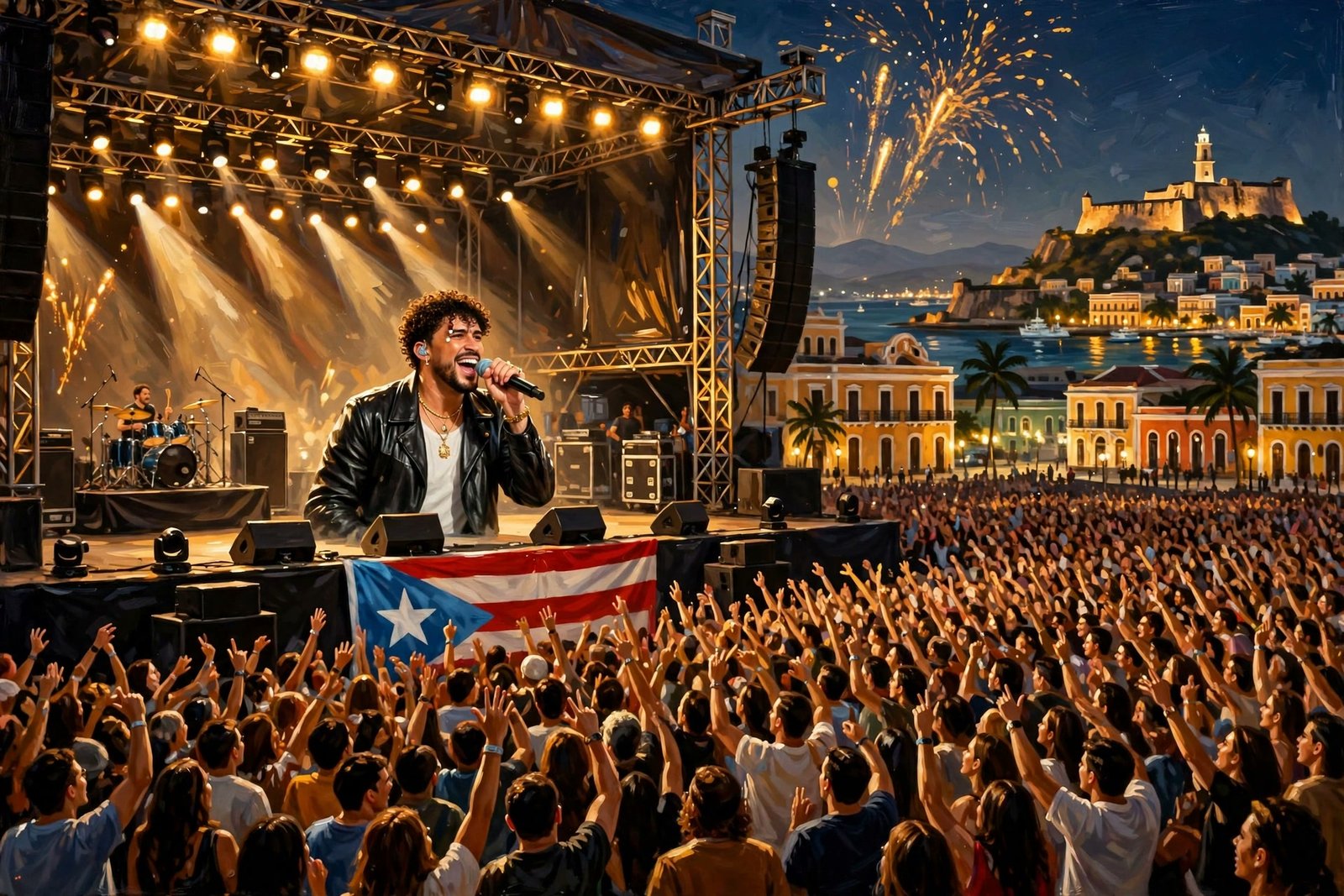
Tonight, Thursday 12 November 2026, the 27th annual Latin Grammy Awards air live from Las Vegas, and “latin grammys 2026” is the number one trending search in the United States. Bad Bunny is the defining figure of the ceremony, arriving after a year that rewrote the record books. His sixth solo album, Debí Tirar Más Fotos, won Album of the Year at the 68th Grammy Awards on 1 February 2026, the first Spanish-language album ever to win the prize. A week later he performed the Super Bowl LX halftime show entirely in Spanish. Today his first signature shoe with adidas, the BadBo, goes on sale. Behind the scale of it all sits a much simpler story: a young man from Vega Baja in Puerto Rico decided who he was, refused to translate himself for anyone, and discovered that the refusal itself was the strategy.
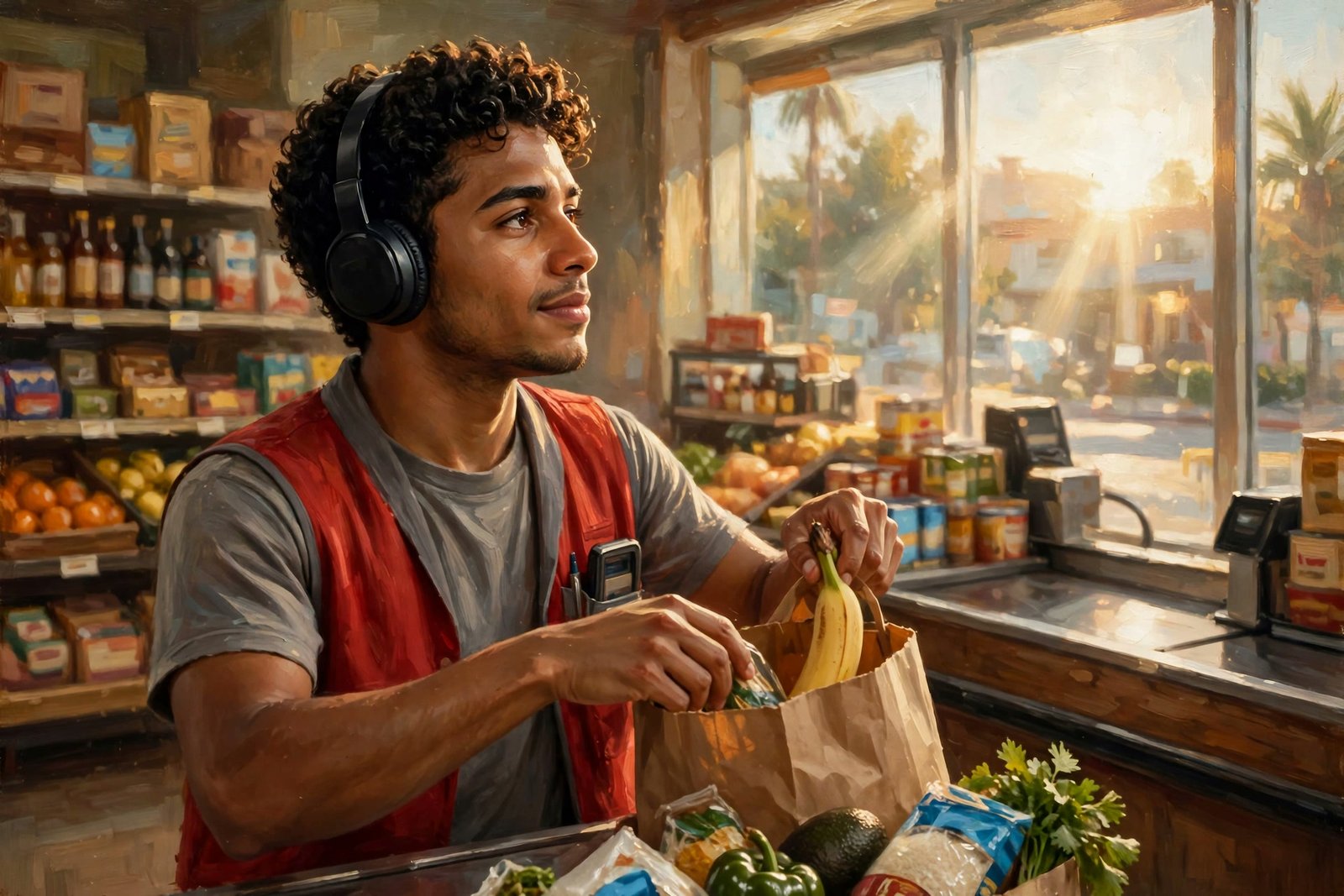
His real name is Benito Antonio Martínez Ocasio, born on 10 March 1994 in Vega Baja, Puerto Rico. Before the fame, he worked bagging groceries at an Econo supermarket while uploading songs to SoundCloud. He was discovered in 2016 and broke through with “Soy Peor”. The albums followed: X 100pre (2018), YHLQMDLG (2020), El Último Tour Del Mundo (2020), the first all-Spanish-language album to top the Billboard 200, and Un Verano Sin Ti (2022). Then came Debí Tirar Más Fotos, released on 5 January 2025 through Rimas Entertainment, the most-streamed release globally in 2025, with 19.8 billion Spotify streams in a single year, the highest annual total ever recorded. The numbers prove something simple: you do not have to leave home, literally or artistically, to conquer the world. Sometimes staying is the bolder move.
Story — From Vega Baja to the Biggest Stage on Earth
Benito grew up in Vega Baja, a town on the northern coast of Puerto Rico, in a working-class family. His father drove a truck. His mother taught English. He sang in the church choir as a boy, where many singers from the island first learn to hold a note in front of people who love them enough to tell them the truth. He has described himself as a shy, ordinary kid who loved music without imagining it would ever become a job. He did not arrive with connections or money. He arrived with a phone, a SoundCloud account, and a willingness to put unfinished work in front of strangers.
The supermarket job is the detail that stays with people, and it should. While bagging groceries at Econo, he was recording songs and uploading them online, fitting a dream around a shift pattern the way millions of people fit their real ambitions around the job that pays the rent. There is a particular psychology to that double life. You learn to work without an audience, to keep going without applause, and to care about the work before anyone else does, because for a long time nobody is watching at all. When the watching finally starts, it finds someone who already knows how to work alone, and that is a very hard thing to fake.
Discovery came in 2016, when the producer DJ Luian heard his work online. The breakthrough song, “Soy Peor”, arrived the same year: a voice that was conversational rather than polished, vulnerable rather than swaggering, and unmistakably Puerto Rican. He did not sound like a star trying to be universal. He sounded like a specific person from a specific place, and that specificity turned out to be the most universal thing about him. Each album then expanded the audience without diluting the identity. Most artists, offered the world, quietly sand down the edges that made them interesting. He sharpened them instead.
Cultural identity is the part of who you are that comes from belonging to a group, its language, its history, its music, its way of seeing the world, and it shapes how you think, what you value, and where you feel at home.
Turning Point
The turning point looked, from the outside, like a single night: 1 February 2026, the 68th Grammy Awards, when Debí Tirar Más Fotos won Album of the Year. It was the first Spanish-language album ever to win the prize, in nearly seven decades of the awards. He also won Best Música Urbana Album and Best Global Music Performance, and his acceptance speech included the words “ICE out”, spoken in defence of immigrants. It was a creative vindication and a moral statement at once, made on the biggest stage available, without softening a word of it.
The decision that followed confirmed what the Grammy night had only suggested. When he planned the world tour for the same album, he left the United States mainland off the itinerary entirely. The Debí Tirar Más Fotos World Tour opened on 21 November 2025 in Santo Domingo, ran for 55 shows, sold 3.1 million tickets, grossed 467.5 million dollars, and closed on 22 July 2026 in Brussels. In an interview with i-D magazine on 10 September 2025, he said he had excluded the United States over concerns that immigration agents might target his fans. His only appearance on the US mainland in that whole stretch was the Super Bowl halftime show on 8 February 2026, at Levi’s Stadium in Santa Clara, performed entirely in Spanish.
Most artists, having just won Album of the Year, would have done the obvious thing: a victory lap through the biggest market on earth. He did the opposite, because he believed his fans there might not be safe. That is not a business decision in the ordinary sense. It is a values decision, made in public, at enormous financial cost. People reveal who they are not by what they say when it costs nothing, but by what they give up when it costs a great deal. There was an earlier turning point too, quieter and just as important: the moment he stopped treating Spanish as a limitation and started treating it as the whole point. Once he understood that the thing he had been told to hide was the thing people loved most, there was no going back.
Mindset
First, identity is the strategy, not the obstacle. The usual advice to artists from small places is to become less specific: smooth out the accent, the references, the local slang, until the work could have come from anywhere. Benito did the reverse. Social identity theory, developed by the psychologist Henri Tajfel, describes how much of our sense of self comes from the groups we belong to. When that group identity is strong and secure, it acts like ballast, steadying you when the world pushes you around. His Puerto Rican identity is the ballast. It tells him who he is when the offers get bigger and the pressure to change gets louder.
Second, autonomy is the fuel. Self-determination theory, from the psychologists Edward Deci and Richard Ryan, argues that people do their best and most lasting work when they feel autonomous, competent, and connected to others, rather than controlled by rewards or fear. Benito chose his language, his collaborators, his release dates, and his touring map, even when those choices cost him money in the short term. That sense of choice is not a luxury. It is the engine. People who feel controlled, even by success, eventually burn out or rebel. People who feel they are choosing their own path can sustain effort for years, because the effort feels like theirs.
Third, purpose is bigger than fame. Fame is a poor goal, psychologically speaking, because it is entirely in other people’s hands. Purpose is something you can carry with you: the desire to represent your island, to open doors for the artists coming behind you, to say something true about a place the world often ignores. His choices keep pointing towards Puerto Rico rather than away from it. That outward-facing purpose protects him from the emptiness that swallows so many stars, because the work is not only about him. It is about something larger, and larger things are harder to exhaust.
Decisions
Singing in Spanish, always. This was the first and biggest decision, made long before it looked wise. The safe path for a Latin artist with global ambitions was to record in English, or to mix the two languages until the Spanish felt like decoration. He refused, building his whole catalogue in Spanish, including the album that won Album of the Year, and performing the Super Bowl halftime show entirely in Spanish. Psychologists call this values-based action: choosing behaviour that matches what you believe, even when the reward for the other choice is obvious. The reward for staying in Spanish turned out to be larger, but he could not have known that at the start. He chose it because it was true to who he was.
Staying in Puerto Rico, literally. The residency turned identity into geography. No Me Quiero Ir de Aquí, roughly “I Do Not Want to Leave Here”, ran for 31 shows at the Coliseo de Puerto Rico in San Juan, from 11 July to 20 September 2025. The first nine dates were reserved for Puerto Rico residents, putting the island first in line for its own celebration. The final show was live-streamed on Amazon Music and Twitch, so the world could watch a party it had not been invited to host. The usual pattern is that a star leaves home, gets famous elsewhere, and returns for a triumphant homecoming. He did the opposite: he made home the centre, and invited the world to come to it.
Speaking plainly in public. In 2024, he endorsed Kamala Harris in the presidential election, after the comedian Tony Hinchcliffe called Puerto Rico a “floating island of garbage” at a rally for Donald Trump. His Grammy acceptance speech in February 2026 included the words “ICE out”, in defence of immigrants. These are reported public statements, not private beliefs being guessed at, and they show a pattern: when his home or his community is insulted or threatened, he answers in public, using his own name and his own platform. People who speak up for their group, even at a cost, strengthen their own sense of identity, and they strengthen the group’s sense of itself too.
Method — How Bad Bunny Works
His method starts with language. He writes in the Spanish he actually speaks, full of Puerto Rican slang, local references, and the rhythms of everyday conversation on the island. When you write in your own voice, you do not have to perform a character. The words arrive faster, the emotions are easier to reach, and the audience can tell the difference between something lived and something assembled. Psychologists who study creativity point out that original work usually comes from deep knowledge of a specific world, not from a shallow knowledge of many worlds. He knows his world intimately, and he mines it relentlessly.
Albums as complete statements. In an era built around singles, he still makes albums that are meant to be heard whole. Debí Tirar Más Fotos is the clearest example: a record steeped in Puerto Rican musical history, from salsa to plena, that asks the listener to sit with a whole world rather than cherry-pick a hit. A single is a transaction. An album is a relationship. Listeners who spend an hour inside his world come away with a different kind of loyalty than listeners who heard one song on a playlist. The streaming numbers bear it out: 19.8 billion streams in 2025 is not the number of a one-hit artist. It is the number of an artist people return to.
Pause and ask yourself: What is the part of your own background you have been quietly sanding down to fit in, and what would happen if you treated it as your strongest asset instead?
What If?
What if he had recorded his breakthrough songs in English? The industry would have welcomed him faster, the radio play would have come sooner, and the path would have looked smoother in the first few years. But the thing that made him unmistakable would have been gone. He would have been one more talented singer competing in the most crowded market on earth, instead of the artist who proved that Spanish could fill the biggest stages in the world. The question reveals how often the shortcut is actually a trap: the easier path is only easier if you do not mind arriving as someone else.
What if he had played the United States mainland on the world tour, the way every adviser in the business would have told him to? The tour would have grossed more, the headlines would have been simpler, and nobody would have questioned the decision. Instead he chose to protect his fans, and the choice became part of his story in a way that extra revenue never could have been. The lesson is not that everyone should turn down money. It is that the choices you refuse define you as clearly as the choices you accept, and sometimes the refusal is the most memorable thing you will ever do.
What Most People Lack
The first thing most people lack is a secure identity to stand on. Most of us carry a vague sense of who we are, assembled from other people’s expectations, and it wobbles whenever the room changes. Benito’s identity is specific: Puerto Rican, Spanish-speaking, from Vega Baja, shaped by the island’s music and history. That specificity is not a limitation. It is an anchor. People with a clear sense of where they come from are harder to push around, because they can measure every offer against a fixed point.
What Successful People Do Differently
They turn the supposed weakness into the advantage. The music industry treated Spanish as a ceiling. He treated it as the whole building. Successful people do this again and again: they look at the thing everyone else calls a limitation, a small-town background, an accent, an unusual style, a refusal to conform, and they ask what it would look like if that thing were the point. The question is not how to hide the difference. It is how to make the difference impossible to ignore.
They let values make the hard calls. When the tour routing decision came, there was no spreadsheet that could settle it. The money pointed one way and the values pointed the other. Successful people, in the long run, are the ones who have decided in advance what they stand for, so that when the moment arrives they are not improvising under pressure. He had decided, years earlier, that his fans and his community came first. The tour decision was simply that earlier decision, applied to a new situation. That is why it looked so calm from the outside.
Success Mindset
How does Bad Bunny handle pressure on the biggest stages? He narrows his attention to the work in front of him. The Super Bowl halftime show is the most pressure-filled performance in popular music: one shot, no second take, and every note judged in real time. Performing it entirely in Spanish added a layer of pressure most performers never face, because he was not only performing, he was making a statement about language and belonging at the same time. The way through that kind of pressure is not to think about the size of the moment. It is to think about the next line, the next step, the next breath. Sports psychologists call this present-moment focus, and it is the foundation of both flow and resilience.
The second pillar of his mindset is self-efficacy, the belief, built from evidence, that he can handle what comes next. The psychologist Albert Bandura showed that self-efficacy grows mainly from mastery experiences, surviving hard things and remembering that you survived them. Benito has accumulated them at every level: the SoundCloud uploads that slowly found an audience, the breakthrough single, the first album, the first chart-topper, the residency that sold out 31 nights, the Grammy win, the Super Bowl. Each one is a piece of evidence he can point to the next time the stakes rise. Self-efficacy is not arrogance. It is the quiet knowledge, earned through repetition, that you have done hard things before and can do this one too.
The third pillar is a growth mindset. The psychologist Carol Dweck’s research distinguishes between a fixed mindset, the belief that ability is set and unchangeable, and a growth mindset, the belief that ability develops through effort, strategy, and learning. His career is a growth mindset in action. He was not born the biggest star in the world. He was a shy kid bagging groceries who kept writing, kept uploading, kept learning, and kept getting better in public, where everyone could see the rough edges. People with a fixed mindset hide their early work, because early work is imperfect and imperfection feels like proof of a limit. People with a growth mindset publish the early work, because they know it is a step, not a verdict.
Failures
What has Bad Bunny got wrong, and what did it cost him? No honest profile can skip this question. Early on, the failure was obscurity: years of uploading songs that most of the world ignored, working a supermarket job while the dream refused to pay. That is not a dramatic failure, but it is a real one, and it is the failure most people know best, the long stretch where effort and reward do not match. The psychology of that stretch is the psychology of persistence without feedback, and it is far harder than failing once, publicly, and moving on. Failing quietly, for years, with no applause and no sign that it will ever work, is the test that breaks most dreams.
As his fame grew, so did the scrutiny. His fashion choices, his lyrics, his public statements, his decision to speak about politics, each of them drew criticism from different directions, sometimes from people who loved the music and disliked the message. Like any artist operating at his scale, he has faced episodes where his behaviour drew public criticism, and he has had to live with the consequences in full view. This profile does not catalogue rumours or repeat gossip, because rumours are not public record. What can be said honestly is that the useful question is not whether he has made mistakes. Every human being has. The useful question is what he did next, and the pattern of his career suggests an answer: he returned to the work, returned to the island, and let the next album, the next residency, the next performance speak for him.
Relationships
His most important relationship, by every public account, is with Puerto Rico itself. The record supports it in concrete terms: the residency reserved for residents, the album steeped in the island’s musical history, the tour that carried the island’s sound to 55 cities, the public defence of the island when it was insulted. A relationship with a place is a real psychological phenomenon. Psychologists call it place attachment, the emotional bond between a person and a particular place, and it functions much like attachment to a person: it gives you security, it shapes your identity, and it hurts when the place is threatened. His place attachment is not nostalgia. It is active, practical, and public.
His relationship with his fans is the other pillar, and it is the one that explains the tour decision better than any other fact. Fans are often treated by the music industry as a market to be harvested, a number to be reported to shareholders. He treats his audience as a community he belongs to, and the difference shows up in the choices: reserving residency dates for residents, worrying publicly about whether fans would be safe at his shows, performing in their language rather than asking them to meet him in his second one. That is not marketing. Marketing is what you do when you want people to buy something. This is closer to loyalty, which is what you do when you want people to know you are on their side.
Dark Side
There are two shadows in this story, and both deserve to be named plainly. The first is the toll of being a symbol. When a person becomes the representative of a whole island, a whole language, a whole community, the weight of that role is enormous. Every performance is no longer only a performance. It is a statement about Puerto Rico, about Spanish, about Latin identity, about immigration, about all the things people project onto him. He asked to make music. The symbolism arrived with the success, and it does not clock off at the end of the show. The dark side of becoming a symbol is that you stop being allowed to be merely a person, and the person underneath the symbol still needs rest, privacy, and the freedom to get things wrong.
Second Act
The second act began on 1 February 2026, when the Grammy win turned a successful career into a historic one. But the real second act is what he chose to do with that history. The Super Bowl halftime show on 8 February 2026, a week after the Grammys, was the most visible version of it: a performance entirely in Spanish, on the most American stage in the world. That is not a victory lap. It is a statement of intent, delivered to the largest possible audience, that the next chapter will be conducted on his terms, in his language, without apology.
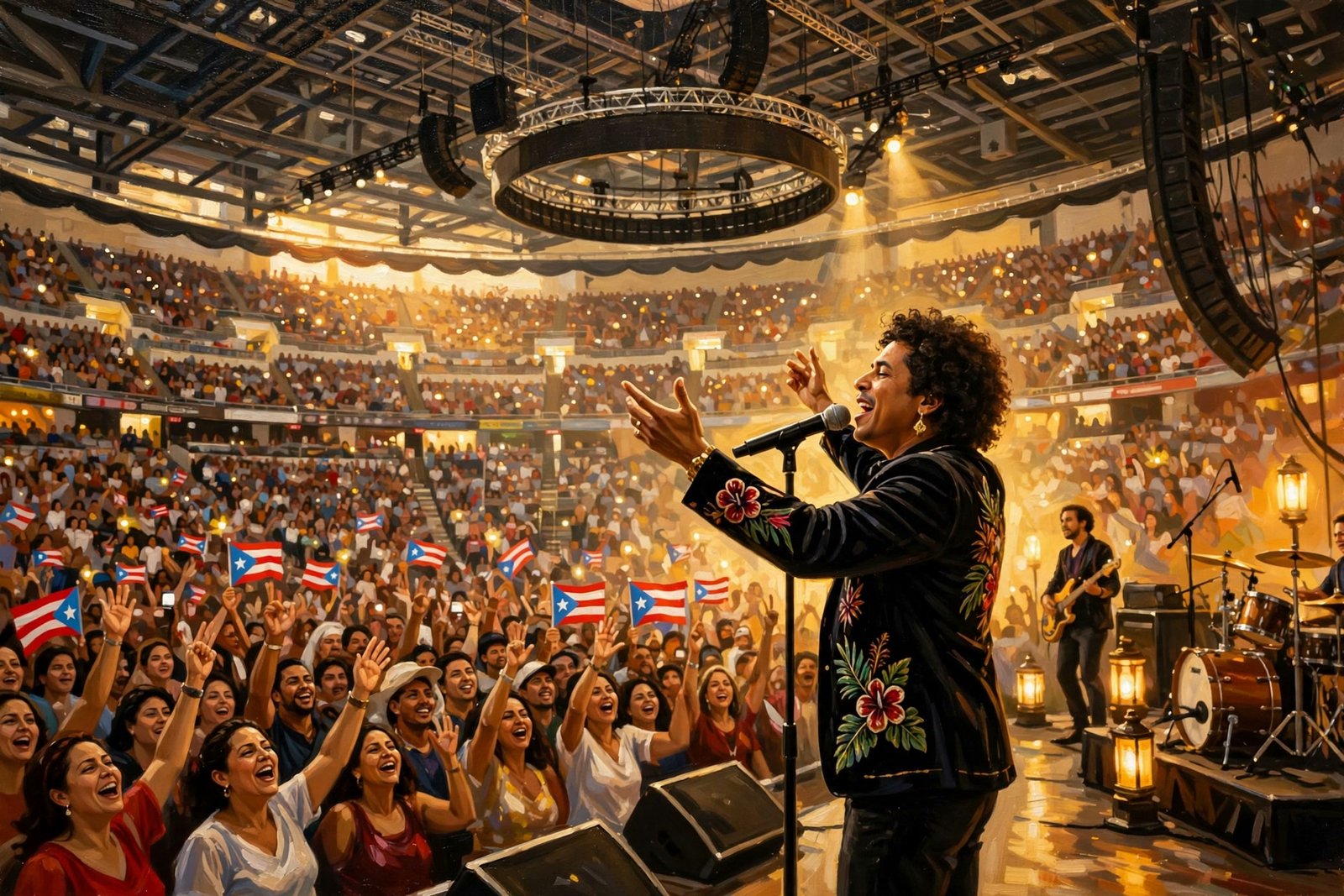
The residency itself was the heart of the second act. Thirty-one shows at the Coliseo de Puerto Rico, from 11 July to 20 September 2025, with the first nine dates reserved for Puerto Rico residents, was not only a concert series. It was a homecoming that refused to leave home. The final show, live-streamed on Amazon Music and Twitch, let the rest of the world watch a party it had not organised. The tour that followed, 55 shows, 3.1 million tickets, 467.5 million dollars, carried that same spirit to Santo Domingo, to Europe, to Brussels on 22 July 2026. Then came the new frontiers: acting in Happy Gilmore 2 in July 2025, and the adidas BadBo, his first signature shoe, launching on 12 November 2026. Forbes estimated his 2025 earnings at around 40 million dollars in November 2026. The second act is still being written, and the Latin Grammys tonight are its latest chapter.
Fun Facts
- Benito Antonio Martínez Ocasio was born on 10 March 1994 in Vega Baja, Puerto Rico, and worked bagging groceries at an Econo supermarket while uploading his early songs to SoundCloud.
- Debí Tirar Más Fotos, released on 5 January 2025, became the most-streamed release globally in 2025, with 19.8 billion Spotify streams in a single year, the highest annual total ever recorded.
- At the 68th Grammy Awards on 1 February 2026, the album won Album of the Year, the first Spanish-language album ever to win the prize, along with Best Música Urbana Album and Best Global Music Performance.
- He performed the Super Bowl LX halftime show on 8 February 2026 at Levi’s Stadium in Santa Clara, entirely in Spanish.
- His residency, No Me Quiero Ir de Aquí, ran for 31 shows at the Coliseo de Puerto Rico in San Juan, from 11 July to 20 September 2025, with the first nine dates reserved for Puerto Rico residents.
- The world tour that followed opened on 21 November 2025 in Santo Domingo, ran for 55 shows, sold 3.1 million tickets, grossed 467.5 million dollars, and closed on 22 July 2026 in Brussels, with no US mainland dates.
- He won five trophies at the 2025 Latin Grammys on 13 November 2025, including Album of the Year for Debí Tirar Más Fotos.
What the Research Says
Bad Bunny’s career is a case study in three well-established areas of psychology, and the research helps explain both his success and the cost of it.
Social identity and belonging. Henri Tajfel’s social identity theory describes how much of our sense of self comes from the groups we belong to, and how a strong, positive group identity protects self-esteem and steadies behaviour under pressure. His Puerto Rican identity functions exactly this way: it gives him a fixed point to measure every offer against, and it gives his audience a shared identity to belong to. The residency was collective identity made visible: thousands of people, in one room, being told at once that who they are is enough.
Self-determination and autonomy. Edward Deci and Richard Ryan’s self-determination theory argues that lasting motivation depends on three needs: autonomy, the feeling that you are choosing your own path; competence, the feeling that you are good at what you do; and relatedness, the feeling that you belong with others. His career satisfies all three at an unusual scale. He chooses his language, his collaborators, and his touring map. He has mastered his craft over a decade of public practice. And he is deeply connected to his community, his collaborators, and his audience. When all three needs are met, motivation becomes self-sustaining.
Place attachment and purpose. Research on place attachment shows that a strong emotional bond to a place provides security, shapes identity, and motivates people to protect and invest in that place. His bond to Puerto Rico does all three, and it gives his career a purpose larger than fame. Purpose is one of the strongest predictors of sustained wellbeing and sustained effort, because it connects daily work to something that outlasts the applause. That is the deepest lesson of his story: the career is not built on talent alone, or on luck, or on timing. It is built on a clear sense of who he is, where he comes from, and what the work is for.
This is an educational look at public behaviour and published research, not an assessment of Bad Bunny as a person.
Activity: The Bad Bunny Mindset Quiz
Bad Bunny’s gift is not only talent. It is the habit of staying himself when the world offers him a shortcut. How do you handle pressure to change who you are? Answer honestly. There are no wrong answers, only patterns worth noticing.
1. You are offered a big opportunity, but only if you change something fundamental about how you present yourself. What happens first?
a) I stay myself and trust the right opportunity will meet me where I am.
b) I change, because the opportunity is too big to risk losing.
c) I change on the surface but keep the real me hidden.
d) I turn it down without thinking it through.
2. Before a big moment, a performance, an exam, a difficult conversation, you usually…
a) Focus on the next concrete step, not on how many people are watching.
b) Feel nervous and try not to think about it at all.
c) Rehearse every possible disaster in advance.
d) Talk yourself out of doing it.
3. Your home, your background, or your accent is treated as something to hide. You…
a) Treat it as your strongest asset and let it shape your work.
b) Hide it when it suits you and bring it out when it is safe.
c) Feel embarrassed by it, even though you know you should not.
d) Decide it is a weakness and try to erase it completely.
4. What does “practise” mean to you?
a) Working steadily on the craft, even when nobody is watching.
b) Doing the whole thing over and over until it feels familiar.
c) Doing the parts I enjoy most and skipping the rest.
d) Something I avoid unless a deadline forces me to.
5. When your values and a big reward point in opposite directions, you…
a) Choose the values, because the reward is not worth the cost to who I am.
b) Choose the reward and deal with the discomfort later.
c) Try to have both, and end up compromising on each.
d) Avoid deciding at all and let the moment pass.
6. A second chance, or a bigger stage, arrives after years of quiet work. You…
a) Step onto it as yourself, in your own language, on your own terms.
b) Step onto it but reshape yourself to fit what the audience expects.
c) Feel like an impostor and wait to be found out.
d) Turn it down, because the quiet work felt safer.
Mostly A: You handle pressure like Bad Bunny at his best, staying rooted in who you are, focusing on the next step, and letting your values make the hard calls. Keep it up.
Mostly B: Your instinct to adapt is real, and it costs you. Name the one part of yourself you refuse to trade, and write it down before the next big decision.
Mostly C: You protect yourself by hiding, but hiding is not control. Practise one small act of openness, a story, an accent, an honest answer, and notice what actually happens.
Mostly D: Avoidance is keeping you safe and stuck. Small, deliberate attempts at hard things build the belief that you can handle them. Start smaller than you think you need to, and tell one person you trust.
Pause and ask yourself: What is the one thing about where you come from that you have been treating as a weakness, and what would your life look like if you treated it as your superpower instead?
Frequently asked questions
What is bad bunny psychology?
Bad bunny psychology is the study of how Benito Antonio Martínez Ocasio turned Puerto Rican identity, pressure and purpose into the biggest music career on earth: social identity, self-determination, a growth mindset, and performance under pressure, all rooted in the decision to stay himself.
Why did Bad Bunny win Album of the Year at the Grammys?
At the 68th Grammy Awards on 1 February 2026, Debí Tirar Más Fotos won Album of the Year, the first Spanish-language album ever to win the prize. He also won Best Música Urbana Album and Best Global Music Performance that night.
Why did his world tour skip the United States mainland?
The Debí Tirar Más Fotos World Tour, which opened on 21 November 2025 in Santo Domingo and closed on 22 July 2026 in Brussels, had no US mainland dates. In an interview with i-D magazine on 10 September 2025, he said he had excluded the United States over concerns that immigration agents might target his fans.
What was the Puerto Rico residency?
No Me Quiero Ir de Aquí ran for 31 shows at the Coliseo de Puerto Rico in San Juan, from 11 July to 20 September 2025. The first nine dates were reserved for Puerto Rico residents, and the final show was live-streamed on Amazon Music and Twitch.
What is Bad Bunny doing at the Latin Grammys in 2026?
The 27th annual Latin Grammy Awards air live from Las Vegas on Thursday 12 November 2026, with “latin grammys 2026” the number one trending US search of the day. Bad Bunny arrives as the ceremony’s defining figure after his Grammy and Super Bowl year, and his first adidas signature shoe, the BadBo, launches the same day.
Try it on our site
Bad Bunny’s story is about identity, belonging, and staying yourself under pressure, all things you can practise. Try these free tools, no signup needed:
- Mind Check-Ins — a quick, anonymous check on how you are really feeling.
- Name Your Feeling — put a precise name to what you are feeling, the first step to understanding it.
- Challenge the Thought — test the belief that you need to change who you are to succeed.
- Burnout and Money-Stress Check — a calm check on pressure, exhaustion, and the cost of striving.
Related reading: Taylor Swift Psychology: Reinvention and Narrative Identity · MrBeast Psychology: Generosity, Gamification, Attention · Kirk Cousins Psychology: The Comeback, the Resilience, and Unfinished Business
Key Takeaways
- Bad Bunny psychology is the study of how Benito Antonio Martínez Ocasio turned home into a superpower: he built the biggest music career on earth in Spanish, without translating himself for anyone.
- On 1 February 2026, Debí Tirar Más Fotos won Album of the Year at the 68th Grammy Awards, the first Spanish-language album ever to win it, and a week later he performed the Super Bowl LX halftime show entirely in Spanish.
- His residency, No Me Quiero Ir de Aquí, ran for 31 shows in San Juan in 2025, with the first nine dates reserved for Puerto Rico residents, and his world tour, 55 shows and 3.1 million tickets, skipped the US mainland over concerns for his fans.
- The psychology behind it is social identity, self-determination, a growth mindset, and performance under pressure: a secure sense of who you are, the freedom to choose your own path, and the habit of focusing on the next step rather than the size of the audience.
- The most useful lesson is not “be famous.” It is: decide who you are before the world offers you a price for changing, and then let the refusal itself become the strategy.
This article is for education only and is not a substitute for professional advice. If you are struggling, please consider speaking to a licensed mental health professional. In the US, call or text 988 for the Suicide and Crisis Lifeline. This profile is an educational look at Bad Bunny’s public behaviour and the research around it, not an assessment of the man himself.