
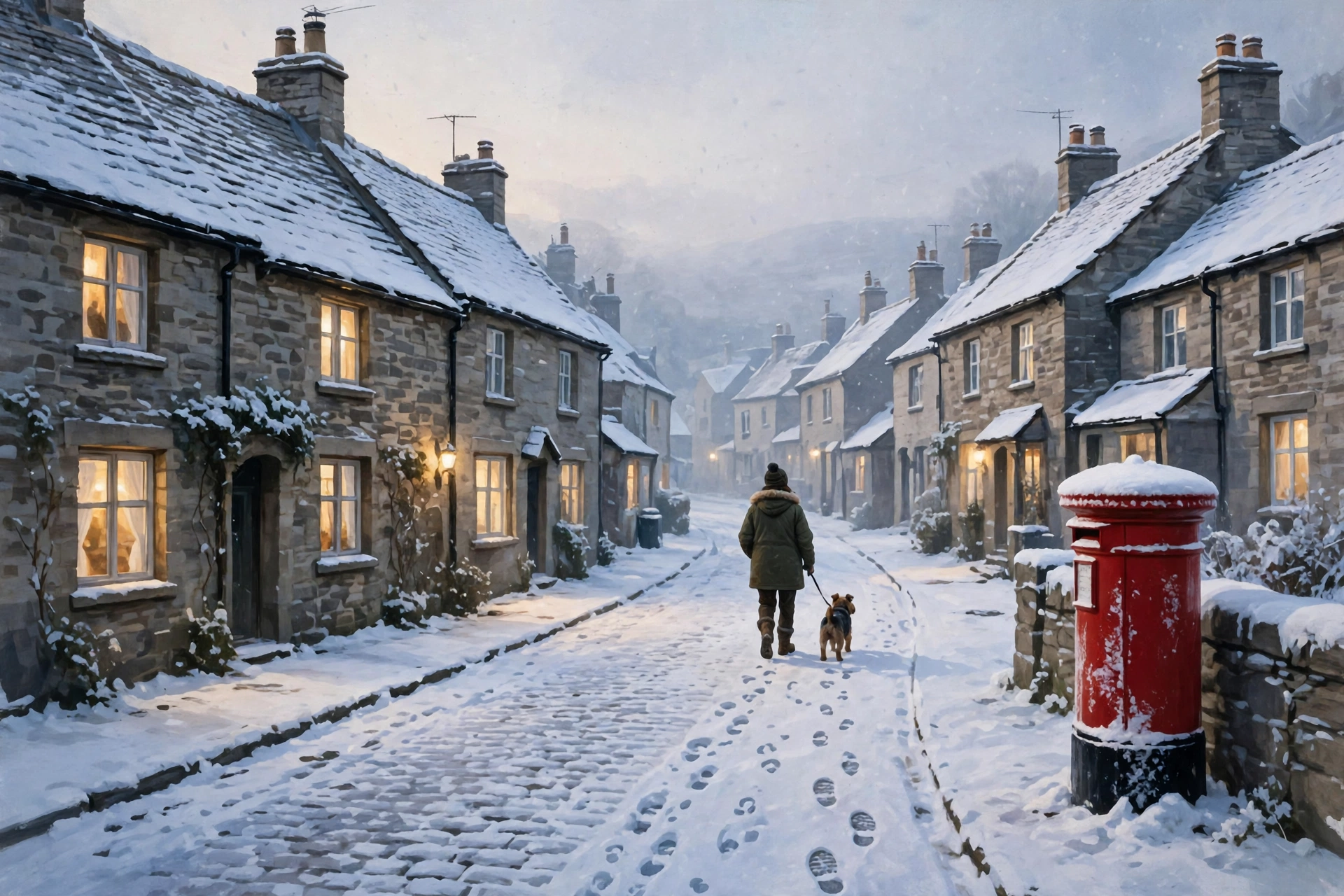
Britain’s First Snow of Winter: The Psychology of Cold Snaps and Winter Anxiety
Reviewed by a Psychology Postgraduate (MA)
The short answer: UK snow warning psychology starts here: Britain’s first snow of winter 2026 arrived on Tuesday 17 November 2026, under a Met Office yellow warning across northern England and southern Scotland. Cold snaps unsettle us because they break routine, shrink our plans and remind us winter has begun, and preparation calms the worry faster than the forecast itself.
On Tuesday 17 November 2026, the first snow of winter 2026 fell across parts of Britain, with a yellow warning, a cold-health alert, gritters out before dawn and a rush hour that slowed to a crawl. The Met Office said on 16 November 2026 that rain moving north overnight would turn to snow as it met colder air.
What exactly did the Met Office warn about?
The Met Office issued a yellow warning for snow from midnight to 11:00 a.m. on Tuesday 17 November 2026, with some reports putting the end at midday, covering an area from Staffordshire in the West Midlands through northern England to southern Scotland. It covered 23 local authority areas, including much of Yorkshire, Derbyshire, Northumberland, Greater Manchester, Cumbria and Lancashire, the Met Office said on 16 November 2026, and PA reported it via the Glasgow Times on 17 November 2026.
Forecasters expected 1 to 5 cm of snow, with 5 to 15 cm possible above 300 to 400 meters, and the greatest chance of settling snow over ground above 200 meters. Snow was expected to turn back to rain through Tuesday morning.
The warning also carried a small chance of power outages and an impact on mobile phone service, according to Met Office chief forecaster Dan Suri, with snow disruption most likely in the Tuesday morning rush hour, meteorologist Alex Burkill said on 16 to 17 November 2026. The AA advised drivers to prepare for the first snowfall of the season on 16 November 2026.
What is known: the warning, the areas, the amounts and the timing were all set out by the Met Office on 16 November 2026. What is unconfirmed: how much snow settled in each place, and whether any power cuts happened, since those were described only as a small chance.
How cold did it get, and who is most at risk?
Tuesday was not the coldest night of the season. That came on Sunday night, 15 to 16 November, when temperatures fell to minus 7.7C at Tulloch Bridge in the Scottish Highlands, the coldest night of the season so far. Earlier, minus 6.6C was recorded at Sennybridge and minus 6.5C at Shap on 13 November.
The UK Health Security Agency issued a yellow cold-health alert for the North West, North East and Yorkshire and the Humber, in place from 9:00 p.m. on Sunday 15 November to 9:00 a.m. on Thursday 19 November, warning of increased use of healthcare services and a greater risk to life for vulnerable people. This is the first cold-health alert and the first snow warning of winter 2026/27.
Britain’s first cold-health alert of the season had already arrived days earlier, and the psychology of cold weather explains why a cold snap reaches beyond frozen pipes and icy pavements, into sleep, mood and anxiety. The south returned to near-average temperatures from Tuesday 17 November, while the north stayed cold.
UK snow warning psychology: why does the first snow hit harder than the second?
The first snow of the season does something the second one never manages: it changes the season in our heads. Psychologists call moments like this seasonal markers, events that tell the brain the old rules no longer apply. The next morning the rooftops are white, and the brain rewrites the script.
That is why the first snow feels bigger than its centimeters suggest. Five centimeters in February is a nuisance. Five centimeters in mid-November is a message: winter has begun and will be here for months. The brain is a prediction machine, and the first snow is the moment its forecast for the months ahead changes.
There is also a novelty effect. By February we have driven in snow a dozen times, but in November we are out of practice, and that rustiness makes the same hazard feel more threatening.
What is winter anxiety?
Winter anxiety is the seasonal rise in worry, restlessness and low mood that arrives with cold, dark weather and the disruption it brings.
It is not a formal diagnosis. It is a pattern, and for most people it shows up as a cluster of small things: checking the forecast more often, dreading the morning drive, sleeping worse, feeling flat by four in the afternoon. None of these is dramatic alone, but together they add up to a season that feels harder than it should, and that is what cold weather anxiety UK means in practice.
Three forces drive it: light, disruption and money. The clocks going back in late October had already shortened the afternoons, and less daylight disrupts sleep. Snow breaks routine, and routine is one of the quiet foundations of feeling steady. And cold weather costs money, as the heating-bill anxiety that arrives with winter fuel payments shows.
Why do cold snaps make our world feel smaller?
Ask someone what a cold snap changes and they will start with the practical things: the drive, the school run, the boiler. Ask again and a different list emerges. They stopped going out in the evening. They cancelled a visit to a friend. They put off a walk they usually enjoy. The world shrinks, quietly, one cancelled plan at a time.
Each decision feels sensible on its own, and staying in is sensible when the pavements are icy. But the pattern has a cost. We regulate our mood through contact, movement and daylight, and a cold snap cuts all three at once. We see fewer people, move less and spend less time outside, then wonder why we feel flat.
Pause and notice: Think about the last cold snap before this one. What shrank first, your plans or your mood? Most people find the plans went first and the mood followed.
How can you prepare without spiralling into worry?
Preparation and worry look similar from the outside, since both involve thinking about what could go wrong. The difference is what happens next. Preparation ends in an action. Worry ends in another thought. Snow disruption stress is what happens when the worry has nowhere to go.
- Check the Met Office forecast once in the morning and once in the evening, then stop. Checking every hour does not improve the forecast, it only feeds the worry.
- Allow extra time for the morning journey. The AA advice on 16 November 2026 was simple: prepare for the first snowfall of the season, slow down and leave extra space.
- Charge your phone, keep a torch handy, and know where your warm layers are. Small acts of readiness calm the nervous system more than reassurance does.
- Protect one piece of your normal day: the walk, the call, the coffee with a friend. Routine is the anchor, and anchors matter most when the weather tries to drag them away.
Why does checking on a neighbour matter more than gritting your teeth?
Checking on a neighbour helps the checker as much as the person checked on. It gives the day a purpose the weather cannot cancel, and it builds the ties that make the next cold snap easier. Knock on a door, send a text, or make a call. It takes five minutes.
Try it on our site
Winter anxiety is easier to manage when you can see it clearly, and that starts with noticing how you actually feel. Our free Mood check-in takes a few minutes and gives you a simple picture of where your mood and energy sit right now, with no signup.
Take the free Mood check-in on our Wellness Tools page and try the Daily Tracker too. A few days of honest notes often show a pattern the worry hides.
Related reading
- Britain’s First Cold-Health Alert of the Winter: The Psychology of Cold Weather and Low Mood
- Winter Fuel Payments Are Landing: The Psychology of Heating-Bill Anxiety
- The Clocks Go Back This Sunday: Why the Time Change Wrecks Your Sleep and Mood
Frequently asked questions
Will it snow again this week? The Met Office said on 16 November 2026 that the south would return to near-average temperatures from Tuesday 17 November while the north stayed cold, so further snow is most likely in the north. Check the current forecast for the latest picture.
What does a yellow snow warning mean? A yellow warning is the lowest level of the Met Office warning system, and it means the weather is likely to cause some low-level disruption, such as longer journeys or slippery surfaces.
Why does cold weather make me anxious? Cold weather anxiety in the UK often comes down to three things: disrupted routine, shorter daylight and added cost. Disrupted sleep makes the anxiety worse, and staying indoors cuts the contact and movement that usually keep mood steady.
Who should I check on during a cold snap? Older neighbours, anyone living alone, and people with health conditions that cold weather worsens are the priority. The UKHSA cold-health alert, running to 9:00 a.m. on Thursday 19 November 2026, names the same group. A quick knock, text or call is enough.
Key takeaways
- The UK first snow 2026 arrived on Tuesday 17 November 2026, under a Met Office yellow snow warning covering 23 local authority areas from Staffordshire to southern Scotland.
- The coldest night of the season so far was Sunday 15 to 16 November, at minus 7.7C at Tulloch Bridge in the Scottish Highlands.
- Preparation ends in action, worry ends in another thought.
This article is educational content, not medical advice. If you are struggling with low mood or anxiety, speak to your GP or a qualified mental health professional. The UK cold health alert runs until 9:00 a.m. on Thursday 19 November 2026. Anyone struggling can call Samaritans on 116 123, free, 24 hours a day.