
California’s Atmospheric River Is Flooding Fire Burn Scars: The Psychology of Surviving Disaster Twice
Reviewed by a Psychology Postgraduate (MA)
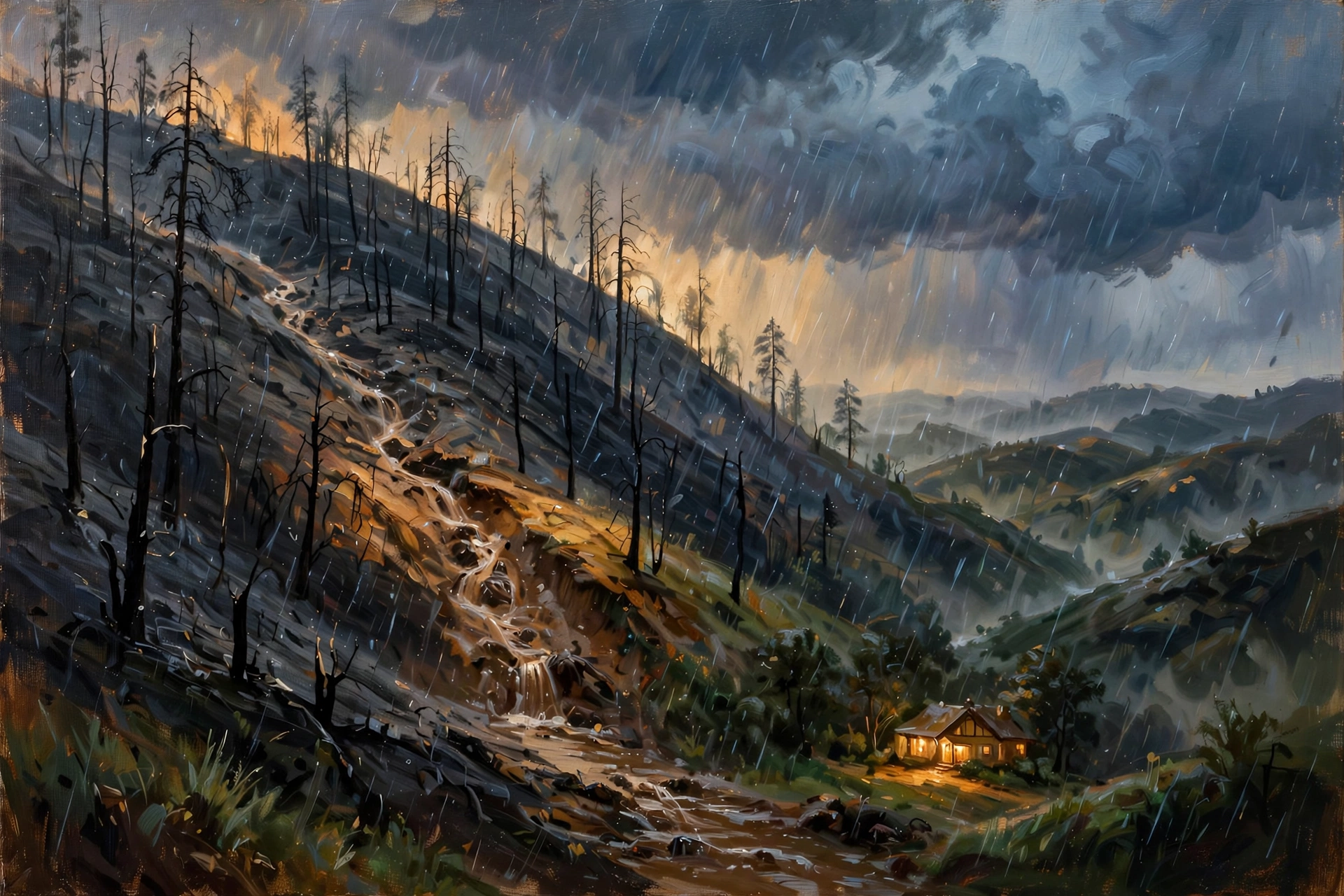
On Wednesday 18 November 2026, a powerful atmospheric river slammed into California. By mid-afternoon, downtown San Francisco had recorded 2.28 inches of rain, breaking a daily rainfall record that had stood since 1918. California storm anxiety is now surging, because this storm is pouring onto hillsides scorched bare by wildfire, and for thousands of families it means a second disaster before the first has finished.
Here is the short answer: when the same people who fled wildfire now face flood and mudslide warnings, the stress is not just doubled, it is compounded. The brain treats the second threat as proof the danger never really ended, which drains coping reserves. That reaction is normal, predictable, and manageable with a few practical steps.
What happened in California on 18 and 19 November 2026?
A powerful atmospheric river, the first major one of the El Nino winter season, reached California on 18 November 2026 and pushed south through 19 November. Downtown San Francisco recorded 2.11 inches before noon, the most rain before midday in 76 years, then reached 2.28 inches by 3pm, passing the 1918 daily record of 2.24 inches, according to the National Weather Service Bay Area office. Streets flooded and around 18,000 customers lost power.
The heaviest rain reached Santa Barbara and western Ventura County between 2am and 5am on Thursday 19 November, then moved into Los Angeles County around mid-morning. Forecasters expected 1 to 3 inches of rain across much of Southern California, with 3 to 5 inches on coastal slopes, and rainfall rates of up to 1 inch per hour. In the Sierra Nevada, up to 30 inches of snow was forecast near Truckee. Flood watches covered Southern California, and forecasters warned that another storm system could arrive around 24 to 25 November.
Why are the fire burn scars so dangerous in this storm?
The scariest part of this storm is not the rain itself. It is what the rain falls on. Los Angeles County issued evacuation warnings from 6pm on Wednesday 18 November through 8am on Friday 20 November for residents living below six recent wildfire burn scars: the Palisades, Eaton, Hurst, Sunset, Canyon, and Kenneth fires. Burned ground cannot absorb heavy rain, so water races downhill and can trigger mud and debris flows with almost no warning.
Many of these families lost homes, or watched neighbours lose homes, in fires earlier this year. Some only just moved back, or are still living in temporary housing while they rebuild. Now the same hillsides that burned are the ones that could slide.
What is compound disaster trauma?
Compound disaster trauma is the psychological strain of facing a second disaster before recovering from the first. It is not simply two stressful events added together. When threats arrive back to back, the brain never gets the quiet period it needs to stand down, so stress hormones stay elevated and sleep stays shallow.
This is known as allostatic load: the wear and tear on the body and brain from carrying stress for too long without a break. Each new alarm adds to the load instead of starting fresh. That is why a person who coped well during the fire can feel oddly fragile during the flood. It is not weakness. It is a system running on empty.
Pause and ask yourself: If the fire taught you one thing about what you actually need in an emergency, what was it? Is that thing packed, charged, or written down right now? A two-minute go-bag check can turn vague dread into one concrete action.
Why does a second evacuation warning feel worse than the first?
Because the first evacuation taught your brain what the warning really means. The first time, the alert was abstract. The second time, you know the traffic, the hotel room, the uncertainty of not knowing whether your street will still be there in the morning.
This is evacuation fatigue, and it is one of the most common reactions in repeated disasters. It shows up as delay, as irritation at the alert itself, or as a strange numbness that looks like not caring. None of those mean a person does not understand the danger. They mean the person’s coping reserves are depleted, and the brain is trying to protect itself by switching off. If you notice yourself putting off preparations, name what is happening. Saying “this is evacuation fatigue, not laziness” is a small act of self-compassion that frees up energy to act.
How does the brain handle back-to-back threats?
Under threat, the brain runs on its fast alarm system, the amygdala, which spots danger and floods the body with adrenaline and cortisol. That system is brilliant for a sprint, but it was never designed for a marathon. When the alarm stays on for weeks or months, the thinking part of the brain, the prefrontal cortex, starts to struggle.
That is why so many people in disaster zones describe the same strange mix: wired and exhausted at the same time. This is the brain doing its job under impossible conditions, not the brain failing. It also explains why flash flood anxiety can feel so physical: a racing heart, a tight chest, a stomach that will not settle. Gentle, rhythmic breathing works because it speaks to that alarm system in its own language, slowing the body so the mind can follow.
What can you do right now to cope with storm anxiety?
You cannot control the weather, and you cannot control the hillside. What you can control is smaller, and that is the point. In a compound disaster, small acts of preparation and care rebuild a sense of agency.
- Make one decision at a time. Decide the next step only: pack the bag, charge the phone, check the county warning map.
- Set a news-checking window. Check official sources, such as the National Weather Service and the LA County emergency page, two or three times a day, and step away in between. If you catch yourself refreshing the same page, try our signs of burnout check.
- Pack the bag now, not later. Documents, medication, phone charger, water, a change of clothes, and something comforting for children or pets. A packed bag turns a warning into a plan.
- Talk to one person. Tell a neighbour, a friend, or a family member what your plan is and where you will go. Social support is one of the strongest predictors of recovery, and it guards against the isolation that feeds overthinking at night.
- Let grief have its moment. Many people are grieving a home, a neighbourhood, or a sense of safety they have not yet rebuilt. Naming that grief is part of coping, as our piece on grieving at the holidays explains.
When should you take an evacuation warning seriously?
Immediately, and every time. A warning is not an order, but it is a clear signal: prepare to leave, and be ready to leave fast. In Los Angeles County this week, the warnings run from 6pm Wednesday to 8am Friday, and officials have been clear that warnings can become orders quickly if rain falls hard on the burn scars. If you live below a burn scar, know your zone, keep your car fuelled, and never drive through flooded roads or flowing water.
Frequently Asked Questions
What is California storm anxiety?
California storm anxiety is the fear and stress that comes with severe weather, especially when a storm threatens homes already damaged by wildfire. It combines worry about flooding, mudslides, evacuation, and property loss.
Why is flooding worse after a wildfire?
Burned soil absorbs far less water than healthy ground, and without plants and roots to hold it in place, heavy rain can trigger mud and debris flows. That is why evacuation warnings were issued below six burn scars in November 2026.
What is evacuation fatigue?
Evacuation fatigue is the mental and emotional exhaustion of being told to leave home repeatedly. It can show up as delay, irritability, or numbness. It is a normal response to repeated threat, not a sign of not caring.
How long will the November 2026 storm last?
The atmospheric river hit on 18 November 2026, with the heaviest Southern California rain on Thursday 19 November and the system easing through Friday. A further storm could arrive around 24 to 25 November.
Where can I get help if the stress feels overwhelming?
If you are in the United States and in crisis, call or text 988, the Suicide and Crisis Lifeline, at any time. Talk to a licensed professional if the distress does not ease once the storm passes.
Try it on our site
Try these free tools on our site:
- Relaxation Techniques – slow breathing and grounding exercises to calm a racing nervous system
- Name Your Feeling – put a name to the mix of fear, grief, and exhaustion so it feels less overwhelming
- Burnout and Money-Stress Check – a quick check-in on how depleted you are feeling right now
- Sleep Reset – a gentle wind-down routine for nights when worry keeps you awake
Related reading: Flash Flood Anxiety: Why Rising Water Feels So Frightening | Florida Flooding Anxiety: When the Water Keeps Coming Back | Signs of Burnout: 28 Warning Signs to Watch For
Key Takeaways
- An atmospheric river broke a 108-year San Francisco rainfall record on 18 November 2026, with 2.28 inches in a single day, and the storm then moved south into Los Angeles County.
- Evacuation warnings ran from 6pm Wednesday 18 November to 8am Friday 20 November for residents below six burn scars, because scorched ground cannot absorb heavy rain.
- Compound disaster trauma happens when a second disaster arrives before recovery from the first, keeping the brain’s alarm system switched on and draining coping reserves.
- Evacuation fatigue, delay, irritability, or numbness, is a normal sign of a depleted system, not a failure to care.
- If you are in crisis in the US, call or text 988 at any time.
This article is for education only and is not a substitute for professional advice. If you are struggling, please consider speaking to a licensed mental health professional.