
Anthropic’s $81 Billion IPO Is the Biggest Ever: The Psychology of AI Bubble Anxiety and FOMO
Reviewed by a Psychology Postgraduate (MA)
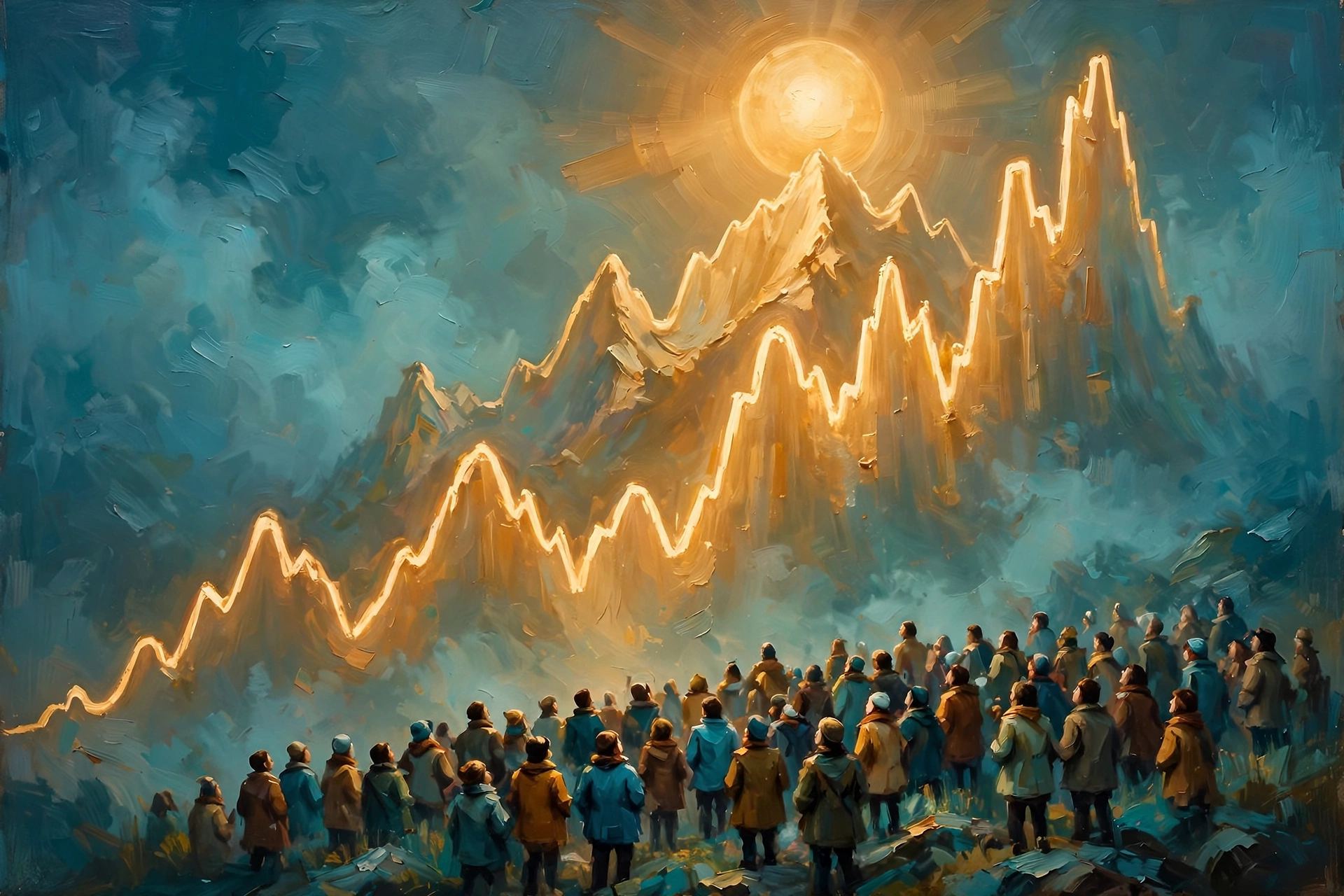
Anthropic has just pulled off the largest stock-market debut in history. Anthropic IPO psychology is the story underneath the numbers: an $81.3 billion listing, a valuation near $1.5 trillion, and excitement mixed with a queasy feeling that this might be too much, too fast.
The short answer: Anthropic’s IPO is triggering FOMO because it combines record-breaking size, a famous name in artificial intelligence, and constant coverage that makes the opportunity feel urgent and obvious. We fear missing out more than being wrong, so a giant debut can feel like a door closing forever.
What Happened With the Anthropic IPO?
What happened with the Anthropic IPO? Anthropic priced its shares at $83 each on Wednesday 18 November 2026, above its marketed $70 to $78 range, and raised $81.3 billion across 980 million shares — the largest stock-market debut on record, according to Reuters, eclipsing SpaceX’s June 2026 IPO of about $75 billion. The total deal reaches $107.3 billion including a separate $26 billion private placement at the IPO price.
Shares begin trading on Thursday 19 November 2026 on the Nasdaq under the ticker ANT. Goldman Sachs and Morgan Stanley led the offering. Anthropic is the first major frontier AI model developer to go public; OpenAI is not expected to list before 2027. The fully diluted valuation is roughly $1.5 trillion — about $1.1 trillion non-diluted — among the roughly 15 largest listed companies, around the same scale as Tesla.
The business numbers are striking. Anthropic reported $16.3 billion of revenue in the first half of 2026, with an annualised run rate of about $81 billion as of 31 October 2026, up $10 billion in a month, and roughly 11,900 customers spending more than $100,000 a year. Yet it spent nearly $9 billion on infrastructure in the first half of 2026 and has committed close to $900 billion to future computing capacity. One market strategist warned the valuation could become “dangerous” at 40 to 50 times projected 2028 revenue (Financial Express, 19 November 2026), whose headline asked whether the “AI bubble is about to burst”. The International Energy Agency reported on 19 November 2026 that global data-centre electricity demand is projected to roughly double by 2030, from 485 to 950 terawatt hours.
What Is AI Bubble Anxiety?
What is AI bubble anxiety? The uneasy feeling that excitement around artificial intelligence has run ahead of what the technology can actually earn — and that the bill will arrive sooner or later.
FOMO is the fear of missing out — the anxiety that others are gaining from an experience or opportunity you are not part of. It is one of the most powerful drivers in investing: missing out feels like a loss, and losses sting roughly twice as much as equivalent gains feel good — loss aversion. When a debut is framed as a once-in-a-generation moment, the fear of watching from the sidelines can override every cautious instinct.
A bubble is what happens when prices are driven less by what something earns and more by what people expect it to earn. The dot-com era is the parallel everyone reaches for: the internet really did change everything, and plenty of dot-com investors still lost everything. Both were true at once — and the same can be true of AI, without that meaning a crash is certain.
Why Does FOMO Hit So Hard When Everyone Is Buying?
Why does FOMO hit so hard when everyone is buying? Because our brains treat the crowd as evidence.
Herd behaviour is the tendency to follow what others are doing, reinforced by social proof: if 22 banks, thousands of headlines and every finance account on your feed treat this as the event of the decade, your brain takes it as information. It feels like research, but it is mostly repetition. The same pattern shows up far from Wall Street — the way brain rot and shrinking attention keep us scrolling is the same loop that keeps us refreshing a share price.
Picture Daniel, a composite example: a 34-year-old who has never bought a share, scrolling on the train as every headline screams about the biggest IPO ever. He does not know the company’s revenue from its costs, but he feels something enormous happening without him — and that feeling, not the prospectus, will decide whether he buys.
The availability heuristic plays its part too: we judge how important something is by how easily examples come to mind. AI is everywhere in the news right now, so the opportunity feels obvious and close, while a quiet risk — a valuation 40 to 50 times future revenue — is much harder to picture than a glowing chart going up. The loop is familiar: the same circling, checking and second-guessing described in how to stop overthinking everything.
Pause and ask yourself: When you first heard about the Anthropic IPO, was your first thought excitement — or the fear of being left behind?
Anthropic IPO Psychology: Why the $1.5 Trillion Number Sticks in Your Head
Why does the $1.5 trillion number stick in your head? Huge, round, record-breaking figures act as mental anchors: once you hear one, it becomes the reference point for everything that follows, fair price or not.
Anchoring is one of the most stubborn biases in psychology. Show someone a number first, and their later judgements bend toward it, even when they know it is arbitrary. A $1.5 trillion valuation makes $83 a share sound almost modest. But the valuation is an opinion about the future, not a measurement of the present. The revenue figures are real and impressive; the multiple placed on them is a bet. That bet is where the bubble anxiety lives: will the hundreds of billions poured into computing capacity come back as profit, or as regret? Nobody knows, and that discomfort is itself the thing to manage. Under uncertainty, our brains prefer a confident story to an honest “we will see” — which is why hype and doom both sound convincing. Living inside that noise overlaps with the signs of burnout many people miss: constant checking, poor sleep, a mind that never switches off.
How Can You Watch the Frenzy Without Getting Swept Into It?
How can you watch the frenzy without getting swept into it? You cannot switch FOMO off, but you can slow it down enough to make a decision you would still respect next month.
1. Wait 48 hours before acting on excitement. A record IPO will still be there in two days — the urgency comes from the news cycle, not the company.
2. Write down your reason in one sentence. If you cannot explain why you want in without the words “everyone”, “biggest” or “missing out”, the reason is social pressure, not analysis. Not buying is a neutral outcome, not a loss.
3. Separate excitement from evidence. Anthropic’s revenue growth is remarkable, and a 40 to 50 times future revenue multiple is demanding. Both can be true.
4. Limit how often you check. Refreshing a price every ten minutes turns a decision into a mood. Constant checking is the same loop behind compulsive phone checking — each glance promises certainty and delivers more anxiety instead. Pick one check a day.
Frequently asked questions
What is Anthropic IPO psychology?
It is the mix of FOMO, herd behaviour and bubble anxiety around the record $81.3 billion listing: investors fear missing the next great AI company while worrying the $1.5 trillion valuation has run ahead of earnings.
Is the Anthropic IPO a sign of an AI bubble?
Not necessarily. The company has real, fast-growing revenue, but a valuation of 40 to 50 times projected 2028 revenue shows how much future growth is already priced in. A bubble is only clear in hindsight: the dot-com era proved a technology can be revolutionary while its early investors still lose money.
Why does FOMO make investing feel so urgent?
FOMO works through loss aversion: missing out feels like a loss, and losses hurt about twice as much as gains feel good. Add social proof from constant coverage, and a decision deserving days of thought feels urgent.
How can I tell excitement from a good decision?
Excitement is fast, social and urgent; a good decision is slow, personal and boring. If your reason survives a 48-hour wait and makes sense in one sentence, it is yours, not the crowd’s.
Try it on our site
Big financial headlines stir up the same loops as any other worry. Try Challenge the Thought to untangle a FOMO spiral, Mind Check-Ins for a quick read on your mood, the Focus Room to step away from the refresh cycle, and the Daily Tracker to see how headlines shape your day.
Related reading: How to Stop Overthinking Everything · Brain Rot and the Psychology of Shrinking Attention · Signs of Burnout
Key Takeaways
- Anthropic priced its IPO at $83 a share on 18 November 2026, raising $81.3 billion — the largest debut on record — at a valuation near $1.5 trillion. Shares begin trading on Nasdaq as ANT on 19 November 2026.
- Anthropic IPO psychology is driven by FOMO, herd behaviour, the availability heuristic and anchoring on $1.5 trillion.
- The business is real — $16.3 billion revenue in H1 2026, an $81 billion annualised run rate — but 40 to 50 times projected 2028 revenue shows how much future growth is already priced in. The dot-com era showed a technology can change everything while early investors still lose money.
- Wait 48 hours, write your reason in one sentence, separate excitement from evidence, and limit price-checking.
This article is educational only — not therapy, diagnosis, medical or financial advice, and not a recommendation to buy, sell, or hold any investment. If you are struggling, consider speaking with a licensed professional. In crisis, call or text 988 in the US; in the UK and Ireland, Samaritans is on 116 123.