
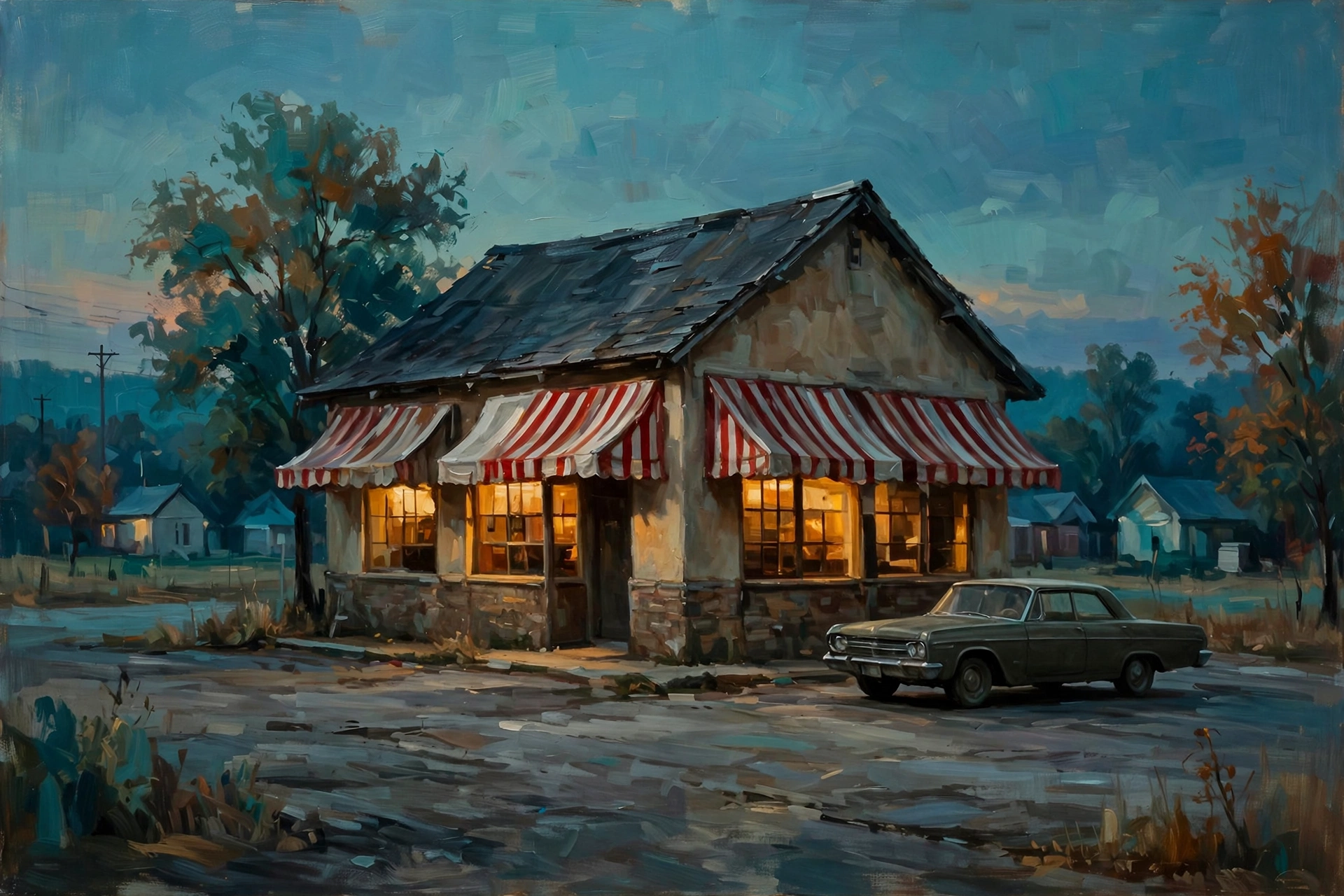
KFC Is Closing 72 Restaurants: The Psychology of Losing a Place You Love
Reviewed by a Psychology Postgraduate (MA)
Seventy-two KFC restaurants are closing across ten American states, and the news has hit a nerve far bigger than fried chicken. The kfc closing psychology is simple: a familiar restaurant is never just a place to eat. It is a habit, a memory, a piece of your routine, and losing it triggers nostalgia, loss aversion and the quiet grief of a place that will not be there next time you drive past.
What actually happened with KFC?
Tasty Chick’n LLC, a Plano, Texas-based franchise operator, filed for Chapter 11 bankruptcy protection on Monday, 16 November 2026, in the US Bankruptcy Court for the Southern District of Texas. It runs 75 KFC restaurants and nine co-branded KFC/Taco Bell locations across ten states: Alabama, Arkansas, Florida, Illinois, Indiana, Kentucky, Mississippi, Missouri, Tennessee and Virginia.
Court filings ask a judge to let the company walk away from the leases on 72 locations that have closed or are winding down; Newsweek counts 67 already dark — Tennessee hardest hit with 19, then Florida with 10 and Arkansas with 9. A hearing on the lease rejections is set for 23 November.
The numbers tell a slow story: sales fell 11.4 percent in fiscal 2024, another 1.4 percent in 2025 and 2.8 percent so far in 2026, while profit margins slid from 11.8 percent in 2023 to just 4 percent. Yum! Brands sent a default notice in December 2025 and, on 15 September 2026, gave notice it intended to end the franchise agreements over roughly $15.6 million in unpaid royalties.
One thing worth saying clearly: KFC itself has not filed for bankruptcy, and neither has Yum! Brands. This is one franchise operator. But it sits inside a wider shrinking — 312 KFC restaurants closed across the US between July 2025 and July 2026, about 7.6 percent of the chain’s footprint, per a Local Falcon analysis reported by the New York Post. That is why “kfc closing” passed 100,000 searches on Google in the United States on 19 November, most of them from people checking whether their local KFC is one of the 72.
Why does losing a fast-food restaurant hurt at all?
Because the brain does not file a restaurant under “food”. It files it under “familiar”. Psychologists call the bond place attachment: the emotional connection people form with specific locations, built through repeated visits, rituals and memories. It is why a demolished cinema or a shuttered corner shop can feel like a small bereavement.
A KFC carries an unusually dense version of that bond: the Sunday bucket after church, the meal after a school match, the first meal a teenager bought with their own money. The food is almost beside the point. What you are really attached to is the version of your life that happened there — and the knowledge that you could go back any Tuesday you liked. A closure takes away the option, and the brain registers that as loss.
What is comfort food nostalgia, and why is it so powerful?
Comfort food nostalgia is the warm, bittersweet feeling when a familiar food or the place that served it reminds you of an earlier, safer time in your life. Research on nostalgia, notably by psychologist Constantine Sedikides and colleagues, finds these memories are usually social — they feature people we love — and recalling them can lift mood, reduce loneliness and restore a sense of meaning.
Smell and taste are the fastest routes to those memories: the olfactory bulb connects almost directly to the limbic system, the brain’s emotion and memory centre, so a whiff of fried chicken can drop you into a childhood kitchen. Fast food, with its standardised flavours, is built for this — a KFC in Memphis tastes the same as one in Glasgow, so the memory travels with you.
Why do we check whether OUR local one is closing?
The first thing most people did was search for their own town. That is not curiosity; it is the brain trying to resolve uncertainty. Psychologists call the discomfort of not knowing ambiguity aversion: we would rather have bad news than no news, because certainty lets us plan. Typing “is my KFC closing” is the same impulse as refreshing a flight status.
Underneath that sits loss aversion: Daniel Kahneman and Amos Tversky found losing something hurts roughly twice as much as gaining the same thing pleases. Nobody celebrates a new chicken shop opening with the intensity they mourn an old one closing — a place that was simply there, unremarkable, becomes precious the moment it might be gone.
And then there is the habit itself. A weekly KFC run is a habit loop: a cue (Friday evening), a routine (the drive, the order, the table by the window) and a reward (salt, fat, warmth). Habits run on autopilot, which is why breaking one feels strangely effortful. The cue still fires on Friday evening; the routine has nowhere to go.
Pause and ask yourself: Think of a place from your childhood that no longer exists — a shop, a restaurant, a cinema. What do you actually miss: the thing itself, or the people and the version of your life that went with it? Naming that is the first step to letting the place go while keeping the memory.
Why does a closure feel like a community loss?
For many towns, a KFC is a third place — sociologist Ray Oldenburg’s term for the informal gathering spots that are neither home nor work. In smaller towns across Tennessee, Arkansas and Kentucky, the KFC on the main road is where the youth team ate after a game and grandparents took grandchildren. When it closes, the town loses a room it shared.
That is why closures play out so publicly: people post photos of their local branch and share memories in the comments. Psychologists would recognise this as collective nostalgia, a shared remembering that binds a group together. The comments section becomes a small memorial service, and joining in genuinely helps — shared grief is easier to carry than private grief. Comfort food is social food, and the conversation about losing it is social too.
How do you cope when a familiar place disappears?
First, let the feeling be what it is. A small grief is still a grief, and dismissing it as “just a chicken shop” does not make it go away; it just makes you feel silly for feeling it. Psychologists who study grief note that disenfranchised grief, the kind other people think you should not feel, is the hardest to process precisely because nobody validates it. Your attachment was real, so the loss is real.
Second, separate the place from the ritual. The ritual was never really about the building — Friday night, no cooking, everyone around the same table — and it can move to another restaurant or a homemade version. Keeping the cue and the reward while swapping the routine is far easier than deleting the habit entirely. Third, make the memory deliberate: take a photo, write down the order everyone always got, tell the story of the bucket tipping over in the car. Nostalgia works best savoured, not suppressed.
Finally, notice what the reaction is telling you. If a closure hits harder than you expected, it is usually not about the restaurant — it is about change: a town changing, a childhood receding, a routine that marked time. The sadness is information, pointing at something bigger than fried chicken. If a small loss keeps looping into bigger worries, overthinking follows the same pattern: one uncertain thought, replayed until it feels like a fact.
Frequently asked questions
Is KFC closing everywhere?
No. One franchise operator, Tasty Chick’n, filed for Chapter 11 on 16 November 2026; 72 of its locations across ten states are closing or winding down. KFC itself has not filed for bankruptcy.
Which states are losing KFC restaurants?
Alabama, Arkansas, Florida, Illinois, Indiana, Kentucky, Mississippi, Missouri, Tennessee and Virginia. Tennessee has the most so far — 19 already closed — then Florida with 10 and Arkansas with 9.
Why is KFC closing restaurants?
Sliding sales, rising costs, and about $15.6 million in unpaid royalties to Yum! Brands. More broadly, 312 KFC restaurants closed across the US between July 2025 and July 2026 amid tougher competition from rival chicken chains.
Why do I feel sad about a fast-food restaurant closing?
Because of place attachment and comfort food nostalgia: the restaurant is tied to memories, routines and people you love, not just to the food. Losing it triggers loss aversion and breaks a habit loop.
Try it on our site
A familiar place closing can stir up more than you expect. Try the Mind Check-Ins for a quick read on how you are feeling, and Challenge the Thought if one worry about change keeps looping. The Daily Tracker shows how hard and hopeful days pattern over time, and Name Your Feeling can help you pin down what this loss brings up.
Related reading: Food and Mental Health: How What You Eat Shapes How You Feel · How to Break a Bad Habit · Grieving at the Holidays
Key Takeaways
- 72 KFCs across ten US states are closing after franchise operator Tasty Chick’n filed for Chapter 11 on 16 November 2026 — KFC itself has not gone bankrupt.
- A familiar restaurant is a place attachment — it holds habits, memories and a version of your life, so losing it feels like a small bereavement.
- Comfort food nostalgia and loss aversion explain why a closure hurts more than the food was worth.
- Keep the ritual, not the building: move the Friday-night meal somewhere new and savour the memory deliberately, once, rather than avoiding it.
- If a small loss keeps looping into bigger worries, that is information — pay attention to what the feeling is pointing at.
This article is educational and is not a substitute for professional advice. If you are struggling, consider speaking to a licensed mental health professional. In the US, you can call or text 988 for free, confidential support, 24 hours a day.