
Reviewed by a Psychology Postgraduate (MA)
Short answer: On 17 November 2026, US prosecutors announced an indictment against Daithi O’Corrain over an alleged attack on a US military aircraft at Shannon Airport. It raises a question in shannon airport protest psychology: why do some people move from marching to direct action, and why does the same act draw sympathy from some and anger from others?
What happened at Shannon Airport?
On 17 November 2026, the US Department of Justice, Southern District of New York, announced that a federal grand jury in Manhattan had indicted Daithi O’Corrain, 48, also known as David Curran, an Irish national. The indictment was returned on Monday 16 November and unsealed on Tuesday 17 November 2026, according to the US Department of Justice, 17 November 2026.
The charge is destruction of US government property. O’Corrain faces up to 10 years in prison if convicted. He is presumed innocent unless proven guilty.
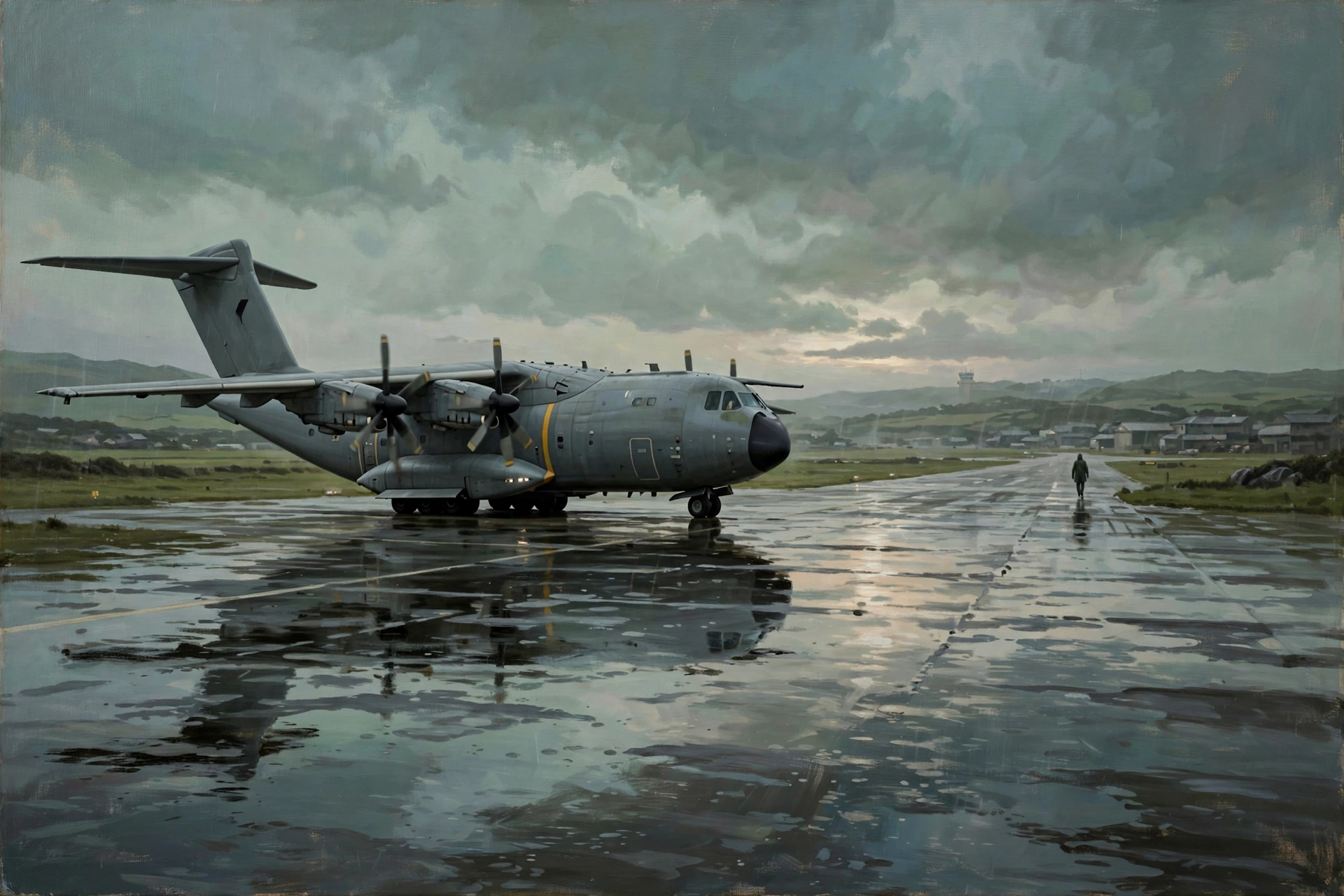
Prosecutors allege that the attack took place in the morning of 11 April 2026, at about 4:39am. They say O’Corrain breached the security perimeter of Shannon Airport in County Clare, Ireland, and reached a US Air National Guard C-130H Hercules aircraft parked on a taxiway.
Inside, he allegedly cut wire bundles and hydraulic lines, crimped a liquid oxygen line, destroyed every gauge in the cockpit, punctured air ducts, and poured ball bearings into the fuel tanks. Prosecutors also allege that he brought capsules of gallium, a corrosive metal that is liquid at room temperature and eats through aluminium.
They say he then escaped through a roof hatch and struck the aircraft’s exterior with an axe. Prosecutors say the aircraft, worth about 60 million dollars, was effectively destroyed and will not return to active flight status.
They also say that if the liquid oxygen line had been cut rather than crimped, there would have been a high chance of a massive explosion inside the aircraft.
What do prosecutors allege about planning?
Prosecutors allege months of planning. They say O’Corrain researched the construction of the C-130 online, researched previous attacks on US military aircraft at Shannon Airport, and tried to contact a person involved in an earlier incident.
This was the fourth unauthorised access at Shannon Airport since May 2025. Earlier incidents included three people accused of spray-painting a US military plane and three others who drove to a restricted area where a US military jet was parked.
O’Corrain was arrested by Irish authorities in April 2026 and faces proceedings in Ireland. He is not in US custody and his US arraignment has not been scheduled.
What is known, and what is not yet known?
- 11 April 2026, about 4:39am: The alleged attack on the US Air National Guard C-130H Hercules at Shannon Airport took place, according to prosecutors.
- April 2026: O’Corrain was arrested by Irish authorities and faces proceedings in Ireland.
- 16 November 2026: A federal grand jury in Manhattan returned the indictment.
- 17 November 2026: The US Department of Justice announced and unsealed the indictment. CNN reported it on 17 November 2026, and Al Jazeera on 18 November 2026.
What is known is the charge, the alleged damage, the stated value of the aircraft, and the fact that O’Corrain is not in US custody. What is not known, from the indictment itself, is a motive.
An online fundraiser organised by people describing themselves as O’Corrain’s friends and comrades frames the act as direct action protesting the US military presence in Ireland and US support for Israel’s war in Gaza. That framing comes from supporters, not prosecutors.
Why do some people choose direct action over peaceful protest?
The gap is between two descriptions: extensive alleged damage, and a protest framed by supporters as opposition to military presence and a war. That is a disagreement about meaning, not only about facts. See Gen Z Protest Psychology for the same tension, as younger protesters often describe an urgency older generations find hard to share.
What is moral outrage, and why does it feel so powerful?
Moral outrage is a strong emotional response to something a person sees as deeply wrong or unjust.
It differs from ordinary anger, which is often personal. Moral outrage is social: the feeling that a rule has been broken, or that a powerful actor has abused its position.
When moral outrage is high, people are less likely to weigh trade-offs or listen to counterarguments. That clarity can be energising, and it can also be dangerous.
Pause and notice your own reaction to this story. Did you feel sympathy, anger, confusion, or a mix of all three? That first reaction often says more about your values and your trust in institutions than it does about the facts. Try naming the feeling before you decide what the act means.
How does a group decide whether an act is heroic or criminal?
Groups do not just react to an act. They interpret it. The same alleged act can be called brave direct action by one group and reckless destruction by another.
By describing O’Corrain as a friend and comrade, and by linking the alleged act to opposition to the US military presence in Ireland and US support for Israel’s war in Gaza, supporters place it inside a larger story about resistance. Prosecutors frame the case in legal terms: destruction of government property, a dollar value, and a potential prison sentence.
Neither framing is neutral. Each asks the audience to judge the act by a different standard. In our article on Why Protests Turn Violent, we looked at how onlookers often blame one side based on who they already sympathise with.
Why does the same act make some people sympathise and others recoil?
Sympathy for a protester does not always mean agreement with what they allegedly did. It can mean agreement with the cause, or distrust of the target.
Several factors shape that split. One is perceived proportionality. Spray-painting a plane is often seen as symbolic, because the damage is limited. Destroying an aircraft worth about 60 million dollars, and allegedly creating a risk of explosion, is harder to see as symbolic.
The Irish context adds another layer. Shannon Airport has long been a focus of debate about the US military presence in Ireland. Our piece on Ireland Public Sector Strike Psychology explores how Irish public debate can turn a policy dispute into a wider question about fairness and national identity.
When does conviction become escalation?
Escalation rarely happens in one leap. It usually happens in small steps, each making the next step feel more acceptable. A person might start at a march, then join a direct action, then take a greater risk.
Escalation is not only about the protester. Authorities, media, and the public can escalate a situation too, by responding in ways that confirm a protester’s belief that the system is hostile. For a wider view, see our article on Netherlands Gen Z Protest Scare Psychology.
What should readers take from this case?
Keep the legal and psychological questions separate. The legal question is whether the allegations can be proven in court. The psychological question is why people take drastic action for a cause.
Try it on our site
If this story has stirred strong feelings, slow down and examine them before you share them. Our Challenge the Thought tool guides you through a simple thought record. If the news has left you feeling anxious, try our Anxiety check-in, or explore the full Wellness Tools hub.
Related reading
- Gen Z Protest Psychology
- Why Protests Turn Violent
- Netherlands Gen Z Protest Scare Psychology
- Ireland Public Sector Strike Psychology
- Ireland Homelessness Psychology
Frequently asked questions
What is shannon airport protest psychology?
Shannon airport protest psychology is the study of why people protest at or about Shannon Airport, why some choose direct action, and how the public judges those actions.
What has Daithi O’Corrain been charged with?
He has been indicted in the US on a charge of destruction of US government property, and faces up to 10 years in prison if convicted. He is presumed innocent unless proven guilty.
Why do some protests turn to direct action?
People may turn to direct action when they believe conventional protest will not work, when they feel strong moral outrage, and when they believe a direct act will draw attention to a cause.
How can I think clearly about a shocking news story?
Pause before reacting, check the source and date, and separate what is known from what is alleged. A thought record or an anxiety check-in can help you slow down.
Key Takeaways
- On 17 November 2026, US prosecutors announced an indictment against Daithi O’Corrain over an alleged attack at Shannon Airport on 11 April 2026.
- The charge is destruction of US government property, with up to 10 years in prison if convicted. O’Corrain is presumed innocent unless proven guilty.
- Prosecutors allege extensive damage to a C-130H Hercules worth about 60 million dollars, and say it will not fly again.
- The US indictment does not specify a motive, while supporters frame the alleged act as direct action against the US military presence in Ireland and US support for Israel’s war in Gaza.
- Protest psychology helps explain direct action through moral outrage, perceived efficacy, collective identity, and escalation in small steps.
- Public reactions split because people weigh proportionality, risk, trust, and group identity differently.
If you are feeling distressed: In Ireland, you can contact Samaritans at 116 123, free to call at any time. If you feel you may act on thoughts of harming yourself, please seek help right away.
Disclaimer: This article is for educational purposes only and is not a substitute for professional advice, diagnosis, or treatment. The legal case described here is ongoing, and the defendant is presumed innocent unless proven guilty.
Sources: US Department of Justice, 17 November 2026; CNN, 17 November 2026; Al Jazeera, 18 November 2026.