
Reviewed by a Psychology Postgraduate (MA)
Forget horoscopes. Forget “16 types.” Personality science has five dimensions — 50 years of research, replicated across cultures, predicting salary to lifespan. The Big Five. Learn them; see them in everyone. Including you.
What it means in one sentence: The Big Five (OCEAN) — Openness, Conscientiousness, Extraversion, Agreeableness, Neuroticism — capture major personality differences.
In short: The Big Five personality traits — Openness, Conscientiousness, Extraversion, Agreeableness, Neuroticism (OCEAN) — are five continuous dimensions that capture major personality differences. Everyone has all five as sliders, not types. Replicated across 50-plus cultures, they predict job performance, relationships, happiness, and health better than popular type systems like Myers-Briggs.
The Big Five in Everyday Words
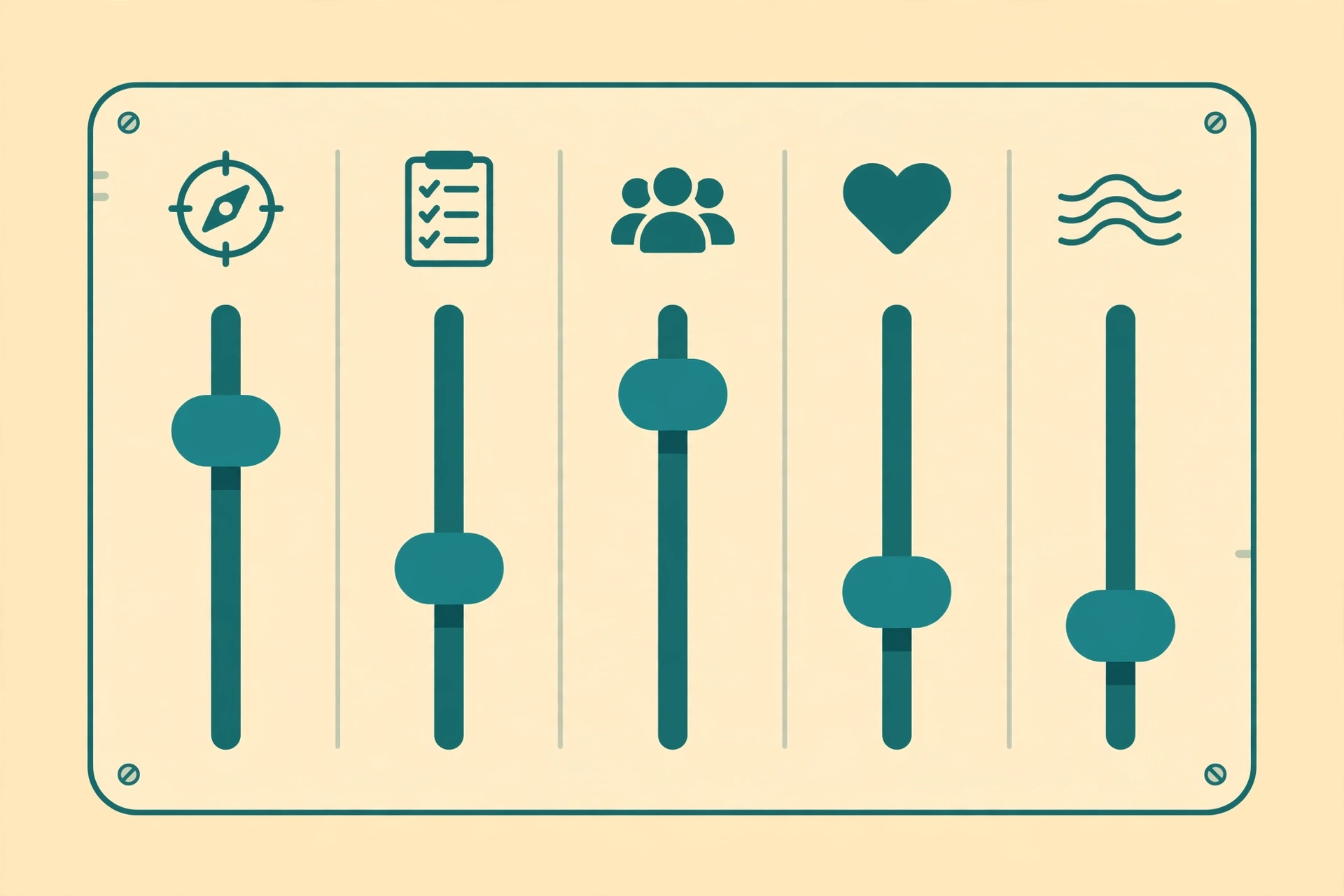
Five sliders, everyone has all five: O — Openness (curious vs. conventional): loves new ideas vs. prefers routine. Explorer slider. C — Conscientiousness (disciplined vs. spontaneous): organized, reliable. Strongest life-success predictor — beats IQ for grades, jobs, health, longevity. E — Extraversion (outgoing vs. reserved): energized by people vs. solitude. Energy source, not social skill. A — Agreeableness (kind vs. competitive): trusting vs. skeptical. Beloved — but lower salaries (don’t negotiate). N — Neuroticism (sensitive vs. steady): worry-prone vs. calm. Only trait where “low” is better.
Not a type — a profile: five positions. “High O, high C, low E” = reliable, curious introvert. Pattern, not box.
The Science Behind It
Replicated 50+ cultures, self and observer ratings, even other species. Predictive power: C → job performance, grades, longevity. E → leadership, happiness. N → mental health risk. O → creativity. A → relationship satisfaction — and lower pay (the agreeableness penalty).
No profile “best.” High C without O = rigid. High E without A = exhausting. Every strength has shadow; every position has winning niches.
3 Examples From Real Life
Example 1 — Startup team: Maya (high O, high E, low C): visionary, chaotic. James (low O, high C, low E): systems, ships on time. Separately fail; together = company. Hire your opposites.
Example 2 — Salary gap: Equally skilled engineers: Alex (high A) accepts first offer; Sam (low A) negotiates 15% more. Same code, different pay. Fix isn’t “less kind” — it’s separating kindness from negotiation: scripts, data, practice.
Example 3 — Happiness profile: Happiest: high E, low N, high C. But levers exist: introvert → quality connection; high N → therapy lowers it; low C → systems simulate conscientiousness. Start from profile; don’t end there.
🧠 Quick check: 'O' in OCEAN measures?
Why: High O = explorer. Low = traditionalist. The creativity dimension.
Try This Today
Guess a friend’s Big Five (1-5 each). Ask them to self-rate. Compare gaps — you see their E accurately, misjudge N (everyone does). People as profiles, not types: most valuable personality skill.
What People Get Wrong
Myth: “Myers-Briggs just as scientific.”
Reality: MBTI: low retest reliability, binary boxes for spectra, weak prediction. Big Five: high reliability, continuous dimensions, massive validity. Popularity isn’t evidence. OCEAN = science; types = horoscope.
Why It Matters
User manual for humans: hiring, relationships, self-improvement, self-compassion (“not lazy — low-C in high-C world; build systems, not shame”). Learn OCEAN; people stop being mysteries — become patterns. Including you.
🧠 Quick check: Strongest Big Five predictor of life success?
Why: C predicts grades, job performance, health, longevity — more than IQ. Reliability compounds.
Frequently Asked Questions
What are the Big Five personality traits?
Openness (curious vs. conventional), Conscientiousness (disciplined vs. spontaneous), Extraversion (outgoing vs. reserved), Agreeableness (kind vs. competitive), and Neuroticism (sensitive vs. steady). Together they spell OCEAN.
Are the Big Five types or dimensions?
Dimensions — five sliders, not boxes. Everyone has all five positions: “high openness, high conscientiousness, low extraversion” describes a reliable, curious introvert. A profile, not a type.
What is the difference between the Big Five and Myers-Briggs?
Myers-Briggs has low retest reliability, binary boxes for spectra, and weak prediction. The Big Five has high reliability, continuous dimensions, and massive validity across cultures, self-ratings, observer ratings, and even other species.
Which Big Five trait best predicts life success?
Conscientiousness — it beats IQ for grades, jobs, health, and longevity. Extraversion predicts leadership and happiness, neuroticism predicts mental-health risk, openness predicts creativity, and agreeableness predicts relationship satisfaction (but lower pay).
Try It on Our Site
Try it now: Mood check-in — see which of the Big Five is loudest in you today. Start the check-in →
More tools for this topic:
- Attachment Style Quiz — personality in relationships Take the quiz →
- Competitive Mindset check-in — trait competitiveness, measured Start →
Related reading: 23. How Personality Develops · 27. Self-Esteem · 28. Identity
Tap when this one clicks — your progress is saved on this device.