
Unruly Passengers Keep Making Headlines: The Psychology of Air Rage
Reviewed by a Psychology Postgraduate (MA)
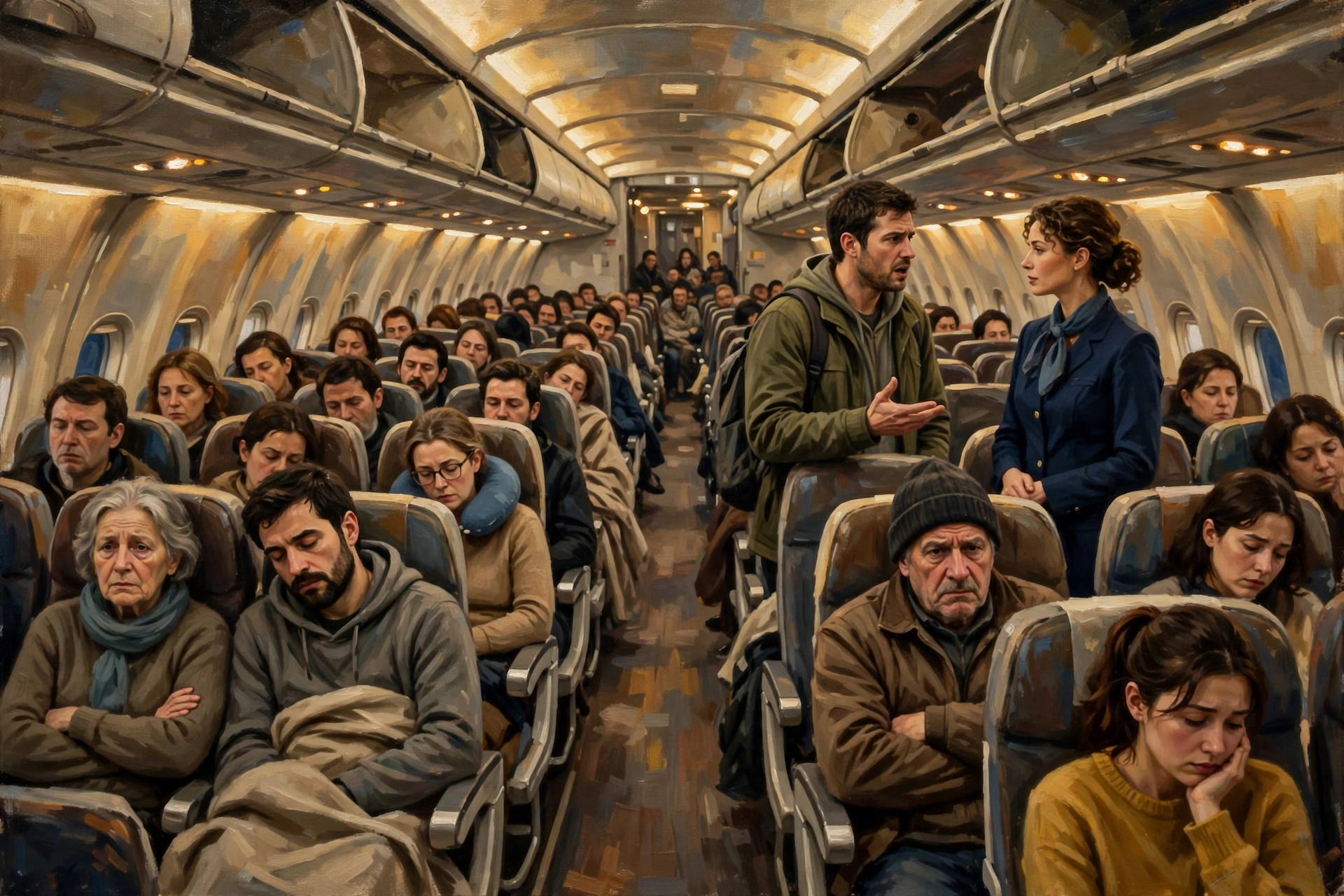
On 12 November 2026, a passenger on United Flight 868 from Tokyo to Chicago had to be restrained by crew after a disturbance mid-flight. The crew declared a Level 3 emergency, the second-highest of four threat levels, and the plane landed with 192 passengers and 12 crew aboard and no injuries reported. Three weeks earlier, on 22 October, American Airlines Flight 339 turned back to Miami after a passenger allegedly threatened a flight attendant shortly after takeoff. Air rage psychology asks a simple question about scenes like these: how does an ordinary person, who would never shout at a stranger in a shop, end up restrained on an aircraft?
In short, a plane cabin stacks almost every known trigger for aggression into one small metal tube: loss of control, crowding, discomfort, tiredness, alcohol, waiting, and an audience. None of those excuses the behaviour, but together they explain why the cabin is one of the few places where a normally polite person can lose their temper in public.
The numbers show this is not a one-off problem. The Federal Aviation Administration (FAA) had recorded 1,483 unruly passenger reports so far in 2026, according to figures reported on 15 November 2026, against 1,621 for the whole of 2025. The pandemic peak was 5,973 reports in 2021, when mask disputes drove confrontations. The FAA has pursued a zero-tolerance policy since January 2021, made permanent in April 2022, and can propose civil penalties of up to $43,658 per violation. More than 310 cases have been referred to the FBI since late 2021.
What Is Air Rage?
What is air rage? Air rage is aggressive, threatening or violent behaviour by an airline passenger, ranging from shouting and refusing crew instructions to physical assault. The FAA counts it as an unruly passenger incident: any behaviour that interferes with the duties of the crew.
Air rage psychology is the study of why the cabin brings it out. The answer is not one cause but a pile-up: the environment strips away the usual brakes on behaviour at the same time as it presses the accelerator.
Think of a composite traveller many readers will recognise. She boarded after a delayed connection, slept badly the night before, and has been awake for 20 hours. Her bag was gate-checked, her seat is in the middle, and the person in front has reclined fully. A drink at the airport bar felt like a reasonable way to relax. When a crew member asks her to stow her bag, the request lands like an insult. She is not a violent person. She is a tired, cramped, slightly drunk person whose self-control is running on empty.
Why Does Flying Make People Angry?
Why does flying make people angry? Because a plane removes control and comfort at the same time, and the brain reads that combination as a threat. You cannot leave, you cannot choose your neighbours, you cannot open a window, and you cannot speed anything up.
The frustration-aggression hypothesis, first proposed by Dollard and colleagues in 1939, says frustration is a reliable trigger for aggression, especially when the frustration feels unfair or blocking a goal. On a plane, frustration is constant and small: the queue, the overhead bin, the elbow war, the delay announcement with no new time. Each one is minor. Added together, they raise the temperature until a small spark, a spilled drink or a curt instruction, sets it off.
Crowding makes it worse. Research on territoriality shows that people defend personal space fiercely, and an economy seat offers roughly 17 inches of it. When a stranger’s elbow crosses the armrest, it feels like a small invasion, even though nobody means it that way. The travel anxiety that builds around disrupted flights shares the same root: the body is braced for trouble before anything happens.
What Role Does Alcohol Play in Air Rage?
What role does alcohol play in air rage? A large one. Alcohol narrows attention to the most obvious cue in front of you and weakens the ability to weigh consequences, a pattern psychologists call alcohol myopia (Steele and Josephs, 1990). A sober passenger hears “please sit down” as a routine instruction. A passenger who has had three drinks hears it as a challenge.
Altitude may add a small extra effect: lower cabin pressure and dry air can make people feel the effects of alcohol sooner, and dehydration worsens mood. The bigger factor is timing. Many people drink before boarding to calm nerves, then drink again in the air, so the alcohol peaks exactly when the cabin is most crowded and the flight is longest.
That is why crew training now treats alcohol as a safety issue, not a service perk. Some airlines have quietly reduced in-flight alcohol service on routes with a history of incidents, and several countries have debated banning pre-flight drinking at airports altogether.
Why Do Ordinary People Snap in Public?
Why do ordinary people snap in public? Because self-control is a limited resource, and a long travel day drains it. Psychologist Roy Baumeister’s work on ego depletion found that resisting impulses, making decisions and staying polite all draw on the same pool of mental energy. By hour six of a travel day, that pool is low.
Deindividuation adds another layer. In a crowd where nobody knows your name, the normal social brakes loosen: you feel less identifiable, less accountable, and more likely to act on impulse. A plane is a crowd that cannot disperse, and a phone camera in every hand makes the moment both public and performative, which can push some people to double down rather than back off.
It is worth saying plainly that none of this excuses the behaviour. Understanding the triggers is about prevention, not sympathy for the person shouting. The crew members who absorb these incidents, and the passengers who watch them, pay the real cost. That cost is why the FAA fines exist, and why airlines now ban repeat offenders.
Pause and ask yourself: Think of your worst travel day. What drained you most: the waiting, the crowding, or the feeling that nobody could tell you what was happening? Naming the trigger in advance is the first step to handling it differently next time.
How Can Passengers Keep Their Cool on a Flight?
How can passengers keep their cool on a flight? Treat the flight like a long shift, not a test of endurance. The goal is to protect your self-control before it runs out.
First, plan for the wait. Download entertainment, bring snacks and water, and assume the flight will be delayed. People who expect a delay cope far better than people who expect perfection, because the gap between expectation and reality is where frustration lives. The same principle explains why a frightening text on a flight can spiral into panic: when information is scarce, the mind fills the gap with the worst version of events.
Second, guard your sleep and your drinking. A short nap before the flight, a meal rather than airport drinks, and water through the journey keep your brain in a state where it can still pause before reacting. Alcohol and exhaustion together are the most reliable recipe for a regretted outburst.
Third, make the seat yours. Noise-cancelling headphones, an eye mask and a small comfort, a book or a playlist, create a pocket of control inside a space you cannot control. Psychologists call this a coping ritual: a small, repeatable action that tells your nervous system you are safe.
Fourth, if someone else loses their temper, do not engage. Move if you can, alert the crew quietly, and keep your own breathing slow. Crowd psychology shows that aggression is contagious in enclosed spaces, and the fastest way to stop a spiral is for one person to stay calm. If the incident leaves you shaken, overthinking the confrontation afterwards is normal, and writing down what happened often helps the mind file it away.
Finally, know the stakes. A single incident can mean a fine of up to $43,658 per violation, a lifetime ban from an airline, and in serious cases a federal charge. The FAA has referred more than 310 cases to the FBI since late 2021. A bad ten minutes at 35,000 feet can follow a person for years.
Frequently Asked Questions
How many unruly passenger incidents happen each year?
The FAA recorded 1,483 unruly passenger reports in 2026 up to mid-November, compared with 1,621 in all of 2025. The record was 5,973 in 2021, during the pandemic mask disputes.
What happens to unruly passengers?
The FAA can propose civil penalties of up to $43,658 per violation, and one incident can bring several violations. Airlines can ban passengers, and serious cases are referred to the FBI for possible federal charges.
Why do people get angry on planes?
A mix of lost control, crowding, tiredness, alcohol, delays and uncertainty. Each factor alone is small, but together they drain self-control and raise the odds of an outburst.
Is air rage getting worse?
Reports remain far below the 2021 peak, but 2026 is running close to 2025’s full-year total with weeks still to go, and high-profile incidents keep making headlines.
Try it on our site
These free tools can help you pause, reflect and reset. No signup needed.
- Thought Reframe — work through a frustrating thought, step by step, before it becomes a reaction.
- Relaxation Techniques — breathing and grounding exercises that work in a plane seat.
- Sleep Reset — a gentle wind-down for the night before an early flight.
- Mind Check-Ins — short questionnaires on mood, anxiety and sleep.
Related reading: QantasLink Strike and Travel Anxiety · The Hijack Text on United Flight 1681 · High-Functioning Anxiety Signs
Key Takeaways
- The FAA recorded 1,483 unruly passenger reports in 2026 up to mid-November, close to 2025’s full-year total of 1,621, and far below the 2021 peak of 5,973.
- Air rage comes from a pile-up: lost control, crowding, tiredness, alcohol, delays and uncertainty, all draining self-control at once.
- Alcohol narrows attention to the most provoking cue and weakens consequence-weighing, which is why it features in so many incidents.
- Penalties are real: fines of up to $43,658 per violation, airline bans, and FBI referral in serious cases.
- Expect delays, protect sleep, limit drinking, and build a small pocket of control in your seat.
This article is for education only, not therapy, diagnosis, or medical advice. If you are struggling, consider speaking with a licensed professional. In the US, call or text 988 for the Suicide and Crisis Lifeline, free and 24/7.