
Reviewed by a Psychology Postgraduate (MA)
At 3pm AEDT on Tuesday 3 November 2026, Flemington Racecourse did what it has done for 166 years: it stopped a nation. And this time, the Melbourne Cup 2026 psychology story is about a favorite that actually delivered — Point of Law, ridden by Ethan Brown, won the 166th Melbourne Cup, with stablemates Zahrann second and Juja Kibo third, giving trainer Ciaron Maher a historic sweep of the trifecta.
In short: Point of Law’s win shows what happens when preparation meets pressure — the favorite carried the weight of public expectation and still produced the run when it mattered, while trainer Ciaron Maher made history as the first trainer in the Cup’s 166-year history to train the first three horses home.
Favorite pressure is the stress of performing when everyone expects you to win, so that anything less than victory feels like failure.
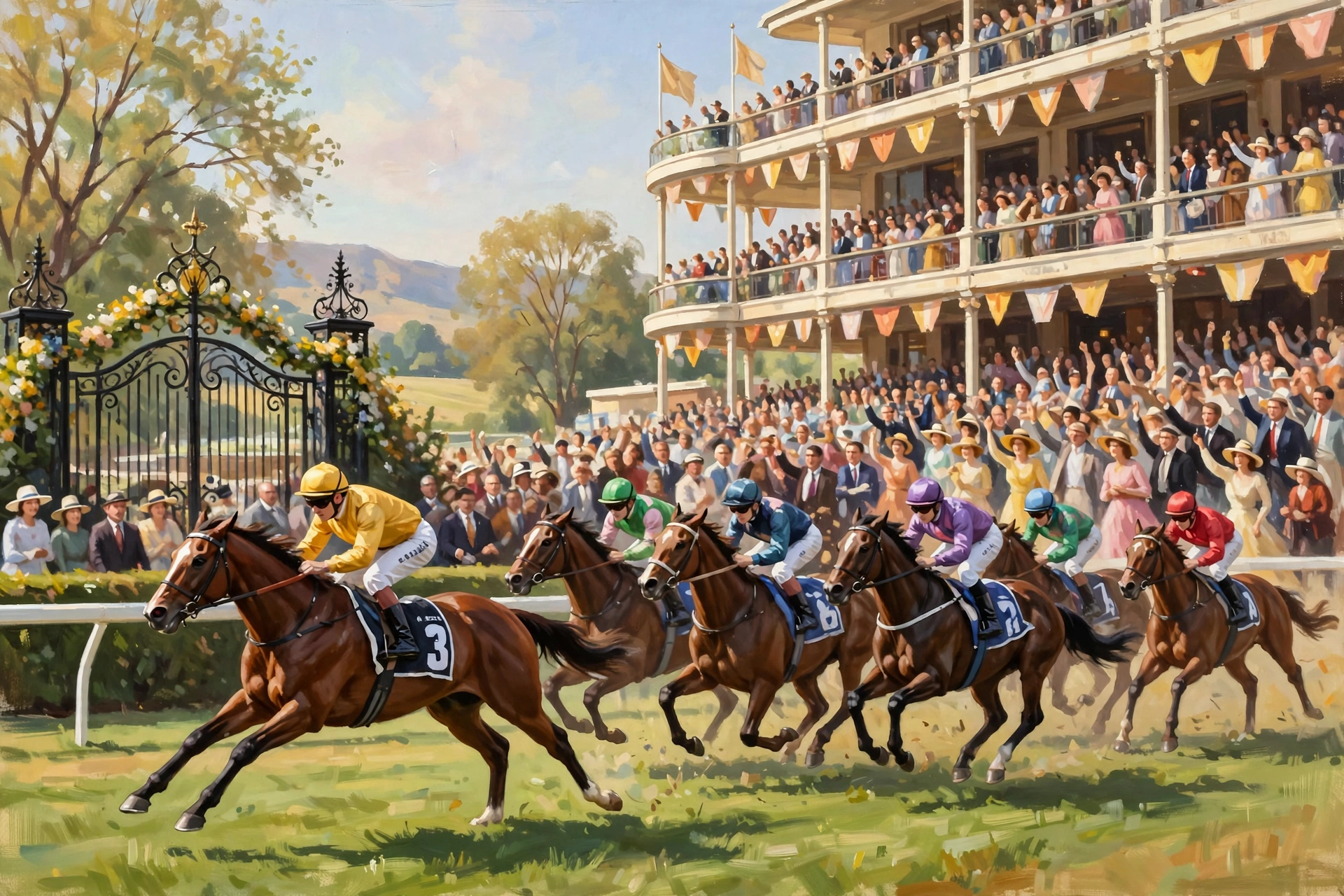
The race itself had all the theater the Cup is famous for. Royal Supremacy tore away early and set a bold pace before fading late, as front-runners so often do when the 3,200 metres start to bite. Point of Law, wearing saddlecloth No. 20, settled, travelled, and produced the decisive run, with Zahrann second, Juja Kibo third, and Sons and Lovers fourth. For Brown, it was a first Melbourne Cup victory — a career-defining moment.
The result in full
Point of Law started as the favorite and justified that status, returning a win dividend of $7.80 and a place dividend of $3.10. The trifecta — Point of Law, Zahrann and Juja Kibo — paid $2,644.50. The total prize pool topped $10 million, with $4.5 million going to the winner’s connections.
Two details make this result more than an ordinary Cup win. The first is the trainer trifecta: Ciaron Maher prepared all three placegetters, something no trainer had ever done in the race’s 166-year history. The second is Point of Law’s backstory: formerly owned by King Charles III, it arrived at Flemington having won the Geelong Cup at its last start — a proven staying performance that marked it out as the horse to beat. Asterix was scratched before the race, reshaping the field. On this occasion, the market got it right: favorites do not always win, but the horse carrying the most public confidence carried the day.
Why does a favorite winning feel so satisfying?
There is a particular pleasure in watching a favorite deliver. When something we predict actually happens, the brain registers a small reward — a sense of order confirmed. A favorite winning feels like the world behaving as it should, at least for three and a half minutes.
But being the favorite is also a psychological burden, not just a betting-market label. The horse, the jockey and the trainer carry the weight of everyone else’s certainty. If a long shot loses, nobody is surprised. If a favorite loses, the questions start immediately: what went wrong, who is to blame, was the hype misplaced? Performing under that scrutiny requires something athletes and performers in every field recognize — the ability to treat the occasion as normal, to run your own race rather than the race the crowd expects.
Ethan Brown’s ride illustrates this well. A first Cup win could easily become a story about nerves — the biggest stage, the biggest crowd, the favorite’s back. Instead, the ride looked patient and composed: settle, wait, strike at the right moment. That composure is not luck; it is what preparation is for. Sports psychology calls this process focus — attending to the next step rather than to the size of the occasion — and it is one of the most reliable predictors of delivering under pressure, whether the arena is a racetrack, an exam hall or a boardroom.
What does Maher’s trifecta tell us about mastery?
The trainer trifecta is the deeper story here. One trainer preparing the first three horses home is not a fluke of a single afternoon; it is the visible tip of a system. Maher’s stable had three horses good enough, fit enough and well-placed enough to dominate a field of the world’s best stayers — the result of years of decisions about which horses to target, how to prepare each one differently, and how to peak multiple athletes on the same day.
Psychology has a name for this kind of long, quiet accumulation: deliberate practice, a concept developed by researcher Anders Ericsson. Expertise is built not by simply repeating a task, but by structured, feedback-driven practice over years. A trifecta does not happen because one trainer had a good day; it happens because the stable’s routines were good enough, for long enough, that three separate preparations all landed on the same afternoon.
There is also a lesson about how we judge success: the public remembers the single dramatic moment, but most success stories are systems stories, and the dramatic moment is only the last visible step of a long staircase nobody televises.
Pause and ask yourself: Think of a time you were the “favorite” — expected to deliver at work, in a family role, or in front of others. Did the expectation sharpen your focus, or did it make you play safe? What would treating the occasion as normal have changed?
Why does the Cup stop a nation?
The Melbourne Cup’s nickname — “the race that stops a nation” — is not just marketing. On the first Tuesday in November, offices pause, schools run sweeps, and people who never follow racing suddenly have opinions about barrier draws. That shared ritual matters psychologically.
Collective rituals create what sociologists call collective effervescence: the energizing feeling of being part of a crowd experiencing the same thing at the same time. Even watching alone on a phone, you know millions of others are watching the same three minutes — and that shared attention turns a race into a social event, bonded by stories retold afterwards and the shared memory of “where were you when Point of Law won?”
Rituals also give us a safe way to experience big emotions: the Cup compresses hope, tension, elation and disappointment into a few minutes, and then it is over. That compression is enjoyable precisely because it is contained, unlike real-life pressures that do not resolve in three minutes.
Why do near-misses linger for punters?
Not everyone watching had a winning ticket, and this is where the Cup’s psychology turns more serious. If you backed Royal Supremacy, you watched your horse lead boldly and then fade — the classic near-miss shape. If your horse ran fourth, you were one place from a payout. If your trifecta had two of the three placegetters but not the third, you were agonisingly close to $2,644.50.
Near-misses are psychologically potent. Research on gambling behavior shows that almost winning activates many of the same reward circuits as winning itself, which is why near-misses can feel strangely encouraging rather than simply disappointing. The mind reads “so close” as “nearly there, try again” — even though each race is independent and the odds reset every time. This is the gambler’s fallacy wearing a friendlier face.
That is why it is worth naming the pattern plainly. Enjoying the Cup as a spectacle, a ritual and a story is one thing. Chasing a near-miss — increasing bets to recover losses, or convincing yourself that a close result means a win is imminent — is where enjoyment quietly turns into harm. The Cup comes once a year; the habits formed around it can last much longer.
Melbourne Cup 2026 psychology: what can the rest of us take from a race?
Strip away the horses, and this Cup offers three transferable lessons. First, pressure is handled by process, not by willpower alone: Brown’s composure came from a plan executed step by step. Second, mastery is a system, not a moment: Maher’s trifecta was years in the making, and judging your own progress by single dramatic days will almost always mislead you. Third, shared rituals matter: the Cup endures because of the togetherness — the pause, the conversation, the story everyone carries into the next day.
For anyone facing their own high-expectation moment — a presentation, a performance, a difficult conversation — the practical version is simple. Prepare the process, not just the outcome: decide your first three steps in advance, so that when the occasion swells around you, you have something concrete to do instead of something enormous to feel. And afterwards, judge yourself on the preparation as well as the outcome.
Frequently asked questions
Who won the 2026 Melbourne Cup? Point of Law, trained by Ciaron Maher and ridden by Ethan Brown, won the 166th Melbourne Cup at Flemington on 3 November 2026. It was Brown’s first Cup win.
What made this Cup historic? Ciaron Maher trained the first three horses home — the first trainer to sweep the trifecta in the race’s 166-year history.
What did Point of Law pay? The win dividend was $7.80 and the place dividend $3.10. The trifecta paid $2,644.50, from a total prize pool of more than $10 million.
Why is the favorite’s win psychologically interesting? Because favorites carry the burden of public expectation: a long shot’s loss surprises nobody, but a favorite’s loss invites blame. Delivering under that scrutiny requires process focus — attending to each step rather than the size of the occasion.
Why do near-misses feel so compelling? Because almost winning activates similar reward responses to winning, making “so close” feel like “nearly there”. But each race is independent.
Try it on our site
Big occasions stir big feelings, whether it is Cup-day excitement or the pressure of being expected to deliver. Try the Focus Room to practice steady concentration under pressure, use the Daily Tracker to notice how high-expectation days affect your mood and sleep, or work through a pressure-filled thought with Challenge the Thought.
Related reading: James Milner Psychology, Election Day Anxiety Psychology.
Key Takeaways
- Point of Law won the 166th Melbourne Cup on 3 November 2026, with Ethan Brown claiming his first Cup win.
- Ciaron Maher made history as the first trainer to sweep the Cup trifecta — a systems story, not a single-day fluke.
- Favorites deliver through process focus: attending to each step rather than to the size of the occasion.
- The Cup endures as a collective ritual — shared attention that bonds a community for three minutes a year.
- Near-misses feel encouraging but carry no information about the next race; watch for chasing behavior.
This article is educational only and is not medical advice. If gambling is affecting your finances, relationships or wellbeing, consider speaking with a licensed professional. In Australia, Gambling Help Online is available on 1800 858 858, and Lifeline on 13 11 14. This article contains no betting tips and is not intended to encourage gambling.