
Oprah Winfrey: The Psychology of Turning Pain Into Purpose
Reviewed by a Psychology Postgraduate (MA)
This profile is an educational look at public behaviour and research, not an assessment of the person. Everything below comes from the public record: interviews, books, speeches, and widely reported events.
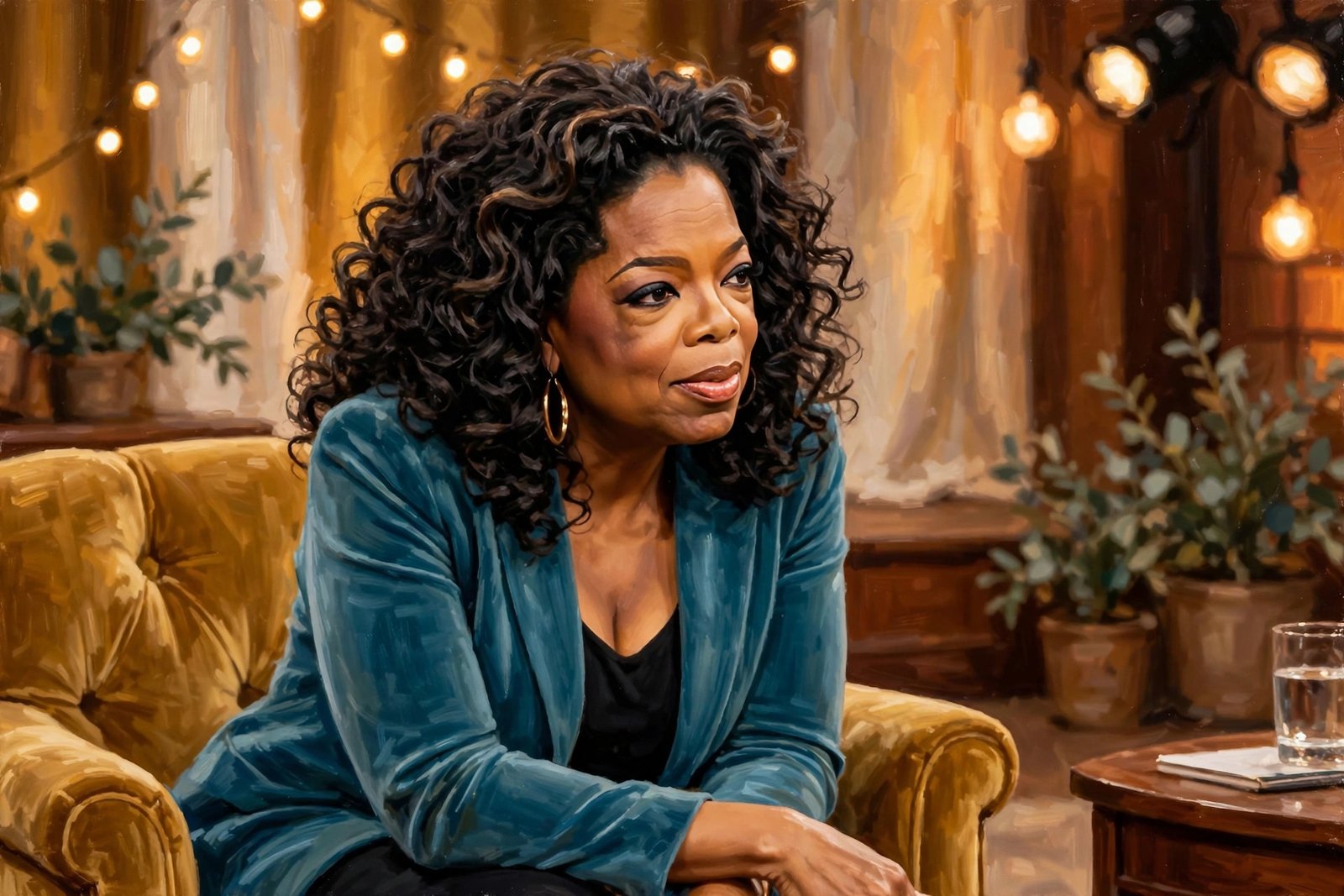
The psychology of Oprah Winfrey is a study in post-traumatic growth: a woman who turned a childhood marked by poverty and abuse into a career built on empathy, listening, and relentless reinvention. Born in rural Mississippi in 1954, she became the host of the highest-rated daytime talk show in American television history, built a media company from nothing, and used her platform to put books, schools, and hard conversations into millions of homes.
The short answer: Oprah Winfrey turned early hardship into lasting influence by doing three things again and again: naming her experiences honestly instead of hiding them, listening to other people with full attention, and reinventing herself whenever a chapter stopped working. Research calls this pattern post-traumatic growth, and her public life offers one of the clearest examples of it.
Post-traumatic growth is the positive psychological change that can follow a struggle with highly challenging life circumstances. It is not about pretending pain was a gift. It is about what some people build after pain: deeper relationships, a clearer sense of purpose, and a stronger appreciation for life. That is the thread running through this profile.
Story: Oprah Winfrey’s Beginning in Rural Mississippi
Oprah Gail Winfrey was born on January 29, 1954, in Kosciusko, Mississippi, to Vernita Lee and Vernon Winfrey. Her first name came from the Bible: Orpah, a figure from the Book of Ruth. Family and friends mispronounced it as Oprah, and the name stuck.
Her earliest years were spent on her grandmother Hattie Mae Lee’s farm in Mississippi. She has described this childhood in public many times: a house without indoor plumbing, dresses sewn from potato sacks, and a grandmother who taught her to read aloud from the Bible before she could properly write. Her grandmother was strict and devout, and young Oprah learned early that words carried weight. She recited Bible verses in church, and people noticed. She was a child who liked being listened to, and she was good at earning the listening.

At six, she moved to Milwaukee to live with her mother. The city years were harder. She has spoken publicly, including on her own show in 1986, about being sexually abused as a child by relatives and family visitors. She has also spoken about running away from home as a young teenager and about the chaos of those years. These are facts she chose to make public herself, and they matter here because she later built a career out of the exact skill her childhood demanded: reading a room and responding with care.
The move that changed everything came when she went to live with her father, Vernon Winfrey, in Nashville, Tennessee. Her father ran a barbershop and set strict rules: schoolwork first, reading every day, no excuses. Under that structure, she flourished. She became an honors student at East Nashville High School, won a full scholarship to Tennessee State University to study communications, and as a teenager won the Miss Black Tennessee pageant. At 17, she was hired to read the news part-time at a local Black-owned radio station, WVOL. She was still a teenager, and she already had a voice people remembered.
At 19, she became a news anchor at WTVF, the CBS affiliate in Nashville. She was the youngest news anchor at the station and its first Black female news anchor. It was built on habits she had practiced since childhood: prepare, show up, speak clearly, and pay attention to people.
Turning Point: When the News Desk Said She Was Too Emotional
The turning point came in Baltimore. In 1976, Winfrey moved to WJZ-TV to co-anchor the evening news. Within a year, she was removed from the anchor desk. The station moved her to the morning show, People Are Talking, alongside host Richard Sher. The message was blunt: she was too emotional for hard news. She cried on air and got involved in the stories.
Most people would have heard that as a verdict. She heard it as information. The morning show let her do the thing the news desk had punished: talk to real people, ask follow-up questions, and let a conversation breathe. The ratings climbed. Audiences responded to the warmth that the newsroom had treated as a flaw. In 1983, a Chicago station, WLS-TV, offered her the job of hosting a struggling morning talk show called AM Chicago. Within months, it went from last place to first. In 1986, the show was renamed The Oprah Winfrey Show and syndicated nationally. It would run for 25 seasons, until 2011, becoming the highest-rated daytime talk show in American television history.
Mindset: What Oprah Winfrey Believes About Growth
If you listen to enough of Oprah Winfrey’s interviews, a consistent mindset emerges. It has four parts, and they are worth naming plainly.
First, she treats intention as a daily practice. Her phrase “live your best life” became a cultural punchline, but the idea underneath it is serious: decide what matters before the day decides for you. She has written about intention-setting for decades. The research term for this is implementation intention: deciding in advance when and how you will act makes follow-through far more likely than vague motivation does.
Second, she treats learning as the real currency. Her book club, her magazine, her interviews with authors and teachers all point the same way. She collects ideas the way other people collect objects. When she interviewed the author of a book that moved her, she did not just promote it. She studied it, quoted it, and came back to it years later. That is a growth mindset in action: the belief that ability can be developed through effort and good teaching, rather than fixed at birth.
Third, she treats vulnerability as a strength, not a confession. She talked about her weight, her childhood, and her mistakes on television. Each time, the audience leaned in rather than punishing her for it. Research on this is clear: when a person in a position of power shares a genuine struggle, listeners tend to trust them more, not less. Her career is a masterclass in that finding.
Fourth, she believes in the power of the question. Her interview style is not built on cleverness. It is built on curiosity. “What did you learn from that?” “How did that feel?” “What do you know for sure?” These are simple questions, asked with total attention. And that brings us to the method, because her method can be learned.
Decisions: The Choices That Built an Empire
Oprah Winfrey’s career is a chain of decisions, and several of them looked risky at the time. The first was the decision to own her work. In 1986, the same year her show went national, she founded Harpo Productions, named by spelling her name backward. Instead of simply being the talent on someone else’s show, she became the owner of the show. That single decision is the difference between a famous employee and a media empire. Ownership meant she controlled the format, the guests, the brand, and the profits. Years later, when she launched her cable network OWN in January 2011, she put her own name and money behind it, and the early ratings were poor.
The second big decision was to change what the show was about. In the late 1980s and early 1990s, daytime talk shows competed to be the loudest and most sensational. Instead, in the mid-1990s, she deliberately shifted toward books, spirituality, and self-improvement, what she called “change-your-life television.” It was a gamble. Sensation was selling, and she bet that depth would sell better over time. She was right: the book club, the “Favorite Things” episodes, and the “What I Know for Sure” columns all came from that decision.
The third decision was to say no to the easiest version of fame. She turned down acting roles that did not interest her, and she chose her film work carefully. Her role as Sofia in The Color Purple in 1985 earned her an Academy Award nomination for Best Supporting Actress. She later produced and starred in Beloved in 1998, a film adaptation of Toni Morrison’s novel that she cared about deeply and that performed poorly at the box office. She has spoken about that failure openly. She did not pretend it did not hurt. She treated it as a lesson in the difference between a project you love and a project the public is ready for.
The fourth decision was about money and meaning together. In 2003, Forbes listed her as a billionaire, the first Black woman to reach that mark. She has said many times that the money was never the point. Her giving supports the claim in one clear way: she funded education, including the Oprah Winfrey Leadership Academy for Girls in South Africa, which opened in January 2007. The decision to build a school rather than simply write checks shows a belief that runs through her whole career. Real help is structural. It is a building, a teacher, a curriculum, a door that stays open.
Method: How Does Oprah Winfrey Listen So Well?
How does Oprah Winfrey listen so well? The answer is that her interview style is a teachable method, not a mysterious gift. Watch any of her best interviews and you will see the same moves, repeated with discipline.
She prepares deeply. Before a guest sits down, she has read the book, watched the film, or studied the life. Guests have said for decades that she knew their work better than they expected. Preparation is what makes her follow-up questions possible. You cannot ask a good second question if you are thinking about your next line.
She asks one question at a time, then stops talking. This sounds simple. It is the hardest skill in conversation. Most people ask a question and then answer it themselves, or stack two questions together so the other person can only answer the easier one. She asks one clean question and waits. Silence is doing work in that pause. Research on active listening shows that speakers share more, and share more honestly, when the listener does not interrupt and does not rush to fill quiet moments.
She mirrors the feeling, not just the facts. When a guest says something painful, she does not move on to the next topic. She names what she heard: “That must have been lonely.” “That sounds like grief.” Researchers call this empathic reflection, and it is the core of person-centered listening. The guest feels understood, the audience feels the moment, and the conversation goes deeper than a list of events ever could.
She uses her own story sparingly and strategically. She does not make the interview about herself, but she will offer a small piece of her own experience at the right moment to show the guest they are not alone. Self-disclosure, used this way, builds trust fast. Used carelessly, it hijacks the conversation. Her discipline is in the timing.
She closes with meaning. Her final questions almost always ask what the experience taught the person, or what they would tell someone going through the same thing. That ending turns a story into a lesson, which is why her interviews stay with people long after the details fade.
Pause and ask yourself: When was the last time someone truly listened to you, without interrupting or offering advice? What did that feel like, and what did you share that you would not have shared otherwise?
What If? The Roads Oprah Winfrey Did Not Take
What if the Baltimore newsroom had kept her on the anchor desk? She might have had a solid, respectable career in broadcast news. She might have been very good at it. But the talk show that made her a cultural force would never have existed, and neither would the book club, the magazine, or the school in South Africa. The demotion that felt like failure was the door to the work she was built for.
What if she had stayed with sensational daytime television in the 1990s? She would probably have made a great deal of money for a few more years. But the audience she built by choosing depth over noise is the reason her influence lasted decades after the show ended. Short-term ratings and long-term trust are often in tension, and she chose trust.
What if she had never started Harpo Productions and simply collected a salary? She would have been wealthy and famous. She would not have owned her work, and she would not have had the leverage to launch a network, a magazine, and a school on her own terms. Ownership is the decision that turned a career into an institution.
What Most People Lack: The Patience for Slow Growth
What most people lack is not talent. It is patience for slow growth. Oprah Winfrey spent years in local radio and television before anyone outside Nashville or Baltimore knew her name. She spent a decade building a daytime show before it became a cultural institution. She spent years turning OWN around after a rocky launch. None of this was fast. All of it compounded.
Researchers call the ability to keep working toward a distant goal without immediate reward delayed gratification, and it is one of the strongest predictors of long-term success. The famous marshmallow studies of the 1960s and 1970s found that children who could wait for a larger reward tended to do better in school and in life years later. Later research has added nuance: a child’s ability to wait depends heavily on whether their environment feels reliable. Her father’s household gave her that reliability, and that reliability made patience possible.
Most people also lack what she has in abundance: a willingness to be a beginner in public. She started a cable network at 57, when she could have retired comfortably. She learned new skills on camera, in front of critics who were waiting for her to fail. That willingness to look clumsy while learning is rare, and it is the price of every reinvention. People who protect their image never get to grow past it.
What Successful People Do Differently: They Build Systems, Not Just Moments
What do successful people do differently? In Oprah Winfrey’s case, the answer is systems. She did not just have good days. She built structures that made good days repeatable.
She built a daily routine around reading, exercise, and reflection, and she has protected it for decades. She built a team she trusted and kept for years, including her longtime partner Stedman Graham and her close friend Gayle King, who has been her friend since their early twenties when they worked together at WJZ in Baltimore. She built rituals around her work: the book club’s regular rhythm, the magazine’s monthly columns, the show’s seasonal arcs. She built feedback loops: she watched the audience, read the letters, and adjusted.
Research on expert performance supports this picture. Sustained high achievement rarely comes from bursts of inspiration. It comes from deliberate practice, regular routines, and honest feedback over many years. The show looked effortless on screen because the system behind it was disciplined.
There is also a quieter difference. Successful people in her mold treat reputation as an asset to protect, not a prize to spend. She has been careful about which products and people she endorses, and when she has made mistakes in that area, the cost has been visible.
Success Mindset: How Oprah Winfrey Thinks About Winning
Oprah Winfrey’s success mindset is not about positive thinking in the shallow sense. She has never claimed that wishing makes things happen. Her version is closer to what researchers call self-efficacy: the belief, built from evidence, that your actions can change your outcomes. Self-efficacy is not confidence you are born with. It is confidence you earn by doing hard things and surviving them.
Her public statements return to a few core ideas. One is that luck is preparation meeting opportunity. She has used that phrase for years, and it captures the research well: people who prepare broadly and stay alert to openings do seem luckier, because they are ready when a door opens. Another is that failure is information, not identity. When Beloved flopped, when OWN stumbled, when the book club faced scandal, she did not describe herself as a failure. She described what had happened and what she would do next. That separation between event and identity is one of the most protective habits in psychology. It is the difference between “I failed” and “I am a failure,” and it changes everything about recovery.
A third idea is service as a compass. She has said many times that the question guiding her choices is not “what will make me famous” but “how can I be of service?” That sounds like a slogan, and it is also a practical decision tool. When the goal is service, the next step is usually clearer than when the goal is status, which depends on other people’s opinions.
Failures: What Went Wrong in Public
No honest profile of Oprah Winfrey can skip the failures, because they are part of the psychology. Her public life includes several visible setbacks, and the way she handled them is as instructive as the successes.
The first was the Baltimore demotion, already described. It stung, and she has said so. But it redirected her toward the work that made her famous.
The second was Beloved, the 1998 film she produced and starred in, based on Toni Morrison’s novel. She cared deeply about the book and the story, and the film failed at the box office. She has described a low period afterward, questioning her judgment. She recovered by returning to the work she knew best: the show, the audience, and the books. The lesson she has drawn in public is about the difference between loving a project and timing it well.
The third was the James Frey affair in 2006. Her book club had selected his memoir, A Million Little Pieces, and it became a bestseller. When reporting revealed that large parts of the book were fabricated, she initially defended Frey on air. Then she reversed course and confronted him in a tense live interview, apologizing to viewers for having defended a book that was not true. The reversal was awkward and public, and it is still discussed as a case study in how public figures correct mistakes. The psychology of it is straightforward: admitting error quickly and visibly is painful in the moment and protective in the long run. Audiences forgive mistakes more readily than they forgive cover-ups.
The fourth was the lawsuit over her 1996 show segment on mad cow disease, when Texas cattle ranchers sued her for disparaging their industry. She won the case in 1998, but the trial cost time, money, and energy, and it taught her about the power and the risk of a platform that large. She became more careful about claims made on air, and that caution shaped the show’s later years.
The fifth was the trouble at her girls’ school in South Africa. In 2007, the same year the academy opened, a staff member was charged with abusing students. Winfrey responded publicly, apologized to the families, and tightened oversight at the school. It was a painful episode for an institution built in her name, and it is a reminder that good intentions do not guarantee good outcomes. Systems need checking, even when the mission is generous.
Relationships: The People Around Oprah Winfrey
Oprah Winfrey’s relationships are a study in long-term loyalty. Her friendship with Gayle King began in the 1970s, when they worked together in Baltimore, and it has lasted for five decades. Her partnership with Stedman Graham began in 1986, the same year her show went national, and they have been together ever since, choosing not to marry. Her closest mentor was the poet and author Maya Angelou, who became a mother figure to her and appeared on her show many times. Angelou’s death in 2014 was a public grief for Winfrey, who spoke about it openly and at length.
What is striking is their stability. Research on adult wellbeing points the same way: the quality of long-term relationships is one of the strongest predictors of happiness and health across a lifetime. The Harvard Study of Adult Development, which has followed people for more than 80 years, found that close relationships, more than money or fame, keep people happy and healthy. The show ended. The friendships did not.
Dark Side: The Criticisms That Stuck
Every public figure of this scale attracts criticism, and an honest profile must include it. The criticisms of Oprah Winfrey fall into three groups.
The first is about the platform. Critics have argued that her show sometimes gave a large stage to unproven health claims, including guests promoting alternative treatments and anti-vaccine views. The most discussed example is her long support for Dr. Mehmet Oz, whose show she helped launch and whose medical advice later drew sharp criticism from doctors. Her defenders note that she also hosted mainstream doctors and scientists. The criticism stands anyway: a platform that large shapes what millions of people believe about their health, and with that reach comes a duty of care.
The second is about consumerism. The “Favorite Things” episodes, in which she gave the studio audience expensive gifts, were joyful television and, critics argued, a celebration of spending that sat oddly beside her messages about gratitude and inner life. She has defended the episodes as generosity. Both things can be true, and the tension is worth noticing rather than resolving.
The third is about the limits of personal responsibility as a message. Her philosophy emphasizes individual choice, mindset, and effort. Critics have argued that this framing can underplay the structural barriers that shape people’s lives: poverty, discrimination, and unequal access to education and health care. She has, to her credit, funded schools and scholarships that address those barriers directly. But the critique of the message itself remains valid, and it is a useful reminder for readers. Mindset matters enormously, and it is not the whole story. A person’s psychology and a person’s circumstances both shape their life, and honest advice has to hold both.
None of this diminishes the achievements. It completes the picture. A profile that only praises is not a profile. It is an advertisement.
Second Act: Oprah Winfrey After the Talk Show
When The Oprah Winfrey Show ended in May 2011 after 25 seasons, many people assumed she would retire. She did the opposite. She launched OWN, the Oprah Winfrey Network, in January 2011, and spent the next years learning the cable business in public. The early ratings were weak, the press was skeptical, and she has described the period as one of the hardest of her professional life. She steadied the network with a partnership with filmmaker Tyler Perry, interview specials, and scripted dramas. OWN became profitable, and it remains the home of much of her work.
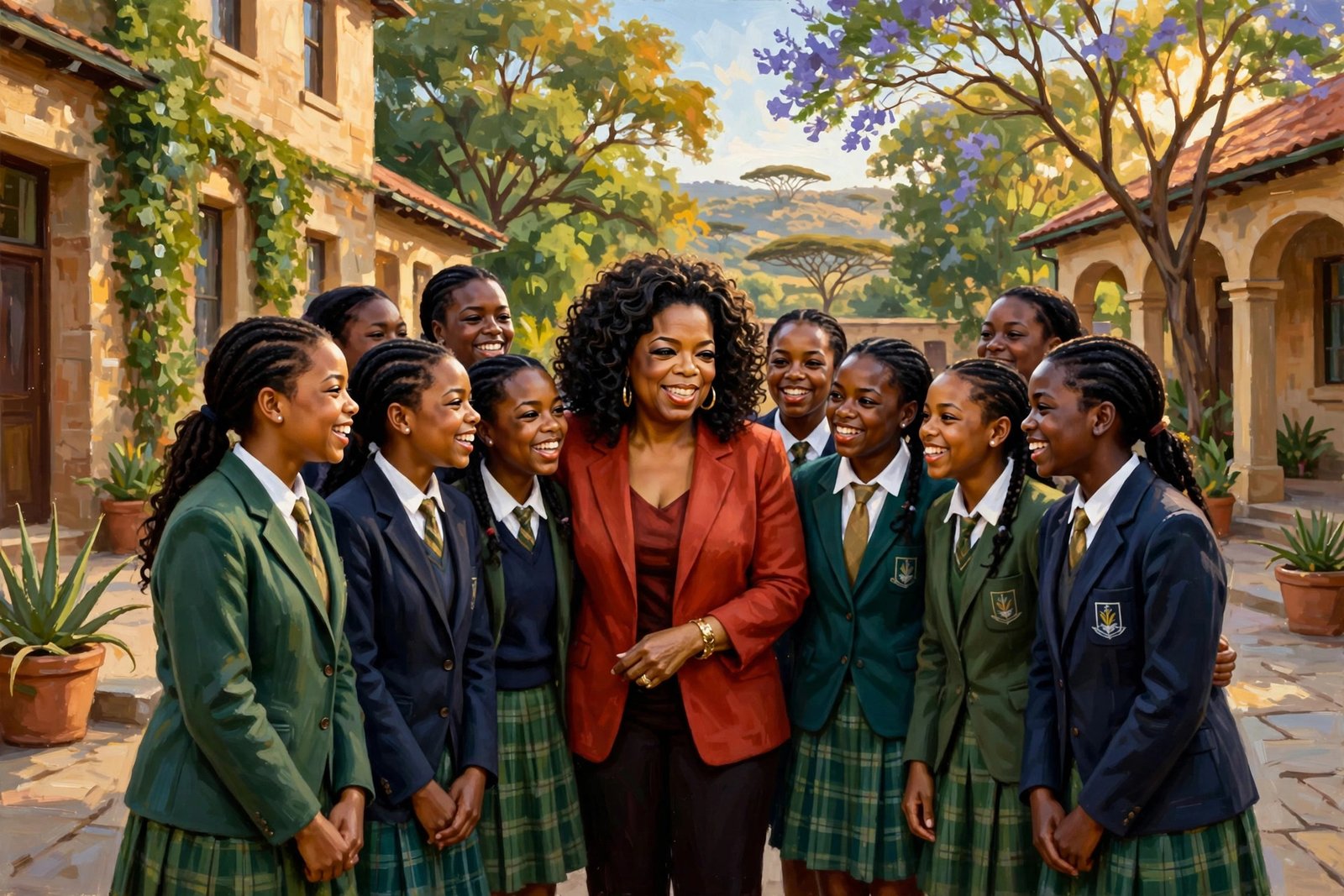
Her second act has been defined by interviews that became news themselves. In January 2018, her Cecil B. DeMille Award speech at the Golden Globes, in which she spoke about press freedom, about the power of speaking truth, and about a future in which nobody would have to say “me too” again, was watched and quoted around the world. In March 2021, her interview with the Duke and Duchess of Sussex, Harry and Meghan, drew about 17 million viewers in the United States and dominated global news for weeks. In 2023, she co-authored Build the Life You Want with the social scientist Arthur C. Brooks, a book about happiness research that returned her to her favorite role: the student who shares what she is learning.
The second act also includes her public reckoning with weight and health. In late 2023, she told People magazine that she uses a weight-loss medication as one part of managing her weight, after decades of public struggles with dieting that played out on television and in magazines. She framed it as a personal health decision, not a moral one, and spoke about the relief of letting go of shame around the subject. For readers, the useful lesson is the shift from self-blame to self-care.
Researchers have a name for the pattern of her second act: generativity. The term, from Erik Erikson, describes the stage of adult life in which people focus on guiding the next generation and contributing to something larger than themselves. Her school, her mentoring of young women, her book club, and her philanthropy all fit that description. A second act built on generativity tends to be more satisfying than one built on repeating past success, and hers is a clear example.
Fun Facts: Things You May Not Know About Oprah Winfrey
- Her birth name was Orpah, from the Book of Ruth. The name was mispronounced so often that Oprah became the name everyone used.
- She was the first Black woman to anchor the evening news in Nashville, at WTVF, when she was 19 years old.
- She ran the Marine Corps Marathon in Washington, D.C., in 1994, finishing in 4 hours and 29 minutes. She has said the training taught her that the body can do far more than the mind expects.
- Her book club, launched in 1996, turned unknown novels into bestsellers overnight. Her first pick was The Deep End of the Ocean by Jacquelyn Mitchard.
- She received the Presidential Medal of Freedom from President Barack Obama in November 2013.
- She has kept journals since she was a teenager, a habit she credits with helping her process her life and make decisions.
- Her 2021 interview with Harry and Meghan was watched by about 17 million people in the United States on its first night.
What the Research Says About Oprah Winfrey’s Growth
What does the research say about Oprah Winfrey’s growth? The research does not study one person, but it studies the patterns her public life displays, and those patterns are well documented.
Post-traumatic growth is real, and it is not rare. Research by Richard Tedeschi and Lawrence Calhoun, who developed the concept in the 1990s, found that many people who face serious adversity report positive changes afterward: stronger relationships, new possibilities, personal strength, spiritual change, and a greater appreciation for life. Their research also stresses that growth and distress can exist at the same time. A person can be hurting and growing simultaneously. Her public story fits that nuance. She has never described her childhood as a blessing. She has described what she built after it.
Expressive writing helps. James Pennebaker’s research, beginning in the 1980s, showed that writing about emotional experiences for even 15 to 20 minutes a day can improve mood, immune function, and long-term wellbeing. Her lifelong journaling habit is a real-world version of that finding. You do not need a publisher. You need a notebook and honesty.
Social support predicts recovery. Decades of research on resilience find that the strongest protective factor after hardship is not toughness but connection. Her father’s structured household, her friendship with Gayle King, and her mentorship from Maya Angelou are all examples of that factor in action.
Purpose protects health. A 2019 study published in JAMA Network Open found that adults with a stronger sense of purpose had lower mortality risk over the following years. Purpose is a sense that your life has direction and that your actions matter to others. Her life after the show, centered on education and mentoring, is a visible example of purpose as a daily practice.
Listening is a skill, and it can be trained. Research on active listening and motivational interviewing shows that reflective listening, asking open questions, and resisting the urge to give advice all improve outcomes in conversations, from therapy to management. Her interview method is an applied version of these findings, and it can be practiced by anyone willing to slow down and pay attention.
Activity: Which Oprah Habit Matches Your Growth Style?
Answer honestly, then open the answer to see what the psychology says. There are no wrong answers — each style is a strength, and each one has a next step.
Question 1: When something goes wrong, what is your first instinct?
- A. I write about it or talk it through with someone I trust.
- B. I look for the lesson and make a plan.
- C. I reach out and help someone else who is struggling.
- D. I sit with it quietly until I understand how I feel.
Reveal the answer
Every option matches a real Oprah Winfrey habit. A is expressive writing, the journaling habit she has kept since her teens. B is the growth mindset in action, treating failure as information. C is generativity, turning pain into service. D is reflection, the pause before the next move. Whichever you picked, that is your natural starting point. Growth works best when it starts where you already are.
Question 2: In a conversation, what do you do most often?
- A. Ask follow-up questions and listen to the answers.
- B. Share a story of my own so the other person feels less alone.
- C. Offer advice or a practical solution.
- D. Reflect back the feeling I heard, like “that sounds lonely.”
Reveal the answer
A and D are the core of active listening, the skill behind her interview method. B is self-disclosure, powerful when used sparingly and at the right moment. C is the most common habit and the least helpful in emotional conversations: advice before understanding usually feels like dismissal.
Question 3: What does reinvention mean to you?
- A. Changing direction when the old one stops working.
- B. Learning a new skill in public, even if I look clumsy.
- C. Keeping the same values but finding a new way to live them.
- D. Letting go of an identity that no longer fits.
Reveal the answer
All four are real forms of reinvention, and her career shows all of them: leaving news for talk, launching a network at 57, keeping service at the center while the format changed, and letting go of being only a talk-show host. The hardest one for most people is D, because identity feels fixed. Research on narrative identity says it is not. The story you tell about yourself can be revised, and revising it is one of the most powerful changes a person can make.
Question 4: What keeps you going when progress is slow?
- A. A daily routine that I protect.
- B. A person who believes in me.
- C. A clear sense of purpose.
- D. Remembering how far I have already come.
Reveal the answer
All four are evidence-based supports for persistence. A is the power of systems over motivation. B is social support, the strongest predictor of resilience after hardship. C is purpose, which research links to better health and longer life. D is self-efficacy, confidence built from your own track record. If one of these is missing right now, that is your next step.
Question 5: What would you like to be known for?
- A. How I listened to people.
- B. What I built that outlasted me.
- C. How I kept growing, even late in life.
- D. How I helped people believe in themselves.
Reveal the answer
There is no scoring here — this question is the point of the whole profile. A legacy is not built in one dramatic moment but from small habits repeated for decades: listening well, owning your work, learning in public, and using what you have to open doors for others. Pick the answer that stirs something in you, and ask what one small step toward it looks like this week.
Frequently Asked Questions About Oprah Winfrey and Post-Traumatic Growth
What is post-traumatic growth?
Post-traumatic growth is the positive psychological change that can follow a struggle with highly challenging life circumstances, including deeper relationships, a clearer sense of purpose, and greater personal strength. It does not mean the pain was good. It means growth happened alongside it.
Did Oprah Winfrey really grow up in poverty?
Yes. She has described her early childhood in rural Mississippi in public many times: a farmhouse without indoor plumbing, a grandmother who raised her, and dresses made from potato sacks. She later lived with her mother in Milwaukee and then with her father in Nashville.
How long did The Oprah Winfrey Show run?
The show ran for 25 seasons, from 1986 to 2011, and became the highest-rated daytime talk show in American television history.
When did the Oprah Winfrey Leadership Academy for Girls open?
The academy in South Africa opened in January 2007. It was built to give disadvantaged girls a high-quality education, and it remains one of her best-known philanthropic projects.
Can anyone practice the listening skills she uses?
Yes. Her interview method is built from teachable habits: prepare before a conversation, ask one question at a time, wait through silence, reflect the feeling you heard, and close by asking what the person learned. Research on active listening supports each of these steps.
Try it on our site
If this profile stirred something in you, try one of these free, anonymous tools. They take a few minutes and turn reading into practice.
- Challenge the Thought — a guided CBT thought record for reframing a painful belief, the way she reframed “too emotional” into a strength.
- Name Your Feeling — build the emotional vocabulary that makes honest conversations possible.
- Confidence Builder — small daily steps for building self-efficacy, the confidence that comes from evidence.
- Social Confidence — practice the listening and conversation skills at the heart of her interview method.
- Relaxation Techniques — calm your body before a hard conversation, so you can actually listen.
Related reading: LeBron James and the Psychology of Longevity, Beyoncé and the Psychology of the Alter Ego, Steve Jobs and the Psychology of Obsession.
Key Takeaways
- Post-traumatic growth is real: some people build deeper relationships, clearer purpose, and greater strength after hardship.
- A trait that fails in one setting can be your greatest strength in another. Her emotional openness was a liability in a newsroom and the foundation of a talk-show empire. Change rooms before you change yourself.
- Listening is a teachable method: prepare, ask one question, wait through the silence, reflect the feeling, and close with meaning.
- Ownership changes everything. Founding Harpo Productions in 1986 turned a famous career into an institution she controlled.
- Failure is information, not identity. The demotion, the film flop, the book club scandal, and the lawsuit all taught her something, and none of them ended the story.
- Long-term relationships are the strongest predictor of a good life. Her fifty-year friendship with Gayle King and her decades with Stedman Graham matter as much as any award.
- Reinvention has no age limit. She launched a network at 57 and co-authored a book on happiness in her late sixties.
- Start where you are. Pick one habit from this profile — a journal, a better question, a daily routine — and practice it this week.
This article is for education only and is not a substitute for professional advice, diagnosis, or treatment. If you are struggling, please consider speaking with a licensed mental health professional. If you are in crisis, call or text 988 in the United States to reach the Suicide and Crisis Lifeline, or contact a crisis line in your country.