
Reviewed by a Psychology Postgraduate (MA)
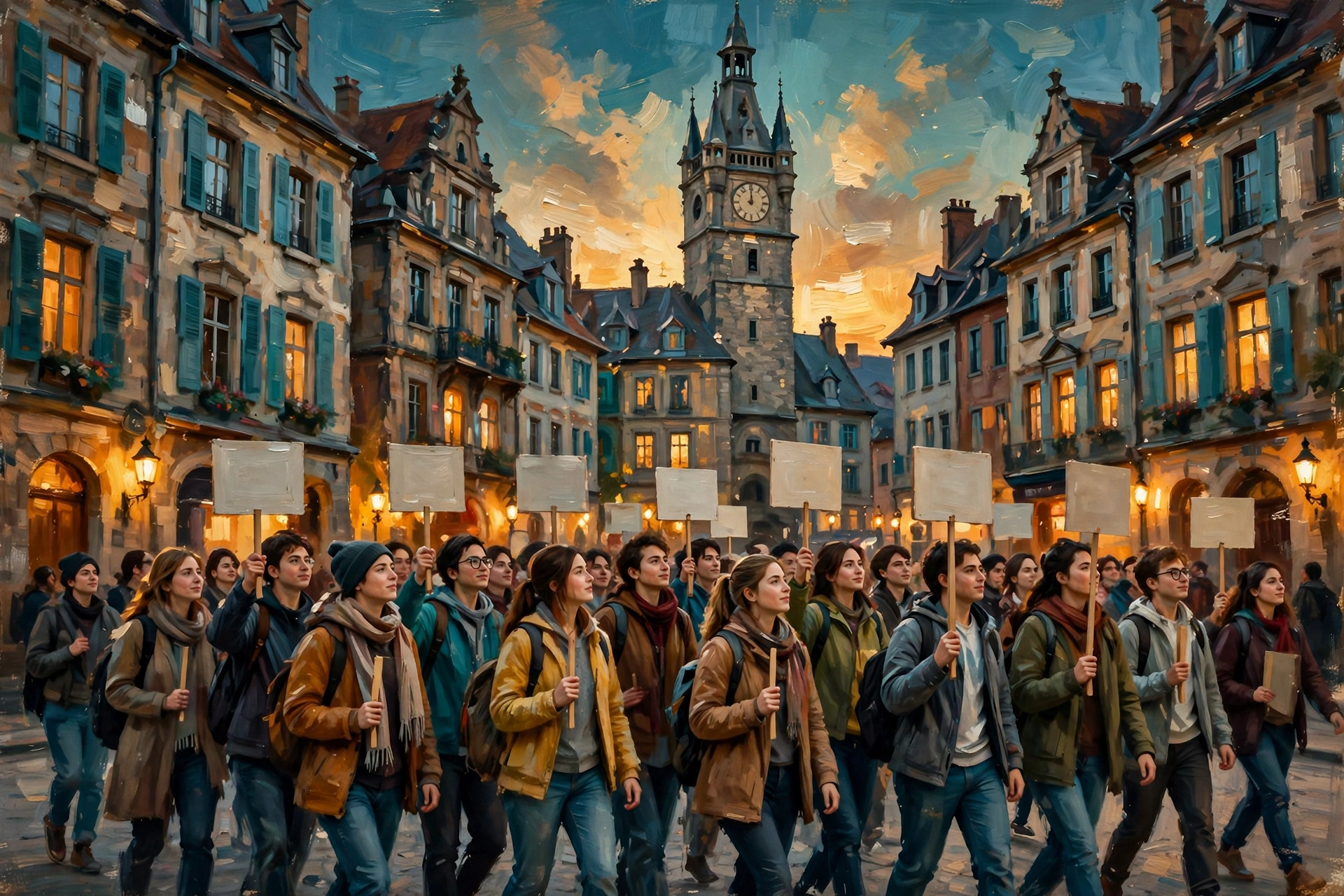
On Friday 20 November 2026, thousands of students rallied across Europe, from Parliament Square in London to the Colosseum in Rome and dozens of other cities, protesting the cost of living, war, and education cuts, according to ABC News on 21 November 2026. Student protest psychology helps explain why this moment feels so charged: rents, food, and tuition have risen while many young adults feel their future is getting harder to afford.
In short, when young adults face rising rents, food prices, and tuition while their future feels less secure than promised, protest becomes more than a political act. It becomes a way to cope, to belong, and to reclaim control when money stress feels overwhelming and effort alone no longer seems enough.
The rallies followed a wave of youth protest in autumn 2026, including planned Gen Z protests in 21 German cities on 31 October, all naming the same pressures: rooms, food, and fees rising faster than student incomes.
Picture a student in London, doing quick maths in a supermarket aisle before a lecture, putting back the coffee and keeping the pasta. These small, repeated choices are the everyday moments behind the headlines.
Why are students protesting across Europe now?
Students are protesting now because several pressures have landed at once: rents and food prices have stayed high, education costs have risen, and many young adults feel the future is narrowing rather than opening up.
The 20 November rallies were not about one policy in one country. They were about a shared experience: everyday life has risen faster than student incomes, and the gap between what young people were told to expect and what they can afford has grown wider. When that gap shows up in a rent bill or a food shop, frustration can turn into collective action. Autumn sharpens it, as new terms, new leases, and new costs arrive all at once.
What is cost of living anxiety in students?
Cost of living anxiety is the persistent worry that everyday expenses will outrun income, leaving too little for basics, for emergencies, or for the future.
For students, it is rarely about one bill. Rent takes a large share of a loan or part-time wage, and food, transport, books, and phone bills take most of the rest. Little is left for a broken laptop or a sudden rent rise, so the mind stays on alert, a chronic stress that never fully resolves.
Money stress also affects attention, sleep, and learning. A student recalculating a budget during a lecture is partly elsewhere, and worry at night means poorer concentration the next day. Over time, financial stress makes study harder, and struggling makes the future feel less secure. Research on cost of living anxiety in New Zealand describes a similar pattern, where rising prices shrink a sense of safety and control.
Feeling anxious about money as a student is not poor planning or personal failure. It is a normal response to a difficult situation, and naming it changes the question from “What is wrong with me?” to “What is happening around me, and what can I do?”
Why does protest feel like a coping response?
Protest can feel like a coping response because it turns private worry into shared action, giving people connection, purpose, and a sense that their voice counts.
When money stress feels private, it can feel isolating, as if everyone else is managing fine. Joining a march changes that in an afternoon. The worry becomes visible and shared, named out loud by people carrying the same placards and describing the same pressures. That can reduce shame and loneliness, even if it does not change a rent bill the next day.
Researchers call this collective efficacy, the shared belief that a group can make a difference together even when individuals feel powerless alone. Thousands of students in Parliament Square, in Rome, and across Europe are harder to ignore than one student writing to a landlord. Research on moral conviction adds that when people see an issue as right and wrong, they are more willing to act, even at a cost.
Pause and ask yourself: When money feels tight, do you carry the worry alone, or talk about it with someone who understands? What would change if you named it out loud, even once, to a friend or a tutor?
What is relative deprivation, and why does it matter in student protest psychology?
Relative deprivation is the feeling of being worse off than you expected, or worse off than a group you compare yourself with, even when your absolute situation has not changed much.
This concept, developed by researchers including Walter Runciman, helps explain anger even in wealthy countries. The comparison that matters is often with the generation before, or with the future young people were promised. Many students heard that a degree would lead to a stable job and a home of their own. When rents rise and ownership feels distant, the gap can feel like a broken deal. Social media sharpens it, showing peers travelling while older generations bought homes far more cheaply relative to incomes.
How does belonging shape youth protest?
Belonging shapes youth protest because marching together creates identity, friendship, and solidarity, and that shared identity can sustain action long after the first rally ends.
For many students, a protest is also social. They go with friends, meet people from other courses, and find a community that shares their values. Loneliness is common in student life, so a movement that offers belonging and purpose can feel like an anchor. Researchers who study social identity note that people act as group members, not only as individuals. Earlier writing on Gen Z protest psychology explores this pull, how identity and a shared sense of injustice can turn frustration into collective momentum.
What actually helps when money stress feels out of control?
What helps most is a mix of practical steps, honest conversation, and small actions that restore control, rather than a single fix.
First, separate what you can influence from what you cannot. You cannot lower national rents alone, but you can review one part of your budget or ask what support your university offers. Second, talk about it. A tutor, student union adviser, or wellbeing service may know about a hardship fund or payment plan. In the UK, university wellbeing services are a natural first step, and Samaritans can be reached on 116 123 if distress feels overwhelming.
Third, protect the basics money stress erodes: sleep, food, movement, and connection. Skipping meals or cutting sleep for extra shifts can make anxiety worse. A walk, a shared meal, or a regular bedtime will not fix a rent rise, but it can steady the mind. The anxiety around the UK autumn budget shows the same need for clear information and someone to talk to. Finally, treat collective action as part of coping, paired with rest. March, organize, then recover, rather than running on empty.
Five steps to try this week:
- List your three biggest costs and ask your university or student union what support exists for each.
- Pick one small budget change, such as a weekly food cap, instead of overhauling everything.
- Tell one trusted person how money feels right now, without apologizing for it.
- Protect one daily anchor: a regular meal, a walk, or a fixed bedtime.
- If protest matters to you, go with friends and keep one evening free to recover.
Frequently asked questions
Why are students protesting in Europe in November 2026?
Students rallied across Europe on 20 November 2026 over the cost of living, war, and education cuts, with large gatherings in London and Rome. Rising rents, food prices, and tuition, plus shrinking opportunities, brought many young people onto the streets.
Is protest a healthy way to cope with money stress?
It can be, when freely chosen and balanced with rest. Protest can reduce isolation, build belonging, and restore agency. It helps most alongside practical support, honest conversation, and care for sleep, food, and connection.
What is generational fairness?
Generational fairness is the sense that each generation deserves a fair chance at stability and opportunity. When young adults face higher costs and fewer chances than the generation before, relative deprivation can make collective action feel necessary.
What should I do if money worry is affecting my studies?
Speak to your university wellbeing service, student union, or tutor about support. Tell someone you trust how it feels, protect sleep and meals where you can, and seek urgent help, including Samaritans on 116 123 in the UK, if distress feels overwhelming.
Try it on our site
If money stress is weighing on you, you do not have to carry it alone. Try one of these free tools, with no signup needed:
- Burnout and Money-Stress Check — a short check-in on how money pressure and exhaustion are showing up for you.
- Mind Check-Ins — quick questionnaires for mood, anxiety, stress, and sleep, with practical next steps.
- Wellness Tools hub — relaxation exercises, thought tools, and brain games to steady your mind.
Related reading: Inflation anxiety in Australia and Stress in America 2026.
Key Takeaways
- On 20 November 2026, thousands of students rallied across Europe, including in London and Rome, over the cost of living, war, and education cuts.
- Cost of living anxiety is often chronic stress from ongoing pressure, and it can affect sleep, attention, and learning.
- Relative deprivation, moral conviction, and collective efficacy help explain why protest can feel like coping, not only politics.
- Belonging matters: marching together can reduce isolation and build shared identity.
- What helps is practical steps, honest conversation, support, and rest, alongside sustainable collective action.
This article is for education only and is not therapy, diagnosis, or medical advice. If you are struggling, consider speaking to a licensed professional, your university wellbeing service, or a trusted support line in your country.