
Vinted and eBay Could Be Banned for Under-16s in the UK: The Psychology of Keeping Children Safe Online
Reviewed by a Psychology Postgraduate (MA)
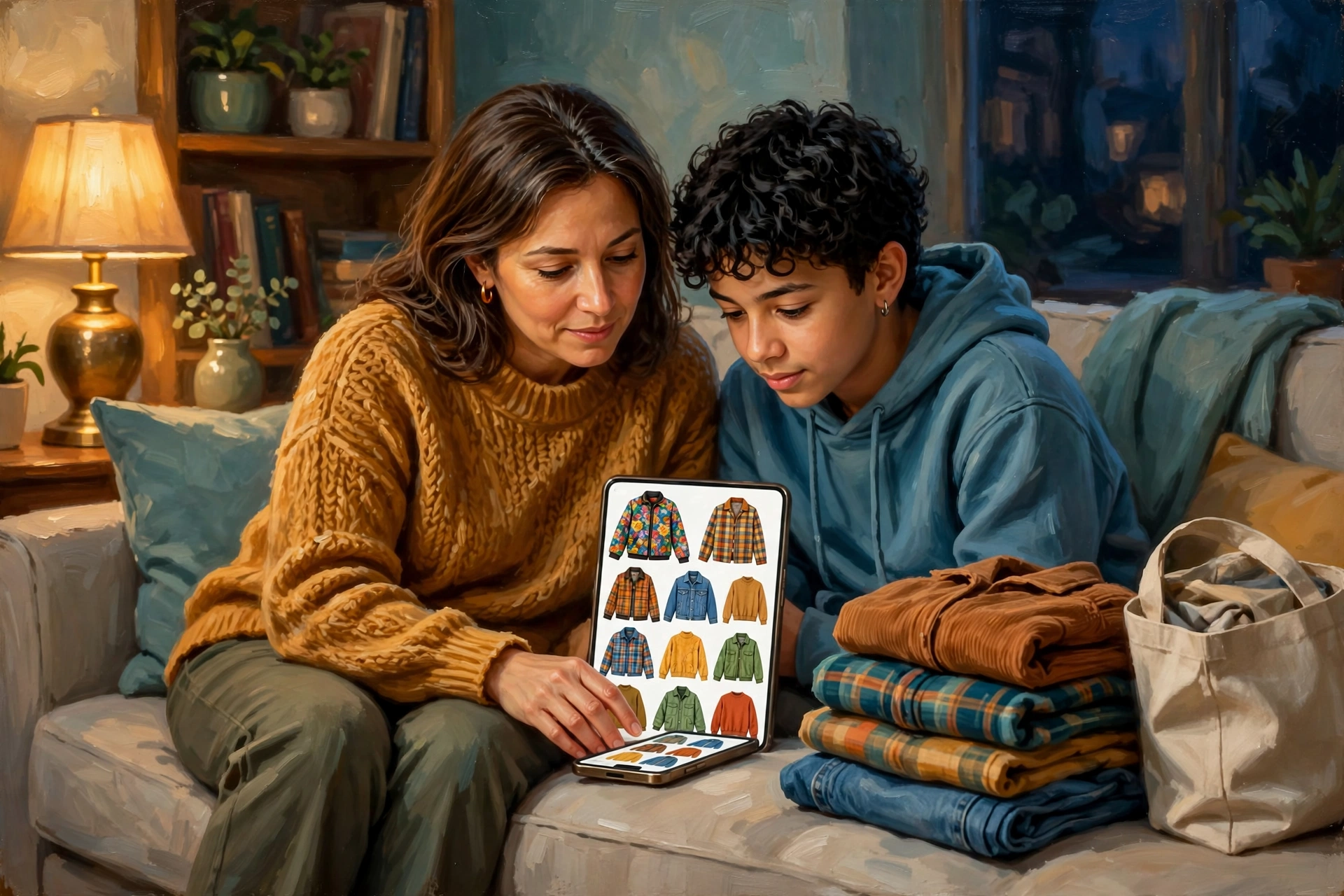
Vinted ebay under 16 ban psychology starts with a surprise: the apps in the firing line are not the ones parents usually worry about. On Sunday 8 November 2026, Culture Secretary Lisa Nandy told the BBC’s Sunday with Laura Kuenssberg programme that the government is “looking seriously” at banning children under 16 from Vinted and eBay, widening a social media ban that was originally aimed at platforms such as Instagram, TikTok and Snapchat. The short answer is this: ministers are not worried about teenagers buying second-hand clothes — they are worried about the messaging features built into those marketplaces, which let strangers start private conversations with children, and about a generation of parents who check their child’s social media but never think to check their shopping apps.
The facts are fresh and specific. The Times reported that the government is preparing to extend the planned under-16 ban to online marketplaces, with eBay, Vinted, Depop and Facebook Marketplace all under consideration. The stated reason is the direct messaging on these services: strangers can use it to contact children, and the Children’s Society, a UK child protection charity, has said some users ask child users for inappropriate photos in exchange for money. Both Vinted and eBay already state on their own websites that users must be at least 18 — eBay because using the site involves entering into a contract — but the rules are barely enforced. Ofcom research suggests as many as 19 percent of children aged eight to 14 use eBay at least once a month, and 15 percent use Vinted monthly. Vinted alone has around 17 million users in the UK.
The wider ban behind this story was announced in June 2026, when the government said children under 16 would be barred from 10 of the biggest social media platforms. The law is planned to pass through Parliament by the end of this year, with the restrictions coming into force in March 2027. YouTube will also be covered, and a complete list of the platforms affected is expected to be published before Christmas. Nandy’s comments confirm that the list is still being drawn up — and that shopping apps, long treated as harmless, are now firmly on it.
Why are messaging features the real danger?
Why are messaging features the real danger? Because grooming rarely starts with something that looks dangerous — it starts with something that looks friendly, ordinary and easy to answer.
Online grooming is the process by which an adult builds trust with a child online in order to exploit them, and its first step is almost always contact: a message, a compliment, a question. That is why the messaging button matters more than the marketplace itself. A child browsing Vinted for a jacket is not in danger from the jacket. The danger is the seller who messages “love your style, want to chat?” and the conversation that follows. Each reply feels small and harmless. Psychologists call this the foot-in-the-door effect: once someone agrees to a tiny request, agreeing to a slightly bigger one feels natural, and the boundary moves a little further each time until it has moved a long way.
Marketplaces make this easier in a specific way. On a social media app, most parents already know the risks and many have had the conversation. On a shopping app, the context is different: the child thinks they are shopping, the parent thinks they are shopping, and nobody is on guard. Researchers call this context collapse — the same feature behaves differently depending on where it sits, and a messaging tool that feels safe inside a shop feels very different once a stranger is using it to ask personal questions. The Children’s Society’s finding that some users offer children money for inappropriate photos is the sharp end of that dynamic: money is the oldest lure in the book, and on a marketplace, where money is already the point, the offer can look almost normal.
Why are teenagers especially open to stranger contact online?
Why are teenagers especially open to stranger contact online? Because the teenage brain is wired to care enormously about what other people think of them, and to be less good at spotting when that attention is not what it seems.
Adolescence is a period of heightened reward sensitivity. The brain’s reward system, driven by dopamine, reacts far more strongly to social rewards — likes, compliments, being noticed — in teenagers than in adults, while the prefrontal cortex, the part of the brain that weighs consequences and hits the brakes, is still developing and will not fully mature until the mid-twenties. That combination is not a flaw; it is how young people learn to navigate the social world. But it means a flattering message from a stranger lands harder on a 13-year-old than on a 30-year-old, and the instinct to pause and ask “who is this person, really?” is weaker at exactly the age when it is most needed.
There is an identity layer too. Psychologist Erik Erikson described adolescence as the stage of identity versus role confusion: young people are working out who they are, and they do much of that work through other people’s reactions. A stranger who seems interested, who compliments their taste or their photos, offers something a teenager is hungry for — recognition from outside the family. That is why warnings that focus only on danger often miss the mark. The child is not being careless. They are doing what their developing brain is built to do: seeking connection and validation. Protection has to work with that drive, not against it, which is why the debate is as much about design — removing the messaging feature, verifying age properly — as it is about rules.
Do bans actually work, or do they backfire?
Do bans actually work, or do they backfire? Both things can be true: a ban can make a platform safer and, at the same time, make the forbidden thing more appealing.
Psychologist Jack Brehm’s reactance theory, first described in 1966, explains the second half. When people feel a freedom is being taken away, they experience reactance — a motivational push to reclaim it — and the restricted thing becomes more attractive simply because it is restricted. Any parent who has watched a teenager want something more the moment it is forbidden has seen reactance in action. A blanket ban on Vinted and eBay could, in theory, turn two shopping apps into forbidden fruit, and determined teenagers are famously good at finding workarounds, from borrowed accounts to fake birthdays.
But the first half matters just as much, and it is the half the government is betting on. Bans work best not as moral statements but as friction: they make the risky behaviour harder, slower and less convenient, and most behaviour, especially impulsive behaviour, collapses when friction rises. A 13-year-old who cannot open an account at all is in a very different position from one who can sign up in thirty seconds with a made-up birth year. That is the logic behind age verification, which Nandy’s team is reportedly considering for platforms with messaging features. The ban announced in June already takes this approach with the big social platforms, and Australia has gone further still, with an under-16 social media ban that has already faced a High Court challenge — a reminder that these laws are contested, and that the balance between protection and freedom is genuinely difficult. The honest answer is that a ban is a blunt tool, but for the youngest users, bluntness is sometimes the point: a locked door protects the child who would not have known to stay away.
What can parents do while the law catches up?
What can parents do while the law catches up? Start with the apps you have not checked yet — and have the conversation before the ban arrives, not after it.
The most useful first step is the least dramatic one: look at your child’s phone together and open every app with a messaging feature, not just the social ones. Vinted, eBay, Depop, gaming apps, even the chat function inside a homework app — if a stranger can message your child through it, it belongs in the conversation. The aim is not surveillance; it is shared awareness. Children who understand why a rule exists follow it far more willingly than children who are simply told to obey it, and a teenager who knows that strangers use marketplace messaging to target children is a teenager who can spot the pattern themselves.
Second, talk about the specific trick, not just the general danger. “Don’t talk to strangers online” is too vague to be useful. “If anyone on a shopping app asks you to move to a private chat, asks for photos, or offers you money, that is a red flag — tell me, and you will not be in trouble” is a script a child can actually use. Research on protective behaviours consistently finds that concrete, specific guidance works better than abstract warnings, because it gives the child a recognisable moment to act on. And the promise of no punishment matters: children who fear losing their phone hide problems instead of reporting them.
Third, check the settings together. Most marketplaces let users limit who can message them, and some let parents set up supervised accounts. Sit down, find the settings, and switch them on as a team — the child keeps their autonomy, and the parent keeps a layer of protection. Finally, model the behaviour you want. If your own phone buzzes all evening and every notification gets an instant reply, your child learns that being constantly reachable is normal. The families who navigate this best are rarely the strictest ones; they are the ones where the phone is a tool the family controls, not a guest that runs the house.
Pause and ask yourself: Which apps on your child’s phone have a messaging feature you have never looked at? And if you are a teenager reading this — has a stranger ever messaged you somewhere unexpected, like a shopping or gaming app? What did you do, and what would you do differently now?
Frequently asked questions
Are Vinted and eBay actually being banned for under-16s?
Not yet. Culture Secretary Lisa Nandy said on 8 November 2026 that the government is “looking seriously” at including Vinted and eBay in the under-16 ban, which is due to come into force in March 2027. A complete list of affected platforms is expected before Christmas.
Why are shopping apps part of a social media ban?
Because of their messaging features. The government and charities including the Children’s Society say strangers use marketplace messaging to contact children, sometimes asking for inappropriate photos in exchange for money. The shopping is not the problem; the private contact is.
Do Vinted and eBay already have age limits?
Yes — both state that users must be at least 18. But enforcement is weak: Ofcom research suggests 19 percent of children aged eight to 14 use eBay at least once a month and 15 percent use Vinted monthly. The proposed ban would add legal force and age verification requirements.
When does the UK under-16 social media ban start?
The ban was announced in June 2026, the law is planned to pass through Parliament by the end of 2026, and the restrictions are due to come into force in March 2027, covering platforms such as Instagram, TikTok, Snapchat and YouTube.
Do bans on children using apps actually work?
Partly. Reactance theory says bans can make a forbidden thing more appealing, and determined teenagers find workarounds. But bans also add friction — they make the risky behaviour harder and slower — and for younger children, that friction is often enough to keep them safe while better protections, such as age verification, are built.
Try it on our site
Online safety, confidence and calm conversations are skills you can practise. These free tools can help, no signup needed:
- Social Confidence — practise the social skills that help teenagers handle tricky conversations, online and off.
- Thought Reframe — untangle the “what if something goes wrong online” spiral into calmer, clearer thinking.
- Focus Room — a quiet space to slow down and reset after too much screen time.
- Daily Tracker — log stress and sleep so you can see what actually helps on hard days.
Related reading: Australia’s Under-16 Social Media Ban Faces the High Court: The Psychology of a World First · Ofcom’s New Rules for Children Online: The Psychology of Harmful Content · Is Social Media Designed to Be Addictive? The Psychology Behind the Scroll
Key Takeaways
- Culture Secretary Lisa Nandy said on 8 November 2026 that the government is “looking seriously” at banning under-16s from Vinted and eBay, with Depop and Facebook Marketplace also under consideration.
- The concern is messaging features, not shopping: strangers use them to contact children, and the Children’s Society reports some users asking children for inappropriate photos in exchange for money.
- Ofcom research suggests 19 percent of children aged eight to 14 use eBay monthly and 15 percent use Vinted, despite both platforms stating a minimum age of 18.
- The teenage brain is highly sensitive to social rewards while the prefrontal cortex is still developing, which makes flattering messages from strangers land harder and harder to question.
- Bans can trigger reactance and make a forbidden thing more appealing, but they also add friction — and for younger children, that friction is often the protection that matters most.
- Parents can act now: check every app with messaging, give children a concrete script for red flags, switch on messaging limits together, and promise no punishment for reporting a problem.
This article is educational and is not a substitute for professional advice. If anxiety, loneliness or low mood are affecting your sleep, appetite or daily life for more than a couple of weeks, consider speaking with a licensed mental health professional. If you are worried about a child’s safety online, contact the NSPCC helpline on 0808 800 5000 in the UK. If you are in crisis, call Samaritans on 116 123 in the UK, or call or text 988 in the US (Suicide and Crisis Lifeline).