
Cristiano Ronaldo Hands Back the No. 7 Shirt: The Psychology of Unshakeable Self-Belief
Reviewed by a Psychology Postgraduate (MA)
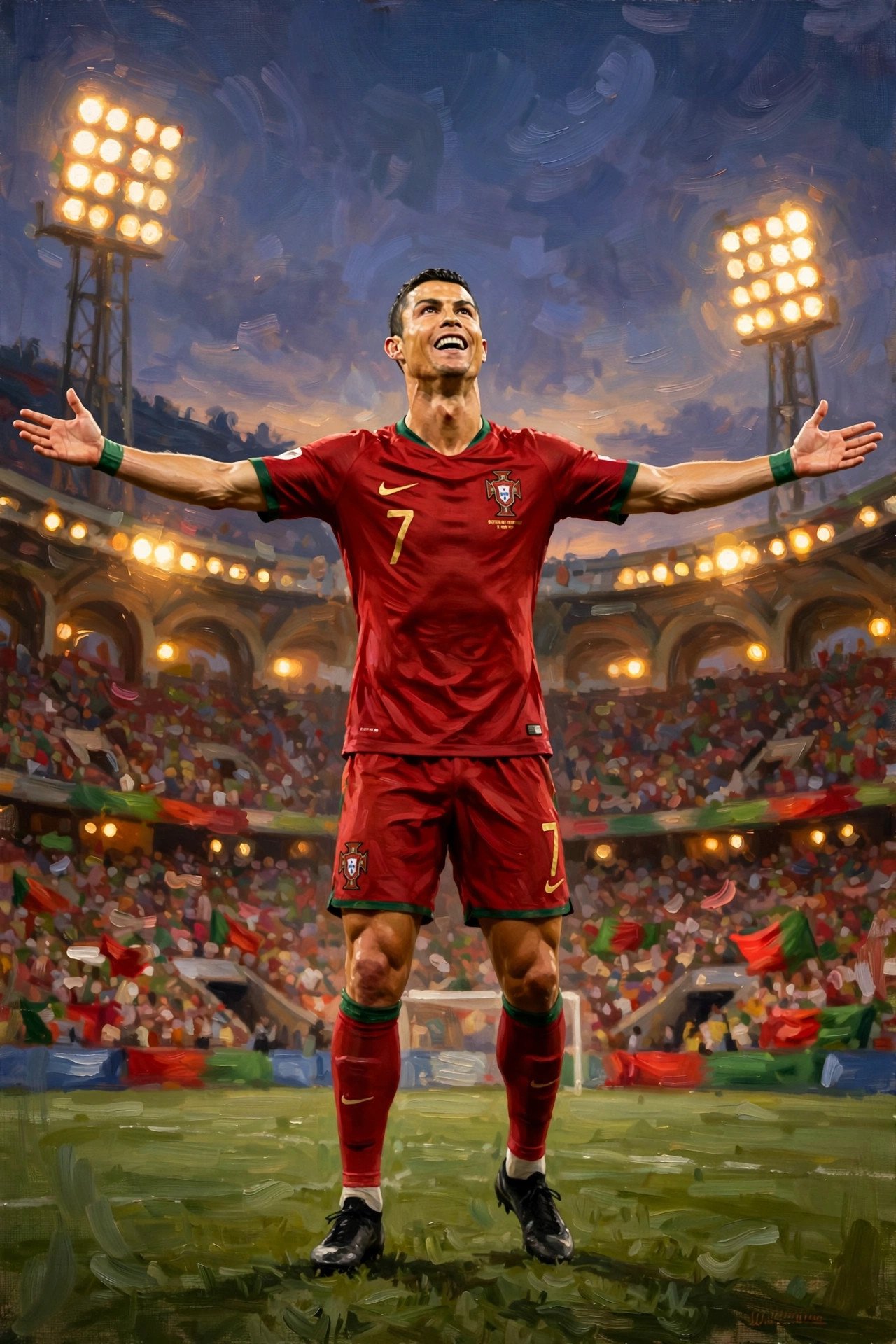
Cristiano Ronaldo psychology is, at its core, the study of unshakeable self-belief. On Thursday 5 November 2026, Ronaldo announced his retirement from international football in a video message on social media, telling the Portuguese people that “the day has come for me to hand back the number 7 shirt of our national team.” He was 41, with 234 caps and 146 goals, both men’s international records, closing a 23-year Portugal career on his own terms.
In short, Ronaldo’s self-belief was never just a feeling. It was a system: a clear picture of who he wanted to become, daily training and recovery habits that kept proving the picture true, and a habit of treating setbacks as information instead of verdicts. That system carried him from Madeira to the top of world football.
This profile is an educational look at public behavior and research, not an assessment of the person. Everything that follows comes from the public record: interviews, speeches, and widely reported events, dated and sourced where possible. The aim is to understand what his choices reveal about self-belief, identity, rivalry, and knowing when to walk away.
The announcement was pure Ronaldo: a video, read from a letter, with clips of his goals and his children, ending with the words “I will never stop being one of you… with a Siuuu.” The timing was not clean. It followed a fallout with Portugal coach Jorge Jesus, who had not used him against Norway, and a walkout from the national-team camp in October 2026 that brought a 30-day suspension and a 255-euro fine. His last Portugal appearance had been a 1-0 Nations League win against Wales in September 2026. Coach Jesus said on 6 November 2026 that he had considered calling Ronaldo up for the November matches, and the Federation promised a fitting tribute. Ronaldo keeps playing club football with Al Nassr in Saudi Arabia, where CNN reported on 5 November 2026 that he stood on 985 career goals, closing in on the 1,000-goal mark he has spoken about publicly.
Story
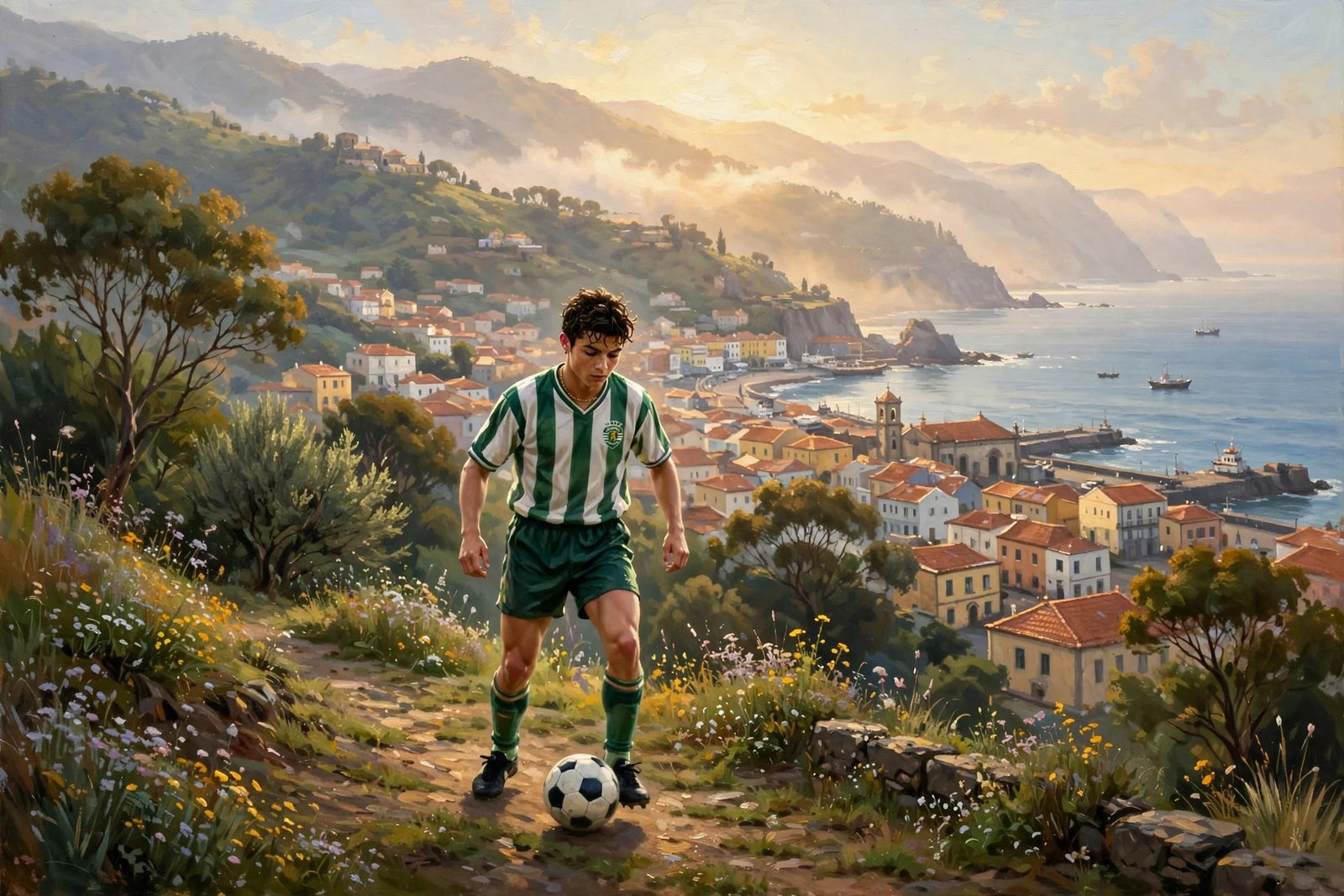
Cristiano Ronaldo dos Santos Aveiro was born on 5 February 1985 in Funchal, the capital of Madeira, a Portuguese island in the Atlantic. He was the youngest of four children. His mother, Maria Dolores dos Santos Aveiro, worked as a cook. His father, Jose Dinis Aveiro, was a gardener and a part-time kit man for the local club, CF Andorinha. Money was tight. The family lived in a small tin-roofed house in the Santo Antonio parish, and young Cristiano shared a room with his brother and sisters.
He left Madeira at 12 to join Sporting CP’s academy in Lisbon, hundreds of miles from home. It was a lonely move for a boy that age. He was mocked for his strong Madeiran accent and has spoken about crying himself to sleep in those early months. What kept him there was a clear picture of where he was going, and a willingness to pay for it in homesickness.
At 15, his career nearly ended before it began. Doctors at Sporting found that his heart raced dangerously fast even at rest, a condition called tachycardia. He had a procedure to correct it, using a laser to cauterize the area of the heart causing the problem. He was operated on in the morning and discharged the same afternoon. Within days he was back in training. His mother later said she had worried he might have to give up football altogether. Instead, the scare seemed to sharpen him.
He made his Sporting first-team debut in 2002. A year later, in a preseason friendly to open Sporting’s new stadium, he tormented Manchester United’s defense so thoroughly that United’s own players urged manager Alex Ferguson to sign him. Within a week he had joined Manchester United for 12.25 million pounds. He was 18, skinny, and flashy, famous for stepovers that sometimes went nowhere. Ferguson gave him the number 7 shirt, worn before him by George Best, Eric Cantona, and David Beckham. Ronaldo spent the next six years turning the flash into substance. He won three straight Premier League titles from 2007 to 2009, the Champions League in 2008, and his first Ballon d’Or the same year.
In 2009, Real Madrid paid a then world-record 80 million pounds to bring him to Spain. Over nine seasons in Madrid he won two La Liga titles and four Champions League titles, and he became the club’s all-time leading scorer. He collected four more Ballon d’Or awards, in 2013, 2014, 2016, and 2017, five in total. In 2018 he moved to Juventus, and in 2021 he returned to Manchester United. His second spell there ended abruptly in November 2022, after a televised interview in which he criticized the club, and the contract was ended by mutual agreement. In January 2023 he joined Al Nassr in Saudi Arabia as a free agent.
His Portugal story ran alongside all of it. He made his senior debut in August 2003. He played in the Euro 2004 final on home soil, which Portugal lost to Greece. Twelve years later, he captained Portugal to their first major trophy at Euro 2016, injured in the first half of the final against France, watching from the touchline as Eder scored the winner in extra time. He added the UEFA Nations League in 2019 and again in 2025. His final international tournament was the 2026 World Cup, where the one major trophy that had eluded him stayed out of reach. He retired as the most-capped men’s international footballer in history and the highest scorer in men’s international football: 234 appearances, 146 goals.
Turning Point
Every long career has moments when the plan changes shape. For Ronaldo, the first came at 15, in a hospital in Lisbon, when doctors told him his heart beat too fast even when he was resting. A teenager who had left home for football was suddenly told that football might be taken away. Psychologists call this a shift in perceived control: the moment you realize that a feared outcome is something you can act on, rather than something that simply happens to you. He trained afterward with a new urgency, as if he had been given a second chance and intended to spend it well.
The second turning point came in September 2005, when his father died of liver failure at 52. Ronaldo was 20, in his third season at Manchester United, and his father had never lived to see him become a global star. The Portugal coach at the time, Luiz Felipe Scolari, broke the news to him personally. Ronaldo kept playing. Grief, in his case, did not slow the career down. It focused it. The goals, the training, the public ambition, all of it took on the weight of unfinished business.
The third turning point was the Euro 2016 final. Forced off injured in the first half, he spent the rest of the match on the touchline, shouting instructions, urging teammates on, living every second of a game he could no longer play in. Portugal won. It was the first time he had led his country to a trophy, and he did it without touching the ball for most of the night. That match changed how people talked about him: no longer only the scorer, but the captain who willed a team over the line from the sideline.
The fourth turning point frames this profile: the decision, on 5 November 2026, to hand back the shirt himself rather than wait for someone to take it from him. His own words said it plainly: “There are decisions that are not made only with the head. They are also made with the heart.” Instead, he chose the ending, the final act of self-belief in a career built on them.
Mindset: Cristiano Ronaldo Psychology and the Power of Self-Belief
Self-belief is the conviction that you can handle what comes next, built from evidence you have collected about yourself.
That one sentence explains more of Ronaldo’s career than any highlight reel. His belief was not blind. It was built, rep by rep, goal by goal, season by season, until the evidence became so heavy that doubt had nowhere to stand. Psychologist Albert Bandura called this self-efficacy, and he showed that it grows from four sources: mastery experiences, watching others succeed, encouragement from others, and managing your physical and emotional state. Ronaldo collected all four: every extra training session was a small mastery experience; watching players he admired made the next level feel reachable; Ferguson’s faith in him at 18 was encouragement from one of the most respected figures in the game; and his attention to sleep, diet, and recovery kept his body in a state where confidence felt physically true.
His mindset also fits what psychologist Carol Dweck calls a growth mindset, the belief that abilities can be developed through effort, learning, and persistence. Ronaldo arrived at Manchester United as a winger who did tricks and lost the ball. He left as a goalscorer who decided matches. That change did not happen by talent alone. It happened because he treated his weaknesses as training targets. He stayed after practice to work on free kicks, rebuilt his body, and studied his own movement. Later he rebuilt his game again, moving from winger to central striker, trading pace for positioning, and then trading the striker’s role for the veteran leader’s role. Each change meant being worse at something new before he was good at it, and each time he accepted that cost in public.
Then there is the “Siuuu.” The celebration, arms out, a leap, a turn, and a shout that whole stadiums learned to echo, looks like showmanship. Psychologically, it is also a ritual: a predictable moment of control inside an unpredictable game. Scoring a goal is chaos; the celebration is order. Doing the same thing every time, in front of eighty thousand people, is a way of saying: I have been here before, and I will be here again.
Decisions
Ronaldo’s decisions reveal a pattern: he chooses the bigger goal, accepts the discomfort that comes with it, and refuses to let other people’s definitions of realistic set his ceiling.
The decision to leave Madeira at 12 was the first. He had a secure path at home. Lisbon offered uncertainty, loneliness, and boys who mocked his accent. He went anyway, because the goal required it. Psychologist Edwin Locke’s goal-setting theory helps explain why this worked: specific, challenging goals lead to better performance than vague or easy ones, especially with commitment and feedback. Ronaldo’s goals were unusually specific: become a professional, play for Manchester United, become the best in the world, win the Ballon d’Or.
The decision to join Real Madrid in 2009 was the boldest of his prime. He was the reigning Ballon d’Or winner, a Champions League winner, and a hero at Manchester United. Madrid offered a bigger stage and a harder challenge, in a league dominated by Barcelona and Lionel Messi. He went, and the rivalry that followed defined an era of football. For nine years the two men pushed each other to scoring numbers no one had thought possible, each one answering the other’s latest record within days.
The decision to join Juventus at 33 was a different kind of bold. He moved to a new league, a new language, and a new team, and kept scoring. The decision to join Al Nassr in January 2023 was bolder still. He left European football entirely, at a moment when many expected him to chase one more Champions League campaign. Critics called it a retirement in all but name. He treated it as a new frontier, kept scoring, and kept talking about the 1,000-goal target.
The final decision may be the most psychologically interesting of all. After 23 years, a public fallout, and a suspension, he did not wait to be dropped. He announced his own ending, in his own words, on his own platform. “I leave with my head held high,” he said. It is the same pattern as every decision before it: define the outcome, choose it, and live with it.
Method
If mindset is the picture, method is the daily routine that turns the picture into reality. Ronaldo’s method, described across hundreds of interviews and profiles, has several consistent parts.
First, train more than the session requires. The stories are consistent across every club he played for: he stayed late to practice free kicks, arrived early, and added extra gym work. Psychologist Anders Ericsson called this deliberate practice: focused, feedback-rich repetition aimed at a specific weakness, not just hours on the pitch. Ronaldo trained with a target, a free kick over the wall, a header from a cross, a finish with his weaker foot, and repeated it until the movement felt automatic.
Second, protect the body like a professional asset. His diet, sleep, and recovery routines are famous: carefully planned meals, multiple naps a day, cold-water recovery, and a strict approach to rest. This is not vanity. It is the fourth source of self-efficacy in Bandura’s model, managing your physical state so confidence has something real to stand on. At 41, still playing professional football, that routine is the reason the belief is still credible.
Third, set goals that are specific and public. The 1,000-goal target is the clearest example. He has spoken about it openly, and CNN reported on 5 November 2026 that he stood on 985 career goals. A public goal creates accountability: every match becomes a small step toward a number everyone can see. Locke’s research supports this: specific goals focus attention, encourage persistence, and make feedback meaningful.
Fourth, use the environment. He trained with people who were better than he was and sought out coaches, physios, and nutritionists who could show him the next level. He kept Ferguson as a mentor long after leaving Manchester United.
Pause and ask yourself: what is one goal you carry vaguely, without a number or a date? What would change if you wrote it down and told one person about it?
What If?
What if the heart procedure at 15 had gone differently, or if his mother had decided the risk was not worth it? He might never have played professional football at all.
What if he had stayed at Sporting? He might have had a fine career in Portugal, a local hero with a comfortable life. He would not have won five Ballon d’Or awards or worn the Portugal shirt 234 times. The move to Manchester United at 18 was the hinge his whole life swung on.
What if there had been no Messi? The rivalry with Lionel Messi defined both men for more than a decade, each one raising the other’s standard, year after year, record after record. Without it, both careers might have been quieter and the numbers smaller. Fittingly, both men closed their international careers in the same year: Messi announced his retirement from Argentina in July 2026, after Argentina lost the World Cup final to Spain, and Ronaldo followed in November. The debate about who was greater will go on forever. The psychology is simpler: each man was better because the other one existed.
What if he had retired from Portugal after Euro 2016, at the top, with the trophy in his hands? He would have left as a hero, and no one would have blamed him. Instead he played ten more years, won another Nations League in 2025, and kept going until the shirt was handed back by choice. The extra decade cost him the perfect ending. It also gave him 146 goals and a record no one is likely to match.
What Most People Lack
Most people do not lack talent. They lack a clear vision, a plan they return to daily, and the patience to let small efforts compound. People say they want change, but they cannot describe what the changed life looks like in concrete detail. Without that picture, every distraction looks equally important.
The second thing most people lack is not motivation but structure. Motivation rises and falls with mood, sleep, weather, and stress. Structure stays. A person who trains only when inspired will train rarely. A person who trains at the same time every day, with a plan written down, will train often.
The third gap is tolerance for being a beginner. Most adults avoid the discomfort of being bad at something new. Ronaldo repeatedly chose the opposite: a beginner as a goalscorer when he had been a winger, a beginner in a new league at 33, a beginner in Saudi Arabia at 38. Each time, he accepted public mistakes as the price of learning.
The fourth gap is harder to admit: most people protect their self-image by avoiding tests. If you never try, you never fail, and the story you tell about yourself stays safe. Ronaldo did the opposite. He took the free kick in the final minute, took the penalty in the shootout, and put his name on a 1,000-goal target for the whole world to track. That willingness to be measured, in public, is the difference between self-belief and self-protection.
None of this means that anyone can replicate his outcomes. Talent, timing, opportunity, and resources all matter. But the gaps above are gaps of practice, not gifts. A clearer picture, a daily routine, a willingness to be a beginner, and the courage to be measured are available to almost anyone, and they explain more of his story than raw talent alone.
What Successful People Do Differently
Successful people, in the research literature and in Ronaldo’s account, do a few things differently, and the differences are smaller and more practical than the mythology suggests.
They define the outcome before they start. Ronaldo did not go to training to see what would happen. He went with a picture of the player he wanted to become, and every choice was measured against it: this meal or that one, this extra set or an early finish, this club or that one.
They work in public and accept feedback. Ronaldo performed openly, in front of millions, every week for more than twenty years. Public effort creates pressure, but it also creates information. You learn quickly what works when the results are visible to everyone.
They treat setbacks as data. A lost final or a missed penalty is information about what to change next. People who treat setbacks as verdicts tend to stop; people who treat them as feedback adjust and continue. Dweck’s research points the same way.
They build teams. Ronaldo’s story is often told as a solo triumph, but it was not solo. He had coaches, agents, physios, nutritionists, family, and teammates. His agent, Jorge Mendes, shaped his career moves from the beginning, and his mentors, above all Ferguson, gave him belief when it mattered most. Successful people are often better at asking for help and choosing collaborators than the lone-hero story allows.
They keep score. Ronaldo has always known his numbers: goals, caps, trophies, records. Keeping score is not vanity. It is feedback. Locke’s goal-setting research shows that specific goals only work when the person gets regular feedback on progress, and Ronaldo’s career was a constant stream of it.
Success Mindset: What Cristiano Ronaldo Psychology Reveals About Self-Belief
Reinvention is the thread that ties Ronaldo’s career together. Winger to goalscorer. Goalscorer to leader. Leader to veteran mentor. Each reinvention required him to give up an identity that was working and build a new one in public.
The psychology of reinvention starts with identity flexibility. People who hold their identity too tightly, defining themselves by a single role, struggle when that role ends. A player who is only a goalscorer has nowhere to go when the goals slow down. A person who sees themselves as someone who learns, works, and leads can carry that identity into a new role. Ronaldo’s self-description has always been broader than any single position. He is a worker, a competitor, and a captain, and those identities travel.
Reinvention also requires what psychologists call self-complexity. Research by Patricia Linville showed that people whose sense of self rests on many roles cope better when one role is threatened. A bad match is less devastating when you are also a father, a businessman, a teammate, and a mentor. Ronaldo’s life has many such roles: the CR7 brand, which spans hotels, clothing, and fragrances; his family; his widely reported charitable giving, including donations to hospitals in Portugal during the pandemic. When one part of the identity took a hit, the others held.
The retirement announcement fits the same pattern. By choosing his own ending, he protected the identity he had built. “I leave with my head held high,” he said. It was a final act of control, the same control he has chased since a hospital room in Lisbon at 15.
Failures
A profile that only lists wins would be dishonest, and it would also be useless. Failures are where the psychology becomes visible.
The first great failure was Euro 2004. Portugal hosted the tournament, reached the final, and lost to Greece, a team they had already beaten in the group stage. Ronaldo, 19 years old, cried on the pitch as the final whistle blew. Twelve years later, he won the same tournament, and the tears of 2004 became part of the story of 2016.
The 2006 World Cup brought a different kind of failure. In the quarter-final against England, his Manchester United teammate Wayne Rooney was sent off after an incident involving Ronaldo, who was caught on camera winking at the Portugal bench afterward. English fans turned on him, and he was booed in every stadium in England for months. Portugal lost the semi-final to France.
The 2022 World Cup was the hardest failure of his international career. He was benched for the last-16 win over Switzerland and again for the quarter-final against Morocco, which Portugal lost. He left the pitch in tears. For a player who had defined his country’s team for two decades, sitting on the bench at a World Cup marked the beginning of the end of his international career. The fallout with coach Jorge Jesus in 2026, the walkout, and the suspension were the final chapter of that slow ending.
The second Manchester United spell ended badly too. After returning in 2021 to enormous excitement, he fell out with manager Erik ten Hag, gave the explosive Piers Morgan interview in November 2022 in which he said he felt betrayed and had no respect for the manager, and left by mutual agreement on 22 November 2022. It was a messy ending to a love story with a club that had made him.
What matters for the psychology is not the list of failures but the response. After each one, the pattern repeats: acknowledge the result, study what went wrong, adjust the method, and return to the routine. That is resilience in its least glamorous form: a training session kept the morning after a bad result.
Relationships
No public life is lived alone, and Ronaldo’s relationships have shaped his story as much as his training did.
His family comes first. His mother, Dolores, held the family together through the lean years in Madeira. His father, Jose Dinis, worked as a kit man at Andorinha and introduced him to football, but he died in September 2005, when Ronaldo was 20, before the biggest chapters of his son’s career. His partner, Georgina Rodriguez, and their five children are the center of his private life, and the video in which he announced his retirement included clips of his children, a deliberate choice about who the farewell was really for.
His most important professional relationship was with Alex Ferguson. Ferguson signed him at 18, gave him the number 7 shirt, protected him from the English media after the 2006 World Cup, and shaped him from a showy winger into a match-winner. Ronaldo has called Ferguson a father figure in football, and the two have stayed close for more than twenty years. Bandura’s research shows that encouragement from a respected figure can raise self-efficacy at exactly the moments when self-doubt is loudest, and Ferguson supplied it when Ronaldo was a teenager in a foreign country.
Then there is the rivalry that defined an era. For more than a decade, Ronaldo and Lionel Messi were measured against each other in every conversation about football: goals, trophies, Ballon d’Or awards, records. The rivalry pushed both men to numbers no one had thought possible. In 2026, both closed their international careers within months of each other: a rivalry, but also a partnership of sorts, two men holding each other to a standard neither could have reached alone.
The hardest relationship of his final years was with his own national team. The fallout with coach Jorge Jesus, who left him out against Norway, the walkout from camp, the suspension, and the fine were not the ending anyone would have scripted for a player with 234 caps. They are part of the record, and they make the retirement announcement more honest, not less. Endings are rarely clean. What matters is who writes the last line, and Ronaldo wrote his himself.
Dark Side
Every honest profile needs a section that looks at the harder parts without turning into either an attack or an excuse. Ronaldo’s public life includes real criticisms, and they belong here.
The first is the gap between his image of discipline and his conduct when frustrated. The walkout from the Portugal camp in October 2026, the 30-day suspension, and the 255-euro fine were the actions of a man who felt disrespected and reacted badly. The Piers Morgan interview in November 2022 was the same pattern at club level: a public attack on his employer that ended his second spell at Manchester United within days. Self-belief, taken too far, can become an inability to accept a smaller role. The same conviction that carried him to the top made it hard for him to accept the bench or a coach’s decision he disagreed with. That is the shadow side of the very quality this profile celebrates.
The second is the tax case. In January 2019, Ronaldo pleaded guilty to tax fraud in a Madrid court and accepted a fine of 18.8 million euros and a 23-month suspended sentence, over unpaid tax on image-rights income between 2011 and 2014, when he played for Real Madrid. He served no prison time, because Spanish law allows sentences under two years to be suspended for first offenders, but the guilty plea is part of the public record. It sits uneasily beside the image of the disciplined professional.
The third is his style. His confidence, his celebrations, and his willingness to talk about himself as the best have always divided opinion. To his supporters, it is honesty and self-belief. To his critics, it is arrogance. Public figures who trade on boldness often find that the line between confidence and overreach moves with the times.
None of these points erase the achievements. None of them are presented here as a verdict on his character. They are included because a profile that only celebrates teaches nothing. The psychology of a long public life includes the mistakes, the criticism, and the work of living with both. His response to criticism has almost always been the same: train harder, score more, and let the next match do the talking.
Second Act
Ronaldo’s second act began before his first one ended. In Saudi Arabia with Al Nassr, he is no longer the young winger who beat defenders with stepovers. He is the veteran who sets the standard for everyone around him, the player younger teammates watch to learn how a professional prepares, trains, and recovers.
The CR7 brand is part of it too: hotels, clothing, and fragrances built on his name and image. So is the 1,000-goal target, the number that keeps him training at 41, and the mentoring role he plays with younger players at Al Nassr. The second act is not a retirement. It is a change of job description, from the man who scores the goals to the man who shows others how goals are scored.

Fun Facts
- He was born on 5 February 1985 in Funchal, Madeira, and left home at 12 to join Sporting CP’s academy in Lisbon.
- His move to Real Madrid in 2009 cost a then world-record 80 million pounds, and he became the club’s all-time leading scorer.
- He has won the Ballon d’Or five times: in 2008, 2013, 2014, 2016, and 2017.
- His 234 caps and 146 goals for Portugal are both men’s international records.
What the Research Says
What does the research say about the ideas behind this profile? Quite a lot, and the findings line up with the patterns in Ronaldo’s public life.
On goal-setting, Edwin Locke and Gary Latham spent decades testing what makes goals work. Their conclusion is consistent: specific, challenging goals lead to higher performance than vague ones, provided the person accepts the goal and gets feedback. A 2002 review by Locke and Latham in American Psychologist summarized this evidence and remains a standard reference. Ronaldo’s habit of setting public, numerical targets, most recently the 1,000-goal mark, fits the model closely.
On mindset, Carol Dweck’s research at Stanford showed that people who believe abilities can be developed, a growth mindset, persist longer after setbacks and choose harder tasks than people who believe talent is fixed. Her book Mindset (2006) brought the idea to a wide audience. Ronaldo’s repeated reinventions are growth-mindset behavior in action.
On self-efficacy, Albert Bandura’s work showed that confidence grows mainly from mastery experiences, small wins that prove you can handle the next step. His 1997 book Self-Efficacy: The Exercise of Control sets out the evidence. Each title, each record, and each comeback added to that record of mastery.
On deliberate practice, Anders Ericsson’s research found that expert performance comes from focused, feedback-rich practice aimed at specific weaknesses, not from talent or hours alone. His work, popularized in the book Peak (2016), describes exactly the kind of extra training Ronaldo has done throughout his career.
Activity
Test what you remember. Choose one answer per question; the correct answer is marked.
1. On which date did Cristiano Ronaldo announce his retirement from international football?
a) 3 November 2026 b) 5 November 2026 — Correct. He announced it in a social-media video message that Thursday. c) 6 November 2026
2. How many caps and goals did Ronaldo finish with for Portugal?
a) 200 caps and 120 goals b) 234 caps and 146 goals — Correct. Both are men’s international records. c) 180 caps and 130 goals
3. At what age did Ronaldo have a procedure to correct a racing heart?
a) 12 b) 15 — Correct. He was diagnosed with tachycardia at 15 and back in training within days. c) 18
4. Which club did Ronaldo join in 2009 for a then world-record fee of 80 million pounds?
a) Juventus b) Manchester United c) Real Madrid — Correct. He joined from Manchester United in 2009.
5. How many Ballon d’Or awards has Cristiano Ronaldo won?
a) Three b) Five — Correct. He won in 2008, 2013, 2014, 2016, and 2017. c) Seven
How did you do? Five correct means you were paying close attention. Three or four means you caught the main arc. Fewer than three means the profile is worth a second read.
Frequently Asked Questions
What is Cristiano Ronaldo psychology?
Cristiano Ronaldo psychology is the study of the mindset behind his career: unshakeable self-belief built through clear goals, deliberate practice, strict recovery habits, and repeated reinvention.
Why did Cristiano Ronaldo retire from international football?
He announced his retirement on 5 November 2026, saying it was time to hand back the number 7 shirt. It followed a fallout with Portugal coach Jorge Jesus and a 30-day suspension after he walked out of camp in October 2026. He said he would leave “with my head held high” and keep supporting Portugal as a fan.
What is Ronaldo’s mindset secret?
There is no single secret. His self-belief was built like a system: specific public goals, daily deliberate practice, strict sleep and recovery routines, and treating setbacks as information instead of verdicts.
Is Cristiano Ronaldo still playing football?
Yes. His retirement is from international football only. He continues to play club football with Al Nassr in Saudi Arabia, where he is closing in on 1,000 career goals.
Try-it box
Try it on our site
Put the ideas from this profile into practice with these free tools, no signup needed:
- Confidence Builder — build self-belief one small step at a time, the way any big goal starts.
- Daily Tracker — track one daily habit and watch small wins add up.
- Focus Room — a calm space to concentrate on a single task without distractions.
- Name Your Feeling — name what you feel before you decide what to do next.
Related reading: Arnold Schwarzenegger Psychology and Mamba Mentality: The Psychology of Kobe Bryant.
Key Takeaways
- Cristiano Ronaldo psychology rests on a system, not a mood: a clear picture of who he wanted to become, daily habits that proved it true, and setbacks treated as information instead of verdicts.
- A growth mindset explains his reinventions. He was not born a goalscorer. He became one deliberately, then reinvented himself again when age took away his pace.
- Rivalry can motivate when it stays within bounds. The long contest with Lionel Messi pushed both men, and both closed their international careers in 2026.
- Setbacks are data, not verdicts: study what went wrong, adjust the method, and return to the routine.
- Endings are choices too. By announcing his own retirement, Ronaldo chose how his Portugal story would end, on his own terms.
- Start small. Pick one goal, write it down, take one concrete step today, and repeat it tomorrow.
This article is educational only and is not therapy, diagnosis, or medical advice. If you are struggling, please consider speaking with a licensed professional, or contacting a crisis line in your country, such as 988 in the United States.