
Australia Just Saved Its Oldest Barracks From the Bulldozers: The Psychology of Places We Refuse to Lose
Reviewed by a Psychology Postgraduate (MA)
Short answer: Victoria Barracks psychology explains why a property decision became a public fight: on Sunday 8 November 2026, Prime Minister Anthony Albanese scrapped the planned sale of Sydney’s 176-year-old Victoria Barracks after more than 2,000 protesters rallied against it. The barracks will stay in public hands.
What did the Australian government announce on 8 November 2026?
On Sunday 8 November 2026, Prime Minister Anthony Albanese announced the government will scrap the outright sale of Sydney’s Victoria Barracks, keeping the site in public hands and available for all Sydneysiders to enjoy.
The announcement, reported by The Straits Times and Bloomberg and confirmed by Defence, reverses a plan that had put one of Sydney’s oldest landmarks on the market. Defence Minister Richard Marles is overseeing the wider estate reform, and Education Minister Jason Clare said he would not describe the new plan as a “backdown”.
What is Victoria Barracks, and why does it matter?
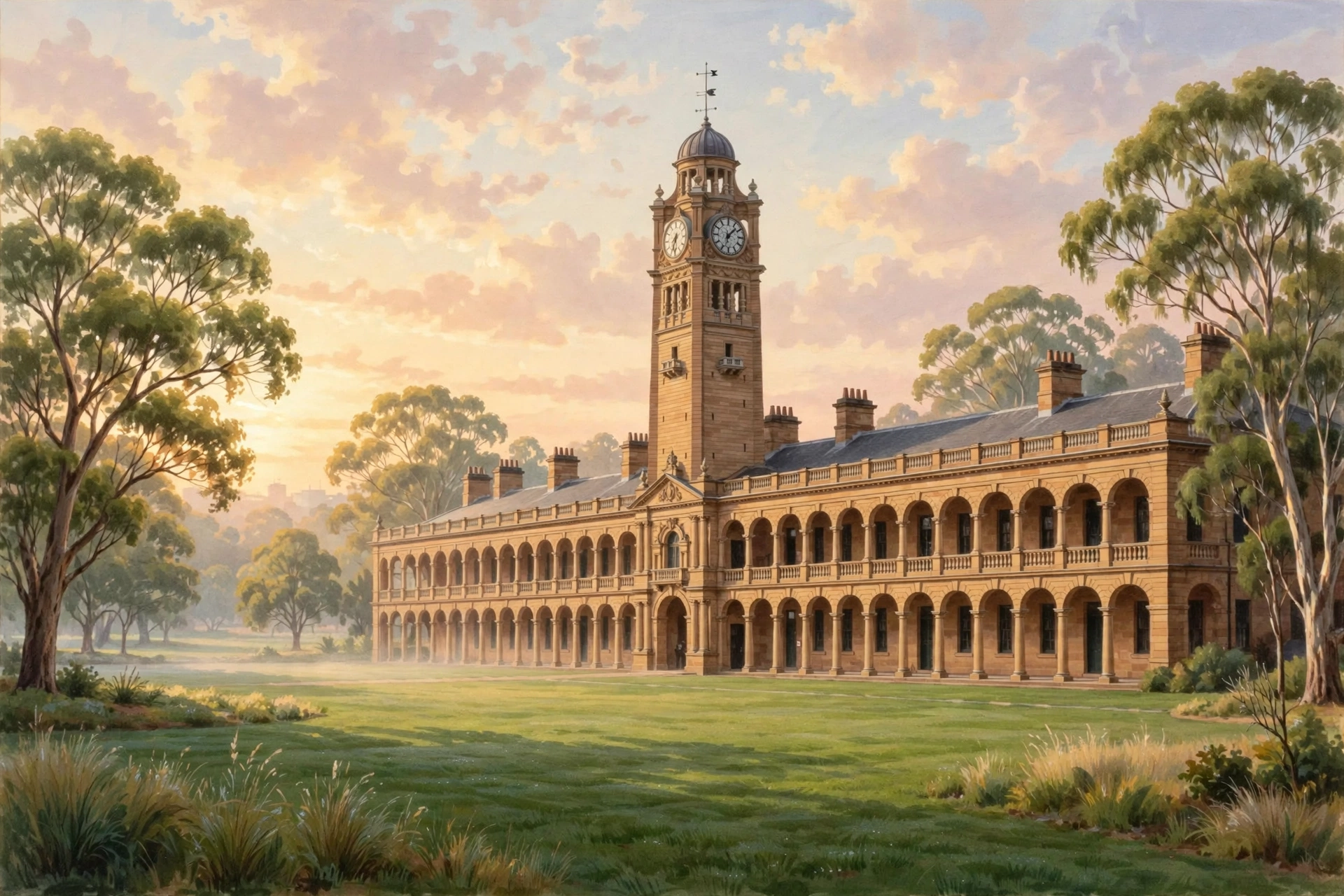
Victoria Barracks in Sydney was established in 1840, its main complex completed in 1848, and it covers 13 hectares in the city’s eastern suburbs.
It first housed the British Army, and Defence describes the site as holding significant heritage. For 176 years it has stood in Sydney’s daily landscape, a sandstone presence generations have walked past, worked in, or served at. On paper the sale was a property transaction, but to many it felt like selling a piece of the city itself.
What happens to the barracks now?
Instead of being sold to a private buyer, the barracks will be transferred to the Department of Finance and leased for events, remaining in public hands.
The distinction matters: a lease for events keeps the gates open in a way a private sale would not. The site will be available for all Sydneysiders to enjoy, rather than disappearing behind a developer’s fence. Three other sites are also spared: Victoria Barracks Melbourne, Fort Queenscliff in Victoria, and RAAF Williams at Point Cook on Melbourne’s fringe.
Why did the government change its mind?
Mounting public opposition changed the plan: more than 2,000 protesters rallied in Sydney, heritage groups campaigned to preserve the site, and the NSW Labor government urged the Prime Minister to abandon the proposal.
Lieutenant General (Retd) Ken Gillespie, a former senior soldier, called the sale a “money grab at the expense of the security of Sydney”. When criticism comes from inside the defence community as well as from heritage campaigners and a state government of the same party, a proposal starts to look politically expensive. The rally mattered because of its size and visibility: two thousand people in one place is hard to ignore.
What is still being sold?
The wider sell-off continues: the barracks were part of the independent Defence Estate Audit, under which the government agreed to divest or partially divest 67 underused and costly defense sites.
Defence has transferred 11 of the 67 sites to the Department of Finance, and by the end of 2026 will have relocated the workforce from six sites. HMAS Penguin in Mosman, Sydney, was identified for partial divestment, and the sales were estimated to generate about A$3 billion to help fund plans to increase Australia’s defense capacity. This is the first significant update to the audit since February 2026.
What is place attachment?
Place attachment is the emotional bond people form with places, described by environmental researchers Irwin Altman and Setha Low as a deep part of identity.
It is the reason a street corner can make you feel at home. The bond grows through repeated experience: the routes we walk, the people we meet, the events we live through there. Over time, the place stops being a backdrop and becomes part of the story of who we are. The campaign was never about 13 hectares of real estate, but about a place that had become part of Sydney’s identity.
Why does losing a landmark feel like losing part of ourselves?
Because places hold our autobiographical memory, so losing one can feel like losing the evidence of a life lived.
Memory is not stored only in the mind; it is stored in the world. We remember our lives partly through the places where they happened: the school gate, the first flat, the barracks where a grandfather served. When a place disappears, the memories do not vanish, but they lose their anchor. Landmarks also carry shared memory: Victoria Barracks belongs to no single person, yet thousands hold a piece of it, a parade, a visit, a family story.
Why does a sale feel worse than a gain of A$3 billion feels good?
Because of loss aversion: losses weigh far more heavily than equivalent gains, so selling a beloved landmark feels worse than the money feels good.
Loss aversion is one of the most reliable findings in behavioral science. Psychologists Daniel Kahneman and Amos Tversky showed that people feel the pain of losing something far more strongly than the pleasure of gaining something of equal value. A$3 billion is enormous, but it is abstract, a number in a budget spread across a defense program nobody can picture. The barracks is concrete: sandstone walls you can touch and gates you can walk through.
How did a protest of 2,000 people change a government decision?
Through collective efficacy: the shared belief that acting together can work.
Psychologist Albert Bandura called it collective efficacy: a group’s shared belief that it can achieve its goals through joint action. It is the difference between one person writing a letter and two thousand people standing in the same place at the same time. The rally showed the government that opposition was real and organized, and it showed the protesters that they were not alone. People often stay silent because they assume their voice will not matter, a belief psychologists call low political efficacy, and a visible win like this one corrects that belief.
Why do leaders refuse to call a reversal a backdown?
Because the word backdown frames a change of mind as weakness, so leaders reframe reversals to protect their authority.
Education Minister Jason Clare said on Sunday he would not describe the new plan as a “backdown”, and the choice of words is revealing. In politics, admitting error is costly, so reversals are usually dressed up as refinements, updates, or responses to new information. People judge a leader who changes course under pressure differently from one who changes course because of new evidence, even when the change is identical. Flexibility is a strength, but the public often reads a U-turn as a sign the original decision was never thought through.
What helps when a place you love is threatened?
Name what the place holds for you, act with others, and separate the building from the memories it holds.
Start by naming it. Ask yourself what the place actually holds: a memory, a person, a version of yourself, a feeling of belonging. Naming the attachment makes it easier to grieve, and easier to defend. Then act with others if you can: defending a place is collective, and shared action builds the efficacy that solo worry cannot. Finally, separate the building from the memories. Even when a place is saved, it changes, and even when one is lost, the memories remain yours.
A moment to pause: Think of a place you would fight to keep: a park, a library, a beach, a street where you grew up. What does it hold for you? If it were threatened tomorrow, what is the first small step you would take?
Try it on our site
When a place you love is under threat, the feelings it stirs up are real. These free tools can help:
- Thought Reframe — untangle anxious thoughts when something you care about feels at risk. Visit Thought Reframe
- Daily Tracker — log stress and sleep so you can see what steadies you on hard days. Visit Daily Tracker
- Social Confidence — build the confidence to speak up for the places and people that matter to you. Visit Social Confidence
Key takeaways
- On 8 November 2026, Prime Minister Anthony Albanese scrapped the planned sale of Sydney’s Victoria Barracks, keeping the 176-year-old site in public hands.
- Victoria Barracks was established in 1840, covers 13 hectares in Sydney’s eastern suburbs, and will now be leased for events.
- More than 2,000 protesters rallied against the sale, alongside heritage campaigners and the NSW Labor government.
- Place attachment explains the fight: places hold our autobiographical memory and our identity, so losing one feels like losing part of ourselves.
- The wider sell-off continues, with 11 of 67 audit sites transferred and about A$3 billion expected.
Frequently asked questions
What is Victoria Barracks?
Victoria Barracks in Sydney was established in 1840, with its main complex completed in 1848. It covers 13 hectares in Sydney’s eastern suburbs, first housed the British Army, and is described by Defence as holding significant heritage.
Why was the sale of Victoria Barracks scrapped?
The government reversed course after mounting opposition: more than 2,000 protesters rallied in Sydney, heritage groups campaigned to preserve the site, and the NSW Labor government urged the Prime Minister to abandon the proposal.
What happens to the barracks now?
Instead of a sale, the barracks will be transferred to the Department of Finance and leased for events, remaining in public hands. Victoria Barracks Melbourne, Fort Queenscliff and RAAF Williams at Point Cook are also spared.
What is place attachment?
Place attachment is the emotional bond people form with places, described by environmental researchers Irwin Altman and Setha Low as a deep part of identity.
Related reading
- A Beloved Department Store Is Closing: The Psychology of Losing a Place That Holds Your Memories
- Protesters Stormed a Microsoft Data Centre in Amsterdam: The Psychology of the Backlash Against AI
- UK Rejoins Erasmus+ After Six Years: The Psychology of Belonging and Second Chances
This article is for education only, not therapy, diagnosis, or medical advice. If you feel distressed, speak with a trusted person or a qualified health professional.
If you are in Australia and need support, contact Lifeline on 13 11 14.