
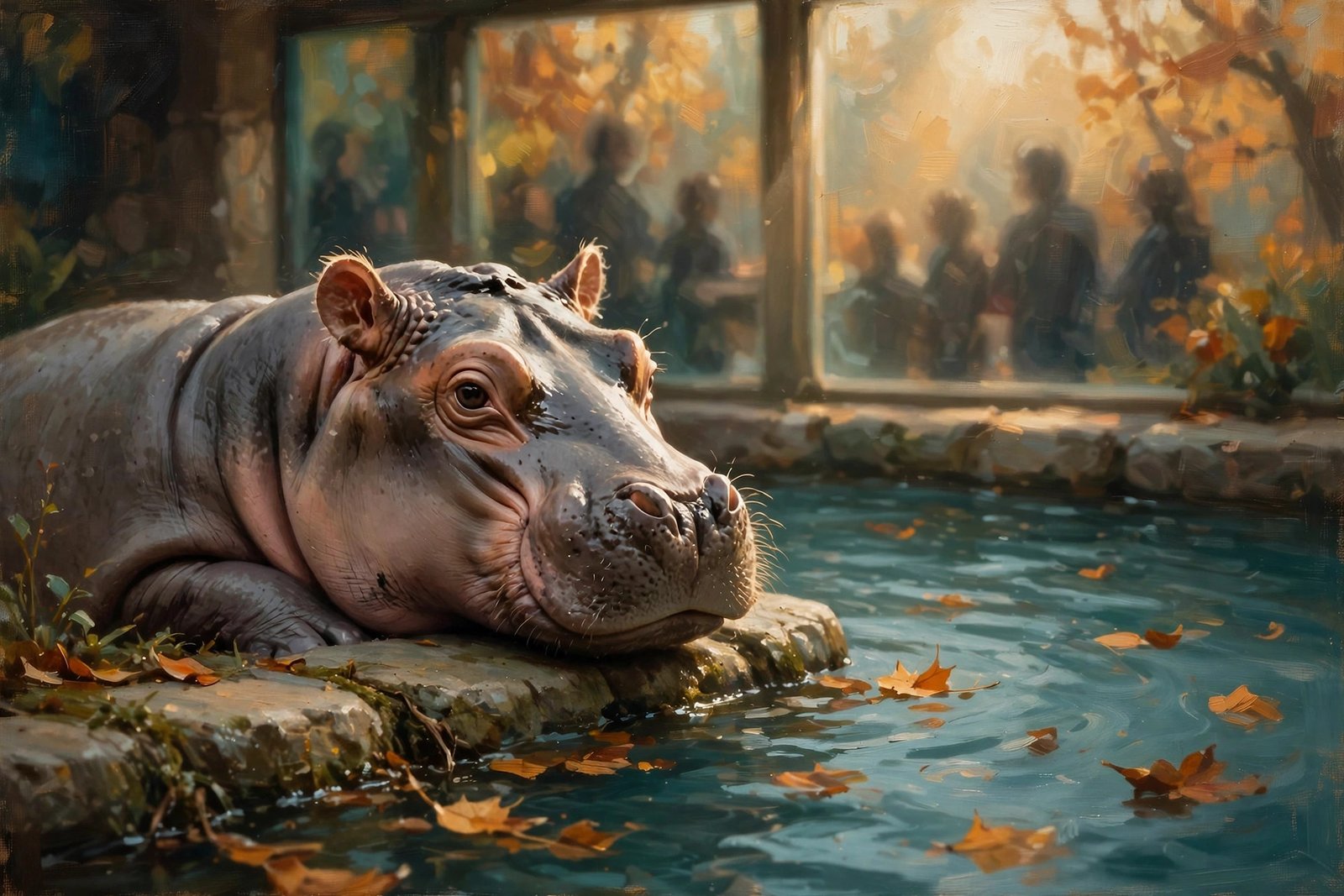
Fiona the Hippo Has Died: The Psychology of Grieving an Animal You Never Met
Reviewed by a Psychology Postgraduate (MA)
Fiona the hippo has died, and millions who never met her are grieving as if they lost a friend. Cincinnati Zoo and Botanical Garden announced the Fiona the hippo death on 19 November 2026, and tributes poured in within hours. If you felt a lump in your throat reading the news, you are not being silly, and you are not alone.
The short answer: We grieve Fiona because our brains formed a real emotional bond with her over nine years of photos, videos and updates, even though we never met her. That bond is called parasocial attachment, and combined with her miracle-baby story and the suddenness of her death, the grief feels personal, not distant.
What happened to Fiona the hippo?
Fiona, a Nile hippopotamus at Cincinnati Zoo and Botanical Garden, died on 19 November 2026, aged 9. The zoo announced her death on social media that day, and the news spread fast. For many people, she was the most famous hippo in the world.
She was born on 24 January 2017, six weeks premature, weighing just 29 lb (13 kg): the smallest Nile hippo ever successfully hand-raised, and the first Nile hippo born at the zoo in 75 years. Her mother is Bibi, her younger brother Fritz was born in August 2022, and her father Henry died earlier. She would have turned 10 on 24 January 2027, and Columbus Zoo was among the first to send tributes.
How did a hat lead to Fiona’s death?
On 8 November 2026, a child tossed a knit hat into the air near Fiona’s enclosure. A ceiling fan caught it and sent it through a one-foot opening above the 12-foot viewing windows, and into her habitat. Fiona swallowed a significant portion of the hat.
For about 11 days, vets and keepers gave her round-the-clock care, with fluids and medication, trying to help her pass the material naturally. Surgery is not an option for adult hippos. An ultrasound showed bunching in her small intestine. Despite multiple attempts, she did not recover. The zoo called it an accident: a small, ordinary moment on a family day out turned into something no one intended. The child’s family deserves care in how this is told, not blame.
Why does Fiona the hippo death hurt so much?
Because Fiona was never just a hippo on a screen. For nine years she showed up in people’s feeds the way a friend does: small updates, funny moments, milestones worth celebrating. That long, steady familiarity is exactly how attachment forms, and attachment does not check whether you have ever met in person.
What is parasocial grief, and why does it feel so real?
Parasocial grief is the genuine sadness we feel when a public figure, character or famous animal we have followed from a distance dies, even though we never had a two-way relationship with them. It builds on parasocial relationships, the one-sided bonds audiences form with people they know only through media, first described by researchers Donald Horton and Richard Wohl in the 1950s.
Those bonds feel real because the brain treats repeated, familiar faces much the same way whether they are in the room or on a screen. Fiona’s keepers spoke to the camera and let the public into her daily life, so fans felt they knew her personality: curious, stubborn, playful. Parasocial relationships can end just as painfully as real ones, because the feelings were never pretend.
Why did Fiona’s “miracle baby” story make the loss harder?
Fiona arrived with a story arc that pulled people in from the start. A premature baby, too small to stand, hand-raised by a team who refused to give up on her: that is the kind of beginning that makes a stranger feel invested. Survival stories create a quiet promise that the happy ending will hold.
That promise is part of what makes her death feel so unfair. She did not die old, or after a long illness people had time to prepare for. She died suddenly, at nine, just two months short of her tenth birthday. There is also the identifiable-victim effect: we feel one named, familiar individual far more strongly than statistics about many unnamed ones. Fiona had a name and a face, and that makes the sadness sharper.
Pause and ask yourself: When did you first meet Fiona – a video of her as a tiny calf, a photo from a zoo visit, or a post a friend shared? What did she mean to you then: hope, comfort, a bit of joy on a hard day? Naming it is often what makes the sadness make sense.
Why do people say “it was just an animal”?
Some people will hear about the tributes and wonder what the fuss is about. That reaction has a name too: disenfranchised grief, the grief that other people think you should not feel. It happens whenever a loss falls outside what a culture treats as a “proper” reason to mourn, and animal loss is a common example.
Being told your sadness is silly does not make it go away. It makes it lonelier, because you stop talking about it and carry it alone. If you have ever lost a pet, you will know this feeling well. Pet loss can hurt as much as losing a person, because the bond was daily and full of small rituals. Fiona was not your pet, but the mechanism is the same: a bond formed, the bond broke, and grief is the honest response.
How does collective grief work on social media?
One reason this death has felt so big is that nobody is grieving alone. The comments under the zoo’s announcement became a shared space: people posting favourite photos, visitors sharing memories of seeing her in person, parents saying their children grew up watching her. That shared remembering is collective grief, and it tells each mourner their feelings are normal.
How do you talk to children about Fiona’s death?
For many children, Fiona may be the first famous animal they loved. Children usually cope better with simple, honest words than with silence. Something like “Fiona died, and that means her body stopped working and she will not be coming back, and it is okay to feel sad about that” gives a child facts and permission at the same time.
Let them ask questions, and answer only what they ask. Drawing a picture of Fiona or looking at old photos together can give a child something to do with feelings that are too big for words. A child who suddenly worries about a pet at home is not being dramatic, so reassure them about the people and animals who are safe and well.
How do you cope with grieving an animal you never met?
First, stop arguing with the feeling. You do not need to justify why Fiona’s death hurts. Grief does not ask for credentials before it arrives, so let it be what it is for a few days: sad, strange, and a little surprising in its strength.
Second, do one small thing to mark the ending: write down your favourite Fiona memory, or share a photo that made you smile. Be gentle with yourself if the feeling loops. Overthinking often follows a sudden loss: replaying the hat, the fan, the eleven days of care. When the loop starts, come back to the facts. It was an accident, the team fought hard for her, and the sadness you feel is a measure of how much joy she gave.
Frequently asked questions
When did Fiona the hippo die?
Fiona died on 19 November 2026, aged 9, at Cincinnati Zoo and Botanical Garden. The zoo announced her death on social media that day.
What caused Fiona’s death?
On 8 November 2026 she swallowed a significant portion of a knit hat that had blown into her enclosure. Vets and keepers cared for her around the clock for about 11 days, but she did not recover.
Why do I feel so sad about an animal I never met?
Because of parasocial attachment: nine years of photos, videos and updates built a real emotional bond with Fiona, and the suddenness of her death makes that bond feel personal.
Is it normal to grieve a celebrity animal?
Yes. Grieving a famous animal is a recognised form of parasocial grief and collective grief. Sharing memories with other fans, and marking the loss with a small ritual, can help it feel less lonely.
How can I help a child who is upset about Fiona?
Use simple, honest words, let them ask questions, and give them something to do with the feelings, like drawing a picture or looking at photos together. Reassure them about the people and animals who are safe.
Try it on our site
Fiona’s death may have stirred up feelings bigger than one news story. Try the Wellness Tools hub, and take a Mind Check-In for a quick read on how you are feeling. If one sad thought keeps looping, Challenge the Thought can help you look at it more gently, and the Burnout + Money-Stress Check is there if the weight goes beyond grief.
Related reading: Derek Hough on Pet Loss: The Psychology of Grieving a Dog | Grieving at the Holidays | Loneliness and Health
Key Takeaways
- Fiona died on 19 November 2026, aged 9, about 11 days after swallowing part of a knit hat that blew into her enclosure.
- Born six weeks premature at 29 lb, she became a global sensation in 2017 and stayed in people’s lives for nine years.
- Parasocial grief explains why her death hurts: the bond was one-sided, but the feelings were real.
- Disenfranchised grief makes animal loss lonelier, but sadness about Fiona needs no justification.
- Mark the ending with a small ritual, talk honestly with children, and remember you are grieving alongside millions of others.
This article is educational, not a substitute for professional advice. If you are struggling, consider speaking to a licensed mental health professional. In the US, call or text 988 for free, confidential support, 24 hours a day.