
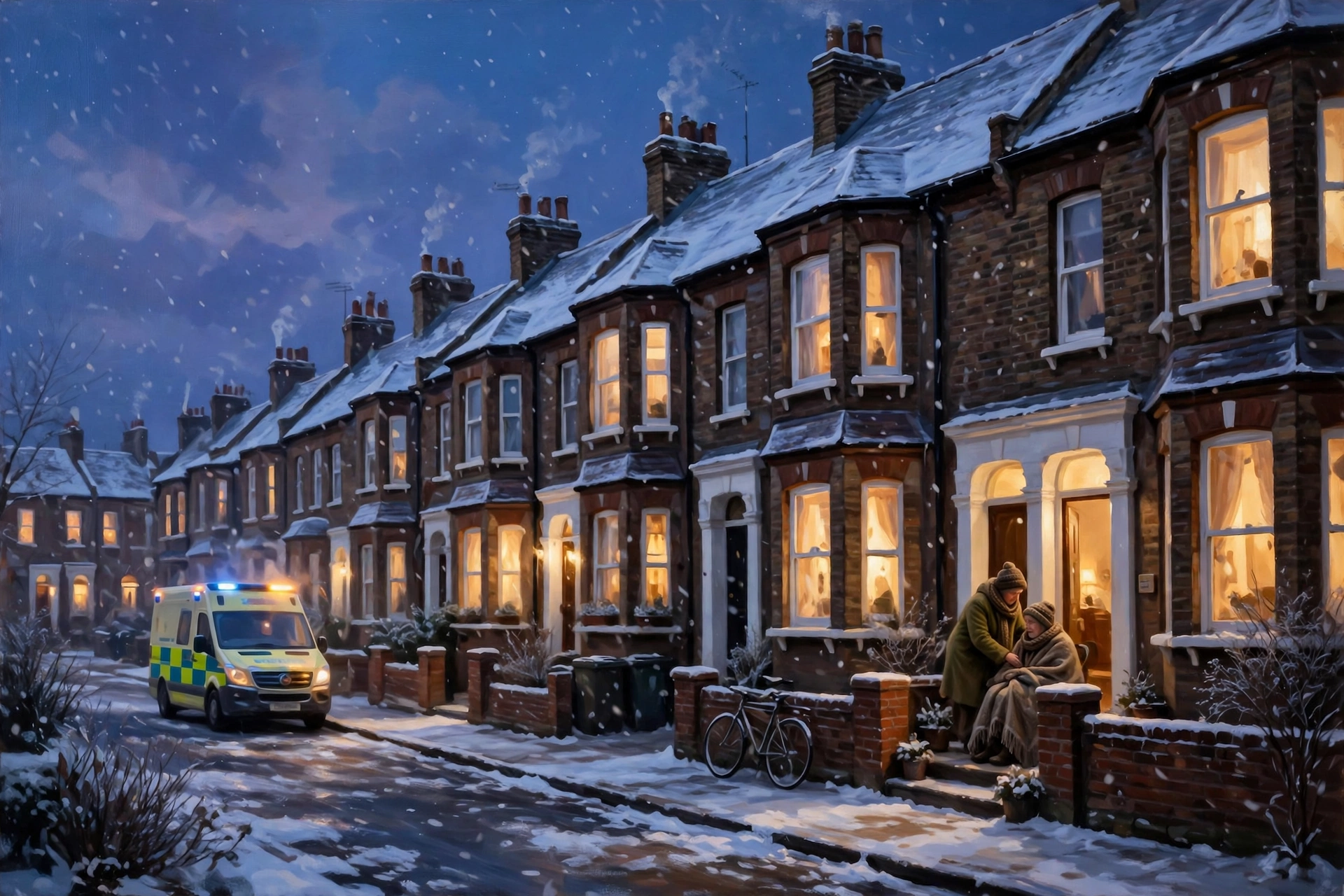
London Ambulances Declared a Critical Incident: The Psychology of Winter Health Anxiety
Reviewed by a Psychology Postgraduate (MA)
Winter health anxiety is the worry that your body, or someone you love, will fail when help is hardest to reach — and on Thursday 19 November 2026, it stopped being abstract for Londoners, when the London Ambulance Service declared a critical incident after days of record demand.
The service took 7,326 calls to 999 on Monday 16 November, 7,366 on Tuesday, and 7,369 on Wednesday — each busier than most New Year’s Eves. Call handlers usually take around 5,500 calls on a typically busy day, and demand was running about 500 more 999 calls a day than the previous week.
Life-threatening emergencies involving breathing problems are up almost 20 percent so far this November compared with the same period last year, and overall Category 1 incidents — the life-or-death calls, including cardiac arrest — are 10 percent higher. Chief Operating Officer Craig Harman said colder weather hits older people, young children, and people with existing health conditions hardest, with an early rise in respiratory and viral infections and “no sign of easing in November.”
The service asks Londoners to call 999 only for life-threatening emergencies and to use NHS 111, a GP, or a local pharmacy for less urgent concerns. It urges everyone eligible for a flu vaccine to get one, and asks everyone to check on vulnerable neighbors. (Source: London Ambulance Service NHS Trust statement, 19 Nov 2026; BBC, 19 Nov 2026.)
The short answer: Winter health anxiety spikes when cold weather, rising illness, and strained services collide, making every cough or chest tightness feel like a possible emergency. It is understandable — and manageable, with a clear rule for when to call 999 and a plan for checking on vulnerable people.
What is winter health anxiety?
Winter health anxiety is a seasonal surge in worry about illness and about getting help in time, triggered by cold weather, circulating viruses, and news of health services under strain. It is not a diagnosis, just a pattern: the body feels a symptom, the mind fast-forwards to the worst outcome, and the news seems to confirm the fear.
Think of Maya, a composite example. She is 34, lives in south London, and her dad, 78, lives alone twenty minutes away. On Wednesday evening she reads about the critical incident, then notices her dad has not replied to her text. Within minutes she has imagined him collapsed on the kitchen floor and an ambulance stuck in traffic. He had simply fallen asleep in front of the television. The fear was real. The emergency was not. That gap — between a real feeling and a real emergency — is where winter health anxiety lives.
Why does a critical incident make personal worry worse?
Because system-strain headlines turn a private worry into a public one. When an ambulance service declares a critical incident, your brain hears not only “services are busy” but “if something happens to you, help might not come.”
Researchers call part of this the availability heuristic: the easier an example comes to mind, the more likely we judge it to be. After three days of headlines about record 999 calls, an ambulance queue is easy to picture, while a calm recovery from a cold never makes the news — so our sense of risk gets distorted. The same loop drives flu anxiety: notice a symptom, search for what it could mean, feel worse, notice more.
Why do cold snaps hit some people harder than others?
Because cold weather raises real risk for some groups, and the mind knows it. Harman was explicit that it hits older people, young children, and people with existing health conditions hardest, and that respiratory and viral infections are already rising early. That is a fact, not anxiety — and it is why the worry feels so reasonable.
For older adults, cold raises blood pressure and makes the heart work harder; for people with asthma, cold air can trigger breathlessness. The worry has a rational root — and a rational response: warmth, rest, fluids, medication on hand, and a plan for who to call.
Pause and ask yourself: What am I actually afraid of — the symptom itself, or the thought that help would not arrive in time? If it is the second fear, the fix is a plan: who you would call and what you would do while you wait. Write it down now, while you are calm.
When should I call 999, and when should I call NHS 111 instead?
Call 999 for life-threatening emergencies; call NHS 111, your GP, or a pharmacist for everything less urgent. That is the line the service is asking people to hold, and it protects the service for those who need it most.
Decide the rule before you need it, because “life-threatening” is hard to judge at 2 a.m. when your chest feels tight. Call 999 immediately if someone is not breathing, is choking, has crushing chest pain or pain spreading to the arm or jaw, shows signs of a stroke — face drooping, arm weakness, speech difficulty — has heavy bleeding that will not stop, has a seizure lasting more than five minutes, or is unconscious or barely responsive.
For fevers, coughs, rashes, sprains, and medication questions, NHS 111 can assess you by phone or online and direct you to the right care; your GP and pharmacist can handle a great deal too.
If you replay the decision for hours afterward, you are not alone — the same loop that drives overthinking about a text message can attach itself to a health decision. A written rule short-circuits the replay.
How do I stop worrying about my elderly parents in winter?
By replacing vague dread with a concrete, shared plan. Worrying about elderly parents in winter is one of the most common forms of this anxiety, and one of the most fixable — because so much of it is worry about not knowing: whether they are warm enough, whether they would call for help, whether you would find out in time.
Start with a conversation, not a lecture. Ask your parent what would help: a daily check-in call at an agreed time, a spare key with a trusted neighbor, a list of medications and allergies on the fridge. Agree on one rule — “if I don’t answer by 10 a.m., call the neighbor” — and write it down.
Practical steps help too, because they are things you can actually do. Make sure the house is warm enough, around 18°C in the rooms they use most, with food, medication, and a working phone. Offer to book a flu vaccine appointment if they are eligible, and check on neighbors as well as family: a five-minute knock on a door can prevent a crisis that no amount of worrying ever would.
What actually helps when the headlines keep coming?
Less scrolling, more doing — in small, specific doses. You cannot control ambulance demand or the temperature, but you can control what you consume and what you prepare — usually enough to bring the worry down from a roar to a background hum.
- Check the news once, then stop. Read a trusted source in the morning, note anything that changes your plan, and close the tab.
- Keep a written decision rule on your fridge: the 999 list above, your GP’s number, the NHS 111 number. When fear spikes, follow the paper, not the feeling.
- Do one practical thing a day: top up the medicine cabinet, charge the spare phone, book the vaccine.
Say the fear out loud to a friend — worry shrinks when spoken — and if checking a symptom three times has not calmed you, the checking itself has become the problem.
Most colds end as colds, and most unanswered texts end with a phone call back. The holiday anxiety building toward December feeds on the same uncertainty — and the same tools work there too.
Frequently asked questions
Is winter health anxiety normal? Yes. Worry about illness and getting help rises every winter, especially when cold weather, flu season, and strained services arrive together.
When should I call 999 instead of NHS 111? Call 999 for life-threatening emergencies: not breathing, choking, crushing chest pain, signs of a stroke, uncontrolled bleeding, a long seizure, or unconsciousness. For fevers, coughs, rashes, sprains, and medication questions, NHS 111, your GP, or a pharmacist is the right first step.
What if I called 999 and it was not an emergency? You did the right thing if the symptoms matched the emergency list at the time. Handlers would far rather assess a less serious call than miss a real one.
Try it on our site
- Anxiety Check-In — check in with how anxious you feel and track it over time.
- Relaxation Techniques — guided breathing and calming exercises for when worry spikes.
- Thought Reframe — turn a catastrophic “what if” into a calmer thought.
- Sleep Reset — a gentle wind-down for nights when worry keeps you awake.
Related reading: Flu Anxiety: Why Flu Season Makes You Worry More · The Psychology of Cold Weather · Holiday Anxiety: Why the Festive Season Feels So Stressful
Key Takeaways
- London’s ambulance service declared a critical incident on 19 November 2026 after three days of record 999 demand, with breathing emergencies up almost 20 percent on last year.
- Winter health anxiety is worry about illness plus worry that help will not arrive in time.
- A written rule for when to call 999 versus NHS 111 takes the decision out of the panicked moment.
- Checking on elderly parents and neighbors, keeping homes warm, and getting flu vaccines are practical steps that calm worry because they are real actions.
This article is for education only and is not medical advice, therapy, or a diagnosis. If you are struggling, please consider speaking with a licensed professional or your GP. If you feel you may act on thoughts of harming yourself, call Samaritans on 116 123 at any time, or call NHS 111 — and always call 999 in a life-threatening emergency.