
A Coroner Says Heading a Football Can Kill: The Psychology of a Game That Never Counted the Cost
Reviewed by a Psychology Postgraduate (MA)
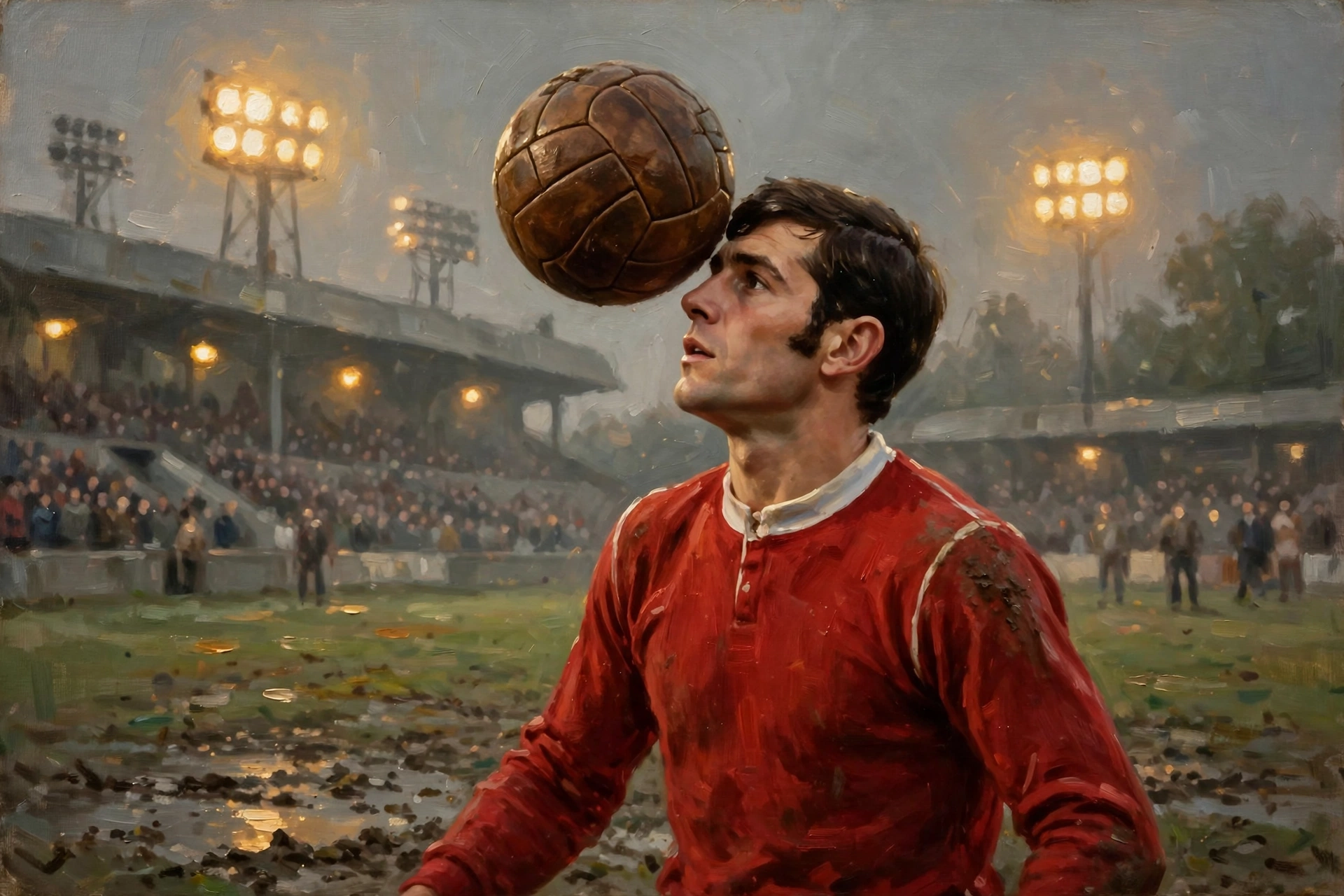
Sixty years after Nobby Stiles helped England win the World Cup, a coroner has said the game he loved helped kill him. The ruling on football heading dementia, delivered at Stockport Coroners’ Court in July 2026, is the first time a British court has formally linked a footballer’s death to heading the ball.
The short answer is this: senior coroner Alison Mutch found that Stiles’s chronic traumatic encephalopathy, or CTE, was caused by repeatedly heading the ball, and that it significantly contributed to his death at 78. She warned that players of all ages are still heading footballs today, and that future deaths could occur unless action is taken.
That warning is why the ruling matters beyond one family. Stiles was a World Cup winner and a Manchester United midfielder. If the damage could happen to him, in full view of millions, how did heading a ball go unquestioned for so long?
What did the coroner find about football heading dementia?
What did the coroner find? Senior coroner Alison Mutch found that Stiles died on 30 October 2020, aged 78, at Manorhey Care Centre in Urmston. Examination of his brain found Alzheimer’s disease, high-stage chronic traumatic encephalopathy, stage 3 LATE, and small vessel cerebrovascular disease.
She said she was “entirely satisfied” his CTE was caused by “repeated heading of the ball” during his career, and that without it he would probably never have developed it. The inquest heard he may have headed the ball more than 136,000 times, starting as a Manchester United apprentice in 1957, aged 15. The medical cause of death was recorded as Alzheimer’s disease, with high-stage CTE contributing.
Her Prevention of Future Deaths report, dated 4 August 2026, went to the Football Association and to the Secretary of State for Education, Lucy Powell. Mutch wrote that “there is a risk that future deaths could occur unless action is taken.” The FA called the issue a “vastly complex” matter. It is phasing out heading in youth football up to under-11 level.
Stiles’s death was not even reported to the coroner in 2020. The investigation began only after his family provided new information, and the inquest ran from January 2024 to July 2026. His son John Stiles leads Football Families for Justice, and dozens of former players and families are suing the FA, the FA of Wales, and the English Football League.
Who was Nobby Stiles?
Who was Nobby Stiles? Born Norbert Peter Stiles in Collyhurst, Manchester, in 1942, he was a tough-tackling midfielder who made nearly 400 appearances for Manchester United and won 28 caps for England, including every game of the 1966 World Cup-winning campaign. His son John told the inquest his father “never talked, he never bragged” about it. The engine room of a championship team spent his final years bed-bound in a care home, living with severe dementia.
What is CTE?
What is CTE? Chronic traumatic encephalopathy (CTE) is a progressive brain disease caused by repeated head impacts, in which a protein called tau builds up in the brain and gradually damages memory, thinking, mood, and behavior.
CTE can only be confirmed by examining brain tissue after death, which is why Stiles’s diagnosis arrived six years after he died. Its symptoms — memory loss, confusion, poor judgment, mood swings, depression, eventually severe dementia — read like a slow unravelling. A single header is not a concussion. The concern is accumulation: thousands of small impacts, each too minor to notice, adding up over a career. One drop of rain does nothing. Years of rain find every weakness.
What does the wider research say about football dementia risk?
What does the wider research say? The strongest evidence comes from the FIELD study, led by the University of Glasgow and published in the New England Journal of Medicine in October 2019. It compared 7,676 former Scottish male professional footballers with more than 23,000 matched members of the general population. Former professionals were about 3.5 times more likely to die of neurodegenerative disease — five times the Alzheimer’s risk, four times motor neurone disease, twice Parkinson’s.
The players actually lived longer on average. Crucially, the extra risk was specific to outfield players, not goalkeepers — which points toward heading. FIELD showed an association, not a mechanism — but alongside brain examinations like Stiles’s, the picture has hardened since 2019.
Pause and ask yourself: Think of something you do every day without thinking — a habit so ordinary it feels harmless. Now imagine learning, decades later, that it carried a cost nobody had measured. How would you want to have been told?
Why did football take so long to connect the dots?
Why did football take so long to connect the dots? Part of the answer is science: the gap between a header in 1966 and a diagnosis in 2026 is sixty years, and the damage only becomes visible when it is far too late. But part of the answer is psychology.
The first mechanism is risk normalisation. When everyone around you does something, and nobody visibly suffers, the brain files it under “safe.” Heading was a basic skill, drilled from childhood, praised by coaches, applauded by crowds. Our article on the winner mindset describes how athletes learn to treat discomfort as the price of belonging.
The second mechanism is present bias: we weigh today far more heavily than decades from now. A header wins a game today; the cost arrives in old age, in a care home. The third is identity. For a professional, the game is not a job. It is who you are — and questioning heading felt like disloyalty. That is the same bind behind performing under pressure in sport.
What does this mean for children heading footballs today?
What does this mean for children heading footballs today? The coroner’s warning was explicit: the risk applies to amateur and professional players, adults and children, and heading still happens in training and matches at every level. Young brains worry scientists most: a child’s brain is still developing and the neck muscles are weaker. The FA is phasing out heading up to under-11 level, but the report asks whether that is enough.
None of this means children should stop playing football — the joy, friendship, fitness, and confidence are real. It means adults should treat heading as a decision with a cost: limit it in training, teach safer technique, and take head injuries seriously the first time.
How do families live with a loss like this?
How do families live with a loss like this? Dementia takes a person in installments: forgotten names, lost routines, then the day the person no longer knows who you are. Researchers call this ambiguous loss — the person is physically present and psychologically gone, and the grief has nowhere clean to land. Our piece on grief describes how losses without a clear ending are among the hardest to carry.
For the Stiles family, the grief has an extra layer: the loss may have been preventable. That brings anger, and anger needs somewhere to go — into campaigning, into Football Families for Justice, into the demand that the game change. Psychologically, that is meaning-making, and bereavement research finds people cope better when they can find meaning in a loss.
The players themselves carry a quieter fear: men who headed the ball thousands of times, now waiting and wondering, their minds replaying what they cannot change — a loop our guide on how to stop overthinking everything addresses directly. If that is you, say the fear out loud rather than carrying it alone. And the Alzheimer’s research we have covered before is a reminder that the science is moving.
Frequently asked questions
What did the coroner rule about Nobby Stiles?
Mutch ruled Stiles’s high-stage CTE was caused by repeatedly heading the ball and contributed to his death at 78 in October 2020.
Is heading a football dangerous?
A single header is not a concussion; the risk comes from accumulation over years. The FIELD study (2019) found former professionals about 3.5 times more likely to die of neurodegenerative disease.
What are the symptoms of CTE?
Memory loss, confusion, poor judgment, mood swings, depression, and eventually severe dementia, years after the impacts. CTE can only be confirmed after death.
Should children still head footballs?
Yes — football’s benefits are real. But heading should be limited in training, especially for younger players, and the FA is phasing it out up to under-11 level. Take any head injury seriously the first time.
Try it on our site
If this story has left you thinking, these free, no-signup tools can help:
- Mind Check-Ins — 27 one-minute check-ins for mood, stress, and sleep.
- Burnout + Money-Stress Check — for stress and worry that has been building a while.
- Daily Tracker — log your mood each day and see what moves it.
Related reading: Choking Under Pressure · The Alzheimer’s Pill · Grieving at the Holidays
Key Takeaways
- Coroner Alison Mutch ruled Stiles’s high-stage CTE was caused by heading the ball over 136,000 times.
- Her report warns players of all ages still head footballs, and future deaths could occur without action.
- The 2019 FIELD study found former professionals about 3.5 times more likely to die of neurodegenerative disease.
- CTE is a progressive disease from repeated head impacts, confirmed only after death.
- Risk normalisation, present bias, and identity explain why football took so long to question heading.
- Children should keep playing, but heading in training should be limited and head injuries taken seriously.
- For families, dementia is an ambiguous loss — and finding meaning is one of the strongest ways to cope.
This article is educational and is not a substitute for professional advice. If you are struggling, consider speaking with a licensed mental health professional. In the US or Canada, call or text 988. In the UK, Samaritans can be reached at 116 123.