
The Psychology of Harry Styles: Reinvention, Privacy, and the Art of Becoming Yourself
Reviewed by a Psychology Postgraduate (MA)
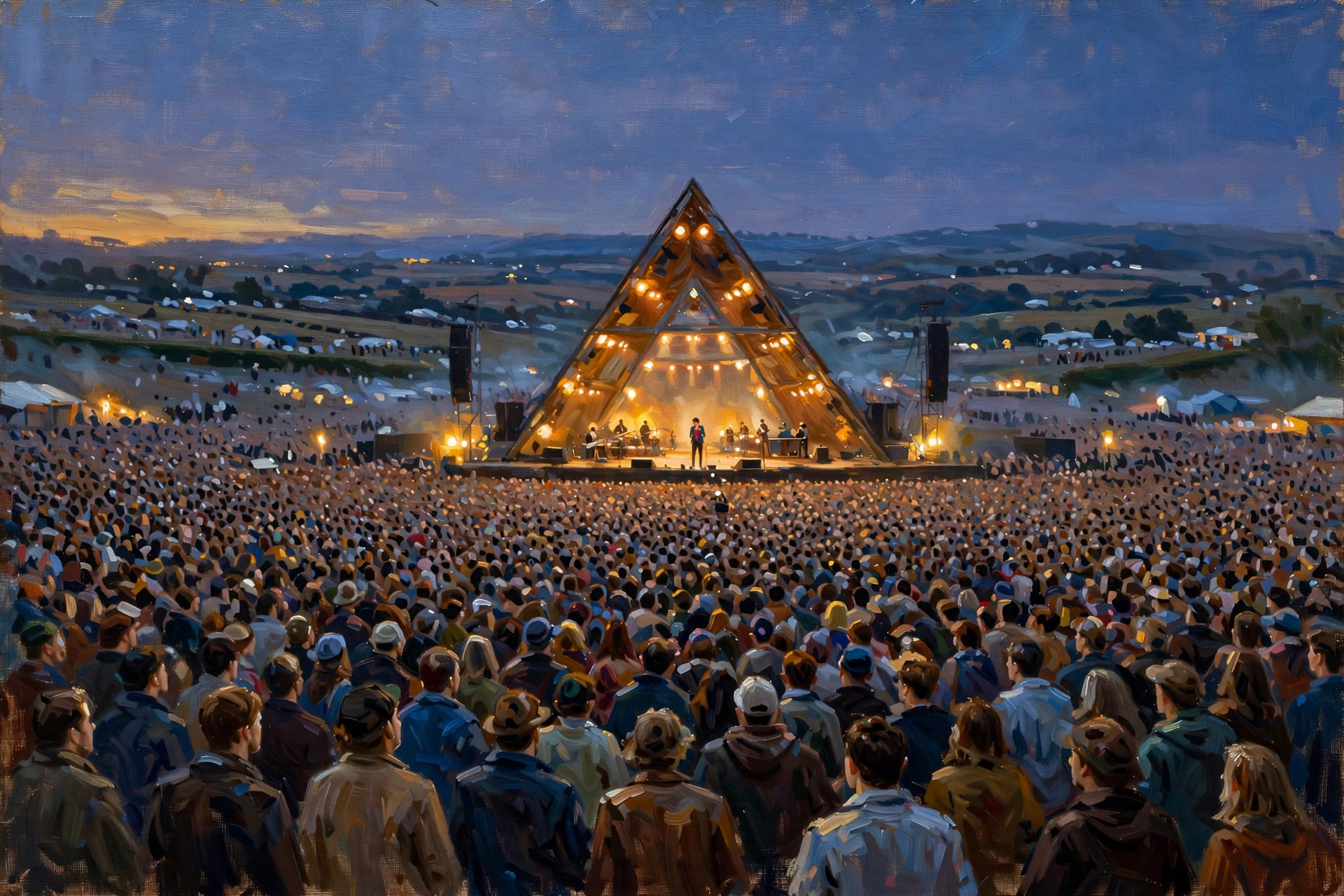
On 18 November 2026, Glastonbury Festival announced its 2027 headliners, and the name on the Saturday night slot stopped a lot of people mid-scroll: Harry Styles, headlining the Pyramid Stage on 26 June 2027. It will be his first ever Glastonbury appearance, at a festival that has been running since 1970. The announcement came at the end of a year in which his fourth album, Kiss All The Time. Disco, Occasionally., released on 6 March 2026, sold more than 183,000 copies in its first week in the UK — his biggest opening week ever — including over 66,000 vinyl copies, the biggest first-week vinyl sales for a British artist this century, according to the Official Charts Company. He topped the charts in 20 countries. He had already played a 30-show residency at Madison Square Garden in New York and a Wembley Stadium residency in London. Now, at 32, the boy who once sang in a school band in a Cheshire village is about to stand on the most famous stage in British music. This profile is an educational look at public behavior and research, not an assessment of Harry Styles as a person.
The short answer: Harry Styles psychology is the psychology of reinvention done slowly and on purpose: a teenager handed global fame at 16 who refused to let it freeze him into one identity, who rebuilt himself album by album, role by role, and outfit by outfit, while guarding his private life with unusual discipline. He treats identity as something you practice, not something you are given, and his career suggests that the people who last are the ones who keep choosing who they want to become next.
Reinvention, in psychological terms, is the deliberate process of revising how you see yourself and how the world sees you, by changing what you do, what you value, and what you are willing to be known for.
Story
Harry Edward Styles was born on 1 February 1994 in Redditch, Worcestershire, and raised in Holmes Chapel, a village in Cheshire. His parents divorced when he was seven, and he and his older sister Gemma were raised mostly by their mother, Anne. He went to Holmes Chapel Comprehensive School, where he sang lead in a school band called White Eskimo that won a local Battle of the Bands, and he worked part-time at the W. Mandeville Bakery. It is an ordinary small-town beginning, and that ordinariness matters: almost everything that followed was extraordinary, and the gap between the two is the story.
On 11 April 2010, at 16, Styles auditioned as a solo singer for the seventh series of The X Factor, encouraged by his mother. He did not get through as a solo act. Instead, the show’s producers put him together with four other eliminated solo singers — Niall Horan, Zayn Malik, Liam Payne and Louis Tomlinson — to compete as a group. Styles suggested the name: One Direction. The group finished third, then became one of the best-selling boy bands of all time, releasing five albums between 2011 and 2015 and touring stadiums around the world.
Think about what that means, psychologically. At 16, your job is to figure out who you are. Styles had to do that work while millions of people were telling him who he was, every day, in every country, at a volume that never switched off. Every haircut was news. Every friendship was photographed. Every version of himself that the public loved became a cage he was expected to stay inside. Most child stars either stay in the cage or break out of it violently. Styles did something rarer: he waited, he learned the business, and when the band went on hiatus at the end of 2015, he began the slow work of becoming someone else — on his own terms, at his own speed.
His solo debut came in 2017: a self-titled album led by the single “Sign of the Times,” which went to number one in the UK, and his acting debut the same year as a British soldier in Christopher Nolan’s Dunkirk. The second album, Fine Line, arrived in December 2019 and set a record for the biggest first-week sales by an English male artist in the United States. Harry’s House followed in May 2022, powered by “As It Was,” which spent 15 weeks at number one on the Billboard Hot 100, and in February 2023 the album won the Grammy Award for Album of the Year. Then came the fourth album, Kiss All The Time. Disco, Occasionally., in March 2026 — a dance-floor record inspired, Styles has said, by Glastonbury’s dance areas — and the Together Together tour that followed. Between the albums there were films (Eternals in 2021, Don’t Worry Darling and My Policeman in 2022), a fashion brand, Pleasing, launched in 2021, and a Vogue cover that made history. Each step was a new version of the same person, and none of them erased the one before.
Turning Point
Styles has had more than one turning point, and the first was the one that looked like failure. Being cut as a solo singer on The X Factor should have been the end of the story. Instead it was the beginning, because the rejection forced him into a group — and the group taught him the two skills that would carry his whole career: how to share a spotlight, and how to survive being watched. Psychologists call this kind of moment a “critical incident”: an event that reorganizes how you understand yourself. For Styles, the lesson was that a door closing is not always a verdict. Sometimes it is a redirect.
The second turning point was the hiatus. One Direction stopped touring at the end of 2015, and Styles, then 21, faced the question every former child star faces: who are you when the machine stops? He could have rushed out a solo record that sounded like One Direction with a different name on it. He did the opposite. He took more than a year, recorded an album full of seventies rock influences, grew his hair, changed his clothes, and came back as someone the old audience had to meet again for the first time. That gap — the year of silence — was the decision. Reinvention needs a pause. You cannot become someone new while you are still performing the old version for the crowd.
The third turning point was quieter, and it happened on stage. On his solo tours, Styles began ending shows by telling the crowd to be kind to themselves and to each other, and to “treat people with kindness” — a phrase that became a slogan, a merch line, and eventually a kind of mission statement. It sounds like a pop star platitude until you remember where it came from: a young man who had spent his teenage years inside the least kind machine in entertainment, choosing to build his name on the opposite of what that machine rewards.
Mindset
Three habits run through Styles’ public record. The first is patience with the long game. He has never chased the quick win: he waited over a year before his solo debut, he took small acting roles instead of demanding a starring vehicle, and he let each album sound different from the last instead of repeating the formula that worked. Psychologists who study delayed gratification find that the ability to wait for the better outcome, rather than grabbing the immediate one, predicts success across a lifetime. Styles’ career reads like a demonstration of it.
The second habit is curiosity over image. He has said in interviews that he looks at women’s clothes and thinks they are amazing, and that he dresses for himself rather than for approval. The mindset behind it is what psychologists call intrinsic motivation: doing something because it feels right to you, not because it will be rewarded.
The third habit is boundary-setting, and it may be the most important one. Styles almost never discusses his relationships in public, declines to confirm or deny speculation, and has described his private life as something he protects rather than something he sells. In a culture that treats a celebrity’s love life as public property, that is a deliberate act of self-definition: the message is that some parts of a person are not for sale. Research on self-determination theory, developed by psychologists Edward Deci and Richard Ryan, holds that autonomy — the feeling that you are the author of your own life — is a basic human need. Styles guards his autonomy the way other stars guard their privacy clauses, and the result is visible: at 32, he still seems to enjoy his work, which is rarer among former child stars than it should be.
Decisions
Look at the decisions, not just the hits. Saying yes to a band formed from five rejected solo singers, and then staying in it for five years, learning how stadiums work, how audiences work, how a global brand works. Saying no to the quick solo cash-in after the hiatus, and instead spending a year making a rock record that confused some of his pop audience. Saying yes to Dunkirk, a supporting role in an ensemble war film, when he could have held out for a romantic lead — and being taken seriously as an actor because he started small. Saying yes to My Policeman, a difficult drama that required emotional risk rather than star power.
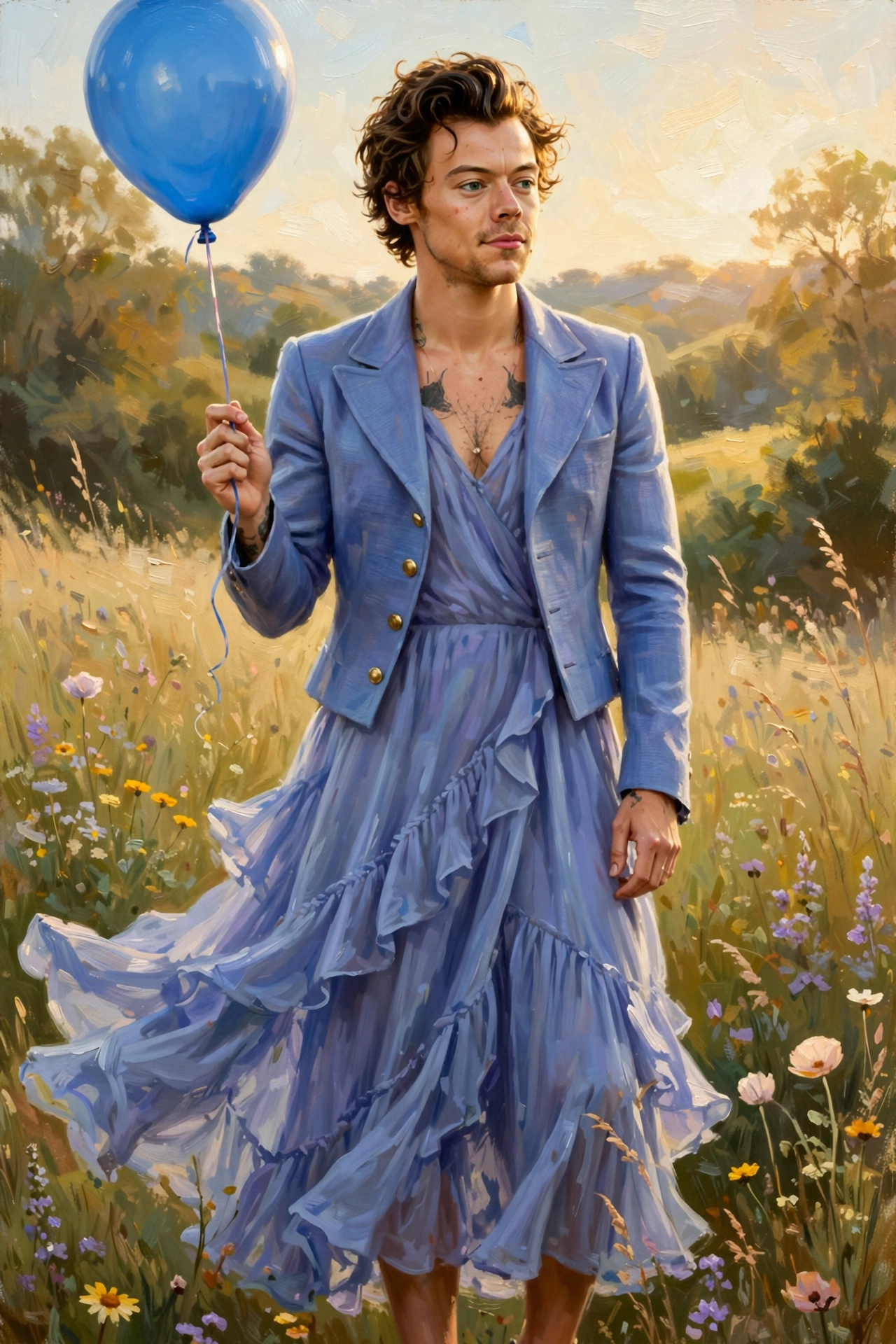
Then there is the fashion decision, which was really a decision about identity. The Vogue cover in December 2020, photographed by Tyler Mitchell, made Styles the first man to appear solo on the cover of American Vogue in the magazine’s 128-year history. He wore a periwinkle Gucci dress. The reaction was loud, some of it ugly, and he answered it by posting a photo of himself eating a banana with the caption “Bring back manly men.” He did not apologize, explain, or retreat. He just kept wearing what he liked. That is a pattern worth noticing: each time the public pushed back, he responded not with a statement but with consistency. Robert Pattinson’s own reinvention followed a similar shape, stepping away from a franchise that defined him and rebuilding credibility one unexpected role at a time, and the lesson is the same: the audience eventually follows the person who refuses to stay in the box, but only if that person keeps showing up as themselves.
The business decisions tell the same story. Pleasing, the beauty and lifestyle brand he launched in 2021, is built around nail polish and skin care marketed to everyone rather than to one gender. It is a small business next to a stadium tour, but it matters because it is his: a company where he sets the values instead of renting them from a record label. And the fourth album was a risk of its own. After the enormous success of Harry’s House, the safe move was another record like it. Instead he made a disco record, then announced a tour with a name — Together Together — that sounded like an invitation rather than a victory lap. The decisions share a shape: stretch a little further than comfort, keep the audience guessing, and never let the last success choose the next one.
Method
Styles’ method, as visible from the outside, is craft layered under charisma. Watch a live performance and you will see the parts: the voice, which is stronger and more controlled than his early records suggested; the stagecraft, learned across a decade of stadium shows, where he works a crowd the way a good host works a room; and the band, which he treats as collaborators rather than backing musicians, giving them solos and introductions in every show. He has said the live show is where he feels most himself, and the research on flow — psychologist Mihaly Csikszentmihalyi’s term for the state of total absorption in a challenging activity — fits: the stage is where his skill and the challenge match, and where the noise of fame drops away.
His songwriting method is collaborative and deliberately unhurried. He works with a small circle of writers, most notably Kid Harpoon, who executive produced the fourth album, and the records are built slowly, in rooms, with instruments, rather than assembled from fragments. The first album is a seventies rock record, the second a California soft-rock daydream, the third a warm, domestic pop album, the fourth a disco record made for dancing. A singer who can make four different records and still sound like himself has found something more durable than a style. He has found a voice.
Then there is the performance of kindness itself, which is a method too. The “treat people with kindness” line, the flags for good causes at shows, the way he pauses a concert to help a fan in the crowd — these are small, repeatable behaviors, and repetition is the point. Psychologists who study habits note that identity is built from repeated action, not from declarations. Styles did not announce that he was kind. He practiced kindness in public, night after night, until it became the thing people expected from him, and then he had to live up to it. That is a method for becoming: pick the person you want to be, and behave like that person until it stops being an act.
What If?
What if Styles had won The X Factor as a solo singer in 2010? He would have had a record deal at 16 and probably a short career: the show’s solo winners rarely last, and he would have been shaped by a label before he had the chance to shape himself. What if One Direction had never gone on hiatus? He would be richer, more famous, and almost certainly less free — still singing someone else’s version of his life at 32. What if he had taken the safe path after Harry’s House and made a second record just like it? He would have sold almost as many copies, and we would be writing a very different, much duller profile. The life he actually lived chose the harder question at every turn: not “what will they love?” but “who do I want to be next?”
What Most People Lack
Most people lack not talent but a tolerance for being misunderstood in public. Styles spent years being misread: first as a boy-band product, then as a pop star trying to be a rock star, then as a fashion stunt, then as an actor who did not belong on a film set. At each stage, the easiest move was to correct the record — to give the interview that explained everything, to complain about the label, to fight the narrative. He mostly did not. He let the work answer, which is slower and harder and, in the end, more convincing than any interview. Most people cannot bear the gap between who they are and who others think they are, so they either perform for the audience or rage at it. Styles did a third thing: he ignored the gap and kept working, trusting that the work would close it eventually.
There is a second thing most people lack, and it is related: the willingness to be a beginner again in public. At 21, he was a beginner as a solo artist. At 23, a beginner as a film actor. At 26, a beginner as a fashion figure. At 27, a beginner as a founder. Beginners look foolish, and famous beginners look foolish in front of millions. The psychology of it is simple and brutal: our fear of embarrassment is one of the strongest forces in human behavior, and it keeps most adults inside the identities they have already earned. Styles kept paying the embarrassment tax, and the returns compounded. Macaulay Culkin’s reinvention shows the same principle from the other side of fame, a child star who rebuilt himself slowly and on his own terms after years away from the spotlight, and the shared lesson is that a second act is not granted. It is earned by someone willing to look like a beginner again.
What Successful People Do Differently
Successful long-career people do three things differently, and Styles illustrates all three. They diversify before they must: music, film, fashion, business — so no single failure or fashion change can end them. One Direction’s hiatus could have been a cliff. Instead it was a doorway, because he had already started building the rooms on the other side. They invest in relationships, not just roles: the long collaborations with Kid Harpoon and his band, the loyalty to the people who were there before the fame, the friendships with fellow artists who are also navigating the same strange life. And they treat their reputation as a long game: one kind interaction, one honest interview, one show where the fans feel seen, repeated for a decade, compounds into trust. That is why, when Glastonbury announced him as a headliner, the reaction was not surprise but satisfaction — as if the audience had been waiting for the festival to catch up with the artist.
There is a fourth difference, and it is the one this profile keeps returning to: they protect their attention. Styles does not live on social media. He does not respond to every rumor. He does not turn his private life into content. In an economy that pays famous people to be constantly available, withholding attention is a form of wealth. Psychologists call the underlying skill self-regulation: the ability to choose where your energy goes, rather than letting the loudest demand choose for you. The result is visible in the work. An artist who is not exhausted by performing his own life has energy left for the art.
Pause and ask yourself: When was the last time you did something because it felt like you, even though nobody around you expected it? And what would change if you gave that version of yourself one small, regular outing — an hour a week, a single honest choice — instead of waiting for a dramatic reinvention?
Success Mindset
A success mindset is often described as believing you can grow. Styles’ version looks more specific: believing you can grow without permission. He did not ask the industry whether a boy-band singer could make a rock record, or whether a pop star could wear a dress on a magazine cover, or whether a 32-year-old could headline Glastonbury for the first time. He just did the thing and let the results argue for him. Psychologist Carol Dweck’s research on growth mindset finds that people who believe abilities can be developed are more likely to take on challenges and persist through setbacks than people who believe talent is fixed. Styles’ career is a long demonstration of the growth view applied to identity itself: the belief that who you are is not a fixed fact but a project you keep working on.
There is a related idea worth naming: psychological flexibility, the core of Acceptance and Commitment Therapy, which is the ability to act in line with your values even when the situation is uncomfortable — to feel the fear, the judgment, the awkwardness, and do the thing anyway. Wearing a dress on the cover of Vogue while knowing the internet would have opinions about it is psychological flexibility in a Gucci gown. Flexibility is not the absence of fear. It is the decision that the value matters more than the fear, and Styles has made that decision in public, repeatedly, for a decade.
Failures
No career this visible is unblemished, and Styles’ has had its rough patches. Some of his early solo shows were uneven as he learned to carry a stage alone. Don’t Worry Darling (2022) was a critical disappointment, and the press tour around it became a louder story than the film itself, with gossip about on-set tensions drowning out the work. His acting has been praised in some roles and questioned in others. The fourth album’s disco turn divided some listeners who had loved the warmth of Harry’s House and wanted more of it.
The instructive part is the response, which is almost always the same: no public feud, no defensive interview, no attempt to win the news cycle. He lets the moment pass and returns to the work. Psychologists call this combination self-compassion plus persistence: treating a setback as information rather than identity, and going back to the practice rather than to the grievance. It is also, simply, a good strategy. The news cycle moves on in days. A career is built in years. The people who confuse the two usually lose both.
There is also the quieter failure that every former child star knows: the years when the public version of you is more famous than the real one, and you start to wonder which one is in charge. Styles has spoken about that pressure in interviews, describing the strangeness of being known by millions of people who have never met you, and the discipline it takes to keep a private self intact inside a public life. He did not solve that problem by retreating from fame or by surrendering to it. He solved it by building a life with a clear boundary between the two.
Relationships
Styles’ relationships, as they appear in the public record, are defined by two things: loyalty and silence. He has kept the same close circle for years — his sister Gemma, his band, his long-term collaborators — and he has spoken warmly about his mother, whose encouragement put him on the path to The X Factor in the first place. His friendships with fellow musicians are long and low-key, the kind that survive fame rather than being built on it. And his fans have a relationship with him that is unusually two-way: at his shows, he reads their signs, answers their questions, helps them come out to their families, and treats the concert as a conversation rather than a performance. That reciprocity is a large part of why his audience has stayed with him through every reinvention — they were not just watching the changes, they were invited into them.
On romance, he is famously, deliberately quiet. He has declined, for years, to discuss his relationships in interviews, and has said that he keeps that part of his life private because it belongs to him and to the other person, not to the public. The speculation has not stopped, but it has never become the story. In a culture that treats a celebrity’s love life as a serial drama, refusing to supply the plot is a form of power. Kristen Stewart took a similar path after her own years of intense public scrutiny, drawing a hard line around her private life and rebuilding her career on her own terms, and the parallel is instructive: privacy, for people who have lived without it, is not secrecy. It is self-respect.
Dark Side
Every honest profile has a shadow, and Styles’ is the one built into his story from the start: the cost of becoming famous at 16. The research on child stardom is sobering. Psychologists who study identity development, following Erik Erikson’s work, describe adolescence as the stage when we form a stable sense of who we are — and doing that work while the whole world is watching, judging, and profiting from you is a recipe for confusion about where the performance ends and the person begins. Styles has described the weirdness of that life: being recognized everywhere, being expected to be grateful for it at all times, and having very little say in how he was presented. That is a real psychological pressure, and it explains a lot about the adult he became: careful with his privacy, slow to trust new situations, and determined to choose his own direction.
There is also the shadow side of the fame economy itself. The tabloid cycle that made One Direction also fed on them: rumors, invasions of privacy, speculation about their personal lives presented as news. Styles’ response — silence, consistency, and a refusal to feed the machine — is one of the healthier ones available, but it has a cost too. Silence gets misread as arrogance, and privacy gets framed as hiding something. The darker truth is that no response is free: engage and you feed the story, ignore it and you are accused of running from it. The only way out is the one he chose, which is to make the work so good that the work becomes the story.
And there is the shadow that comes with the brand of kindness itself. When “treat people with kindness” becomes a slogan on a tote bag, it invites cynicism, and Styles has faced his share of it — people asking whether the kindness is real or a marketing strategy. The behavior behind it, over a decade of shows and interviews and charitable giving, has been consistent. In 2022, after the school shooting in Uvalde, Texas, he donated one million dollars, with Live Nation, to the gun-safety organization Everytown for Gun Safety. His tours have regularly supported charitable causes, with fans raising money for local organizations at shows. Kindness, practiced long enough, stops looking like a slogan and starts looking like a habit.
Second Act
Styles has already had several second acts, and the Glastonbury headline is the latest of them. The first was the solo debut in 2017, when he stepped out of the biggest band in the world and asked to be judged as a musician on his own. The second was the acting career, built slowly from a small role in Dunkirk to leading roles in 2022. The third was the fashion and business act: the Vogue cover, the Gucci partnership, and Pleasing, a brand that treats beauty as something for everyone.
Glastonbury 2027 is the next act, and it is a particularly fitting one. The festival is famous for the artists who treat it as a coronation, and Styles has never played it — not with One Direction, not solo. His first appearance will be as a headliner, on the Saturday night, in front of a crowd of more than 200,000 people, at a festival that sold out its tickets in 42 minutes in October 2026 before a single artist had been announced. It is the kind of moment that usually arrives at the end of a career. For Styles, at 32, it arrives in the middle of one, which is exactly the point. Drew Barrymore’s reinvention followed a similar arc, a child star who rebuilt herself in public and then kept rebuilding, act after act, until the reinvention itself became the career, and the lesson holds: a second act is not a comeback. It is a decision to keep becoming, and Styles has made that decision so many times now that it looks less like a series of choices and more like a way of living.
Fun Facts
Styles was the lead singer of a school band called White Eskimo, which once played at a wedding. He worked at a bakery in Holmes Chapel before The X Factor, and has joked that he would have liked to be a physiotherapist if music had not worked out. He suggested the name One Direction himself, and the group agreed to it within minutes. He has four nipples, a fact he has mentioned cheerfully in interviews and which his fans treat as a beloved piece of trivia. He is a keen reader who has cited the novelist Haruki Murakami as a favorite, and he once said that he reads to understand how other people think. His tattoos are famously numerous — more than 60 of them — and include a swallow, a butterfly, and the words “Treat People With Kindness” written on his arm in his grandmother’s handwriting.
What the Research Says
What does psychology research say about a life like Styles’? Several findings fit. First, identity is not a single decision but a process. Erik Erikson’s theory of psychosocial development describes adolescence and young adulthood as the stage of identity formation, when we try on roles and commitments and gradually settle into a coherent sense of self. Styles’ career is that process made visible: trying on a rock star, a film actor, a fashion figure, a founder, and keeping the parts that fit.
Second, autonomy matters more than approval. Self-determination theory, from Deci and Ryan, holds that people thrive when they feel autonomous, competent, and connected — and that fame, which looks like the ultimate reward, often undermines all three, because it replaces your own goals with the audience’s. Styles’ insistence on choosing his own records, his own clothes, and his own boundaries is a textbook case of protecting autonomy inside a system designed to take it away.
Third, parasocial relationships — the one-sided bonds fans form with celebrities — are real and psychologically significant. Research finds that they can provide comfort, inspiration, and a sense of belonging, particularly for young people figuring out who they are. Styles’ relationship with his audience works because he treats it as a real relationship: he shows up, he listens, he remembers, and he gives something back. That is why his fans have followed him through every reinvention rather than demanding he stay the person they first loved.
Finally, the research on enclothed cognition — the finding, from a 2012 study by Hajo Adam and Adam Galinsky, that what we wear changes how we think and behave — gives a scientific frame to the fashion story. Clothes are a tool for self-construction: the outfit you choose changes how you carry yourself, how others respond to you, and, over time, who you become. Styles has used that tool more deliberately than almost any pop star alive. The dress on the Vogue cover was not a costume. It was a statement about who he is, made in the language everyone understands.
Activity
The Reinvention Quiz — five questions to find your next version. Answer honestly, then open each answer to see what it means:
1. When you imagine your life a year from now, what is the first change that comes to mind?
That first answer is usually the honest one. It is the change your mind has already been rehearsing. Write it down in one sentence, and ask yourself what the smallest version of it would look like this week.
2. What is one thing people expect from you that no longer fits who you are?
Expectations from others are not obligations, even when they feel like it. Name the expectation, then name who set it — and whether that person still gets a vote.
3. What would you try if you knew nobody would laugh at you for being a beginner?
This is the question Styles answered four times in public: solo artist, actor, fashion figure, founder. The beginner stage is the price of every reinvention. Pick one thing and give it a month.
4. Which part of your life is most yours — chosen by you, not inherited or expected?
That part is your anchor. When reinvention feels scary, start from the part that already belongs to you and build outward from there.
5. What is one boundary you wish you had set sooner?
Boundaries are not walls. They are the lines that keep the public version of you from eating the private one. Choose one boundary to hold this week, and notice what it gives back.
If most of your answers point in the same direction, that is your next version, waiting for a first step. If they conflict, the conflict itself is the information — sit with it a little longer before deciding.
Frequently Asked Questions
Why is Harry Styles headlining Glastonbury 2027?
Glastonbury announced its 2027 headliners on 18 November 2026: Sam Fender on Friday, Harry Styles on Saturday 26 June, and Billie Eilish on Sunday, with Cher in the Legends slot. It will be Styles’ first Glastonbury appearance, following his fourth album and a year of stadium residencies.
What is Harry Styles’ fourth album?
His fourth album is Kiss All The Time. Disco, Occasionally., released on 6 March 2026. It sold more than 183,000 copies in its first week in the UK, including over 66,000 vinyl copies, and topped the charts in 20 countries.
How did Harry Styles become famous?
He auditioned for The X Factor in 2010 at 16, was grouped with four other singers to form One Direction, and the band became one of the best-selling boy bands of all time before going on hiatus at the end of 2015. His solo career began in 2017.
Why is Harry Styles so private about his personal life?
Styles has consistently declined to discuss his relationships in public, saying his private life belongs to him. The profile above reads this as a boundary-setting habit that protects his autonomy — a pattern researchers link to wellbeing under fame — not as secrecy.
Try it on our site
Styles’ story is about choosing who you become next. Try it for yourself:
- Confidence Builder — build the confidence to try a new version of yourself, one small step at a time.
- Mind Check-Ins — a quick check-in on how you are really doing today, before you decide what to change.
- Name Your Feeling — put a precise name on what you feel, so the feeling stops making the decisions for you.
Related reading: Julia Roberts and the Psychology of Longevity · Bill Murray and the Psychology of Spontaneity · Ric Flair and the Psychology of the Comeback
Key Takeaways
- Reinvention is a practice, not a single event: Styles rebuilt himself album by album, role by role, and outfit by outfit, with a pause between each version.
- A public failure, like being cut as a solo singer, can be a redirect rather than a verdict — if you are willing to take the door that opens instead.
- Protecting your autonomy matters more than winning approval: privacy, patience, and choosing your own next step are what keep a long career sustainable.
- Being a beginner again in public is the price of every second act, and the embarrassment tax pays compound interest.
- Identity is built from repeated action: pick the person you want to be, behave like that person, and let the work close the gap with the audience.
- Kindness, practiced in public night after night, stops being a slogan and becomes a habit — and a habit becomes a reputation.
This article is for education only and is not therapy, diagnosis, or medical advice. If you are struggling, consider speaking to a licensed professional. In the US, you can call or text 988 for the Suicide and Crisis Lifeline; in the UK, Samaritans is available at 116 123.