
Reviewed by a Psychology Postgraduate (MA)
The worst performer is certain they’re brilliant. The expert is full of doubt. This isn’t arrogance — it’s the Dunning-Kruger effect: the less you know, the less you know you don’t know. It explains overconfident amateurs, disastrous DIY, and why meetings are full of certainty from the least informed.
What it means in one sentence: The Dunning-Kruger effect is the finding that low-ability individuals overestimate their competence — because the skills needed for competence are the same skills needed to recognize competence.
The Dunning-Kruger Effect in Everyday Words
The paradox: To know you’re bad at something, you need enough skill to evaluate. But if you’re bad, you lack that skill — so you can’t see it. It’s a trap: incompetence hides itself.
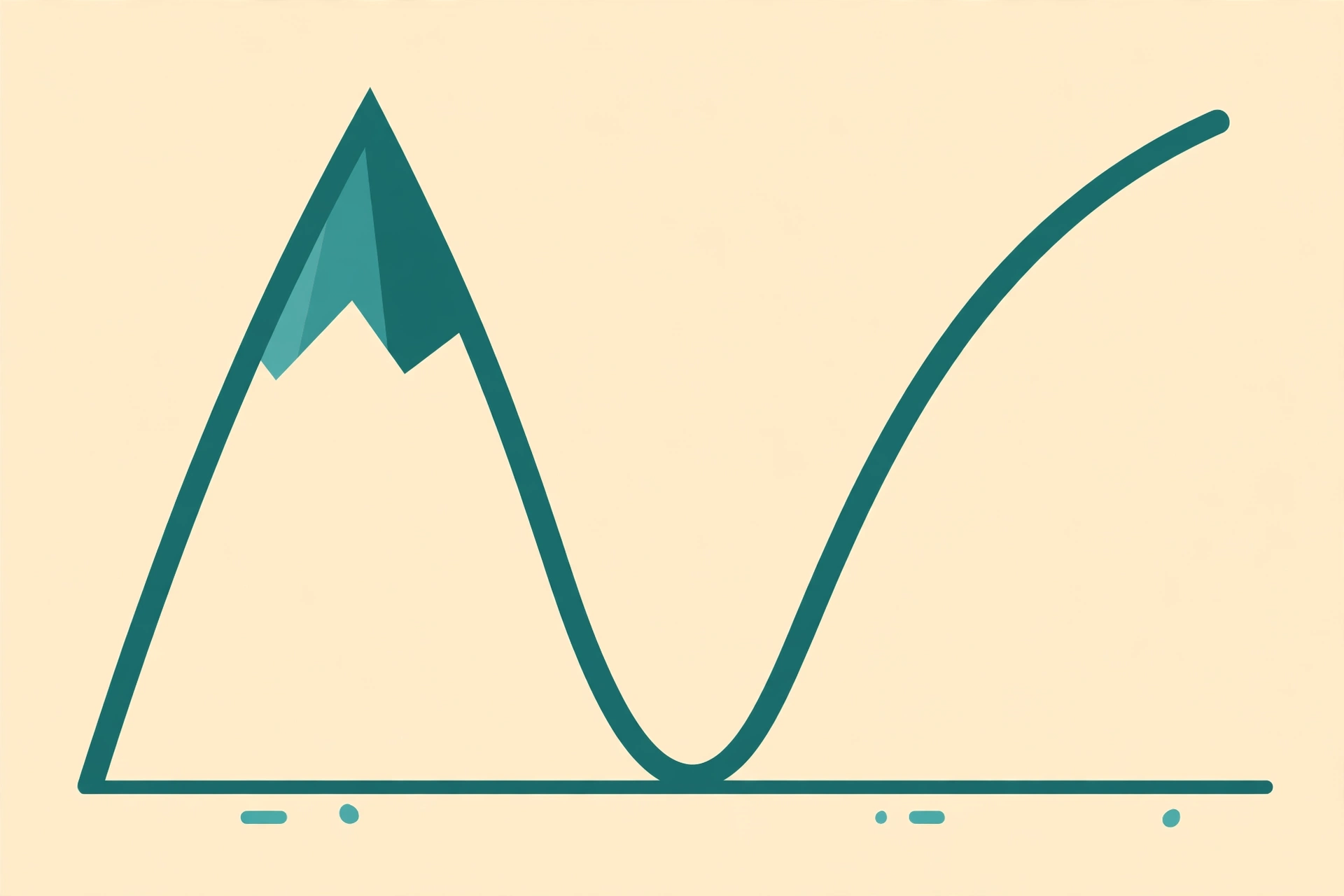
The curve: Beginners: high confidence (“how hard can it be?”) — Mount Stupid. Then: crash (“I know nothing“) — Valley of Despair. Then: slow climb — Slope of Enlightenment. Experts: moderate confidence, aware of limits — Plateau of Sustainability. The most confident are at the start; the most competent are cautiously confident.
Impostor syndrome (flip side): High performers underestimate — assuming everyone finds it easy (“if I can do it…”). Dunning-Kruger and impostor syndrome are mirror images: the unskilled can’t see their gaps; the skilled can’t see their gifts.
The Science Behind It
Dunning & Kruger (1999): Bottom quartile (logic, grammar, humor tests) overestimated themselves by ~50 percentile points — rating themselves above average. Top quartile slightly underestimated. Training the unskilled improved both skill and self-awareness — proving the mechanism (metacognition).
Caveats: It’s not “stupid people think they’re smart.” It’s domain-specific (you can be expert in one area, Dunning-Kruger in another). And the original effect is statistical (regression to mean contributes). But the core — metacognitive deficit — holds.
3 Examples From Real Life
Example 1 — The meeting: The least informed person speaks most confidently. The expert hedges (“it’s complex…”). The group follows the confident one — not the knowledgeable one. Dunning-Kruger doesn’t just affect individuals — it distorts groups. Confidence signals competence — falsely.
Example 2 — The DIY: You watch a YouTube video. “I can do plumbing!” Mount Stupid. You flood the bathroom. Valley of Despair. You hire a plumber, watch, learn. Slope. Years later: you can do it — and know when not to. The journey from confident incompetence to humble competence.
Example 3 — The driver: 80% of drivers rate themselves above average. Statistically impossible. But each can’t see their own errors (they forget them) while seeing others’ (confirmation bias). We’re all Dunning-Kruger somewhere — the question is where, not whether.
🧠 Quick check: What is the Dunning-Kruger effect?
Why: Metacognitive deficit: incompetence hides itself. Training improves both skill and self-awareness — proving the mechanism.
Try This Today
Seek disconfirmation. Pick something you’re confident about. Ask: “What would prove me wrong?” Seek that evidence. Ask an expert to critique you. The antidote to Dunning-Kruger isn’t humility (performative) — it’s feedback (real). Invite correction. The Valley is painful but necessary.
What People Get Wrong
Myth: “Dunning-Kruger means dumb people are arrogant.”
Reality: It’s domain-specific and universal — you’re Dunning-Kruger in something. It’s not intelligence — it’s metacognition (knowing what you don’t know). The arrogant expert and the humble beginner both exist. The effect is about calibration, not character.
Why It Matters
Dunning-Kruger shapes decisions: overconfident amateurs lead, invest badly, reject expertise. The fix is cultural: reward “I don’t know,” normalize expertise, demand evidence over confidence. And personally: assume you’re on Mount Stupid in new domains. Climb down deliberately. The smartest thing is knowing you’re not.
🧠 Quick check: What is 'impostor syndrome' in relation to Dunning-Kruger?
Why: The unskilled can't see gaps; the skilled can't see gifts. Both are miscalibration — in opposite directions.
Frequently Asked Questions
What is the Dunning-Kruger effect in simple terms?
The Dunning-Kruger effect is a cognitive bias where people with low ability in an area overestimate how good they are, while highly skilled people underestimate themselves. It was first documented by psychologists David Dunning and Justin Kruger in 1999. The least competent are also the least able to see their own incompetence.
Why do incompetent beginners feel so confident?
Beginners lack the knowledge to spot their own mistakes, so a little learning feels like mastery. Psychologists call this the peak of false confidence on the Dunning-Kruger curve. Real competence grows only after the beginner hits the slump where they realise how much they do not know.
Are experts immune to the Dunning-Kruger effect?
Not entirely, but the effect runs in reverse for them. True experts tend to underestimate their own ability because they assume what is easy for them is easy for everyone. This is why seasoned professionals sometimes doubt themselves while beginners charge ahead with total confidence.
How can I avoid the Dunning-Kruger effect?
Actively seek feedback from people more skilled than you, test your skills against real standards instead of gut feeling, and keep learning past the point where you feel confident. Metacognition, honestly asking what you might be missing, is the best known defence against overestimating yourself.
Try It on Our Site
Try it now: Competitive Mindset check-in — calibrate your confidence against reality. Start the check-in →
More tools for this topic:
Related reading: 15. Cognitive Biases · 22. Growth vs. Fixed Mindset · 18. Heuristics
Tap when this one clicks — your progress is saved on this device.