
Reviewed by a Psychology Postgraduate (MA)
Two people lose their jobs. One spirals for a year. The other grieves, adapts, rebuilds — stronger. Same event, different outcomes. The difference is resilience: not avoiding hardship, but recovering from it. And it’s not a trait you’re born with. It’s a set of skills — and they’re learnable.
What it means in one sentence: Resilience is the capacity to adapt well to adversity — recovering from setbacks, trauma, and stress, often growing through them.
In short: What is resilience? It is the ability to recover from adversity — to grieve, adapt, and rebuild after hardship rather than being defined by it. Research shows resilience is not a rare inborn trait but a set of learnable skills: realistic optimism, strong relationships, flexible coping, and a sense of purpose.
What Resilience Means in Everyday Words
Not toughness: Resilience isn’t not feeling pain. It’s feeling it and recovering. The myth (“tough it out”) confuses suppression (unhealthy) with resilience (processing + adapting). Resilient people cry, struggle, need help — then rebuild.
The factors (APA): Connection (supportive relationships — the strongest predictor), Wellness (sleep, exercise, health — physical foundation), Healthy thinking (realistic optimism, not toxic positivity), Meaning (purpose, values — why to keep going). It’s ordinary, not extraordinary — everyday resources, not heroics.
Post-traumatic growth: Some don’t just recover — they grow: deeper relationships, new purpose, greater strength. Not guaranteed (don’t romanticize suffering), but possible. Adversity can be transformative — if processed, not just endured.
The Science Behind It
Masten’s research: resilience is “ordinary magic” — common, not rare. Most children in adversity do okay if they have one stable relationship. It’s systems, not superpowers: supportive relationships, cognitive flexibility, physiological regulation.
Neurobiology: Resilient brains show better prefrontal regulation of amygdala — they feel threat but recover faster. This is trainable: mindfulness, exercise, CBT all strengthen regulation. Resilience is neural, not just attitudinal.
It’s dynamic: Not a trait (have/don’t) but a process (varies by domain, time). You can be resilient at work but not in relationships. It depletes (chronic stress erodes it) and rebuilds (rest, support restore it). Think battery, not badge.
3 Examples From Real Life
Example 1 — The layoff: David, 45, laid off. Month 1: grief, fear. Resilient response: leans on connection (friends, not isolation), maintains wellness (runs daily — regulates), reframes (“chance to pivot,” not “I’m done”), finds meaning (mentors others job-hunting). Year 1: new career, stronger. Not unscathed — transformed. The skills did it, not toughness.
Example 2 — The child: A girl in poverty, unstable home — but one teacher believes in her. That single stable relationship predicts resilience more than any program. She struggles but persists, graduates, thrives. “Ordinary magic”: not removing adversity, but one connection buffering it. Resilience is relational.
Example 3 — The athlete: A runner tears her ACL. Non-resilient: identity shatters (“I’m nothing without running”), quits. Resilient: grieves, adapts (coaches while rehabbing), finds meaning (helps others recover), returns stronger mentally. Same injury, different narrative. Resilience isn’t avoiding the fall — it’s choosing the story.
🧠 Quick check: What is resilience?
Why: Not toughness or suppression — it's processing + adapting. 'Ordinary magic': common resources (one stable relationship) predict it more than heroics.
Try This Today
Build one pillar. Pick the weakest: Connection (text a friend), Wellness (walk 20 minutes), Thinking (reframe one setback: “What could this teach?”), Meaning (one values-aligned act). Resilience isn’t built in crisis — it’s built now, in calm. Stock the battery before you need it.
What People Get Wrong
Myth: “Resilient people don’t struggle — just tough it out.”
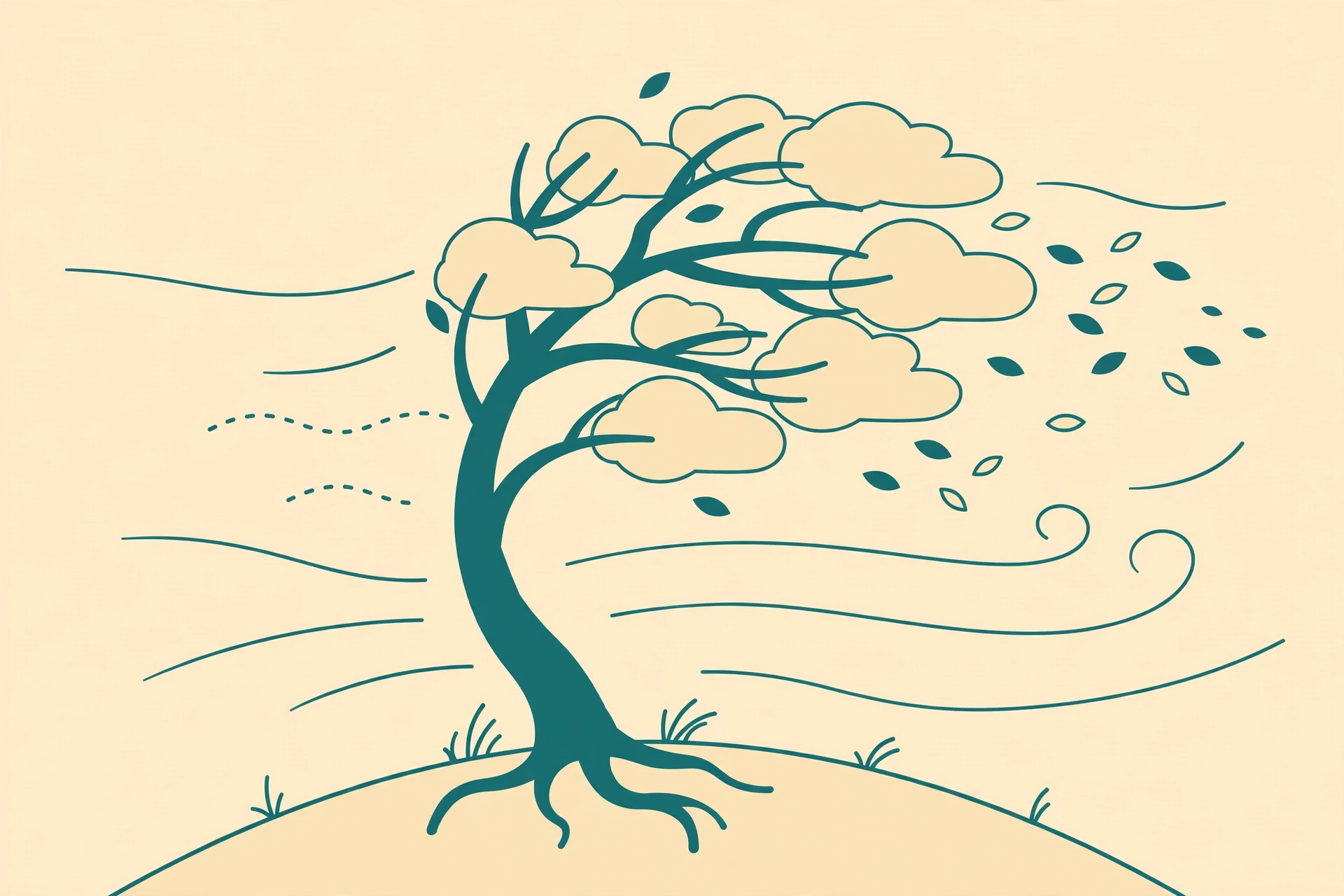
Reality: They struggle deeply — then recover. “Toughing out” (suppressing) is unhealthy coping, not resilience. True resilience includes pain, help-seeking, and time. The tough facade breaks; the flexible reed bends and returns. Don’t admire stoicism — build resources.
Why It Matters
Adversity is guaranteed. Resilience determines whether it breaks you or builds you. And it’s learnable: connection, wellness, thinking, meaning — ordinary tools, extraordinary outcomes. You’re not born resilient. You become it — one relationship, one walk, one reframe at a time. Start now. The storm will come. Be ready.
🧠 Quick check: What is 'post-traumatic growth'?
Why: Not romanticizing suffering — but processed adversity can transform. Growth isn't automatic; it's the product of struggling well, with support and meaning.
Frequently Asked Questions
What is resilience in psychology?
Resilience is the process of adapting well after adversity — recovering from setbacks rather than being permanently defined by them. It is about bouncing back, not about never falling.
Are some people just born resilient?
Temperament helps a little, but research shows resilience is mostly built: supportive relationships, realistic optimism, flexible coping strategies, and a sense of purpose all strengthen it. It is a skill set, not a fixed trait.
What are examples of resilience?
Grieving a loss and gradually rebuilding daily life, retraining after a layoff, or a community pulling together after a disaster. Resilience usually looks ordinary — small steps, repeated.
How can I build resilience?
Invest in relationships, practice reframing setbacks as temporary and specific, keep routines that steady you, and take small brave actions. Each recovery teaches your brain that hardship is survivable.
Try It on Our Site
Try it now: 7-Day Anxiety Toolkit — resilience is trainable — here’s a guided week. Begin the program →
More tools for this topic:
Related reading: 40. Healthy vs. Unhealthy Coping · 27. Self-Esteem · 22. Growth vs. Fixed Mindset
Tap when this one clicks — your progress is saved on this device.