
Denmark’s Supreme Court Is Deciding Who Counts as “Non-Western” Today: The Psychology of Labels That Divide Us
Reviewed by a Psychology Postgraduate (MA)
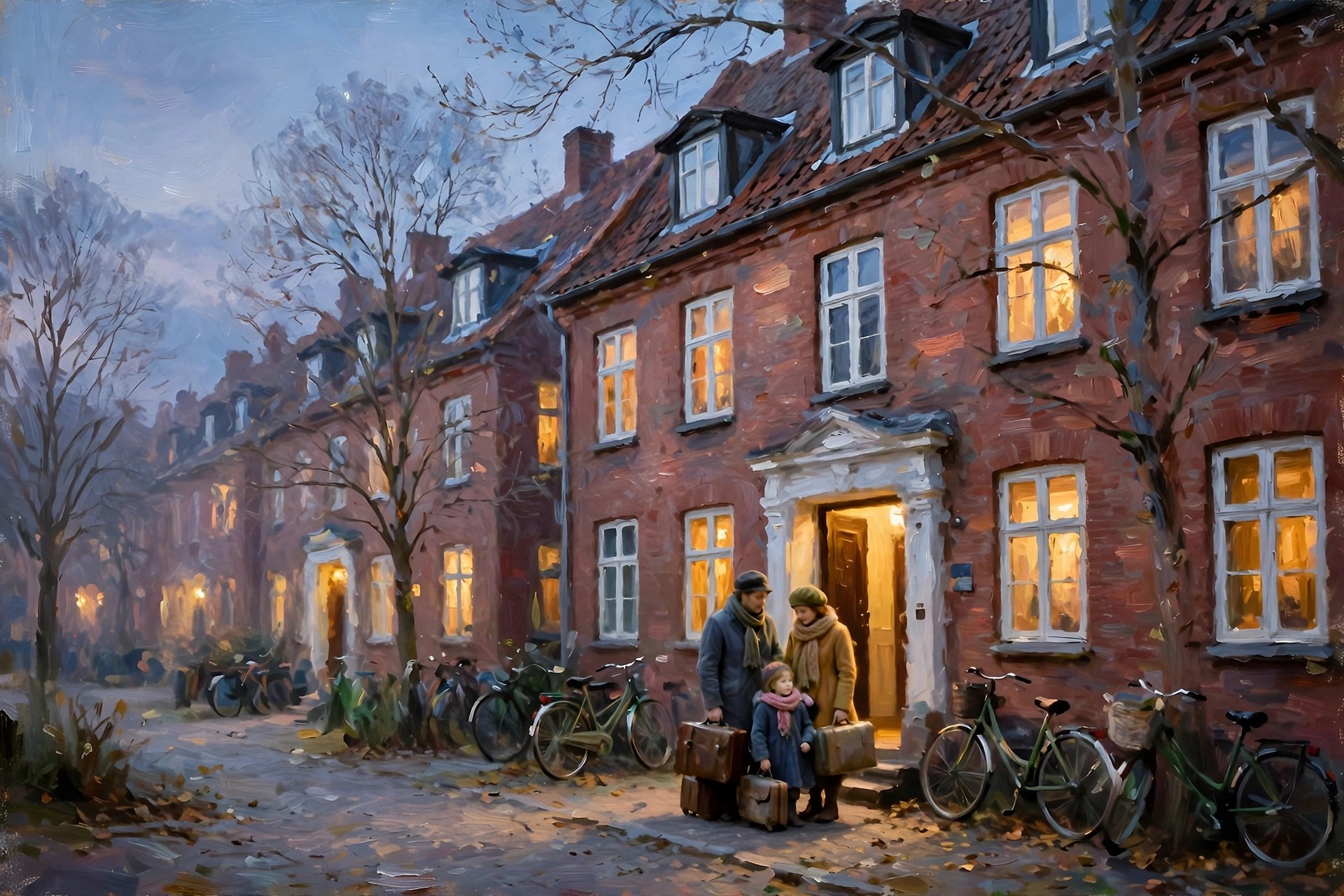
Denmark parallel societies psychology begins with seven families in a courtroom in Copenhagen. Today, Monday 9 November 2026, Denmark’s Supreme Court is hearing the second day of a landmark case: seven families from the Nøjsomhed-Sydvej estate in Helsingør, north of Copenhagen, say they were forced from their homes because of where they — or their parents — come from. Their leases were terminated in 2022 under a 2018 law once known as the “ghetto law”, now called the “parallel societies” policy, which targets social housing estates where more than half of residents are classed as “non-Western”. The short answer to what is at stake: the court must decide whether a government label, applied to whole neighbourhoods, counts as racial discrimination — and the psychology of that question reaches far beyond Denmark, into how labels shape identity, belonging and trust everywhere.
The facts are specific. Under the 2018 law, every 1 December the government names “parallel societies”: social housing areas of at least 1,000 people where more than 50 percent of residents are immigrants or descendants from “non-Western” countries. Housing associations there must cut non-profit housing by 40 percent by 2030, through sales, demolitions or ending tenancies. The seven families lost in the lower courts, which ruled the phrase does not name a single ethnic group and so does not breach Denmark’s Equal Treatment Act. But in December 2025 the Court of Justice of the European Union ruled, in cases from Mjølnerparken in Copenhagen and Schackenborgvænget in Slagelse, that the criterion may be unlawful — a rule that looks neutral can still be, in the EU court’s words, inextricably linked to ethnic origin. The Supreme Court’s verdict, expected later this month, will decide the matter for Denmark.
Why does a label on a neighbourhood matter so much?
Why does a label on a neighbourhood matter so much? Because labels do not just describe people — they change how people are treated, and how they see themselves.
Labelling theory, developed by sociologist Howard Becker in the 1960s, makes a simple claim with large consequences: a label, once applied, tends to become a self-fulfilling reality. Call an area a “ghetto” or a “parallel society” and three things happen at once. Outsiders treat it differently — employers, landlords, teachers, police. Insiders internalise it — residents, especially young people, absorb the message that their home is a problem. And institutions act on it, which is exactly what this law does: the label triggers the evictions. The word is not a description of the policy. It is the engine of it.
Denmark’s own history with the word shows the shift. The policy was introduced in 2018 as part of a plan called “One Denmark without Parallel Societies: No Ghettos in 2030”, and the government has since moved from the word “ghetto” to “parallel societies” and “transformation areas”. The renaming shows even the government knows labels carry weight — but changing the word while keeping the mechanism, the same 50 percent threshold and the same evictions, is exactly what the Supreme Court is being asked about: does a softer label make the policy fairer, or just easier to defend?
What happens inside a person when the state labels them?
What happens inside a person when the state labels them? The research points to a quiet, corrosive process that psychologists call stereotype threat.
Claude Steele’s work on stereotype threat, first published in the 1990s, showed that when people are aware of a negative stereotype about their group, the fear of confirming it can itself damage their performance — in exams, interviews, everyday interactions. Part of the mind is busy monitoring the stereotype, using up the attention needed to do the task well. Now imagine that dynamic scaled up to a whole neighbourhood, applied not in a single test but every day, by the state itself. A teenager from Nøjsomhed-Sydvej carries the label into every form she fills in, every address she writes down, every time someone asks where she is from. The label becomes a second job: managing other people’s assumptions before you have said a word.
There is a second effect, described by Henri Tajfel’s social identity theory: people draw part of their self-worth from the groups they belong to, and when a group is publicly devalued, members must choose — distance themselves from it, accept the devaluation, or fight back. None is free: distancing cuts ties with neighbours and family, acceptance means absorbing the message that your home is lesser, and fighting back costs energy on a battle you did not choose. The seven families chose the third option, and the fact that it took them to the Supreme Court shows how expensive that choice is.
Why does losing a home hurt differently from other losses?
Why does losing a home hurt differently from other losses? Because a home is not just a building. Psychologists call the bond with a place “place attachment”: like attachment to people, it provides safety, identity and continuity, and losing it triggers grief.
For the Helsingør families, the loss was not a fire or a flood — events nobody chose. It was a decision, made by people they will never meet, on the basis of a category they did not choose. Research on procedural justice, led by Tom Tyler, finds that people can accept outcomes they dislike when the process feels fair — but when it feels arbitrary, the damage goes deeper than the outcome. Being told your lease is ending because your neighbours share a background corrodes something more valuable than any single tenancy: trust in institutions. If the court upholds the law, thousands of residents in other designated areas will live with the same uncertainty. If it strikes the label down, the government may have to abolish the category entirely — a possibility legal experts have raised since the EU court’s ruling.
Place attachment also explains why the families fought back rather than moving on. A home holds routines, neighbours, the school run, the shopkeeper who knows your name. Forced relocation breaks all of those threads at once, and research on displacement consistently finds the same pattern: the material loss is recoverable, but the loss of community and continuity leaves a longer mark, especially on children and older people. The families’ argument is psychological as much as legal: you cannot treat a home as a number on a spreadsheet and expect the people inside it to feel like numbers.
Pause and ask yourself: Have you ever been labelled — by a postcode, a school, a job title, an accent — in a way that changed how people treated you? How did it change the way you behaved, and how long did it take to shake off?
What does this case mean for the rest of us?
What does this case mean for the rest of us? Categories are tools, and tools can be used well or badly. Governments everywhere sort people into groups — for statistics, services, policy — and sorting is not inherently harmful: it is how a state knows where to build schools or hospitals. The danger begins when a category stops being a description and becomes a judgement with consequences. Denmark’s “non-Western” label is unusually explicit, but the dynamic is universal: every country has words for “us” and “them”. The verdict, expected later in November, will be watched well beyond Denmark because it asks the question in its purest form: can a state divide residents into two kinds and treat them differently, as long as it uses a neutral-sounding word?
For readers, the takeaway is smaller and more personal. Notice the labels in your own life — the ones you apply to others and the ones applied to you. A label is a shortcut, and shortcuts are where thinking stops. The moment you catch yourself judging a person by a category rather than by what they did, you have found where the psychology of this Danish courtroom lives in your own head. The families in Helsingør are asking a court to do something we can all practise for free: look past the label and see the people.
Frequently asked questions
What is Denmark’s “parallel societies” law?
A 2018 law, once called the “ghetto law”, requiring social housing estates where over 50 percent of residents are classed as “non-Western” to cut non-profit housing by 40 percent by 2030.
What is the Supreme Court deciding?
Whether the state’s use of the “non-Western” classification in evictions constitutes racial discrimination. The hearings ran on Friday 6 November and Monday 9 November 2026, with a verdict expected later in November.
What did the EU court say?
In December 2025, the Court of Justice of the European Union ruled the criterion may be unlawful, because a rule that looks neutral can still be linked to ethnic origin. It left the final decision to the Danish courts.
Who are the families in the case?
Seven families from the Nøjsomhed-Sydvej estate in Helsingør, north of Copenhagen, whose leases were terminated in 2022. They lost in the lower courts and appealed to the Supreme Court.
Why does the label matter psychologically?
Research on labelling theory, stereotype threat and social identity shows official labels change how people are treated, how they perform, and how they see themselves — and losing a home to a category, rather than a choice, damages trust in institutions.
Try it on our site
If this story stirred something — about belonging, identity, or the labels you carry — these free tools can help you work through it:
- Thought Reframe — challenge the labels you have internalised and rewrite them on your own terms.
- Social Confidence — practise showing up as yourself, even when the room has already decided who you are.
- Daily Tracker — notice how belonging — or its absence — shapes your mood day to day.
- Focus Room — a quiet space to sit with a difficult feeling before you act on it.
Related reading: A United Ireland Could Cost €25 Billion: The Psychology of Belonging, Denmark’s Cyberattack and the Psychology of Digital Trust, Pre-Settled Status Revoked: The Psychology of Belonging on Paper.
Key Takeaways
- Denmark’s Supreme Court is hearing the second day of a landmark case today, 9 November 2026, on whether the “non-Western” label behind evictions from social housing amounts to racial discrimination.
- Seven families from Helsingør lost their homes in 2022 under a 2018 law that forces housing estates with over 50 percent “non-Western” residents to cut non-profit housing by 40 percent by 2030.
- The EU’s top court ruled in December 2025 that the criterion may be unlawful; the Danish verdict, expected later in November, could force the category to be abolished.
- Labelling theory, stereotype threat and social identity research all explain why official labels do real psychological damage — they change how people are treated and how they see themselves.
- Losing a home to a category, rather than a choice, breaks place attachment and corrodes trust in institutions — the harm goes beyond the tenancy itself.
- The lesson for everyone: notice the labels you use and the ones used on you. A category is a shortcut, and shortcuts are where thinking stops.
If this story has raised difficult feelings about belonging, identity or housing insecurity, consider speaking to a licensed mental health professional. In Denmark, Livslinien offers support on 70 201 201. In the US, call or text 988. In the UK and Ireland, call Samaritans on 116 123.