
Reviewed by a Psychology Postgraduate (MA)
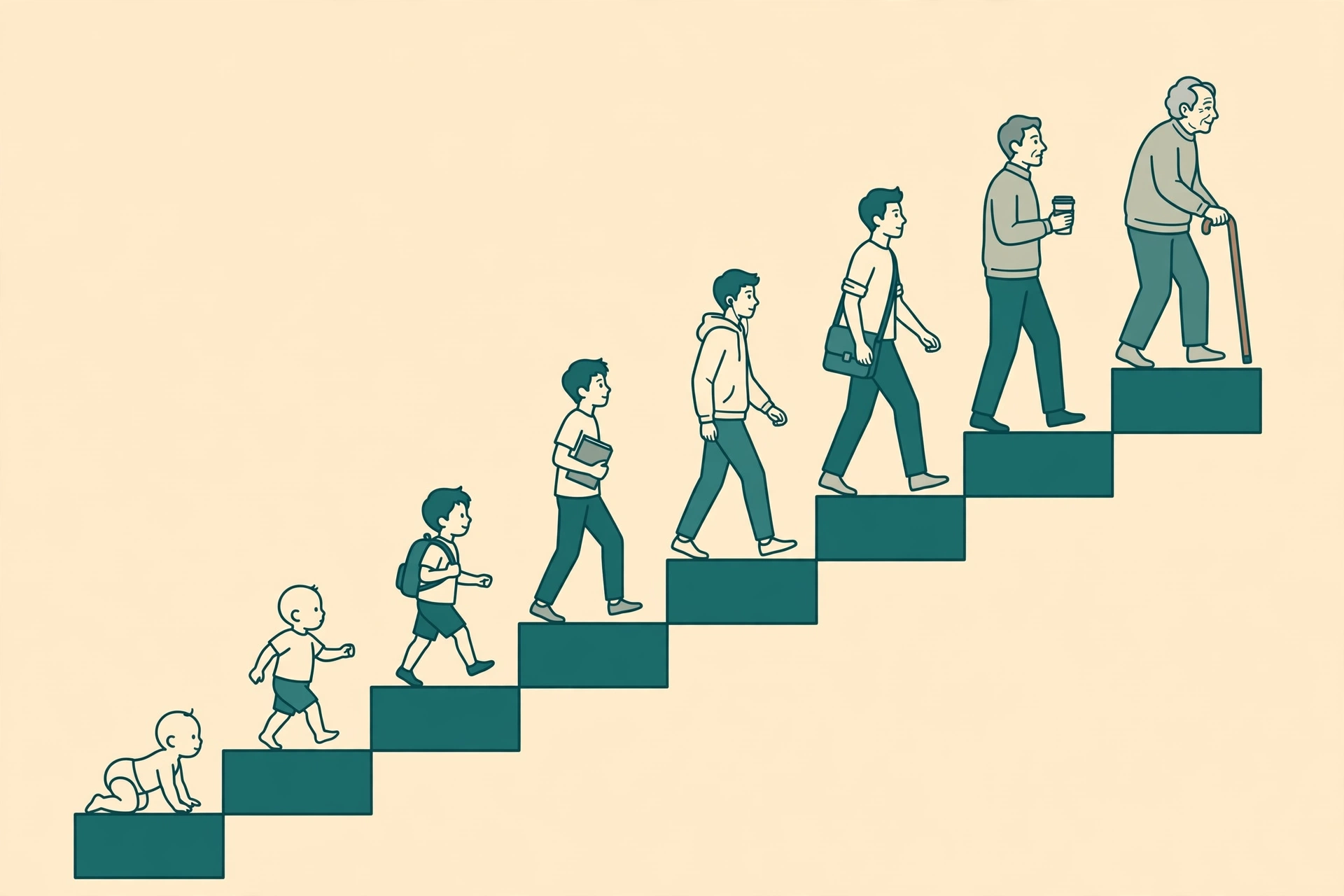
Why do toddlers scream “NO!”? Why do teens obsess over identity? Why do 40-year-olds question everything? Not random — developmental stages: predictable psychological tasks, in order, birth to death. Erikson mapped all eight.
What it means in one sentence: Erikson’s stages are eight psychosocial crises — infant trust to elderly integrity — each a conflict shaping personality for life.
In short: Erikson's stages of development are eight psychosocial crises spanning birth to old age, from infant trust vs. mistrust to elderly integrity vs. despair. Each stage poses a question — “Can I trust?”, “Who am I?”, “Am I contributing?” — and its resolution shapes personality for life. Erikson's radical claim: development is lifelong, and stages are tasks to work through, not age boxes.
Erikson's Stages in Everyday Words
1. Trust vs. Mistrust (0-1): “Can I trust?” Reliable care → hope. 2. Autonomy vs. Shame (1-3): “Can I do it myself?” The “NO!” stage → willpower or shame. 3. Initiative vs. Guilt (3-6): “Can I lead?” → purpose or guilt. 4. Industry vs. Inferiority (6-12): “Can I be competent?” → competence or inferiority.
5. Identity vs. Role Confusion (12-20): “Who am I?” → fidelity or confusion. 6. Intimacy vs. Isolation (20-40): “Can I love deeply?” → love or isolation. 7. Generativity vs. Stagnation (40-65): “Am I contributing?” → care or “is this all?” 8. Integrity vs. Despair (65+): “Was it worthwhile?” → wisdom or despair.
The Science Behind It
Erikson (1950) made development social and lifelong — Freud stopped at childhood; Erikson went to the grave. Research supports the sequence: identity does precede stable intimacy.
Modern update: stages are tasks, not age boxes — they revisit. Cultures vary: collectivist “who are we?” vs. individualist “who am I?” Map universal-ish; terrain cultural.
3 Examples From Real Life
Example 1 — “NO!” toddler: Refuses every shirt. Not defiant — developmental (Autonomy). Wise parents: limited choices (“red or blue?”) — autonomy within bounds. Crush the “no” → shame. Honor structurally → will.
Example 2 — 45-year-old’s question: Has everything, feels hollow. Generativity vs. Stagnation: “Am I contributing?” Starts mentoring — hollowness lifts. Not success-failure; mattering hunger. Midlife crises often misdiagnosed generativity.
Example 3 — Teen’s tribes: Skater, gamer, activist — monthly. Not chaos — Identity working. Danger isn’t exploration; it’s foreclosure (unexamined adoption) or diffusion (no exploration). Chaos is curriculum.
🧠 Quick check: Core adolescent conflict (Erikson)?
Why: Teens must explore values, roles, tribes for authentic self. Trying-on is the task.
Try This Today
Which stage’s question is loudest now? “Can I trust?” “Who am I?” “Am I contributing?” “Was it worthwhile?” Name it. What would resolution look like? You’re not “behind” — you’re in a stage. Stages are for working through.
What People Get Wrong
Myth: “Development ends at 18.”
Reality: Erikson’s radical claim: lifelong. The 40-year-old’s crisis and 70-year-old’s review are as developmental as toddler’s “no.” Never done — just at a later question. “Too late” is usually stage-confusion.
Why It Matters
Turns confusing behaviors into readable tasks. Tells you what’s next: 30 and lonely → intimacy (deep bonds, not contacts). 50 and hollow → generativity (mentor, create). Stages don’t just explain past — prescribe present.
🧠 Quick check: What is 'generativity' in midlife?
Why: 7th stage: 'Am I contributing?' Resolved → care. Unresolved → 'is this all there is?'
Frequently Asked Questions
What are Erikson's 8 stages of development?
Trust vs. mistrust (0-1), autonomy vs. shame (1-3), initiative vs. guilt (3-6), industry vs. inferiority (6-12), identity vs. role confusion (12-20), intimacy vs. isolation (20-40), generativity vs. stagnation (40-65), and integrity vs. despair (65 plus). Each yields a virtue: hope, will, purpose, competence, fidelity, love, care, wisdom.
What is psychosocial development?
Erikson's idea that development is social and lifelong: at each stage, a psychological conflict with the social world must be resolved. Freud stopped at childhood; Erikson followed development all the way to the grave.
Does development end at 18?
No — that is Erikson's radical claim. The 40-year-old's generativity crisis and the 70-year-old's life review are as developmental as a toddler's “no.” Stages revisit across life and vary by culture.
What is generativity vs. stagnation in midlife?
The midlife question “Am I contributing?” Generativity means mentoring, creating, and caring for the next generation; stagnation is the hollow feeling of “is this all?” Many midlife crises are misdiagnosed generativity hunger.
Try It on Our Site
Try it now: Mood check-in — locate yourself in your own developmental story. Start the check-in →
More tools for this topic:
Related reading: 23. How Personality Develops · 28. Identity · 50. Maslow’s Hierarchy
Tap when this one clicks — your progress is saved on this device.