
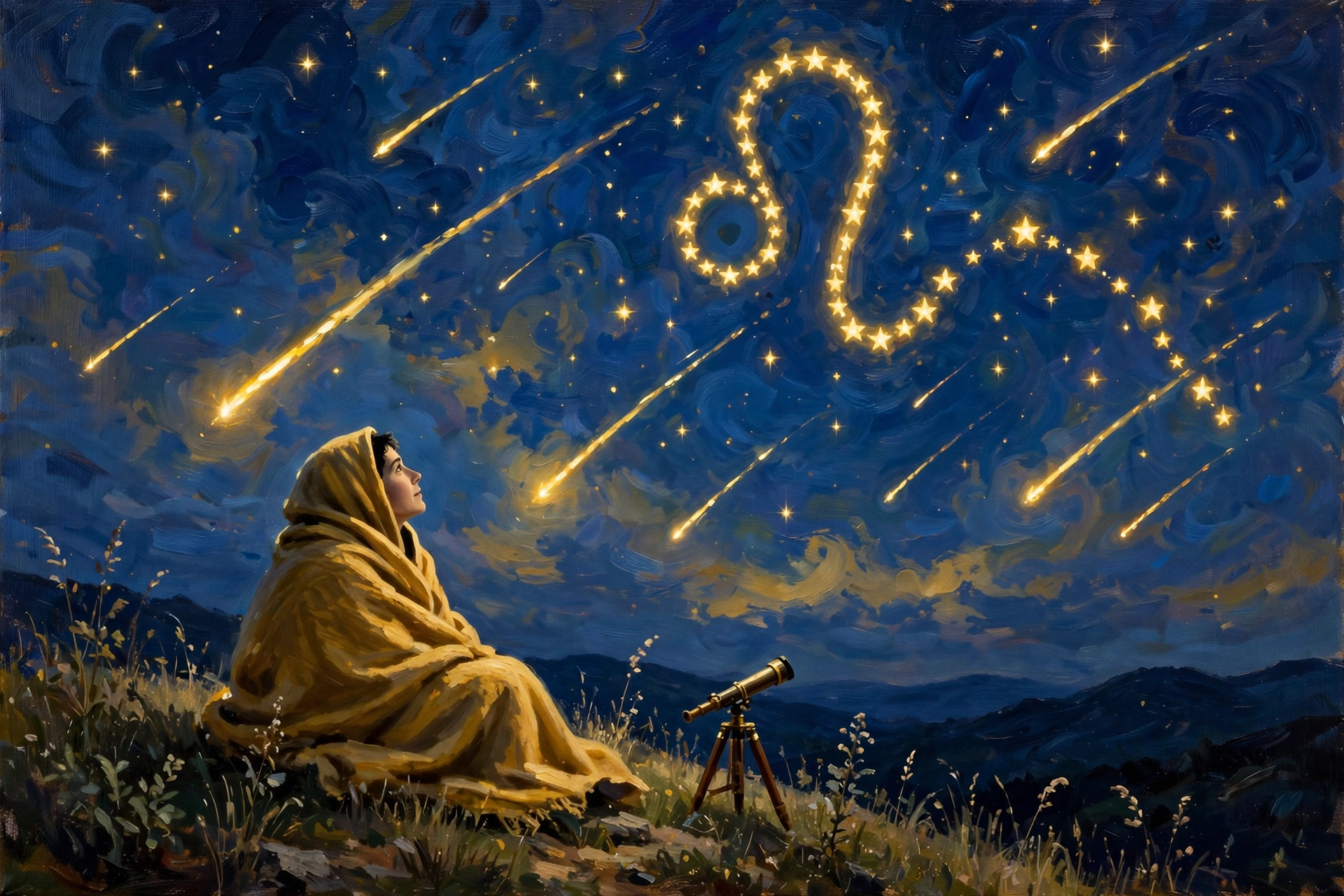
The Leonid Meteor Shower Peaks Tonight: The Psychology of Awe, Wishing and Looking Up
Reviewed by a Psychology Postgraduate (MA)
The annual Leonid meteor shower peaks on the night of Tuesday 17 November into Wednesday morning 18 November 2026, and “meteor shower” is trending in the United States today. The leonid meteor shower psychology behind the rush outside is as interesting as the meteors: one streak of light can quiet a busy mind, spark a wish, and remind us how small and connected we are.
Here is the short answer: the Leonids fill us with awe because they are vast, fast and fleeting, and awe shrinks everyday worries while opening us up to wonder, hope and each other.
What is happening tonight?
The Leonids are debris shed by Comet 55P/Tempel-Tuttle, which loops around the Sun roughly once every 33 years. Each November, Earth passes through the dust trail it left behind. The tiny particles hit the atmosphere at about 71 kilometres per second and burn up as bright streaks.
The shower is active from 6 to 30 November 2026. The International Meteor Organization (IMO) puts the maximum at 23:45 UT on 17 November, which is 6:45 p.m. Eastern Time.
Under ideal dark skies, expect about 10 to 15 meteors an hour. No meteor storm is expected this year. The first-quarter Moon sets around midnight, leaving the hours before dawn dark, and a supermoon follows on 24 November 2026.
When to see the Leonids tonight
When is the best time to watch the Leonids? From midnight to dawn on Wednesday 18 November, local time, after the Moon sets.
You need no telescope or binoculars. NASA advises looking away from the radiant, near the bright star Regulus, because meteors further from it draw longer lines. Find the darkest sky you can, lie back, and let your eyes adjust for at least 20 minutes.
Why are the Leonids famous if tonight is so modest?
Why are the Leonids famous? Because roughly every 33 years, Earth crosses a fresh, dense trail from Comet 55P/Tempel-Tuttle, and the Leonids erupt into a storm of thousands of meteors an hour.
In 1833, meteors fell like snowflakes across North America. In 1966, observers in the western United States saw an estimated 40 to 50 meteors per second for about fifteen minutes. This year marks the 60th anniversary of that storm, and the next forecast storm is not expected until 17 November 2033.
If you caught the slower fireballs of the Northern Taurids earlier this month, our guide to the Northern Taurids meteor shower explains the difference.
Leonid meteor shower psychology: what is awe, and why does the night sky trigger it?
What is awe? Awe is the emotion we feel when we meet something vast that challenges how we understand the world, and it quiets the self while opening the mind to wonder.
That definition comes from Dacher Keltner and Jonathan Haidt, who described awe in a landmark 2003 paper as having two ingredients: vastness, and a need for accommodation, the feeling that our usual frameworks do not quite fit what we are seeing. A meteor fits both.
Keltner’s later research found that awe leaves people feeling smaller, yet more connected to others, a pattern researchers call the “small self”. Awe does not solve anything. It reframes it.
Why do we make wishes on shooting stars?
Why do we wish on shooting stars? Because a rare, bright, fleeting event feels like a signal, and a wish turns wonder into a small ritual of hope.
The tradition is old, with roots in ancient ideas that falling stars were signs from the gods. A streak of light that appears without warning and vanishes in a second begs to be given meaning. A wish is the meaning we give it.
A wish is hope with a deadline of one second. You have to know what you want before the light is gone, which means pausing to ask what you actually hope for. Naming a wish clarifies what matters, and small rituals like this can reduce anxiety and increase a sense of control.
Pause and ask yourself: If a bright Leonid crosses the sky tonight and you have one second to make a wish, what would you actually wish for? What is the one hope you would name if nobody ever heard it? Just noticing it is enough.
Why does waiting in the dark feel so good?
Why does waiting for meteors feel rewarding? Because the wait trains patience, and the reward feels earned rather than handed over.
Most of modern life is built to remove waiting. A meteor shower refuses to cooperate: you might wait ten quiet minutes for a single streak, and there is no way to hurry it. Waiting for something uncertain builds a different kind of satisfaction than getting something on demand.
Your eyes need about 20 minutes to adapt to the dark, and every glance at a phone screen resets the clock. If the darker months have been weighing on you, our piece on seasonal low mood in the fall explores why autumn affects mood, and what genuinely helps.
Can watching the night sky restore attention?
Can watching the night sky restore attention? Yes: natural settings give the brain a break from directed focus, and attention recovers on its own.
Attention restoration theory, developed by researchers Rachel and Stephen Kaplan, proposes that our capacity for focused attention gets tired, like a muscle, and that natural environments restore it because they engage us softly. A meteor shower is a perfect example: you are alert, scanning the sky, but nothing asks you to decide, reply or perform.
Why is a meteor shower better shared?
Why is a meteor shower better shared? Because awe is a social emotion: shared wonder bonds people faster than shared opinions ever do.
Think about the last time you saw a shooting star with someone else: a gasp, a pointed finger, a laugh when the other person missed it. Research finds that people feel more connected after moments of wonder shared together than after ordinary time together.
Step outside with a partner, a friend, a child or a neighbour, phones face down, and agree that whoever sees one first makes the wish out loud. The meteors are the excuse. The company is the point. Learning how to set boundaries without guilt can protect those unhurried moments.
Why do we fear missing a meteor shower?
Why do we fear missing a meteor shower? Because rare, time-limited events trigger loss aversion: missing something special feels worse than seeing it.
The Leonids peak for one night. Miss it, and the next strong showing is a year away, and the next storm is 2033. Losses feel roughly twice as powerful as equivalent gains, so “you might miss it” motivates us more than “you might see it”.
FOMO is not always a bad guide: here it points at a free, beautiful, hour-long break under the sky. Three meteors or none, an hour outside is a good night. The signs of high-functioning anxiety often hide inside that quiet striving, and naming it is the first step to loosening its grip.
How to watch the Leonids tonight
How should you watch the Leonids? Treat it as a slow mindfulness practice: get comfortable, breathe, and let the sky come to you.
- Go after midnight. The best window runs to dawn on Wednesday 18 November.
- Get away from lights. A dark park or a backyard away from porch lights beats a bright driveway.
- Lie back and look wide. Take in a broad sweep of sky.
- Give your eyes 20 minutes. No phone, no torch. Each bright screen resets your night vision.
- Dress for the wait. A warm coat, hat, gloves and blanket turn a cold vigil into a comfortable one.
- Breathe with the sky. Slow breaths, shoulders down, jaw unclenched.
No app, no equipment, no expertise. The Leonids ask very little of us.
Frequently asked questions about the Leonids
When is the Leonid peak in 2026? The Leonids peak on the night of 17 into 18 November 2026. The IMO puts the maximum at 23:45 UT on 17 November, and the best viewing is after midnight until dawn.
How many meteors will I see tonight? Under ideal dark skies, expect about 10 to 15 meteors an hour at the peak, and fewer from towns and cities.
Where should I look to see the Leonids? Look toward the eastern sky after midnight, where Leo rises. Looking away from the radiant near Regulus often shows longer, brighter trails.
Will there be a Leonid meteor storm in 2026? No. Current models show Earth passing only thin dust trails this year, and the next forecast storm is in 2033.
Try it on our site
Tonight’s sky is an invitation to slow down. Our free tools can help you carry that calm into the week:
- Focus Room — a quiet, timed space for deep focus.
- Relaxation Techniques — guided breathing and grounding exercises for before bed.
- Mind Check-In — a quick check-in with your mood, energy and stress.
- Daily Tracker — log tonight’s moment of awe alongside your sleep, mood and habits.
Related reading: our guide to the Northern Taurids meteor shower, how a daily gratitude practice rewires attention toward the good, and seasonal low mood in the fall.
Key Takeaways
- The Leonids peak on the night of 17 to 18 November 2026; best viewing is after midnight until dawn.
- Expect 10 to 15 meteors an hour under ideal dark skies.
- The meteors are dust from Comet 55P/Tempel-Tuttle, radiating from Leo near Regulus.
- Awe shrinks everyday worries and increases connection: the “small self” effect.
- Wishing on a shooting star is a small ritual of hope.
- Waiting in the dark is a gentle exercise in patience and being present.
This article is for education only and is not a substitute for professional advice, diagnosis or treatment. If you are struggling, please speak with a licensed professional. In the United States, call or text 988 for the Suicide and Crisis Lifeline.