
Reviewed by a Psychology Postgraduate (MA)
Loneliness Can Steal Six Healthy Years of Your Life — Here’s What 277,000 People Revealed
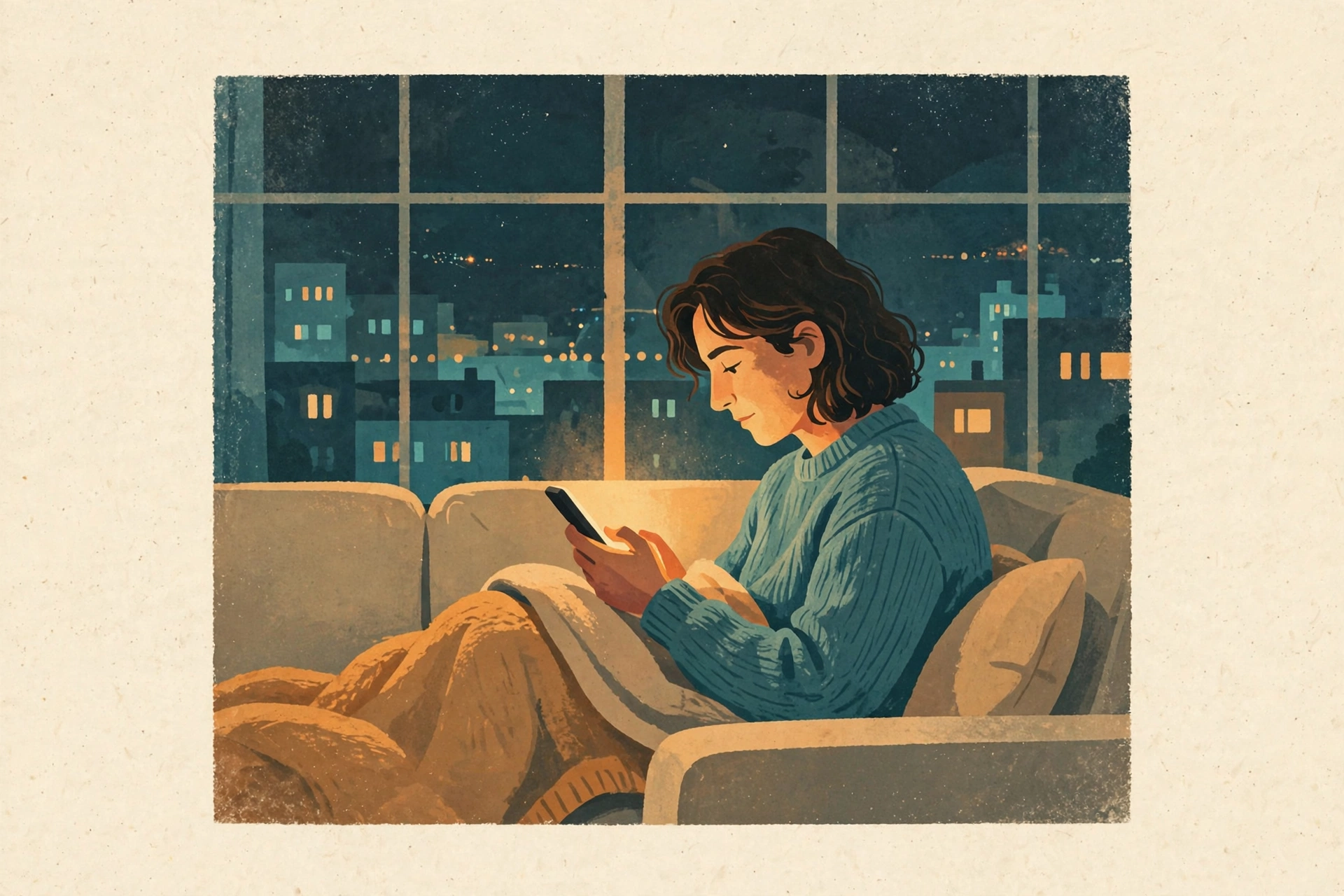
Picture this: it’s 9 PM on a Tuesday. You’ve answered every text, liked every photo, maybe even had dinner with friends last weekend. By every objective measure, your social life looks fine.
And yet, sitting on your couch, scrolling through everyone else’s highlight reel, there’s a hollow feeling you can’t quite name. You’re surrounded — and somehow still alone.
If that feeling is familiar, you’re not being dramatic. You’re being human. And according to the largest study of its kind, published just weeks ago, that feeling may be quietly costing you years of healthy life.
In short: The effects of loneliness go far beyond feeling sad: a Tulane study of 277,489 adults found chronic loneliness can cost nearly six healthy years of life — and healthy habits could not offset it. Loneliness stresses the body like a physical threat, raising risks for heart disease, depression, and early death. Connection is a health behavior.
The Study That Put a Number on the Effects of Loneliness
Researchers at Tulane University, led by Dr. Lu Qi, analyzed health records from 277,489 adults in the UK Biobank — people aged 40 to 69 who started the study free of seven major conditions: diabetes, heart disease, lung disease, dementia, cancer, depression, and anxiety.
Then they asked a deceptively simple question: starting at age 50, how many years could these people expect to live free of disease — and how did loneliness change that number?
The answer, published in Nature Communications in September 2026, is sobering.
People experiencing both loneliness and social isolation lost:
• 5.8 years free of depression and anxiety (men)
• 3.7 years free of depression and anxiety (women)
• 2.4 years free of physical disease (women)
• 1.7 years free of physical disease (men)
Read that again. Not years of life — years of healthy life. Years before a diagnosis changes what your days feel like. As Dr. Qi put it: “Overall, the study found that social isolation and loneliness can have a significant impact on disease-free life expectancy. This includes both physical and mental disease.”
And here’s the part that should make every one of us pause: roughly half of American adults say they feel lonely.
Lonely and alone are not the same thing
One of the most important things this study does is draw a line most of us blur every day.
Social isolation is objective. It’s a headcount — how many people you see, how often you leave the house, how many names are in your phone.
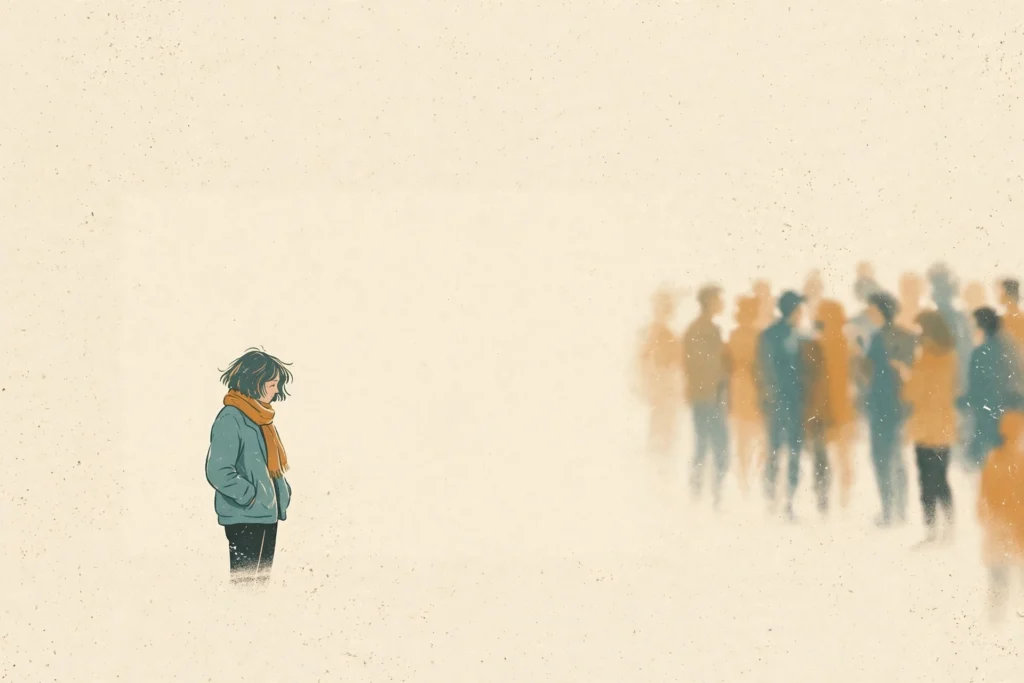
Loneliness is subjective. It’s the gap between the connection you have and the connection you need. You can be lonely in a crowded room, in a happy marriage, at a party you organized yourself.
The researchers found these two related — but different — experiences. And that difference turned out to be the whole story.
The twist nobody expected
Here’s where the study gets genuinely surprising.
The team also looked at lifestyle — diet, sleep, exercise, smoking. And they found something hopeful: for people who were socially isolated, healthy habits genuinely helped. Eating well, sleeping enough, moving your body, and not smoking narrowed the health damage tied to isolation.
But for loneliness? Those same healthy habits did essentially nothing. The association wasn’t statistically significant. You cannot out-jog, out-salad, or out-sleep the feeling of being unseen.
Let that sink in. We’ve spent decades telling people that health is a checklist — eat right, move more, sleep eight hours. And it matters. But this study suggests there’s a dimension of health that no checklist reaches: the felt sense that you matter to someone, and someone matters to you.
Why men are hit hardest
The gender split in the data is striking. Men lost nearly six depression-free years; women lost just under four. The researchers point to a painful, familiar pattern: men tend to have fewer emotionally close friendships, friendship networks that thin out with age, and friendships built around activities — watching the game, playing golf — rather than emotional honesty.
As Andrew MacPherson of the Foundation for Social Connection put it, many men have activity-based friendships that don’t translate into the kind of relationships where you can say “I’m not okay.”
This isn’t about blaming men. It’s about naming a cultural script — the one that taught generations of boys that needing people is weakness — and recognizing what it costs.
So what actually helps?
If healthy habits can’t touch loneliness, what can? The honest answer: connection itself. Not more of it — better of it. Psychology has been quietly building this case for years:

1. Chase depth, not headcount. One conversation where you say the real thing beats twenty where you perform fine. Research on friendship consistently shows that perceived quality of relationships predicts well-being far more than quantity.
2. Borrow someone’s Tuesday. Loneliness thrives on the highlight-reel version of other people’s lives. Regular, unglamorous contact — a weekly walk, a standing coffee, a group chat that’s actually active — does more than occasional grand plans.
3. Say the vulnerable thing first. Studies on self-disclosure show that when one person opens up, the other almost always reciprocates. Someone has to go first. Let it be you.
4. Notice the story you’re telling. Lonely brains develop a negativity bias toward social situations — interpreting neutral faces as rejecting, assuming the worst. Simply knowing this bias exists loosens its grip.
5. If it’s heavy, get support. Persistent loneliness that shades into depression deserves professional help, not just willpower. That’s not failure — it’s exactly what the support exists for.
Frequently Asked Questions
What are the effects of loneliness on health?
Chronic loneliness acts like a physical stressor: higher risks of heart disease, depression, weakened immunity, and early death. A Tulane study of 277,489 adults linked it to nearly six fewer healthy years.
Can healthy habits cancel out loneliness?
Surprisingly, no — the Tulane researchers found exercise and good diet did not offset loneliness’s toll. Social connection appears to be its own independent health behavior.
What is the difference between being alone and being lonely?
Being alone is a physical state; loneliness is the felt gap between the connection you want and the connection you have. You can be lonely in a crowd and content alone.
What actually helps with loneliness?
Regular, meaningful contact beats more contacts: recurring rituals, volunteering, and turning acquaintances into real conversations. Small, repeated belonging signals rewire the feeling fastest.
The bottom line
We’ve treated loneliness as a soft problem — a feeling, not a health crisis. This study says otherwise. Six years of healthy life is not soft. It’s roughly the same order of magnitude researchers have long associated with smoking or obesity — except you can’t see it, measure it at a checkup, or fix it with a better diet.
The good news hidden inside the bad: loneliness is not a life sentence, and it’s not fixed by becoming an extrovert or collecting friends. It’s fixed by closing the gap between the connection you have and the connection you need — one honest conversation at a time.
Want to understand your own patterns? Try our free interactive psychology tools — including check-ins that help you spot loneliness early, before it compounds: zenthapsychology.com
Sources: Wang, X., Ma, H., Heianza, Y., Liang, Z., Franco, O.H., & Qi, L. (2026). Associations of loneliness, social isolation and healthy lifestyle with life expectancy free of major physical disease and mental disorder. Nature Communications. DOI: 10.1038/s41467-026-74498-8