
Reviewed by a Psychology Postgraduate (MA)
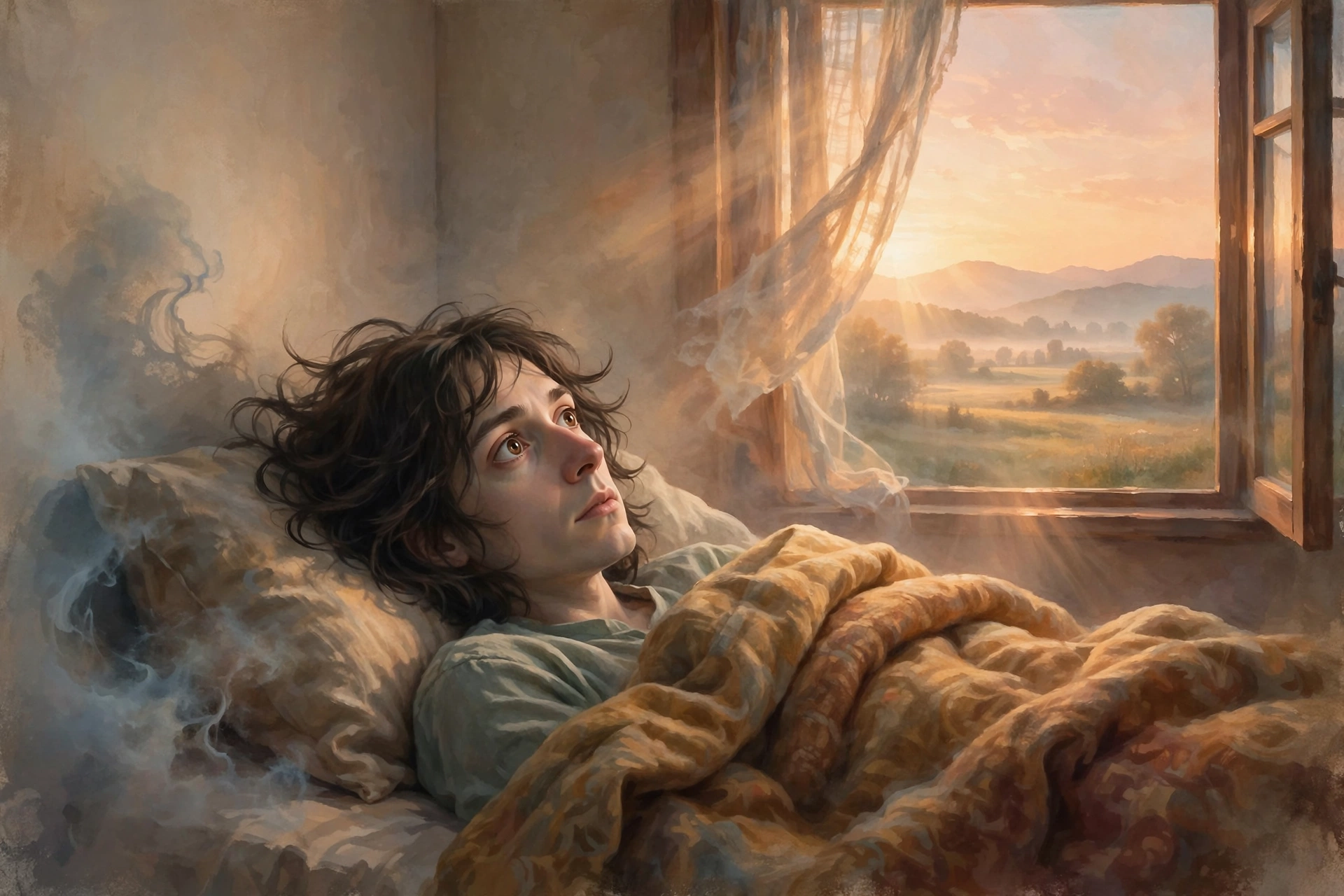
You wake up — but you cannot move. Your eyes are open. You can see your bedroom, hear the hum of the air conditioner, feel the weight of your own blanket. But your body will not respond. Your fingers will not twitch. Your voice will not come. And then, in the corner of your vision, something moves.
If this has happened to you, you know the particular terror of sleep paralysis: fully conscious, completely frozen, sometimes visited by hallucinations so vivid they feel more real than waking life. It is one of the most frightening experiences the human brain can produce — and also one of the most misunderstood. Here is what is actually happening, why it happens, and what helps.
In short: Sleep paralysis happens when your mind wakes up before your body does — you are conscious but temporarily unable to move or speak. It is caused by REM atonia, the natural muscle paralysis of dreaming, persisting into wakefulness. Episodes last seconds to a few minutes, are more likely with disrupted sleep, and are frightening but not dangerous.
What Sleep Paralysis Actually Is
Your brain has a built-in safety feature. Every night, when you enter REM sleep — the stage where most vivid dreaming happens — your brainstem switches off your voluntary muscles. This is called REM atonia, and it exists for a good reason: without it, you would physically act out your dreams. Sleepwalkers and people who punch in their sleep are experiencing a glitch in this exact system.
Sleep paralysis is a timing error. Your mind wakes up a few seconds — sometimes a minute or two — before the atonia switches off. Consciousness arrives; the body has not caught up. You are awake inside a body that still thinks it is dreaming. The experience is not dangerous in itself, but your threat-detection system does not know that, which is why it feels like an emergency.
Why You See Things That Are Not There
The hallucinations are the part people talk about least and fear most. A shadowy figure by the bed. Pressure on the chest, as if something is sitting on you. A sense of an evil presence in the room. Whispering, footsteps, or a feeling of floating.
These are not signs of anything supernatural — and they are not a sign you are losing your mind. They are hypnagogic hallucinations: dream imagery leaking into waking consciousness because you are caught exactly on the border between REM sleep and wakefulness. Your dreaming brain is still projecting images while your waking brain is trying to make sense of them. The amygdala, your brain’s alarm system, is highly active during REM — so the images it generates skew threatening. A neutral shadow becomes a figure. A blanket’s weight becomes a crushing presence.
Sleep researcher Baland Jalal, who has studied sleep paralysis across cultures, found something fascinating: the content of the hallucinations varies by culture — an “old hag” in Newfoundland, a demon in Egypt, alien visitors in the United States — but the underlying mechanism is identical everywhere. Your brain builds the nightmare out of whatever your culture taught you to fear.
What Triggers an Episode
Sleep paralysis does not strike randomly. The research points to a consistent set of triggers, all of which disrupt the clean boundary between sleep stages:
1. Sleep deprivation and irregular schedules. This is the biggest one. Anything that fragments your sleep — all-nighters, shift work, jet lag, a new baby — increases the odds of waking mid-REM.
2. Sleeping on your back. Multiple studies find episodes are more common in the supine position, possibly because back-sleeping slightly restricts the airway and lightens sleep. Side-sleeping is a simple, evidence-backed tweak.
3. Stress and anxiety. High stress disrupts sleep architecture, creating more of those ragged transitions where paralysis slips through. This is also why episodes often cluster during difficult periods of life.
4. Alcohol and sleep-disrupting substances. Alcohol may knock you out, but it fragments the second half of the night — prime territory for REM disruption.
5. Certain sleep disorders. Narcolepsy and sleep apnea both increase frequency significantly. If episodes are frequent, this is worth discussing with a doctor.
What to Do During an Episode
Knowing the mechanism is genuinely useful in the moment — fear feeds on mystery, and understanding starves it. When it happens:
Do not fight your whole body. Straining against the paralysis tends to spike panic, which makes the hallucinations worse. Instead, focus all your effort on one tiny movement: wiggle a finger, scrunch your toes, blink hard. Small motor pathways often come back online first, and once one moves, the rest usually follows.
Control your breathing. Your diaphragm still works during paralysis — that is why you can breathe. Slow, deliberate breaths signal safety to your nervous system and counteract the amygdala’s alarm. Inhale for four counts, exhale for six.
Remind yourself what it is. A silent mantra helps: “This is sleep paralysis. My body is still in REM. It will pass in under two minutes.” People who know what is happening consistently report less terror than people experiencing it blind.
Do not engage the hallucination. Trying to stare down the figure or reason with the presence gives your dreaming brain more material. Look away, close your eyes if you can, and wait it out.
Your Sleep Stability Check
Episodes feed on disrupted sleep. Reflect honestly on your own patterns:
- How consistent is my sleep schedule — and how often do I run on significantly less sleep than I need?
- Do I usually fall asleep on my back? Could I try training myself to sleep on my side?
- Are my episodes clustered around stressful periods — and what is my wind-down routine on those nights?
How to Make Episodes Rarer
Prevention beats management. The same habits that improve sleep generally are the ones that reduce paralysis specifically:
Stabilize your schedule. Same bedtime, same wake time, every day. Regularity is the single most powerful lever — it keeps your sleep stages cleanly separated.
Protect your wind-down. A real wind-down routine — dim lights, no scrolling, something calming — reduces the fragmented, anxious sleep where episodes breed. Our Wind-Down for Sleep exercise was built for exactly this.
Sleep on your side. If you are a back sleeper with frequent episodes, a body pillow can retrain the habit surprisingly fast.
Manage the stress load. Since stress is a major trigger, whatever genuinely calms your nervous system — daytime movement, a worry journal before bed, progressive relaxation — pulls double duty here.
When to See a Doctor
Occasional sleep paralysis is common and not dangerous — studies suggest a large minority of people experience it at least once. But see a doctor if episodes are frequent (weekly or more), if they come with excessive daytime sleepiness (which can signal narcolepsy), if you gasp or choke awake (possible sleep apnea), or if the fear of episodes is damaging your sleep itself. A sleep specialist can rule out underlying disorders quickly, and that peace of mind alone is worth the visit.
Frequently Asked Questions
What is sleep paralysis?
A state between sleeping and waking where you are conscious but cannot move or speak, sometimes with vivid hallucinations. It happens when REM atonia — the muscle paralysis that keeps you from acting out dreams — lingers after your mind wakes.
What causes sleep paralysis?
Disrupted sleep is the biggest trigger: irregular schedules, sleep deprivation, sleeping on your back, stress, and jet lag. It is also more common in people with narcolepsy, anxiety, or PTSD.
What is the sleep paralysis demon?
The “demon” or intruder figure many people report is a hypnagogic hallucination — the dreaming brain misfiring while you are awake. It feels real because your threat-detection system is fully online while your body is offline.
How can I stop sleep paralysis episodes?
Keep a regular sleep schedule, avoid sleeping on your back, and cut late caffeine and alcohol. During an episode, focus on wiggling a finger or toe and slow your breathing — small movements can break the atonia.
Try It on Our Site
Build steadier sleep with these free tools:
Mind Check-Ins
Relaxation Techniques
Brain Games
Related Reading
- Why Can’t I Sleep? 12 Causes of Insomnia
- Why Do I Overthink at Night?
- Sleep and the Brain, Explained
Key Takeaways
- Sleep paralysis is a timing error: your mind wakes up while your body is still in REM atonia, the muscle “off switch” that keeps you from acting out dreams.
- The terrifying hallucinations are dream imagery leaking into waking consciousness on the REM-wake border — your amygdala makes them feel threatening, but they are not real.
- The biggest triggers are sleep deprivation, back-sleeping, stress, and alcohol — all of which fragment the boundary between sleep stages.
- During an episode: focus on moving one finger or toe, slow your breathing, remind yourself what is happening, and do not engage the hallucination.
- Steady sleep schedules, side-sleeping, and a real wind-down routine make episodes rarer.
- See a doctor if episodes are frequent, come with daytime sleepiness, or if fear of them is ruining your sleep.
This article is for educational purposes only and is not a substitute for professional medical or mental health advice, diagnosis, or treatment. If sleep paralysis is frequent or distressing, consider speaking with a qualified healthcare professional.