
Reviewed by a Psychology Postgraduate (MA)
In short: Gallup’s October 2026 report finds only 44% of Americans aged 18 to 29 are “thriving” — down from 64% in 2010. The drivers are financial pressure, depression, loneliness, and job anxiety. Psychologically, the steepest loss is hope: the belief that the future can be better, which research shows is a cognitive skill that can be rebuilt.
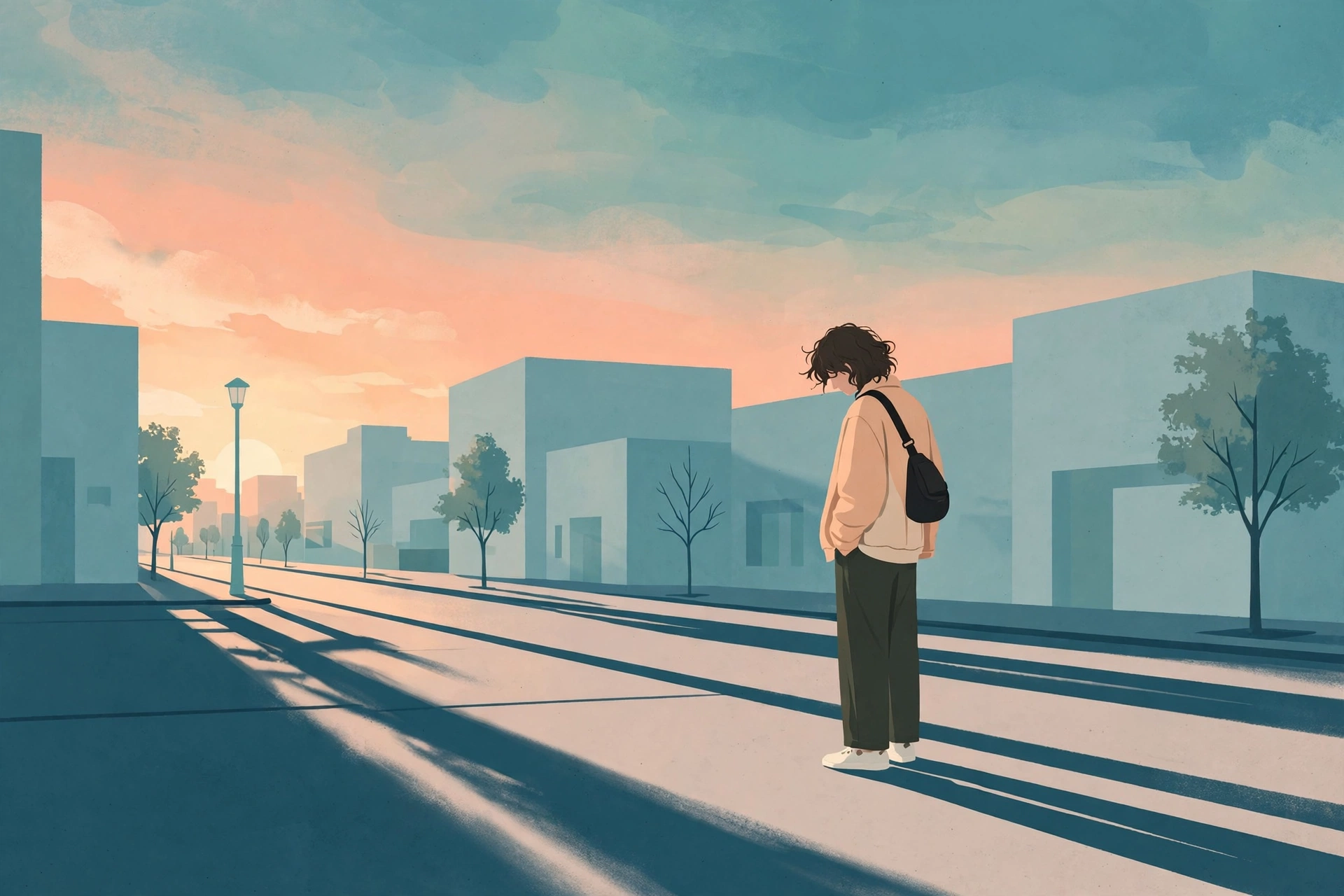
Sunday, 8:47 PM. Maya is 26, employed, splitting rent on a one-bedroom with a roommate. She has done everything the blueprint said: degree, internship, job with a 401(k) she doesn’t fully understand. She is lying on her bed scrolling past a former classmate’s engagement photos, and a question she would never say out loud is sitting on her chest:
Is this… it?
She is not in crisis. She would probably rate her life a 6 out of 10. But when she imagines five years from now, the picture doesn’t get brighter — it gets hazier. Rent higher, jobs weirder, the planet warmer. Somewhere between the engagement photos and the third news alert of the evening, “fine” starts to feel like a verdict.
Maya is fictional. But the feeling she represents — young Americans thriving less than any generation before them — is now, according to Gallup, the statistical norm for her age group.
Why So Few Young Americans Are Thriving: The Gallup Headline
In early October, Gallup and the Rippel Foundation released Thriving Together in America, drawing on Gallup’s National Health and Well-Being Index — more than 15,000 US adults across all 50 states. The headline landed like a thud:
Just 44% of Americans aged 18 to 29 are “thriving” in 2026 — down from 64% in 2010. Twenty points of well-being, gone in sixteen years, with most of the erosion happening since 2019.
The trajectory tells the story: 57% in 2019, a pandemic cliff to 39% in 2020, a rebound to 51% in 2023 — and now a slide backward. Young adults went from the highest-thriving age group in America to the lowest. Adults 30 to 44 aren’t faring much better (45%, down from a 62% high). And national “hope” — confidence that the future will be better than the present — sits at 59.4%, near its all-time low since Gallup started tracking it in 2008.
The supporting figures fill in the human cost: depression treatment among under-30s has roughly doubled since 2017, from 13% to nearly 27%, and almost three in ten young adults report significant loneliness every single day. The drivers: financial pressure, depression, loneliness, and fear about jobs.
So the question isn’t really “are young people struggling?” anymore. The data answered that. The question is why — and, more importantly, what a generation running on fumes can actually do about it.
What does “thriving” mean, anyway?
Before we psychoanalyze a generation, it helps to know what Gallup is actually measuring — because it’s smarter than it sounds.
The metric comes from psychologist Hadley Cantril’s Self-Anchoring Striving Scale, developed in the 1960s: picture a ladder with ten rungs. You rate your life right now (0 = worst possible, 10 = best possible), then where you expect to be five years from now. To count as “thriving,” you need a 7 or higher today and an 8 or higher for the future.
That two-part structure is the genius of it. Thriving isn’t just “my life is good.” It’s “my life is decent and I believe it’s heading somewhere.” The second half — future expectation — is where hope lives. And hope, as the psychologist C. R. Snyder spent his career showing, isn’t a mood. It’s a cognitive engine with two parts: pathways (believing there are routes forward) and agency (believing you can walk them). Snyder’s hope theory says people with high hope don’t just feel better — they perform better, persist longer, and recover faster from setbacks.
So when Gallup reports hope scraping all-time lows, it’s reporting something precise: millions aren’t just unhappy today. They’ve lost the plot of a better tomorrow — and psychologically, that is a much heavier burden than a bad week.
Pause and ask yourself: Where would you put yourself on Cantril’s ladder — today, and five years from now? Not where you should be. If the gap stings, you’re not broken; you’re measuring what millions of people feel right now. Our 2-minute Mood check-in can help you sort out what’s weighing on you most.
Why this generation feels the squeeze: five forces
1. The comparison engine never sleeps. Leon Festinger’s social comparison theory (1954) says we judge ourselves against the people around us — but “the people around us” used to be a dozen neighbors. Now it’s a curated feed of ten thousand. Decades of research finds that upward comparison — your behind-the-scenes against everyone else’s highlight reel — predicts lower self-esteem and life satisfaction. Maya isn’t just living her life; she’s living it next to a classmate’s proposal, a colleague’s promotion, an influencer’s apartment. The ladder got taller, and everyone else looks like they’re already climbing.
2. Control feels like a rumor. Since the 1970s, psychologists have known perceived control — the belief that your actions shape your outcomes — is one of the strongest predictors of well-being. Martin Seligman’s work on learned helplessness showed what happens when effort stops seeming to matter: organisms stop trying. Apply that to a generation told that rent, groceries, and even entry-level jobs are subject to forces no hustling can tame. When the levers feel disconnected from outcomes, disengagement isn’t laziness. It’s the predicted response.
3. Connection is up; belonging is down. This is the generation that never logs off — and nearly 30% feel significantly lonely daily. John Cacioppo’s decades of research showed loneliness isn’t about the number of contacts; it’s about the quality of connection. You can have 800 followers and feel unseen. Worse, loneliness changes how the brain reads social situations — the lonelier you feel, the more threatening people seem, which makes reaching out harder. It’s a trap with a feedback loop.
4. The pandemic scar tissue never fully healed. Remember that cliff: 57% to 39% in a single year. The pandemic hit during the exact years — late teens, early twenties — when people build the foundations of adult life: first jobs, first apartments, first real friendships away from home. Researchers call this a developmental disruption, and its effects don’t evaporate when lockdowns end. A generation launched into adulthood during a global emergency is still metabolizing it.
5. The future feels like a threat, not a promise. Job anxiety, AI uncertainty, climate dread — the background radiation of modern young adulthood is a steady hum of what if it gets worse? Chronic uncertainty keeps the brain’s threat systems idling, and when hope’s “pathways” component collapses — when you can’t picture the route to a better life — Snyder’s research says agency withers too. You don’t get hopeless all at once. You get hopeless one canceled plan at a time.
What actually moves the needle, according to the research
No article can fix an economy or a housing market. But the psychology of well-being is not nothing — it’s the difference between sinking and swimming in the same water. What follows is grounded in real research, not vibes.
Rebuild hope the way Snyder described it: one pathway at a time. Hope isn’t optimism; it’s engineering. Pick one small, specific goal — not “fix my life,” but “apply to two jobs this week” or “text one friend I miss.” Albert Bandura’s self-efficacy research shows that small completed goals restore the belief that effort works. Agency is rebuilt in inches, not miles.
Audit your comparison inputs. You can’t turn off Festinger’s wiring, but you can change the feed. Research suggests that curating who you follow — fewer highlight reels, more real people — measurably reduces comparison-driven distress. Try this: for one week, notice which accounts leave you feeling smaller. Mute them. That’s not avoidance; it’s stimulus control.
Invest in weak ties. The sociologist Mark Granovetter famously showed that weak ties — the barista who knows your order, the neighbor you wave at — contribute disproportionately to belonging. You don’t need a bigger inner circle; you need more small, warm contacts. Regular, low-stakes human interaction is one of the most underrated well-being interventions in the literature.
Name it to tame it. Matthew Lieberman’s work on affect labeling shows that putting a word to what you feel — “I’m not failing, I’m disappointed” — measurably calms the brain’s threat response. Vague dread is paralyzing; named feelings are manageable. (This is exactly why we built our emotion-naming tool.)
Show up somewhere local. The most hopeful line in the Gallup–Rippel report is its least-reported: communities across the country are already using well-being data to change the trajectory together. Belonging isn’t downloaded; it’s built in rooms with other people — volunteer shifts, rec leagues, neighborhood projects. The antidote to “I’m alone in this” is a place where that stops being true.
Protect the basics. Sleep, movement, daylight: unglamorous, and consistently among the strongest predictors of daily mood in the research literature. When everything feels big, start with the body.
Frequently Asked Questions
What does Gallup mean by “thriving”?
It comes from the Cantril Self-Anchoring Striving Scale: you rate your life now and where you expect to be in five years. “Thriving” means 7 or higher today and 8 or higher for the future — a good life now plus hope for tomorrow.
Why are young Americans struggling more than older generations?
Research points to five forces: relentless social comparison, eroded perceived control, connection without belonging, pandemic developmental disruption, and chronic uncertainty about jobs, AI, and the climate.
Is the decline in young Americans’ well-being real or exaggerated?
The numbers are consistent across measures: thriving down from 64% to 44% since 2010, depression treatment among under-30s doubled since 2017, and nearly 3 in 10 young adults report significant loneliness daily.
What actually helps when hope feels low?
Research-backed moves: small completable goals (which rebuild self-efficacy), curating comparison inputs, investing in weak ties, naming your feelings, showing up somewhere local, and protecting sleep and movement.
Try it on our site
The report is a mirror; these free tools are the next step — concrete ways to move from the numbers to your own:
- Mood check-in — put words and numbers to where you are on the ladder right now.
- Loneliness check-in — is it contact you’re missing, or connection? Find out.
- Stress check-in — map what’s actually weighing on you: money, work, the future, all of the above.
- Name Your Feeling — practice affect labeling: name the emotion before it names you.
Related reading: Lonely in a Crowd: Why Being Around People Can Still Feel Empty · How to Stop Doomscrolling (Without Deleting Everything) · The Psychology of Not Fitting In
Key Takeaways
- Gallup’s October 2026 report finds only 44% of US adults aged 18–29 are “thriving,” down from 64% in 2010 — the steepest well-being decline of any age group.
- “Thriving” (Cantril’s ladder) requires a good life today and hope for tomorrow — and national hope is near its all-time low.
- Depression treatment among under-30s has doubled since 2017, and nearly 3 in 10 young adults feel significant loneliness daily.
- The psychology: social comparison (Festinger), eroded perceived control (Seligman), Cacioppo’s loneliness research, pandemic developmental disruption, and collapsed hope pathways (Snyder).
- Research-backed moves: small completable goals (Bandura’s self-efficacy), curating comparison inputs, investing in weak ties (Granovetter), affect labeling (Lieberman), local community participation, and protecting sleep and movement.
If low mood, hopelessness, or loneliness are seriously affecting your daily life, consider speaking with a licensed mental health professional — in the US, you can call or text 988 anytime. This article is educational and is not a substitute for professional advice, diagnosis, or treatment. Data referenced: Gallup National Health and Well-Being Index and the Gallup–Rippel Foundation report “Thriving Together in America” (October 2026).