
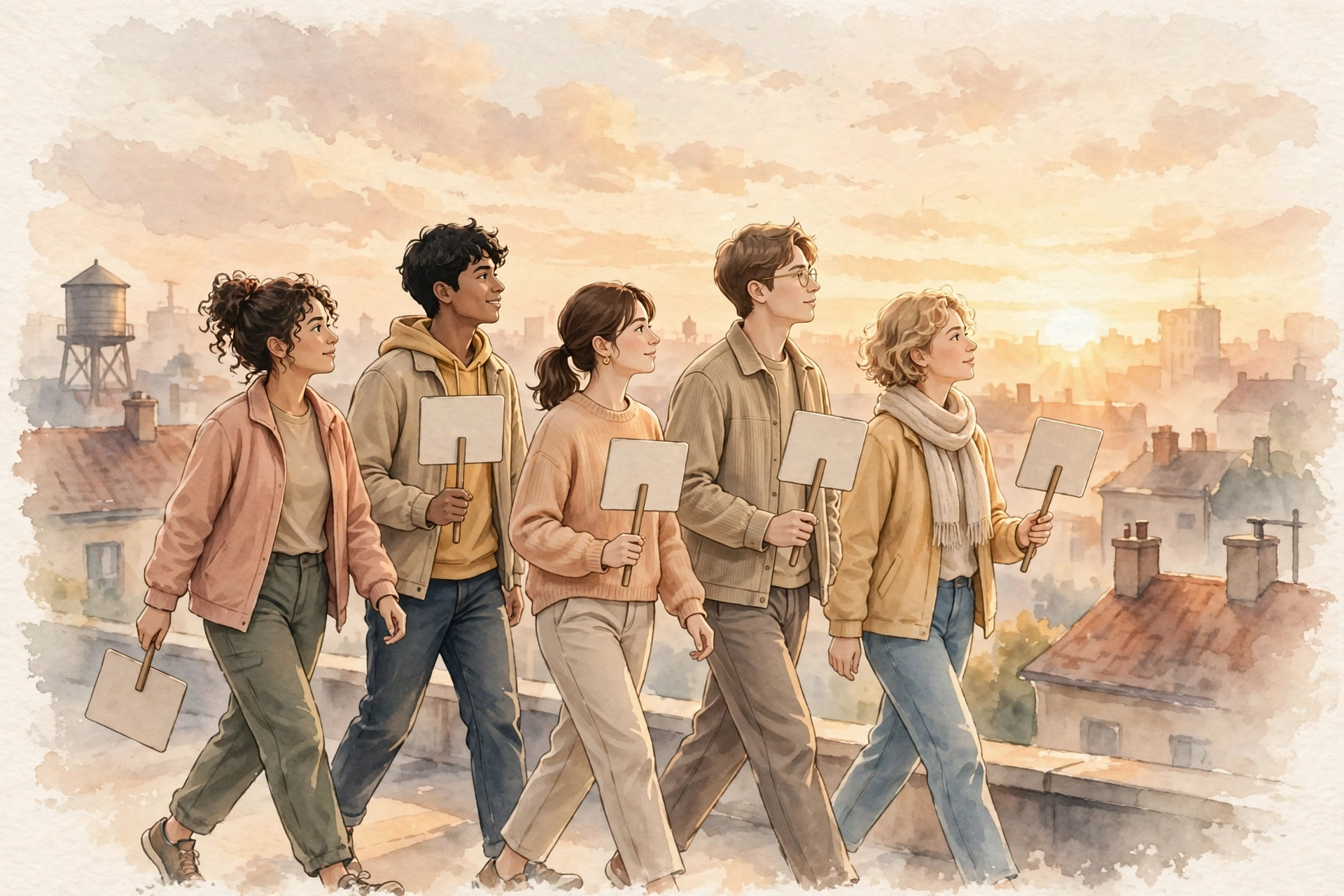
Gen Z Protest October 31: The Psychology of Young People Taking to the Streets
Reviewed by a Psychology Postgraduate (MA)
On Saturday, October 31, a youth initiative calling itself “Gen Z steht auf” — German for “Gen Z Rises Up” — has called a nationwide protest day in Germany, with demonstrations planned in 21 cities including Berlin, Hamburg, Munich, Frankfurt, and Cologne. The gen z protest wave, reported on October 22, 2026, is one of the largest youth-led mobilizations Germany has seen in years.
The short answer to why young people are marching: protest is how this generation does identity work, turns anxiety about the future into action, and signals moral conviction. When young people feel unheard, the street becomes the loudspeaker — and the psychology behind it is as old as adolescence itself.
The demands: better education funding, affordable living, stronger social services, and opposition to a return to compulsory military service. Co-initiator Akram Selo told the dpa news agency that organizers “clearly distance” themselves from any form of violence. Police are preparing a large operation: the GdP police union warned of possible clashes, and Berlin police spokesman Florian Nath said authorities will examine whether these are genuine student protests amid worries radical groups could exploit them on Halloween night.
The call follows weeks of youth and student activism across Europe, especially in France, where school protests widened into nationwide demonstrations that turned violent on October 17 — the backdrop everyone in Germany is watching, and exactly what the October 31 organizers say they are determined to avoid.
What is happening with the gen z protest on October 31?
A youth group called “Gen Z steht auf” has called for demonstrations in 21 German cities on October 31, 2026 — demanding education funding, affordable living, stronger social services, and no return to compulsory military service. Organizers insist the events will be peaceful; police are planning a large operation amid concerns about possible clashes on Halloween night.
Picture a 19-year-old trainee in Cologne. On the train home she sees the call to action: a poster shared by a friend of a friend, listing the 21 cities. Her classroom is overcrowded, her rent eats half her pay, and the word “conscription” keeps appearing in her news feed. She forwards the poster to two friends. That forwarding, multiplied millions of times, is how a youth protest begins: not with ideology, but with a personal knot of worry that suddenly has a date and a place.
Why do young people protest? What does the psychology of protest say?
Young people protest because adolescence and early adulthood are the life stages when identity, moral conviction, and a need for agency collide. The psychology of protest shows that for youth, demonstrating is less about any single policy and more about answering: “What kind of person am I, and what do I stand for?”
Moral conviction is the strong and absolute belief that something is right or wrong, a stance people experience as part of who they are rather than a mere opinion. Research consistently finds it is the strongest predictor of who merely agrees with a cause versus who actually shows up.
Erik Erikson described adolescence and emerging adulthood as the identity-versus-role-confusion stage, where the central task is building a coherent sense of self. Activism is identity work: holding a sign and chanting with strangers become material the young self uses to answer “who am I.”
Why gen z protests now: future-anxiety and intergenerational fairness
Gen Z is protesting now because this generation reports higher anxiety about housing, money, and the future than older generations did at the same age — and research links that anxiety directly to collective action.
Translate the demands into feelings. Education funding: the daily reality of under-resourced classrooms. Affordable living: the math that does not work no matter how carefully you budget. Opposition to conscription: conscription anxiety — the sharp fear of having your young-adult years commandeered by the state. Each is a concrete fear about the future, and research shows future-anxiety is one of the most reliable motivators of action.
Underneath sits intergenerational fairness — the deeply human sensitivity to whether the deal between generations feels reciprocal. “Will I get even a fraction of the security my parents had?” When the answer looks like no, perceived injustice follows. Bandura’s perceived collective efficacy — the belief that acting together can change things — completes the picture: no single 19-year-old can fix education funding, but twenty thousand in one square, coordinated on social media, just might.
Pause and ask yourself: When was the last time a frustration about your future felt too big to hold alone — and what would it take for you to say so out loud, with other people?
How does social media accelerate youth mobilization?
Social media accelerates youth protest by collapsing the distance between a grievance and a gathering — a poster becomes a movement in hours because the barriers of organizing have nearly vanished.
The “Gen Z steht auf” call did not travel through unions or parties. It traveled through stories, reposts, and group chats — what researchers call crowd-enabled action, where individuals with smartphones can broadcast and recruit without any central headquarters. That speed is thrilling and volatile at once: huge numbers arrive fast, but nobody controls the guest list. And every repost is a small public commitment — once your friends have seen you share the poster, staying home starts to feel like a statement of its own.
What keeps a protest peaceful? What research says
Research on protest movements finds that three things keep demonstrations constructive: clear organization, specific demands, and explicit nonviolence norms — all of which the October 31 organizers are publicly signaling.
Keep the distinction straight. Crowd-violence research studies how crowds turn destructive; youth protest psychology is about civic engagement. What separates them is structure: named organizers who can set rules, specific demands that keep the message legible, and public nonviolence commitments — Selo’s “clearly distance” statement to dpa sets expectations before a single person arrives.
The French contrast is instructive: school protests that widened into nationwide demonstrations turned violent on October 17 when those guardrails thinned — when anger outpaced organization. One caveat: Halloween night raises police anxiety because masks and darkness reduce accountability cues in a crowd — what researchers call deindividuation. The counter is the same recipe: visible marshals, a clear identity, and nonviolence norms repeated until they stick.
How can young people channel frustration into action safely?
The healthiest version of protest is organized, informed, and paired with ways to cope with the anxiety driving it — anger needs both an outlet and a shock absorber.
- Turn frustration into a task. Join the organized group, not just the crowd. Marshal roles and poster runs build the structure that keeps protests peaceful.
- Separate the anxiety from the cause. Conscription anxiety and housing anxiety will outlast any single demonstration. Write down what exactly you fear, then name one concrete step you can take this week.
- Know your basics before you go. Go with friends, keep your phone charged, know the route, carry water, and agree on a meeting point if the group splits.
- Keep the long view. One protest day rarely changes policy. The movements that win convert march energy into sustained organization — meetings, campaigns, votes.
Frequently asked questions
What is the gen z protest on October 31, 2026?
A nationwide protest day in Germany called by the youth initiative “Gen Z steht auf” (“Gen Z Rises Up”), with demonstrations planned in 21 cities including Berlin, Hamburg, Munich, Frankfurt, and Cologne — demanding education funding, affordable living, stronger social services, and no return to conscription.
Is the October 31 gen z protest expected to be peaceful?
Organizers say yes — co-initiator Akram Selo told the dpa news agency they “clearly distance” themselves from violence. Police are still preparing a major operation amid warnings that radical groups could exploit the demonstrations on Halloween night.
Why is conscription such a big issue for young Germans?
Conscription anxiety — fear of compulsory military service returning — threatens young people’s control over their own near future. Threats to autonomy are among the most motivating triggers for collective action.
Is it normal to feel anxious about attending a protest?
Yes, completely. Feeling both excited and nervous is the norm, especially for first-timers. Going with friends and knowing the plan helps a lot.
Try it on our site
- Stress and Motivation check-ins — measure your stress and motivation levels and get honest, psychology-grounded feedback on where you stand.
- Name Your Feeling — put a precise name to the emotions behind your frustration or hope; naming a feeling is the first step to working with it.
- Wellness Tools hub — explore 27 check-ins, brain games, relaxation exercises, and guided programs for everyday mental wellbeing.
Related reading: The Psychology of Financial Stress · Why So Few Young Americans Are Thriving · The 5-4-3-2-1 Grounding Technique
Key Takeaways
- On October 31, 2026, “Gen Z steht auf” has called demonstrations in 21 German cities — education funding, affordable living, social services, and no return to conscription.
- Moral conviction and identity formation explain why young people show up: protest is how emerging adults answer “who am I and what do I stand for.”
- Future-anxiety — about housing, money, and conscription — is a proven motivator; perceived collective efficacy turns private worry into public action.
- Research shows protests stay peaceful with named organizers, specific demands, and explicit nonviolence norms — all signaled by October 31 organizers.
- Channel the energy constructively: join organized groups, know your safety basics, manage the anxiety alongside the activism.
This article is for educational purposes only and is not professional advice. If you are struggling with anxiety or stress, please speak with a licensed mental health professional. In the US, the 988 Suicide and Crisis Lifeline is available 24/7; in Germany, the Telefonseelsorge crisis line is 0800 111 0 111.