
Lawrence McCutcheon Dies at 76: Why Losing a Childhood Hero Hurts Like This
Reviewed by a Psychology Postgraduate (MA)
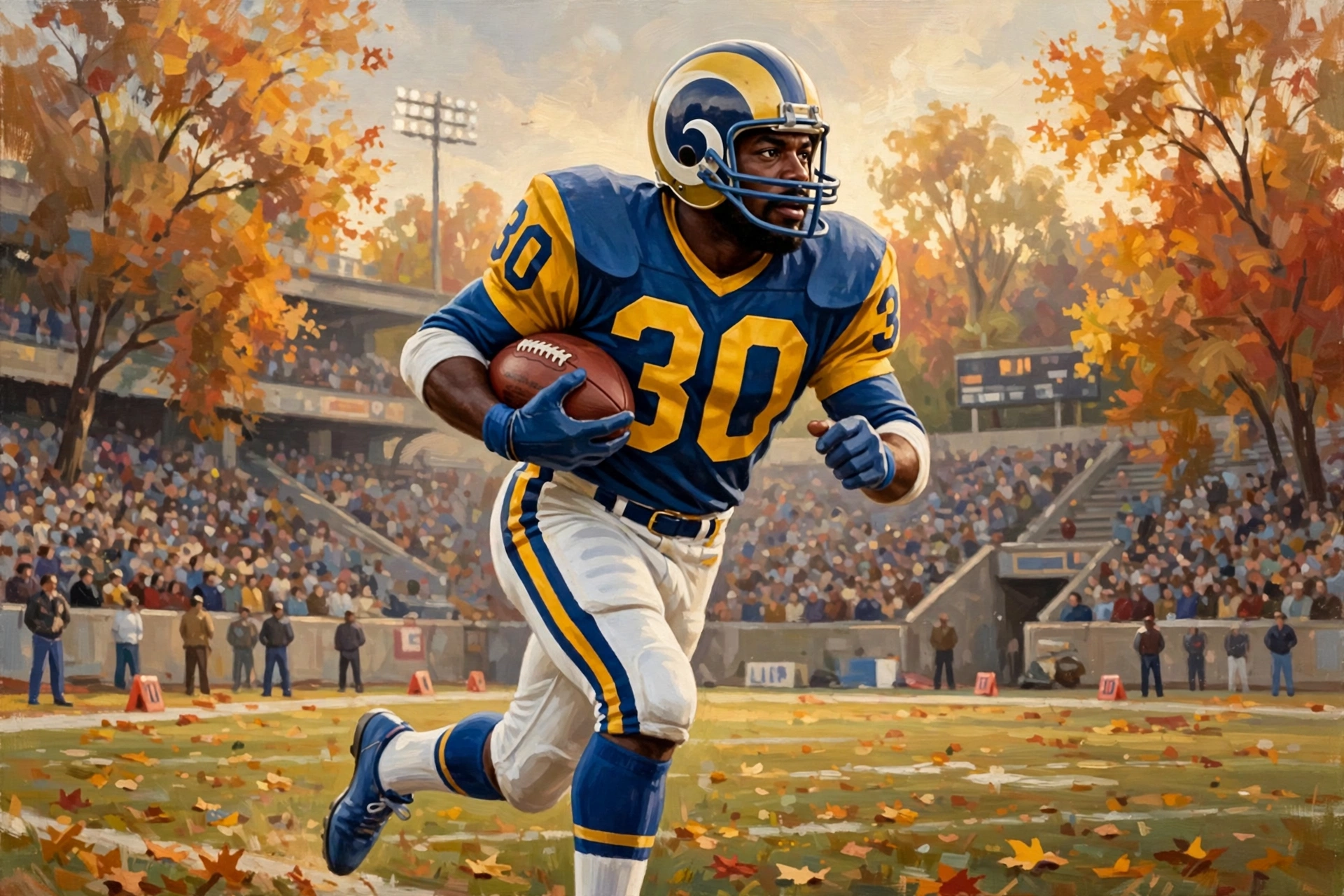
Lawrence McCutcheon, the running back who became one of the defining players of the Los Angeles Rams in the 1970s, died on 23 October 2026 at the age of 76. For many fans, the news brought Lawrence McCutcheon childhood hero grief — the ache of losing a player who belonged to their childhood. His family announced his death on 24 October, saying he had passed away peacefully with family at his bedside after a long battle with Parkinson’s disease, and asking that donations in his honour go to the Michael J. Fox Foundation for Parkinson’s Research. Among the first tributes came from Troy Aikman, the former Dallas Cowboys quarterback, who wrote on his Instagram story: “As a Rams fan as a young boy growing up in SoCal, he was the man. I met him later in life and he was a true gentleman. RIP Lawrence.”
In short: grieving a childhood hero is real grief, because the hero was never just a stranger on a screen. He was part of the landscape of your childhood, and losing him can feel like losing a piece of that time — and of the person you were when you first watched him play. If McCutcheon’s death hit you harder than you expected, you are not being sentimental. You are experiencing a well-documented form of loss.
Who was Lawrence McCutcheon?
McCutcheon was drafted by the Rams in the third round of the 1972 NFL Draft out of Colorado State University. He spent eight seasons with the Rams, from 1972 to 1979, and was named to the Pro Bowl five times in a row, from 1973 through 1977, leading the team in rushing for five consecutive seasons. When he left the franchise in 1980, he was its all-time leading rusher.
His most famous single play came in Super Bowl XIV, when he threw a 24-yard touchdown pass to Ron Smith against the Pittsburgh Steelers — a reminder that he was more than a runner. After his playing career, which also took in the Denver Broncos, Seattle Seahawks, and Buffalo Bills, he spent 32 more years in the Rams’ front office, rising to director of player personnel, a role he held from 2003 until his retirement in 2016. His family remembered him in their statement as a husband, father, grandfather, and great-grandfather, and as “Clutch” — the nickname that followed him through his career.
For Aikman, who grew up in Southern California before his own Hall of Fame career, McCutcheon was the player a young Rams fan looked up to. That detail matters, because it captures exactly how childhood heroes work: they are admired from a distance first, and only later, if ever, met as people.
What is parasocial grief?
Parasocial grief is the grief felt for a public figure with whom you had a one-sided relationship — you knew a great deal about them, they knew nothing about you, and yet the bond felt personal. The term builds on the idea of a parasocial relationship, a one-sided emotional connection with a celebrity, athlete, or creator, built up over years of watching, listening, and following their story.
Parasocial grief is not a lesser version of “real” grief. It is grief with a different shape: there is no funeral to attend, no shared family to mourn with, and often no social permission to be upset. The loss is genuine, but the rituals for it are missing, which can make it harder, not easier, to process.
Why does Lawrence McCutcheon childhood hero grief hurt so much?
Because a childhood hero is wired into autobiographical memory. When you watched McCutcheon run in the 1970s, you were not just watching football. You were sitting in a particular living room, at a particular age, with particular people, feeling a particular kind of excitement that belonged to that time of life. The hero becomes a tag for the memory: mention his name, and the whole scene comes back.
When the hero dies, that tag changes meaning. The memory is still there, but it now carries an ending. Psychologists sometimes describe this as a double loss: you lose the person, and you lose the uncomplicated version of the past that person represented. For older fans, there is a third layer too — a reminder of their own ageing. The heroes of your youth do not stay young, and their deaths quietly confirm that neither do you.
Pause and ask yourself: Who was the first hero you remember admiring from a distance — an athlete, a musician, an actor, someone else entirely? What age were you, and where were you when you watched them? The vividness of that memory is a clue to why this kind of loss lands so deeply.
Why do people say “but you didn’t even know him”?
Because grief is usually judged by closeness, and a one-sided relationship looks, from the outside, like no relationship at all. This is what grief researchers call disenfranchised grief: grief that is not socially recognised or supported, because the loss does not fit the usual categories of family, friend, or partner.
Disenfranchised grief has a cruel twist. The mourner not only feels sad, but feels embarrassed about feeling sad, and embarrassment suppresses the very expression that helps grief move. People minimise their own reaction — “I should not be this upset, I never met him” — and then wonder why the feeling will not go away. It will not go away on command, because minimising a feeling does not process it. It stores it.
Why do tributes from other famous people help?
Because they give private grief a public form. When Aikman, himself a football legend, says openly that McCutcheon “was the man” to him as a boy, he normalises what ordinary fans are feeling in private. The tribute acts as permission: if a Hall of Fame quarterback can say this hero shaped his childhood, then a fan in the stands can say it too.
How can you honour a childhood hero’s death without getting stuck in it?
First, let the grief be what it is. You do not need to justify it with a personal connection, and you do not need to rank it against other losses. A simple, honest sentence — “I am sad that he is gone” — is a complete response.
Second, revisit one good memory on purpose. Watch a highlight, remember a game, or tell someone about the first time you saw him play. Deliberate remembering is different from rumination: it has a beginning and an end, and it places the hero back in the happy context where he belongs, rather than leaving him attached only to the news of his death.
Third, separate the person from the era. It is tempting to turn a hero’s death into proof that everything good is gone, or that the modern game will never match the old one. That is grief generalising, not analysis. The 1970s Rams were great, and the present has its own players who will one day be someone’s childhood heroes.
Fourth, consider a small, concrete tribute if that feels right. McCutcheon’s family asked for donations to Parkinson’s research in lieu of flowers. Whether or not you donate, the principle is useful: turning feeling into action, however small, gives grief somewhere to go besides circling.
Fifth, notice if the loss has opened a larger grief. Sometimes a public death unlocks a private one — a parent, a childhood home, a time of life that cannot be revisited. If McCutcheon’s death has brought older losses to the surface, that is not a malfunction. It is grief doing what it often does: using a new loss as a door to older ones that were never fully grieved.
Frequently asked questions
Is it normal to cry over a celebrity you never met?
Yes. Parasocial grief is a recognised response. Years of following someone’s career can create a genuine emotional bond, and bonds produce grief when they end, whether or not the person knew you existed.
Why does a childhood hero’s death feel worse than a current star’s death?
Because childhood heroes are tied to autobiographical memories from a formative time of life. Losing them can feel like losing part of your own past, as well as the person.
What is disenfranchised grief?
Disenfranchised grief is grief that is not socially recognised or supported — for example, grief for a public figure, an ex-partner, or a pet — because it does not fit conventional categories of loss. It can feel harder precisely because it lacks rituals and permission.
How long does parasocial grief usually last?
For most people, the sharpest feelings ease within days to a few weeks, especially once tributes and shared memories have run their course. If sadness deepens or persists, or stirs older unresolved losses, talking to someone can help.
Try it on our site
If this news has stirred sadness, or brought older losses to mind, these free tools offer a quiet place to reflect: Mind Check-Ins to notice how you are doing, Challenge the Thought for working through a heavy thought, and Wellness Tools for relaxation and grounding exercises.
Related reading: Parasocial Relationships: Why You Feel Attached to People You’ve Never Met, The Psychology of Bill Murray: Spontaneity, Second Acts, and the Joy of Going Off Course, Jalen Williams Injury Leaves Thunder Fans Shaken: The Psychology of Watching an Athlete Get Hurt
Key Takeaways
- Lawrence McCutcheon, five-time Pro Bowl running back for the Rams from 1973 to 1977, died on 23 October 2026 at 76 after a long battle with Parkinson’s disease.
- Troy Aikman’s tribute — “as a Rams fan as a young boy growing up in SoCal, he was the man” — captures how childhood heroes live in fans’ memories.
- Parasocial grief is real grief for a one-sided bond, and it can feel harder because it lacks funerals, rituals, and social permission.
- Childhood heroes anchor autobiographical memories, so their deaths can feel like losing part of your own past.
- Let the grief be what it is, revisit one good memory on purpose, and let tributes and shared stories do their quiet work.
This article is educational only and is not therapy, diagnosis, or medical advice. If you are struggling, consider speaking to a licensed professional. In the US, call or text 988. In the UK and Ireland, Samaritans is on 116 123.