
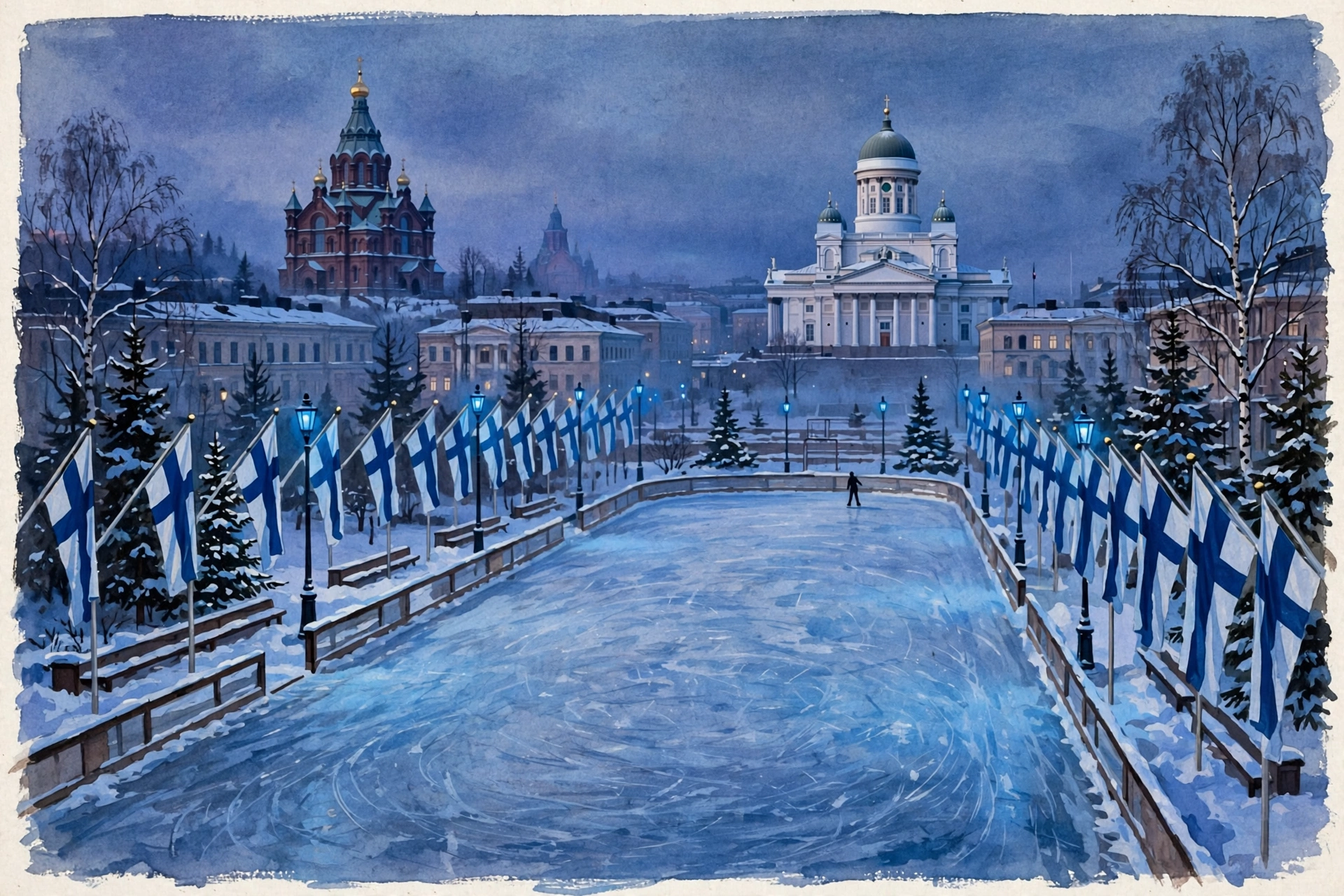
Finland Shut the Door on Russian Athletes: The Psychology of Fairness in Sport
Reviewed by a Psychology Postgraduate (MA)
The short answer: Finland Russian athletes visa ban psychology starts with a door closing just as it was opening. On 12 November 2026, Finland said it will refuse visas to Russian athletes from 16 November, even those cleared to compete as neutrals, and Norway followed within hours. The question now is whether keeping athletes out is fair, or punishes the wrong people.
This article updates our earlier piece on sports boycott psychology, which covered Finland saying no to playing Russia in ice hockey, and the Nordic countries following. That boycott was about teams refusing to play. This new step is about a government refusing to let athletes in at all, and it raises a harder question about who pays the price.
What did Finland and Norway actually decide?
On Thursday 12 November 2026, the Finnish government announced new entry restrictions for Russian citizens applying for short-term work visas, including professional athletes. From Monday 16 November, Russians will generally only be admitted for work essential to national interests, and professional sport does not qualify. The rules apply to Russian athletes and to those approved to compete under neutral status.
Foreign Minister Elina Valtonen explained the position plainly: “As long as Russia’s war of aggression continues, Russian athletes have no business in Finland.” Finland shares a 1,340-kilometre border with Russia and has kept strict entry restrictions since the invasion began in February 2022.
Hours later, Norway announced its own restrictions: it will refuse entry to Russian and Belarusian professional athletes and their support staff, for as long as the war continues. Estonia has also decided to bar Russian and Belarusian competitors.
Which competitions are caught in the middle?
The timing is what makes this hurt. The ISU Grand Prix Finlandia Trophy is scheduled for 20 and 21 November in Helsinki, four days after the Finnish rules take effect. Norway is due to host ski jumping World Cup events in Lillehammer from 20 to 22 November, and cross-country skiing competitions in Trondheim in early December. The cross-country World Cup opener in Ruka, Finland, follows on 27 to 29 November, and the biathlon World Cup opener in Kontiolahti runs from 26 to 29 November, although that event already excludes Russians under International Biathlon Union policy.
The largest concern is further ahead: Finland hosts the World Figure Skating Championships in Tampere from 16 to 21 March 2027. The International Skating Union said on 12 November that it had “taken note” of the decision, was “studying its implications”, and was seeking clarification from Skating Finland. The ISU added that it believed “athletes should not be punished for the actions of their governments”.
How did we get here?
- February 2022: Russia invades Ukraine. International federations ban Russian and Belarusian athletes.
- 30 June 2026: the ISU announces that eligible Russian and Belarusian skaters can return from the 2026-27 season as Individual Neutral Athletes, without flags or anthems.
- September 2026: the International Ski and Snowboard Federation relaxes its neutral-athlete rules, while making clear that host countries alone set visa and entry policy.
- 30 October 2026: the Court of Arbitration for Sport rules in a way that opens the door for the Russian ice hockey team to return to the World Championships next year, over the objection of the International Ice Hockey Federation.
- 6 November 2026: Finland says no to playing Russia in ice hockey, and the other Nordic countries follow.
- 12 November 2026: Finland announces the visa restrictions, effective 16 November. Norway follows within hours. The ISU says it is studying the implications.
Every time a door opens for Russian athletes, a government closes a different one. The federations decide who may compete. The countries decide who may enter. The athletes are caught between the two.
What does Finland Russian athletes visa ban psychology say about fairness in sport?
Collective punishment in sport is when a whole group is barred because of the actions of its government, rather than anything its members did themselves.
That definition is where the argument lives. Supporters of the ban say athletes are not ordinary travellers. In Russia, elite sport is state-funded and used as proof of national strength, so letting athletes compete normally would hand the government a propaganda win. From this view, the ban is not punishment of individuals. It is a refusal to let sport be used as a stage.
Critics say the line between symbol and person cannot be drawn that cleanly. A 19-year-old skater did not order an invasion, and four years out is most of a sporting career. When the neutral route opened in June 2026, it looked like a compromise: compete, but without the flag. Finland’s decision closes even that route, which is why the ISU’s objection stings. Both sides mean different things by fairness. That is why the argument never settles. Research on identity helps explain why it feels so personal: for elite athletes, identity is bound up with the flag, the team and the anthem, as our guide to identity psychology explains.
What does exclusion do to the athletes left out?
For the athletes, the cost is concrete. Russian figure skaters have been out of international competition for more than four years, since 2022. A career in figure skating is short, and the skaters who were teenagers when the ban began are adults now. The neutral-athlete route was supposed to end that. Instead, the visa decision may keep the door shut for the Finlandia Trophy, the Ruka World Cup and possibly the Tampere Worlds in March 2027.
Finland, meanwhile, lives with the pressure daily. A country with a 1,340-kilometre border with Russia does not experience this as an abstract debate, as our piece on Finland drone alerts psychology showed. From Helsinki, the visa decision looks like consistency: the same country that will not play Russia in hockey will not host its athletes either. Psychologists call the risk identity foreclosure: when “athlete” is the only identity a person has built, and it is taken away, there is little else to fall back on.
What does it do to the fans watching?
Fans feel the split too. Sport asks supporters to do two things at once: love the contest and care about what it means. When athletes are barred, some fans feel moral clarity. Others feel moral fatigue, the slow exhaustion of a sport that keeps arguing about who is allowed to play instead of playing. There is also a tribal pull: our piece on the psychology of sports fandom describes how quickly supporters sort the world into “us” and “them”. A ban feeds that pull, turning a sporting question into a loyalty test, and punishing the very doubt a hard question needs.
Pause and reflect: Think of a time you were judged as part of a group rather than as yourself. Did the label feel fair, or did it miss who you are? If you want a structured way to explore that pattern, try our free questionnaires.
What can the rest of us take from this?
Three lessons follow. First, separate the person from the symbol. An athlete can be both a symbol of a state and an individual with no power over it, and holding both ideas at once is the only honest way to judge the ban. Second, ask who bears the cost. If a rule’s cost falls on teenagers who never chose the war, say so plainly, even if you still support the rule. Third, notice when a decision has no review date. Finland’s rules last “as long as the war continues”, but open-ended rules deserve regular review, or they harden into habit.
Try it on our site
If this story stirred up strong feelings about fairness or exclusion, our free tools can help. Take a free questionnaire to check in with how you are feeling, or browse the full set of wellness tools – all free, with no signup needed.
Related reading
- Sports Boycott Psychology: Why Finland, Norway, Sweden and Denmark Refuse to Play Russia
- Finland Drone Alerts Psychology: What a Night of Warnings Does to a Country
- Groupthink Explained: Why Smart Groups Make Bad Decisions
Key Takeaways
- On 12 November 2026, Finland said it will refuse visas to Russian athletes from 16 November, including those cleared to compete as neutrals.
- Norway followed within hours, also barring Belarusian athletes and support staff, for as long as the war continues.
- The rules land just before the Finlandia Trophy on 20-21 November and raise questions about the Tampere World Championships in March 2027.
- The ISU says athletes should not be punished for the actions of their governments and is seeking clarification.
- The psychology underneath is a clash over fairness: who counts as a symbol, who bears the cost, and what exclusion does to identity.
Frequently Asked Questions
Is Finland banning Russian athletes?
Finland announced on 12 November 2026 that from 16 November, Russians applying for short-term work visas, including professional athletes, will generally only be admitted for work essential to national interests. Professional sport does not qualify, and the rules apply to athletes competing under neutral status as well.
Why did Finland make this decision?
Foreign Minister Elina Valtonen said: “As long as Russia’s war of aggression continues, Russian athletes have no business in Finland.” Finland shares a 1,340-kilometre border with Russia and has kept strict entry restrictions on Russian citizens since February 2022.
What does Norway’s decision cover?
Norway said it would refuse entry to Russian and Belarusian professional athletes and their support staff, for as long as the war continues. No precise start date has been announced for Norway’s measures.
Will the Finlandia Trophy go ahead?
The Finlandia Trophy is scheduled for 20 and 21 November 2026 in Helsinki. The ISU said on 12 November that it was studying the implications of Finland’s decision and seeking clarification from Skating Finland and the organising committee.
If this article has raised feelings of distress about war or exclusion, support is available: in Finland, call MIELI Kriisipuhelin on 09 2525 0111.
This article is for education only, not therapy or professional advice. If you are struggling, please speak to a qualified professional.