
Reviewed by a Psychology Postgraduate (MA)
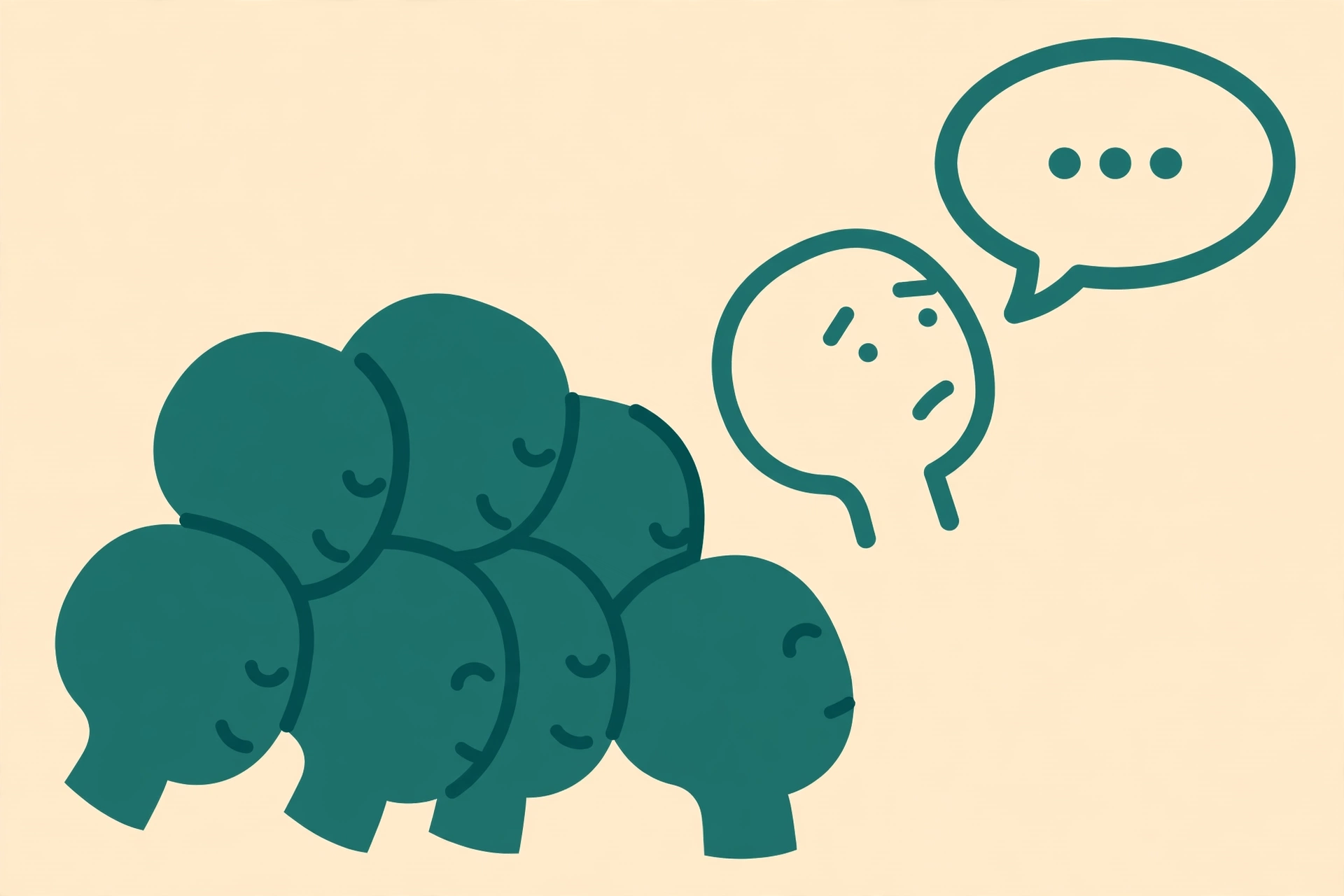
The Bay of Pigs. The Challenger explosion. Countless corporate disasters. In each, brilliant people made obviously bad decisions — together. Not from stupidity. From groupthink: the psychological drive for consensus that overrides realistic appraisal. Smartest people in the room, collectively dumb. Here’s how it happens — and how to stop it in your groups.
What it means in one sentence: Groupthink is when a cohesive group’s desire for harmony and consensus overrides critical thinking — producing irrational, often disastrous decisions.
In short: Groupthink is what happens when a cohesive group's desire for harmony overrides critical thinking, producing irrational decisions by smart people. Psychologist Irving Janis identified symptoms from illusion of invulnerability to self-censorship and mindguards. The antidotes are procedural: assign a devil's advocate, let leaders speak last, gather anonymous input first, and bring in outside voices.
Groupthink in Everyday Words
Psychologist Irving Janis (1972) studied foreign-policy fiascos and found a pattern. Antecedents: high cohesion (“we’re a great team”), insulation (no outside opinions), directive leadership (“here’s what I think — agree?”), stress (decide now). Symptoms: illusion of invulnerability (“we can’t fail”), collective rationalization (dismissing warnings), belief in inherent morality (“we’re the good guys, so we’re right”), stereotyping outsiders (“they’re evil/stupid”), self-censorship (doubts stay silent), illusion of unanimity (silence = agreement), direct pressure (“don’t rock the boat”), mindguards (members shield the group from dissent).
Result: incomplete survey of alternatives, failure to examine risks, poor information search, selective bias, no contingency plans. The group doesn’t decide badly — it stops deciding and starts agreeing.
The Science Behind It
Janis’s case studies (Bay of Pigs, Vietnam escalation, Pearl Harbor) showed smart people, good process, terrible outcomes — the common thread was cohesion without dissent. Lab experiments confirmed: groups under high cohesion + directive leadership made worse decisions than individuals — reversing the usual “wisdom of crowds”.
The mechanism is social, not intellectual: normative pressure punishes dissent, self-censorship hides doubts, mindguards filter information. The group doesn’t lack smarts — it lacks psychological safety (Edmondson’s term): the belief that dissent won’t be punished. Without safety, intelligence self-silences.
3 Examples From Real Life
Example 1 — Challenger: Engineers knew the O-rings might fail in cold. They raised concerns. But NASA’s culture — schedule pressure, “can-do” cohesion, managers overruling engineers — produced collective rationalization (“the data is inconclusive”). Seven astronauts died. The Rogers Commission didn’t blame physics. It blamed decision process: groupthink, with a body count.
Example 2 — The startup: A founding team, tight-knit, visionary. The CEO proposes a pivot. Everyone nods — though two see flaws. They self-censor (don’t break cohesion), rationalize (“CEO sees something we don’t”), stereotype doubters (“that advisor doesn’t get our vision”). Six months and $2M later: the flaws were real. The team wasn’t dumb — it was cohesive. Cohesion without dissent is just agreement.
Example 3 — The family: A family never discusses the obvious problem (Dad’s drinking, the failing business). Each member knows. But harmony is the rule — raising it breaks cohesion. So all perform normalcy. This is groupthink intimate: the most cohesive groups (families) are most vulnerable. Love doesn’t prevent groupthink — it enables it (dissent feels like disloyalty).
🧠 Quick check: What is groupthink?
Why: Janis: cohesion + insulation + directive leadership → symptoms (self-censorship, illusion of unanimity) → disastrous decisions. Smart people, collectively dumb.
Try This Today
Assign a devil’s advocate. In your next group decision, explicitly task someone: “Your job is to attack this plan.” This legitimizes dissent — removing the social cost. Even better: leader speaks last (no anchoring), anonymous input first (writing before speaking), outside expert (break insulation). You’re not being negative — you’re vaccinating against groupthink.
What People Get Wrong
Myth: “Groupthink means groups are dumb — decide alone.”
Reality: Diverse groups with psychological safety outperform individuals (wisdom of crowds). Groupthink isn’t “groups bad” — it’s “cohesive-without-dissent bad.” The fix isn’t solitude — it’s structured dissent. The best decisions come from groups that fight well: high cohesion plus high safety plus explicit dissent roles.
Why It Matters
Groupthink scales from families to nations — and the more cohesive the group, the greater the risk. It explains wars, crashes, scandals, and your team’s bad calls. The antidotes are procedural: devil’s advocates, anonymous input, leaders last, outside voices, rewarded dissent. Harmony feels good. But the best groups aren’t the most agreeable — they’re the most honestly disagreeable. Discomfort now prevents disaster later.
🧠 Quick check: What is 'psychological safety' and why does it prevent groupthink?
Why: Edmondson: without safety, intelligence self-silences. Safety doesn't mean comfort — it means dissent is safe. That's what breaks groupthink.
Frequently Asked Questions
What is groupthink?
Groupthink is when a cohesive group's desire for harmony and consensus overrides realistic appraisal, producing irrational and often disastrous decisions. Smart people, collectively dumb — because the group stops deciding and starts agreeing.
What are the symptoms of groupthink?
Janis listed eight: illusion of invulnerability, collective rationalization, belief in inherent morality, stereotyping outsiders, self-censorship, illusion of unanimity, direct pressure on dissenters, and mindguards who shield the group from dissent.
What are famous examples of groupthink?
The Bay of Pigs invasion and the Challenger explosion. In both, insiders raised warnings, but cohesion, schedule pressure, and directive leadership produced collective rationalization — the Rogers Commission blamed Challenger's decision process, not just its physics.
How do you prevent groupthink?
Use structured dissent: assign a devil's advocate, have leaders speak last so they do not anchor the room, collect anonymous input before discussion, invite an outside expert, and reward dissent. Diverse groups with psychological safety outperform individuals.
Try It on Our Site
Try it now: Boundaries check-in — can you dissent when the group won’t?. Start the check-in →
More tools for this topic:
Related reading: 29. Conformity · 30. Obedience (Milgram) · 32. The Bystander Effect
Tap when this one clicks — your progress is saved on this device.