
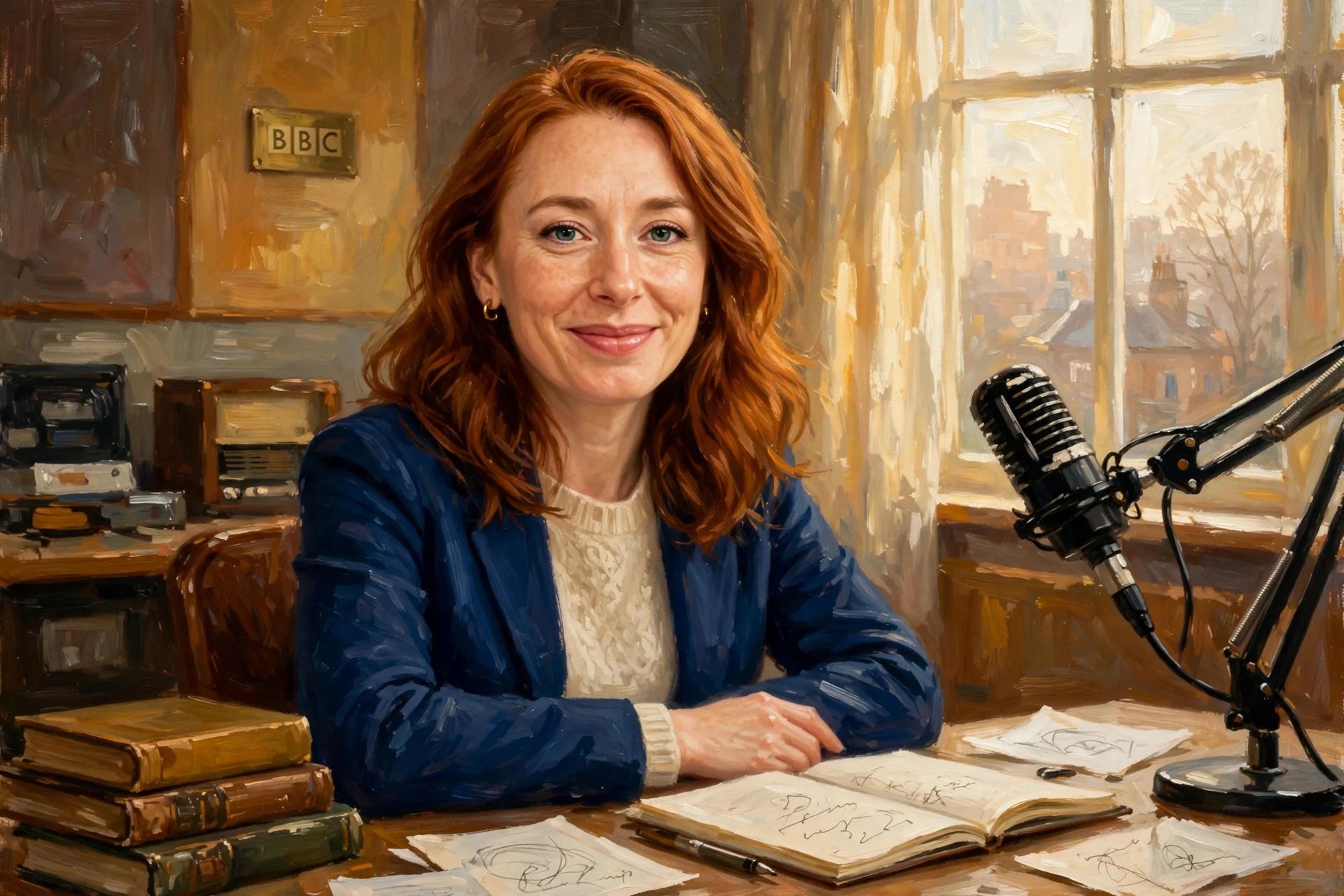
Hannah Fry’s Five-Year All-Clear: The Psychology of Waiting, Luck and Getting Screened
Reviewed by a Psychology Postgraduate (MA)
Mathematician and broadcaster Professor Hannah Fry has told the BBC she feels “unbelievably lucky” after receiving a five-year all-clear from cervical cancer. Speaking on BBC Radio 4’s Desert Island Discs on Sunday 15 November 2026, the 42-year-old described how cancerous cells were found after she attended a cervical screening in 2020, an appointment she had put off for months. She went on to have a hysterectomy in her thirties, which she called “horrific”, and spent more than a week alone in a hospital bed because Covid rules meant nobody could visit. Hannah Fry cancer news like this lands as a health story, but underneath it is a psychology story about the two hardest parts of illness: the waiting, and what you do with the luck afterwards.
In short, the worst part of Fry’s experience was not the surgery. It was the stretch of not knowing. A surgeon told her four of her lymph nodes looked enlarged, and her chances depended on whether the cancer had spread: good if none were affected, about 60 per cent if one was, and about 40 per cent if two were. She waited for the answer alone in a hospital bed. That waiting, the mind suspended between two very different futures, is where the psychology of serious illness really lives.
Fry’s story has a happier ending than most. She recently had her five-year clear, a milestone oncologists treat as a benchmark for long-term remission. “As awful as that was, it had a full stop at the end of the sentence,” she said. “I had my five-year clear the other day. I feel so unbelievably lucky.” She added that she would not swap the experience, describing it as a gift to have gone through it at 36. She had previously documented her treatment in the 2022 BBC Two film Making Sense of Cancer with Hannah Fry.
Why Do People Delay Cervical Screening?
Why do people delay cervical screening? Fry’s own answer is refreshingly ordinary: she put the appointment off for months. She was 36, busy, with two young daughters, and a routine screening felt like something that could wait. It could not.
Psychologists recognise this pattern as avoidance coping. A test that might deliver bad news gets postponed, not because the person does not care, but because the appointment itself triggers anxiety. Delaying feels like relief in the short term, which rewards the delay, and the appointment drifts further away. The same mechanism shows up in overthinking a worry instead of acting on it: thinking about the appointment replaces going to it.
Embarrassment plays a part too. Cervical screening is intimate and uncomfortable, and many people quietly avoid it for that reason alone. Add a busy life and a vague sense that “it won’t be me”, a bias psychologists call optimism bias, and months pass. In the UK, the NHS invites people aged 25 to 64 for cervical screening every five years, and the test exists precisely to catch changes before they become cancer. Fry’s cells were found because she eventually went.
What Is the Psychology of Waiting for Test Results?
What is the psychology of waiting for test results? It is one of the hardest mental states there is, because the brain hates uncertainty more than it hates bad news. Research on uncertainty, sometimes called the uncertainty paradox, finds that people often prefer a certain bad outcome to an uncertain one, because at least a known outcome can be planned for.
Fry’s wait was extreme: alone in a hospital bed for over a week, told four lymph nodes looked enlarged, with her survival odds hanging on a result nobody could give her yet. Under those conditions the mind does what minds do. It runs scenarios. It replays the surgeon’s words. It bargains. It searches for meaning in every small signal from the ward. Psychologists call this intolerance of uncertainty, and it is linked to anxiety in study after study: the less certain the outcome, the more the mind loops.
The isolation made it worse. She was in hospital during Covid restrictions, with no visitors for more than a week. Social support is the single most reliable buffer against stress in the research literature, and she had none in the room. She had only her own thoughts, which is why her line about the experience having “a full stop at the end of the sentence” matters so much. A full stop is what the waiting mind craves: an ending, a verdict, a fact to stand on. The same waiting shaped the response to Pope Leo’s lung cancer diagnosis earlier this year: the announcement was not the hard part, the not-knowing was.
Why Does Survivorship Bring Guilt as Well as Relief?
Why does survivorship bring guilt as well as relief? Because surviving feels arbitrary. Fry calls herself “unbelievably lucky”, and the word lucky is doing heavy work. It acknowledges that the same disease, found a few months later, might have ended differently. Many survivors describe a version of this: relief mixed with guilt towards people whose luck ran out, and a strange pressure to make the survival mean something.
Psychologists sometimes call the positive side of this post-traumatic growth: the idea that a brush with mortality can reorder priorities, deepen relationships and sharpen appreciation for ordinary life. Fry’s version is plain and specific. She says she would not swap the experience and calls it a gift to have gone through it at 36. That is not denial. It is meaning-making, the mind’s way of turning a frightening event into a chapter with a purpose rather than a random accident.
But growth and guilt often arrive together, and gratitude after a health scare can feel complicated rather than simple. A survivor can feel grateful and guilty in the same hour, and both feelings are honest. The useful question is not whether the gratitude is justified, but what it points towards: the screening she nearly skipped, the surgeon who acted, the five years that followed.
Pause and ask yourself: Is there a health appointment, a test or a check you have been putting off? What is the feeling underneath the delay: fear of bad news, embarrassment, or simply never finding the moment? Notice it without judging it, then ask what the smallest next step would be.
What Can We Learn From Hannah Fry’s Story?
What can we learn from Hannah Fry’s story? Three practical lessons, each grounded in the psychology above.
First, book the appointment you have been avoiding. Fry’s cancer was found because she eventually went to a screening she had delayed for months. The NHS invites people aged 25 to 64 for cervical screening every five years, and the test checks the health of the cervix and helps prevent cervical cancer. If you have received an invitation and set it aside, the most useful response to this story is not worry but a booking. If the appointment itself makes you anxious, tell the clinic: they do this all day, and a short conversation beforehand often makes the experience much easier.
Second, prepare for the wait, not just the result. If you are waiting for test results, the waiting itself deserves a plan. Decide in advance when you will check for news and when you will not. Keep one daily routine intact, even a small one, because routine gives the brain a sense of control when outcomes are unknown. Talk to one person about how the waiting feels, rather than carrying it silently: high-functioning anxiety often hides behind a calm exterior, and naming it early helps.
Third, let a good result change something small. Fry’s five-year clear did not just end a medical chapter; it changed how she talks about her life. Survivors often find that the lesson is not “seize every day” but something quieter: answer the letter, keep the appointment, pay attention sooner. If a story like this stirs you, act on the stir while it is warm. Book the check, message the friend, take the walk. Meaning that stays in the head fades; meaning that becomes an action lasts.
Frequently Asked Questions
Is Hannah Fry cancer free?
Yes. Fry told BBC Radio 4’s Desert Island Discs on 15 November 2026 that she recently received her five-year clear after treatment for cervical cancer, and described herself as “unbelievably lucky”.
How was Hannah Fry’s cancer found?
Cancerous cells were discovered after she attended a cervical screening in 2020, an appointment she had delayed for months. Her GP called her back for further tests and a biopsy, and she then had a hysterectomy.
How often should you get cervical screening in the UK?
The NHS invites people aged 25 to 64 for cervical screening every five years. The test checks the health of the cervix and helps prevent cervical cancer.
Why is waiting for test results so stressful?
Because the brain dislikes uncertainty more than bad news. Without a known outcome, the mind loops through scenarios, which keeps anxiety high. A clear result, good or bad, at least gives the mind something to plan around.
Try it on our site
These free tools can help you pause, reflect and reset. No signup needed.
- Daily Tracker — track mood, sleep and habits, including the small health steps that matter.
- Thought Reframe — work through a worrying thought about health, step by step.
- Sleep Reset — a gentle wind-down for worried nights.
- Mind Check-Ins — short questionnaires on mood, anxiety and sleep.
Related reading: Gratitude Practice: The Psychology Behind It · Pope Leo’s Lung Cancer Diagnosis · Waking Up at 3 a.m.
Key Takeaways
- Hannah Fry received a five-year all-clear from cervical cancer, telling Desert Island Discs on 15 November 2026 that she feels “unbelievably lucky”.
- Her cancer was found at a screening she had delayed for months, a common pattern of avoidance coping.
- The hardest part was waiting alone in hospital to learn whether the cancer had spread to her lymph nodes: uncertainty is often harder than bad news.
- Survivorship mixes relief, guilt and gratitude, and many people turn the experience into meaning through post-traumatic growth.
- The practical lesson is simple: book the appointment you have been avoiding, plan for the wait, and let a good result change something small.
This article is for education only, not therapy, diagnosis, or medical advice. If you are struggling, consider speaking with a licensed professional. In distress, call Samaritans on 116 123 in the UK and Ireland, free and 24/7.