
Conscription Anxiety Psychology: Why Dutch Students Walked Out on 20 November
Reviewed by a Psychology Postgraduate (MA) | 21 November 2026
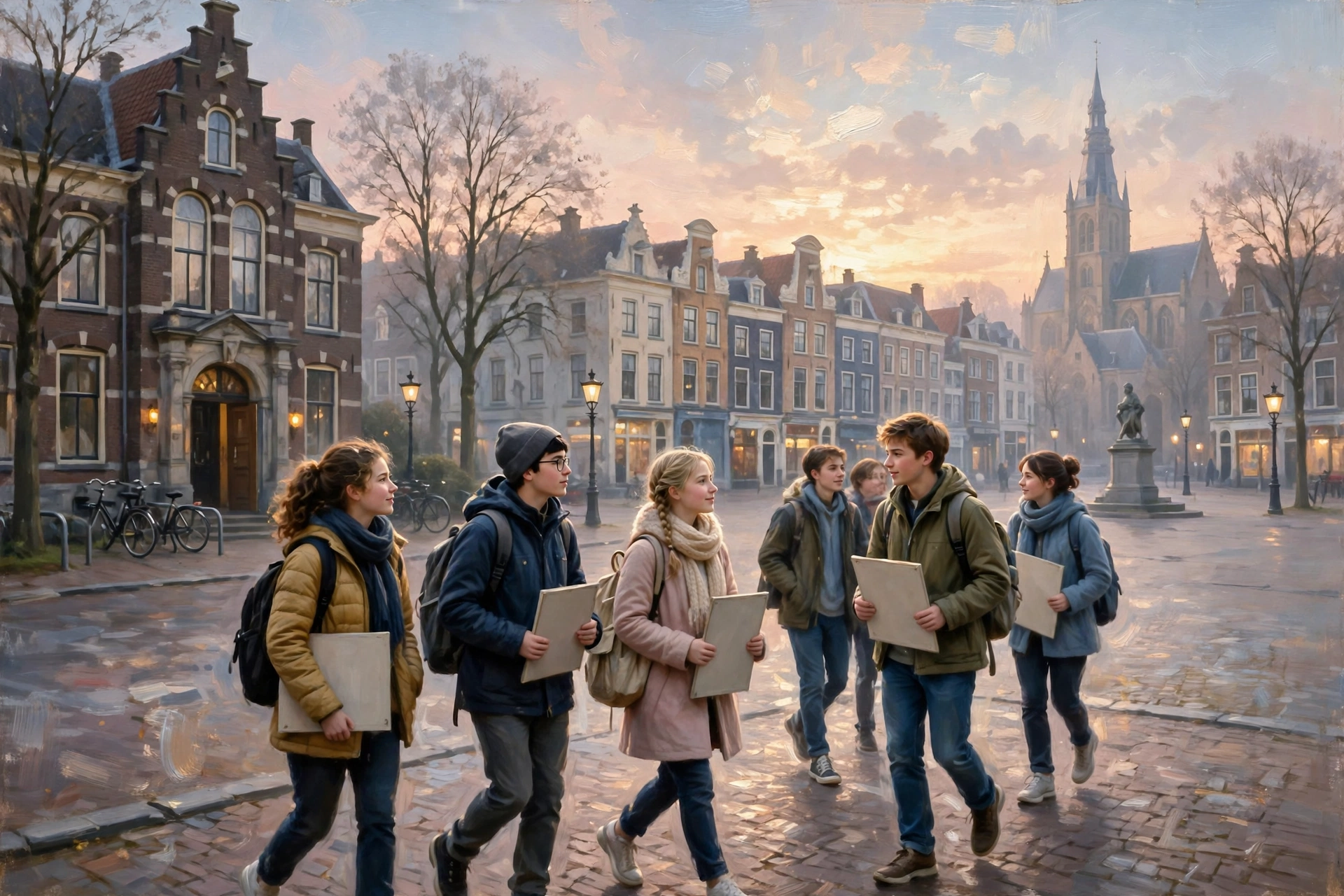
Conscription anxiety psychology helps explain why thousands of Dutch students walked out of class at 1pm on Friday 20 November 2026, protesting the possible return of military conscription and military recruitment in schools. The walkouts took place at more than 60 schools and institutions in 16 Dutch cities, as part of a European day of action. This article covers what happened, what the students want, what the government is planning, and why compulsory service stirs such strong feelings.
In short, Dutch students walked out on 20 November 2026 because the government is preparing selective conscription legislation, and many young people fear losing control over their futures. Conscription anxiety psychology describes the anticipatory worry and sense of unfairness that prospect creates, and protest is one way young people turn that fear into action.
What happened on 20 November 2026?
The walkouts began at 1pm on Friday 20 November 2026. According to NOS and RTL Nieuws, via Kyiv Post on the same day, students left lessons at more than 60 schools and institutions in 16 cities, gathering at the Stopera in Amsterdam, the Domplein in Utrecht and the Broerplein in Groningen. DutchNews and TU/e Cursor also covered the walkouts on 20 November 2026.
Organised by Stop de Oorlogskoorts, meaning “Stop the War Fever”, and backed by the National Student Union, the LSVb, and Young and United, the youth wing of FNV, it formed part of a European day of action in 25 countries under the banner “Fight for Our Future, Not Their Wars”. Tensions had risen after a Russian drone damaged the Dutch Embassy in Kyiv.
What are the students demanding?
The organisers set out three core demands: an end to conscription, keeping the Defence Ministry out of schools, and spending on young people’s futures instead of funding arms. They also called on schools and universities to disclose ties to the Defence Ministry and the arms industry, and to end military recruitment on campuses.
LSVb chair Evy Kras told RTL Nieuws that “money is being taken away from care, education and housing to go to defence.” In mid-November 2026, the LSVb and Stop Wapenhandel published a report saying defence spends 260 million euros a year on recruitment campaigns in schools and online. That figure fed their demand that the Defence Ministry stay out of classrooms.
What is the government actually planning?
State Secretary Derk Boswijk is preparing legislation for a selective military conscription system. He said in March 2026 that he could not rule out young people having to serve in the coming years. Under the plan, the armed forces would grow from about 80,000 to 200,000 personnel in a crisis. The bill has not yet been submitted to parliament, so no law has passed and nobody has been called up.
Conscription formally still applies to people aged 17 to 45 in the Netherlands, but call-ups have been suspended since 1997. The proposed system would make four steps compulsory: a survey, responding to an invitation, selection, and service. A Peil.nl survey found that 80 percent of Dutch people aged 18 to 24 oppose military service. What remains undecided is the final form of the bill: how many would be selected, what exemptions would apply, or how long service would last.
What is conscription anxiety?
Conscription anxiety is the persistent worry, dread and sense of powerlessness that arises when a young person faces the possibility of compulsory military service, especially when the timing, terms and personal consequences remain uncertain.
That definition separates conscription anxiety from ordinary worry about exams, jobs or housing. It adds the prospect that the state could direct where you live, what you do and whether you face danger, regardless of your own plans. It is anticipatory anxiety: distress arrives before anything has happened, fed by imagination and uncertainty.
Conscription anxiety psychology: why does the prospect of conscription feel so frightening?
The first mechanism is autonomy. Late adolescence and early adulthood are when people build an independent life, choosing where to study, work and live. Compulsory service hands the timetable of that life to someone else, and people cope far better with chosen demands than with imposed ones.
The second mechanism is loss of control. Uncertainty is often more distressing than bad news itself, because bad news can at least be planned around. With selective conscription, young people do not know whether they will be chosen, when, or what service would involve, and that uncertainty keeps the threat permanently active.
The third mechanism is generational fairness. Young people are being asked to consider a sacrifice while many feel squeezed by housing costs, study debt and a difficult job market. When Evy Kras links defence spending to money taken from care, education and housing, she speaks the language of relative deprivation: the feeling that your group gets less than it deserves. For many students the classroom is also part of who they are, so recruitment in schools feels like an intrusion.
Pause and ask yourself: When a big decision about your future is made without you, what bothers you most: the uncertainty, the loss of choice, or the feeling that it is unfair? Naming it is the first step towards dealing with it.
Why did students walk out together, rather than worrying alone?
Protest is, among other things, a coping strategy. The first ingredient is collective efficacy: the belief that acting together can change an outcome no individual could change alone. One student refusing a survey achieves little; thousands leaving class at 1pm across 16 cities creates a news event, and that creates pressure.
The second ingredient is moral conviction: when people believe an issue is a matter of right and wrong, they are far more willing to act. The slogan “Fight for Our Future, Not Their Wars” frames conscription as a moral question about whose future is being spent. The third ingredient is social identity: walking out with classmates turns an isolating fear into a shared experience, and discovering that hundreds of others share the same worry replaces isolation with belonging.
This Netherlands conscription protest is part of a wider European day of action: see our coverage of the Europe-wide student walkouts. The psychology of Gen Z protest psychology helps explain why this generation is highly mobilised when an issue touches its future directly. An earlier rumour-driven panic among Dutch students is examined in our piece on the Netherlands Gen Z protest scare, a different story.
How can young people cope with conscription anxiety?
Military service anxiety is understandable, and there are practical ways to keep it manageable while the legislation remains undecided:
- Separate facts from speculation. Write down what is known, such as the bill not having been submitted to parliament, and set it beside what is feared.
- Limit doomscrolling. Choose one or two moments a day to catch up on reliable news, then step away.
- Talk about it with peers. Shared worry loses power when spoken aloud, and the walkouts show that acting together helps.
- Focus on what you can influence. You cannot decide the legislation, but you can decide how informed you are and whether you take part in debate.
If worry becomes persistent or interferes with sleep, study or daily life, speak to a trusted adult or a school counsellor. In the Netherlands, young people in distress can contact 113 Suicide Prevention at 113.nl.
Frequently asked questions
Why did Dutch students protest conscription on 20 November 2026?
Students walked out at 1pm to protest the possible return of selective military conscription and military recruitment in schools. Organised by Stop de Oorlogskoorts and backed by the LSVb and Young and United, the walkouts took place at more than 60 institutions in 16 cities.
Is conscription coming back in the Netherlands?
Not yet. State Secretary Derk Boswijk is still preparing the selective conscription Netherlands legislation, and said in March 2026 that he could not rule out young people having to serve. The bill has not been submitted to parliament, and call-ups have been suspended since 1997, so no law has passed and nobody has been called up.
What is conscription anxiety?
Conscription anxiety is the persistent worry, dread and sense of powerlessness that arises when a young person faces the possibility of compulsory military service, especially when the timing, terms and consequences remain uncertain. It is anticipatory anxiety, driven by uncertainty and loss of control.
How much does the Netherlands spend on military recruitment?
A report published in mid-November 2026 by the LSVb and Stop Wapenhandel says defence spends 260 million euros a year on recruitment campaigns in schools and online.
Try it on our site
If this story has stirred up worry, Zentha’s free tools can help. Try Challenge the Thought, our interactive CBT thought record, to break a feared outcome into parts and test each against the evidence. You can also take a Mind Check-In or explore the free activities in our Wellness Tools hub. Everything runs in your browser, with no signup and no data stored on our servers.
Key Takeaways
- Dutch students walked out at 1pm on Friday 20 November 2026 at more than 60 schools and institutions in 16 cities, as part of a European day of action.
- Their demands: an end to conscription, keeping the Defence Ministry out of schools, and spending on young people’s futures instead of arms.
- State Secretary Derk Boswijk is preparing selective conscription legislation, but the bill has not reached parliament and call-ups have been suspended since 1997.
- A Peil.nl survey found 80 percent of Dutch people aged 18 to 24 oppose military service, and a mid-November 2026 report put defence recruitment spending at 260 million euros a year.
- Conscription anxiety is anticipatory anxiety driven by uncertainty, loss of autonomy and generational unfairness, and collective action is one way young people restore a sense of control.
Educational disclaimer: This article is for general educational purposes only. It is not medical advice, therapy or a diagnosis. If you are struggling with anxiety or distress, please speak to a qualified health professional or contact a crisis line in your country.