
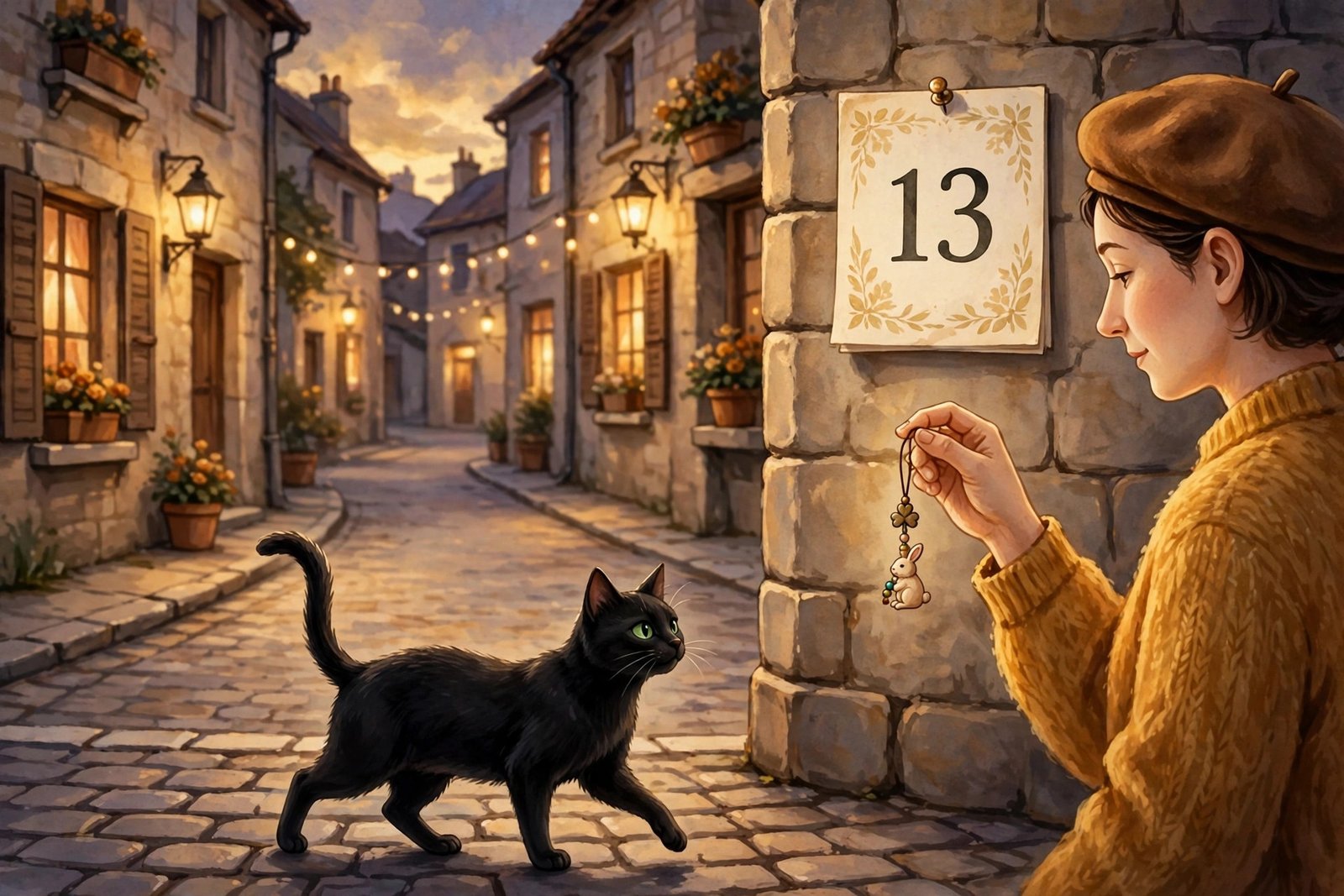
Friday the 13th Psychology: Why Superstition Feels So Real on the Unluckiest Day
Reviewed by a Psychology Postgraduate (MA)
It is Friday 13 November 2026, and “Friday the 13th” is the number one trending search on Google in the US today, above every other query in the country.
Friday the 13th psychology is the psychology of how the mind handles uncertainty. In short: the day feels unlucky because the brain spots patterns, remembers the hits, forgets the misses, and reaches for anything that restores a sense of control. The date has no power. The story we have told about it for generations does.
Why is Friday the 13th unlucky?
Friday the 13th is considered unlucky because two old fears, the number 13 and the day Friday, were layered together until the combination felt dangerous. Thirteen has long been treated as an irregular, unsettling number, while Friday carries sombre associations in Christian tradition.
The origins most often cited are old ones. At the Last Supper, thirteen guests sat at the table, with Judas as the thirteenth. In Norse myth, Loki arrived as the thirteenth guest at a feast in Valhalla. Friday is associated in Christian tradition with the crucifixion. The 1907 novel “Friday, the Thirteenth” by Thomas W. Lawson then helped fix the idea in the American imagination.
What is paraskevidekatriaphobia?
Paraskevidekatriaphobia is the fear of Friday the 13th, a word built from the Greek for Friday, thirteen and fear. For most people it is a mild, half-playful unease, but for some it is a genuine anxiety that shapes real decisions, from avoiding flights to postponing meetings. It follows the same loop as other fears: the brain flags a threat, the body tenses, and avoidance brings relief. Our article on the difference between stress, anxiety and worry explains how that loop works.
Why do people believe in superstitions?
People believe in superstitions because the brain is a pattern-finding machine that would rather see a false pattern than miss a real one. When something bad happens on a Friday the 13th, it sticks in memory. When nothing happens, the day is forgotten by lunchtime.
Psychologists call the first part illusory correlation: seeing a connection between two things that are not actually linked. A person stubs their toe, misses a bus and spills coffee on a Friday the 13th, and the date gets the blame, though the same mishaps happen on ordinary Tuesdays. Confirmation bias then does the rest: once you believe the day is unlucky, you notice every mishap and ignore every smooth hour. The availability heuristic adds a third push, since vivid stories of Friday the 13th disasters are easy to recall. It is the same shortcut that makes fear of crime feel so strong in places that are statistically safe.
There is also control. Psychologists talk about locus of control, the sense of whether life is shaped by our own actions or by forces beyond us. A superstition offers a handle on that feeling: knock on wood or carry a charm, and you have done something. It may not change the odds, but it changes the feeling.
Does anything actually go wrong more often on Friday the 13th?
The research is delightfully contradictory, and that contradiction is the point. A study published in the BMJ in 1993 by Scanlon and colleagues reported more road-traffic accidents on Friday 13th than on comparable days. A later Dutch study found the opposite: fewer accidents, with the researchers suggesting people drove more carefully because they were nervous about the date.
Belief changes behaviour, and that is the real lesson. Expect danger and you may grow distracted and clumsy, or you may slow down and double-check. The date does not cause accidents. The belief about the date changes how people act, and their actions change the outcome.
Why do rituals and lucky charms feel so comforting?
Rituals and lucky charms feel comforting because they give the mind something to do when it cannot control the outcome. The anthropologist Bronislaw Malinowski noticed this a century ago among fishermen in the Pacific: the more uncertain and dangerous the trip, the more elaborate the ritual around it. Safe lagoon fishing had no rituals at all. The rituals did not change the sea, only the fishermen, steadying their nerves.
A footballer who always puts his left boot on first is doing the same thing. Psychologists sometimes describe the comfort as placebo-like: not because the charm has power, but because believing in it lowers anxiety, and lower anxiety improves performance. This is also how habits form and lock themselves in: a behaviour followed by relief gets repeated, and repetition turns it into an automatic part of the routine. Negativity bias adds weight to the bad moments too, since one flat tyre on a Friday the 13th outweighs a hundred uneventful ones in memory.
Pause and ask yourself: Think of the last Friday the 13th you remember. Can you recall one thing that actually went wrong, or mostly the jokes and the feeling of the day? If the feeling outweighs the evidence, that is your brain remembering the story and forgetting the ordinary hours.
How can you stop a superstition from running your day?
You can stop a superstition from running your day by treating the belief as a thought, not a fact, and testing it against your own evidence. When the thought “today will go badly” appears, name it for what it is: a prediction, not a report. Keep a note of what actually happens on the 13th and compare it with an ordinary day. Most people who try this find the two days look remarkably similar. Overthinking feeds the same spiral, turning one uneasy thought into a whole forecast of disaster, and the way out is the same: slow the thought down and check it against the facts.
Then replace the ritual rather than just dropping it. If you normally avoid something on Friday the 13th, do a small, safe version of it instead. Each ordinary outcome weakens the association a little more. Psychologists call this gentle exposure one of the most reliable ways to loosen a fear, because the brain learns from experience far faster than from argument.
A few practical steps help:
- Name the thought out loud: “I am having the thought that today is unlucky.”
- Check the evidence: list three ordinary Friday the 13ths when nothing unusual happened.
- Do one normal thing you would have avoided, and notice the day carries on.
- Keep rituals that genuinely calm you, and drop the ones that only feed the worry.
- Laugh at the story, kindly. Humour puts you back in charge of the narrative.
Why does the whole internet care about Friday the 13th today?
The whole internet cares because shared superstitions are shared stories, and shared stories are social glue. Searching for “friday the 13th” is a way of joining in. Halloween brings a similar wave, and our piece on why Halloween anxiety overwhelms so many people explores how a date on the calendar can stir real feelings in millions at once.
So if today feels a little charged, that is your brain doing its job: scanning for patterns, weighing risks, reaching for control. Thank it for the warning, check the evidence, and get on with the day. The story is good, but it does not need to decide how your day goes. You do.
Frequently asked questions
Why is Friday the 13th considered unlucky? It combines two old fears: the number 13, linked to the Last Supper and Loki in Norse myth, and Friday, associated with the crucifixion. The 1907 novel “Friday, the Thirteenth” made it a popular American superstition.
What is the fear of Friday the 13th called? It is called paraskevidekatriaphobia, from the Greek words for Friday, thirteen and fear. For most people it is mild unease, but for some it is a genuine anxiety that changes plans and decisions.
Do more accidents really happen on Friday the 13th? The evidence is mixed. A 1993 BMJ study reported more road-traffic accidents on Friday 13th, while a later Dutch study found fewer, suggesting people drove more carefully. Belief changes behaviour, and behaviour changes outcomes.
Why do people believe in superstitions? Because the brain spots patterns, remembers the hits and forgets the misses. Illusory correlation, confirmation bias and negativity bias make coincidences feel meaningful, while rituals and lucky charms restore a sense of control.
How can I stop worrying about Friday the 13th? Treat the belief as a thought to test, not a fact. Note what actually happens, do one normal thing you would have avoided, and keep only the rituals that calm you. If the fear regularly limits your life, a licensed professional can help.
Try it on our site
If today has stirred up superstitious thoughts, try these free tools, no signup needed:
- Challenge the Thought — test an uneasy thought against the evidence.
- Mind Check-Ins — short check-ins for anxiety, mood and stress.
- Brain Games — quick games for a busy mind.
- Wellness Tools hub — all our free check-ins, games and exercises.
Related reading: Halloween Anxiety: Why October Overwhelms and How to Cope · Psychology of Fear of Crime: Why Safe Places Feel Scary · What Is Overthinking?
Key Takeaways
- Friday the 13th is the number one trending US search today, Friday 13 November 2026, because a centuries-old story still captures the public imagination.
- Paraskevidekatriaphobia is powered by illusory correlation, confirmation bias, the availability heuristic and negativity bias, not by the date.
- Research is mixed: one BMJ study found more accidents, a later Dutch study fewer, showing belief changes behaviour either way.
- Rituals and lucky charms comfort us by restoring a sense of control, a pattern Malinowski saw in fishermen facing uncertain seas.
- Test the belief against your own evidence, do one normal thing you would have avoided, and keep the folklore fun.
This article is educational only and is not therapy, diagnosis or medical advice. If superstition or anxiety is regularly limiting your life, please speak to a licensed professional for support.