
Dublin AI Summit Psychology: Europe’s AI Meeting Was Hijacked by One Question
Reviewed by a Psychology Postgraduate (MA)
The short answer: Dublin AI summit psychology starts with a meeting that changed shape. On 13 November 2026, EU leaders met in Dublin for the first European Council session devoted to artificial intelligence, but the question of who speaks for Europe in Ukraine peace talks took over the day, and two anxieties shared one room: AI, and being left out.
This article updates our earlier piece on the Dublin EPC summit psychology, which covered around 50 European leaders gathering at the same venue the day before. That summit set the scene; this one was supposed to change the subject, and did not quite manage it.
What happened in Dublin on Friday 13 November?
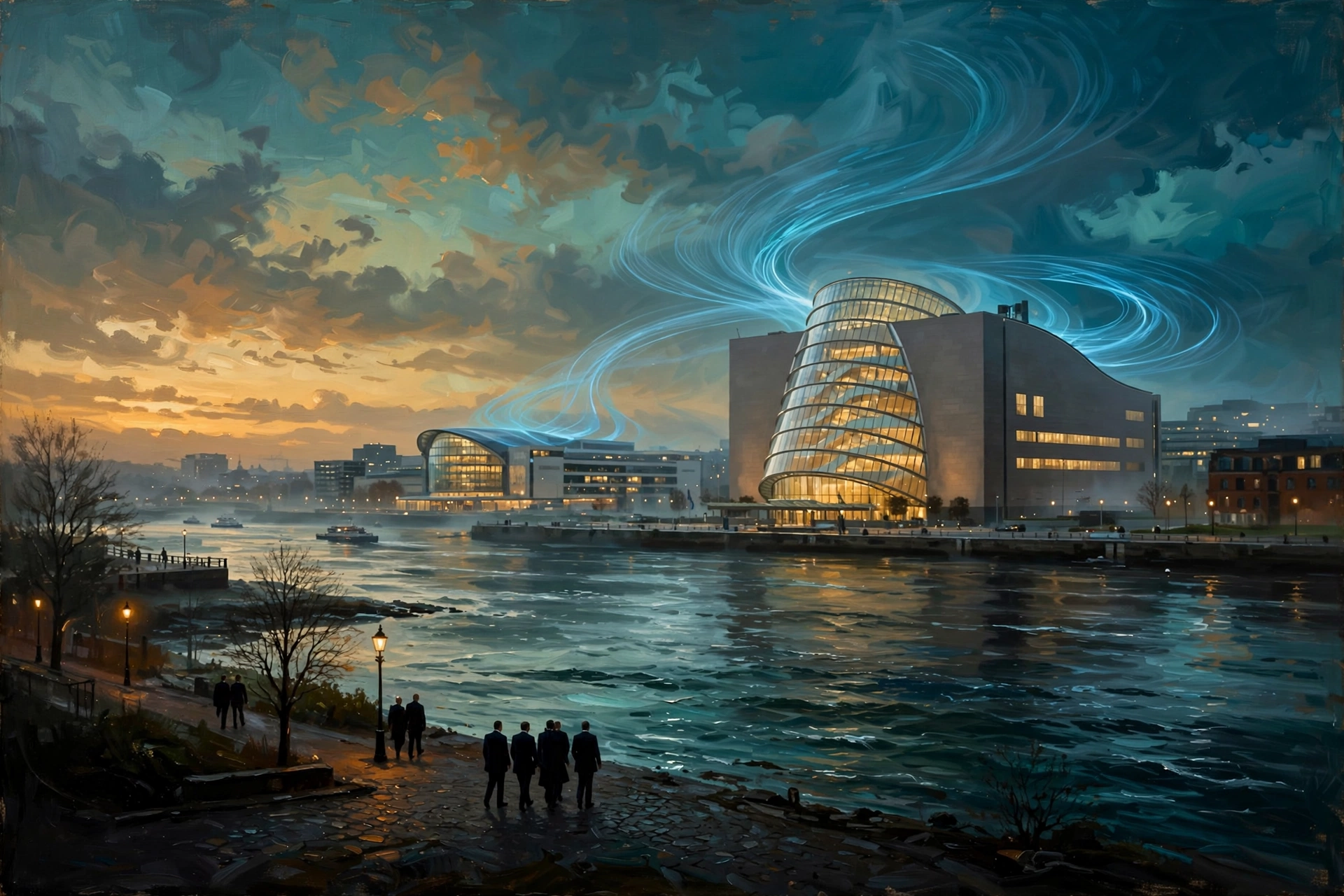
An informal European Council meeting took place at the Convention Centre Dublin on Friday 13 November 2026, chaired by Antonio Costa during Ireland’s six-month Presidency of the Council of the EU. It was the first European Council meeting ever dedicated to artificial intelligence. The agenda: harness AI’s potential to boost European competitiveness and examine its wider impact on society, security and trust.
The meeting was planned in two parts: the first on competitiveness and sovereignty in AI, with Arthur Mensch, chief executive of French AI company Mistral AI, invited to speak. The second looked at AI’s impact on society, with Nobel laureate Geoffrey Hinton, professor emeritus at the University of Toronto. The EU AI summit Dublin hosted was the first of its kind, and Hinton’s presence showed it was not purely about economics.
But the AI agenda was overtaken by a row over who should speak for Europe in Ukraine peace talks. The meeting was informal, so no formal conclusions were adopted, and outcomes were still emerging at publication time.
Why did the Ukraine question take over an AI summit?
Italian Prime Minister Giorgia Meloni wrote to Costa warning that the multiple formats of EU engagement on Ukraine made the bloc “less credible”. If several people claim to speak for Europe, nobody outside it knows who to listen to.
Late on Thursday 12 November, Volodymyr Zelenskyy held talks with US envoys Jared Kushner and Steve Witkoff at a military airbase outside Dublin, after two days of talks in Abu Dhabi. Zelenskyy then confirmed Europe will take part directly in the next round of negotiations, rather than being kept on the sidelines.
Who represents the bloc remains open. Kaja Kallas has pitched herself, alongside Costa, to represent Europe, and if no decision is taken on 13 November, the question goes to a special European Council on 26-27 November.
Zelenskyy restated the scale of the war: Russia launched 115 missiles of various types in the first week of November 2026 alone, alongside thousands of guided aerial bombs and jet-powered drones (Zelenskyy, 13 Nov 2026). That is why the question feels urgent: it is about who speaks while missiles are still falling.
How did the week in Dublin unfold?
- Wednesday 11 November 2026: a draft public sector pay deal is agreed in the early hours, calling off a nationwide strike.
- Thursday 12 November 2026: the 9th European Political Community summit at the Convention Centre Dublin, with about 50 leaders and the theme “Europe – strong, secure and connected”. Taoiseach Micheal Martin lists four outcomes: Ukraine support, hybrid threats, tech innovation, and cleaner energy, under the largest security operation in Irish state history.
- Late Thursday 12 November 2026: Zelenskyy meets US envoys Kushner and Witkoff at a military airbase outside Dublin.
- Friday 13 November 2026: the Ireland EU Council meeting takes place at the same venue, the first European Council ever devoted to AI. Spain’s PM Pedro Sanchez skips the meeting ahead of a snap election on 29 November.
- 26-27 November 2026: a special European Council is scheduled, already carrying the EU budget, Ukraine financing, the Commission’s option paper on Ukraine’s 2027 needs, and a 22nd sanctions package. Von der Leyen confirmed both will be presented there.
What does Dublin AI summit psychology say about AI anxiety?
AI anxiety is the persistent worry that artificial intelligence is changing work, truth, and daily life faster than people, laws, and institutions can keep up.
In Dublin that worry was also political: can Europe build its own AI capacity rather than renting it, can its rules keep pace with systems that improve every few months, and does the public trust any of it? Mensch argues Europe must move faster and build more, or be left behind; Hinton argues speed without care is the danger. The Geoffrey Hinton AI warning is simple: systems are improving faster than the rules that govern them.
Most tools arrive slowly enough for people to adapt. AI has arrived in waves, and when change outruns understanding, people feel out of control. That is the AI anxiety Europe is feeling, shared across a continent.
Why does being left out of the room hurt so much?
The row over who speaks for Europe looks diplomatic. Underneath, it is psychological, about voice. To have a voice is to be recognised as someone whose views count; to lose it is to be treated as an audience.
Research on social exclusion is consistent: being left out activates some of the same brain systems as physical pain, and people respond with anger, anxiety, and frantic efforts to get back in. That holds in playgrounds, workplaces, and summit rooms alike. Europe’s fear is exclusion at continental scale: decisions about its own security made in rooms it cannot enter.
Meloni’s letter makes the point from the other side: too many voices can be as damaging as none, and a single voice requires trust.
How do leaders decide when nothing is certain?
Dublin was a study in deciding under ambiguity: nobody knows how fast AI will develop, or what it will do to jobs and trust.
Faced with ambiguity, people reach for certainty: they simplify, pick a side early, and look for a person to trust rather than a fact to weigh. It is a shortcut the brain uses when the full picture is too large to hold, but an early pick can lock in the wrong spokesperson, and a single story about AI can hide the real trade-offs.
There is also the need for closure: When a question stays open, the mind keeps returning to it, and that unfinished feeling is tiring. This is why political limbo feels so draining, as our piece on the Dutch government collapse psychology. The same strain shows up far from summit rooms: when money is tight and the future is unclear, as in our piece on New Zealand cost of living anxiety, people feel tired without knowing why. Uncertainty keeps the brain on alert, and alertness is expensive.
Pause and reflect: When have you felt left out of a decision that affected you, and what did you do next – speak up, withdraw, or wait? If you want a structured way to explore that pattern, try our free questionnaires.
What can ordinary people take from a summit like this?
Three lessons follow. First, name the anxiety precisely. “I am worried about AI” is vague; “I am worried AI will change my job before I can retrain” is specific, and specific worries can be planned for. Second, separate being present from being heard: showing up is not the same as having a voice. Third, accept that some decisions will stay open, and set a date to revisit them, as Dublin did.
Try it on our site
If this story stirred up worry about the future, or the sting of feeling unheard, our free tools can help. Take a free questionnaire to check in with how you are feeling, or browse the full set of wellness tools – all free, with no signup needed.
Related reading
- Europe’s Leaders Are in Dublin Today: The Psychology of Hosting the Continent’s Biggest Summit
- Dublin EU Summit Psychology: The Disruption, the Deal, and the Relief
- The Dutch Tax Vote Passed – But the Government May Still Fall: The Psychology of Political Limbo
Key Takeaways
- On 13 November 2026, EU leaders held the first European Council meeting ever devoted to AI, in Dublin.
- The AI agenda was overtaken by a row over who speaks for Europe in Ukraine peace talks.
- Zelenskyy confirmed Europe will take part directly in the next round of talks.
- Who speaks for Europe Ukraine talks is still undecided, deferred to 26-27 November.
- The psychology underneath is familiar: AI anxiety, the pain of exclusion, and the strain of deciding under ambiguity.
Frequently Asked Questions
What was the Dublin AI summit?
An informal meeting of the European Council at the Convention Centre Dublin on Friday 13 November 2026, chaired by Antonio Costa during Ireland’s Presidency of the Council of the EU, and the first European Council meeting ever dedicated to artificial intelligence.
Who spoke to the leaders about AI?
Arthur Mensch, chief executive of Mistral AI, addressed competitiveness and sovereignty, while Nobel laureate Geoffrey Hinton addressed AI’s impact on society.
Who speaks for Europe in the Ukraine peace talks?
Still undecided at the time of publication. Kaja Kallas has pitched herself alongside Antonio Costa to represent the bloc, and if no decision is taken on 13 November, the question goes to a special European Council on 26-27 November 2026.
Why does being left out of negotiations matter so much?
Being excluded from decisions that affect you is experienced as a threat to identity and status, not just a practical problem.
If this article has raised feelings of distress about war or uncertainty, support is available: in Ireland and the UK, call Samaritans on 116 123, free, at any time.
This article is for education only, not therapy or professional advice. If you are struggling, please speak to a qualified professional.