
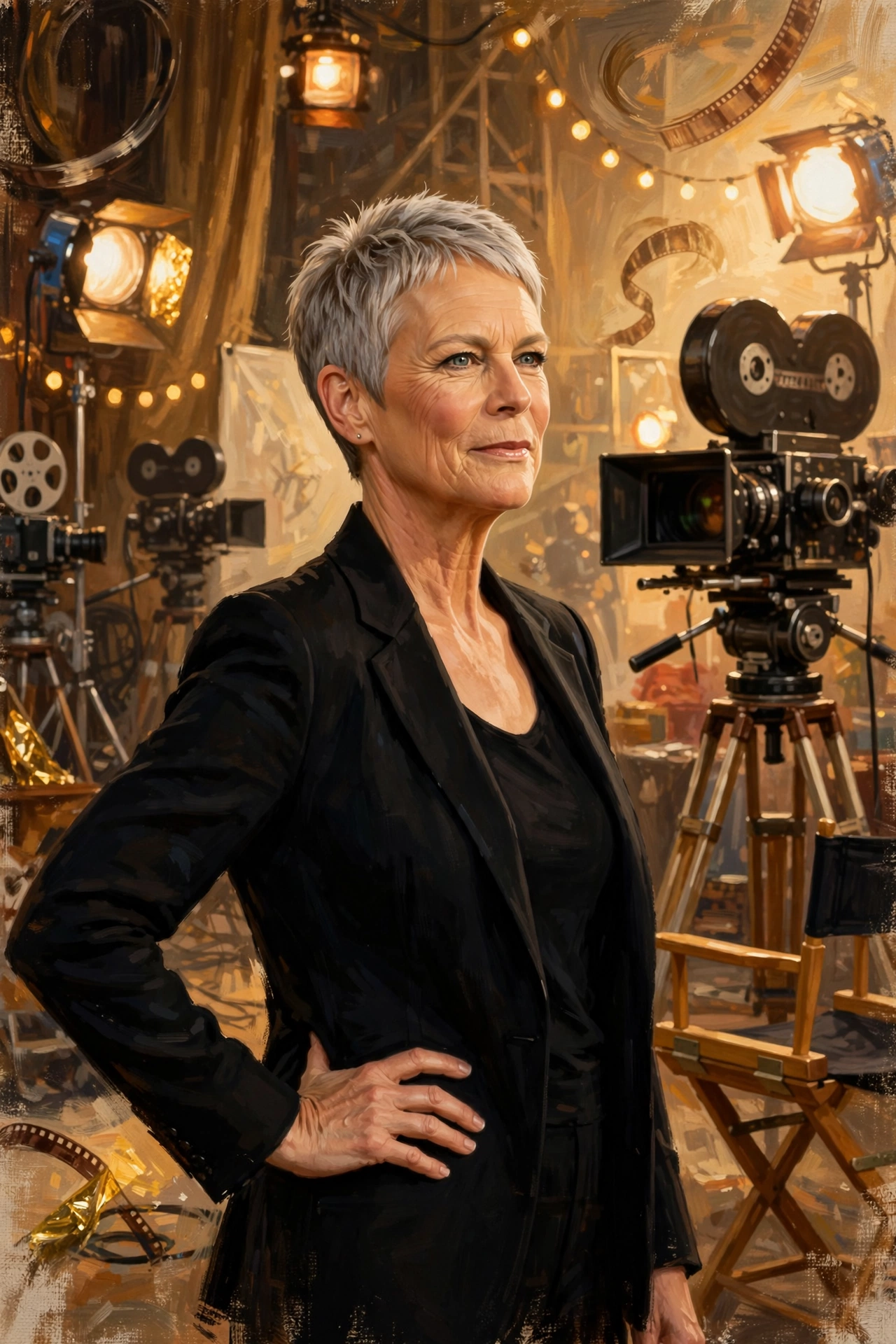
Jamie Lee Curtis at 67 Is Still Reinventing Herself: The Psychology of a Five-Decade Career
Reviewed by a Psychology Postgraduate (MA)
Jamie Lee Curtis is trending again this week, and the reason is wonderfully on brand. Jamie Lee Curtis psychology asks how one actor keeps reinventing herself for five decades. On 28 October 2026 she appeared on The Tonight Show Starring Jimmy Fallon and, in the cold open, transformed into Elizabeth Holmes for a 90-second spoof of the hit documentary You Can See Everything, blonde wig, low voice and all, while Fallon played director Nathan Fielder. Fans online called the sketch Emmy-worthy. It was also, in a way, the whole Curtis story in miniature: a 67-year-old actor, on television to promote Newlyweds, the NBC sitcom she co-created that premiered on 23 October 2026, stealing the night by playing someone else entirely. This profile is an educational look at public behavior and widely reported career choices, not an assessment of Jamie Lee Curtis as a person.
The short answer: The psychology of Jamie Lee Curtis is the psychology of reinvention without self-erasure. Over nearly five decades she has moved from horror icon to comic star to dramatic actor to Oscar winner, not by chasing each new trend but by telling the truth about each stage of her life, including addiction and recovery, aging in public, and the strange weight of being Hollywood royalty. Her career suggests that longevity is less about never changing than about changing on purpose, and that the most durable public identity is one built on honesty rather than image control.
Reinvention, in psychological terms, is the deliberate reshaping of identity and behavior in response to new circumstances, while keeping a coherent sense of self underneath the change.
Story
Jamie Lee Curtis was born on 22 November 1958 in Los Angeles, California, into film royalty. Her father was Tony Curtis, the Bronx-born star of Some Like It Hot; her mother was Janet Leigh, whose shower scene in Alfred Hitchcock’s Psycho (1960) is one of the most famous moments in cinema history. Her parents divorced when she was young, and Curtis has spoken publicly about growing up in the long shadow of two famous names, a childhood split between privilege and instability. She attended boarding school in Connecticut, briefly studied social work at the University of the Pacific, and then dropped out to act, a decision that, given her parentage, looked inevitable from the outside and felt like a gamble from the inside.
The gamble paid off almost immediately, and in the most typecasting-prone way possible. John Carpenter cast the 19-year-old Curtis as Laurie Strode in Halloween (1978), a low-budget horror film shot in about three weeks that became one of the most profitable independent films ever made. Laurie, the babysitter who fights back, made Curtis the original “final girl” and the defining scream queen of her generation. She followed it with The Fog (1980), Prom Night (1980), Terror Train (1980) and Halloween II (1981), a run that could easily have ended her story. Instead, it became chapter one.
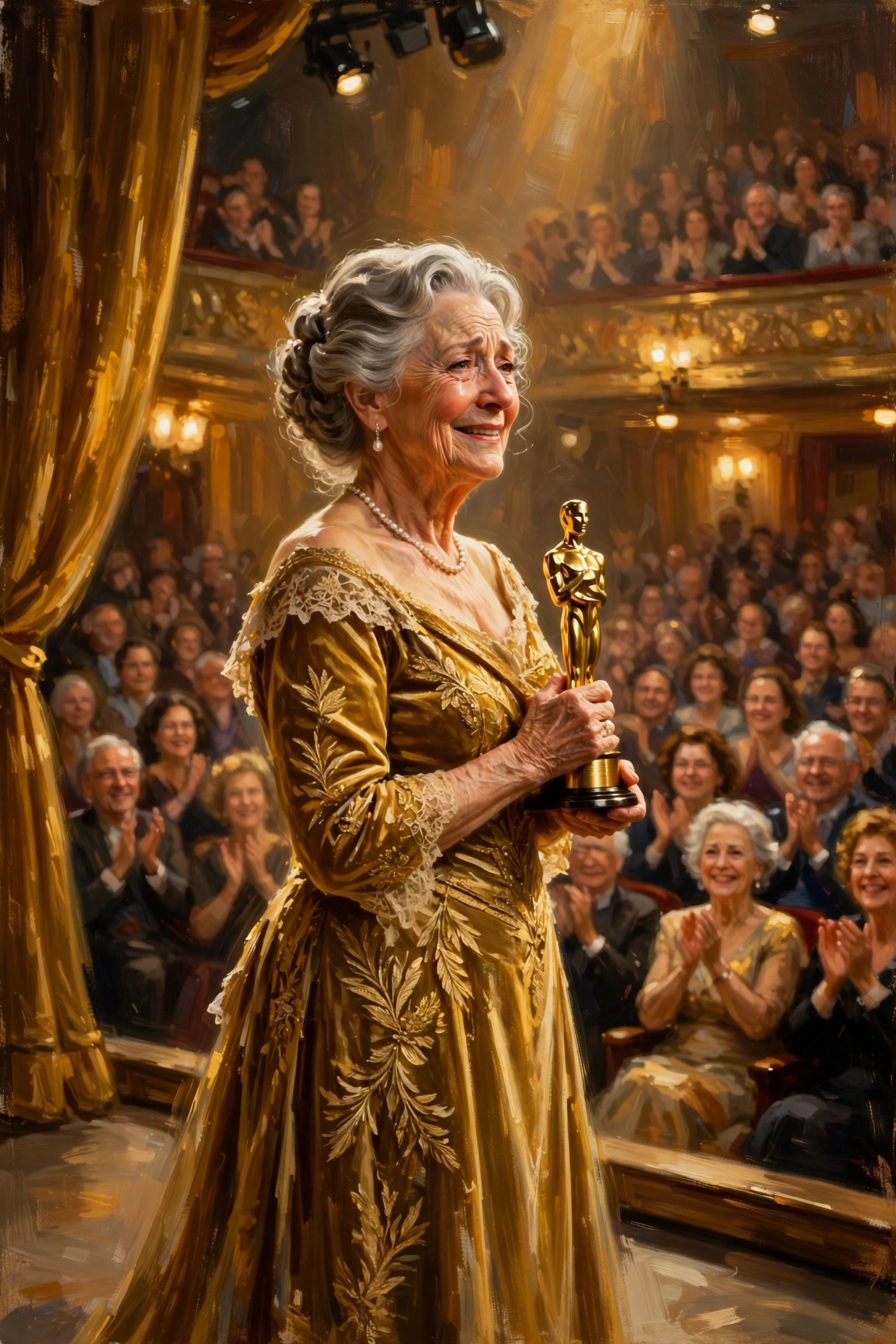
What followed is one of the longest reinventions in Hollywood. Curtis proved herself a comic actor in Trading Places (1983) opposite Dan Aykroyd and Eddie Murphy, and then a brilliant one in A Fish Called Wanda (1988), playing a con artist with a precision that earned her a BAFTA nomination and a permanent place in comedy history. She won a Golden Globe for True Lies (1994), in which her dance sequence opposite Arnold Schwarzenegger became a cultural touchstone. She returned to Laurie Strode in Halloween H20 (1998) and again, decades later, in David Gordon Green’s trilogy Halloween (2018), Halloween Kills (2021) and Halloween Ends (2022), closing the character’s story on her own terms. She played the sharp-tongued matriarch Linda Drysdale in Knives Out (2019), the ferocious Donna Berzatto in television’s The Bear, for which she won an Emmy as a guest actress in 2024, and Deirdre Beaubeirdre, the weary tax auditor, in Everything Everywhere All at Once (2022). That last role won her the Academy Award for Best Supporting Actress in March 2023, her first Oscar nomination, at the age of 64, after 45 years in the business.
Alongside acting, Curtis built a second public life as an author of children’s books, co-created with illustrator Laura Cornell, beginning with When I Was Little: A Four-Year-Old’s Memoir of Her Youth (1993), and as a longtime supporter of children’s hospitals. She married actor and director Christopher Guest in 1984, and they have two daughters, Annie, born in 1986, and Ruby, born in 1996. When Ruby came out as transgender, Curtis spoke about it publicly and supportively, describing how she and Guest learned, listened, and changed their language. It was, again, reinvention as a family practice: identity not as a fixed performance but as something you update when you learn more.

Turning Point
Curtis has named several turning points herself, but two stand out because they changed the direction of her life rather than just her career. The first was private. She has spoken publicly, in interviews and in her own writing, about becoming dependent on painkillers and alcohol after a cosmetic procedure in the late 1990s, and about getting sober in February 1999. She has described recovery not as a single dramatic moment but as a daily practice, and she has kept talking about it for more than 25 years, long after it stopped being newsworthy. That decision, to name the problem in public and keep naming it, changed what kind of actor she could be: the roles after recovery, from Halloween H20 onward, carry a different weight, a woman who has survived something real rather than merely acted survival.
The second turning point was professional, and it came late. For decades Curtis was respected but not quite decorated, a working star rather than an awards-season fixture. Everything Everywhere All at Once changed that in a single awards season. The film’s directors, Daniel Kwan and Daniel Scheinert, cast her against type as a drab, exhausted IRS auditor, and she played Deirdre with such comic misery and sudden tenderness that audiences who had known her for decades saw someone new. The Oscar win at 64 did not just reward one performance; it reframed the whole career, turning a “former scream queen” narrative into a “five-decade master” narrative overnight. Psychologists call this kind of reframing narrative identity work: the same life, told with a different through-line, becomes a different story.
Mindset
Three habits run through Curtis’s public record. The first is radical candor about the body. Curtis has spent decades talking honestly about aging in Hollywood: about cosmetic procedures she regretted, about refusing to hide her age, about the pressure on actresses to look frozen in time. She has posted unfiltered photographs, talked about her gray hair and her body without apology, and described the film industry’s beauty standards as a kind of collective delusion. In a culture built on image management, candor is a strategy: it disarms criticism by saying the thing first, and it builds trust because audiences can tell the difference between a performance and a confession.
The second habit is work as identity anchor. Curtis has almost never stopped working, and she has worked across every register: horror, comedy, drama, voice work, children’s books, television, producing. Psychologists who study identity talk about “possible selves,” the versions of ourselves we can imagine becoming. Curtis seems to have kept an unusually large set of possible selves alive at once, so that when one door closed, another identity was already waiting. The scream queen became the comic, the comic became the mother, the mother became the grandmother, the grandmother became the Oscar winner.
The third habit is humor as a coping tool. Watch any Curtis interview and you will see it: self-deprecation deployed at exactly the moment a conversation could turn maudlin or self-important. Humor, in the coping literature, is one of the most adaptive defenses, a way of holding painful material at a distance long enough to examine it. Curtis uses it constantly, about her parents, about fame, about aging, about herself. It is not avoidance; it is regulation, the ability to feel something fully and still choose the tone in which you tell it.
Pause and ask yourself: When have you reinvented yourself, even in a small way, and what part of the old version did you keep on purpose? Curtis kept her humor and her work ethic through every reinvention. What is the thread that has stayed constant through yours?
Decisions
Look at the decisions, not just the roles. Leaving university to act, despite having a safety net most aspiring actors would envy, and then refusing to coast on her parents’ names. Saying yes to Halloween when horror was considered career poison for a serious actress. Saying yes to comedy when horror had made her bankable, and then saying yes to returning to horror, twice, when she could have left Laurie Strode behind. Getting sober in public and staying sober in public for more than two decades. Marrying Christopher Guest in 1984 and building a family life deliberately away from the Hollywood center. Writing children’s books when nobody asked a horror star to write children’s books. Taking the small, unglamorous role of an IRS auditor at 63, and playing it without vanity, which is what won her the Oscar.
Each decision shares a shape: a willingness to look foolish, a refusal to protect the image at the expense of the work, and a bet that honesty would age better than glamour. That last bet is the interesting one. In an industry that rewards image control, Curtis bet on the opposite, and the bet paid off slowly, over decades, which is exactly how the best psychological bets tend to pay off.
Method
Curtis’s method, as visible from the outside, is preparation plus presence. Directors describe her as famously prepared, the actor who arrives knowing the lines, the blocking, and the other actors’ cues, and then throws the preparation away in the moment to react honestly. That combination, structure plus spontaneity, is what acting teachers call the paradox of the craft, and it is also a decent description of psychological flexibility: hold the plan lightly enough to respond to what is actually happening.
Her comic method deserves its own note. Curtis is a physical comedian of unusual precision. The True Lies dance, the A Fish Called Wanda double-crosses, the Freaky Friday body-swap with Lindsay Lohan in 2003 and its sequel Freakier Friday in 2025, all depend on timing, on the pause before the reaction, on the face that says one thing while the body says another. Comedy, at that level, is emotional intelligence made visible: reading a room, calibrating a response, and trusting the audience to meet you halfway.
What If?
What if Curtis had stayed in horror? She would have had a comfortable career, a convention circuit, and a footnote. What if she had never gotten sober? By her own public account, the addiction years were narrowing her life, and the roles of the 2000s onward, the ones that required emotional range rather than energy, might never have arrived. What if she had retired at 60, as many actresses of her generation were quietly encouraged to do? There would be no Oscar, no The Bear, no Newlyweds, no Tonight Show sketch at 67. The counterfactuals matter because they show how much of a long career is decided not by talent but by a handful of unglamorous choices made when nobody is watching: the meeting you take, the help you accept, the role you say yes to when it looks too small.
What Most People Lack
Most people lack Curtis’s tolerance for being underestimated. For decades, the industry treated her as a reliable utility player rather than a leading light, and she kept working anyway, without the public bitterness that usually accompanies that treatment. Underestimation is psychologically corrosive: it teaches you to shrink your ambitions to match other people’s expectations. Curtis did the opposite. She let the underestimate stand and outlasted it, which is a rarer skill than talent. It requires a source of self-worth that does not depend on the current review cycle, and Curtis seems to have found hers in family, in recovery, and in work itself rather than in applause.
What Successful People Do Differently
Successful people, the research suggests, do not just work harder; they work differently. They set process goals rather than outcome goals, they seek feedback rather than praise, and they treat setbacks as information rather than verdicts. Curtis’s career maps onto that pattern unusually well. She chose roles for what they would teach her, not for what they would pay. She sought out collaborators, from John Carpenter to the Daniels to Christopher Guest, who would stretch her. And she treated the industry’s verdicts, the typecasting, the quiet decades, the awards that did not come, as information about the market, not as verdicts on her worth. When the market finally caught up, she was ready, because she had never stopped preparing.
Success Mindset
What does Curtis believe about success? From her interviews, a consistent picture emerges: success is a byproduct, not a target. She has described fame as a strange accident of birth and timing, work as the real reward, and awards as lovely but unreliable evidence. That is a growth mindset in Carol Dweck’s sense, the belief that ability develops through effort rather than being fixed at birth. It is also, notably, the mindset of someone who grew up watching two famous parents navigate fame’s costs. Curtis inherited not just their genes but their cautionary tale, and she built a career designed to survive fame rather than to maximize it.
Failures
Curtis’s failures are public and instructive. There were box-office disappointments, films that vanished, and a long stretch in the 1990s and 2000s when the phone rang less often. There was the addiction period she has described herself, a failure of coping that she turned into the foundation of her recovery. There were cosmetic procedures she has said she regretted, a failure of self-acceptance that she later converted into advocacy for aging honestly. None of these failures ended her, and that is the point worth studying. Psychologists distinguish between failure as an event and failure as an identity. Curtis treats failures as events, things that happened, were learned from, and were left behind, rather than as verdicts on who she is. That distinction is learnable, and it is the single most useful habit in this entire profile.
Relationships
Curtis’s most important relationship, professionally, is with the audience, and it has lasted 48 years because she has never lied to it for long. Her marriage to Christopher Guest, since 1984, is one of Hollywood’s longest, and she has described it as a partnership built on separate creative lives and mutual respect rather than merged identity. Her relationship with her daughters, particularly her public support for Ruby, shows a parent willing to update her understanding rather than defend her original assumptions. Her friendships in the industry, from the Halloween family to her Everything Everywhere castmates, are visibly warm and long-lived. The pattern is consistent: relationships built on honesty last longer than relationships built on performance, because honesty does not require maintenance.
Dark Side
Every long public life has a shadow, and Curtis’s is the shadow of inherited fame. Being the child of two icons meant growing up with comparison built into every review, every casting decision, every headline. She has spoken about the insecurity that produced, about feeling that she had to prove she belonged, and about the ways fame distorted her early sense of self. The addiction years belong in this section too, not as scandal but as consequence: a person raised in an industry that medicates discomfort, with access to medication and pressure to look perfect, found the obvious coping tool and paid for it. The dark side of her story is not that she struggled; it is that the struggle was so predictable, given the circumstances, and so rarely discussed honestly at the time. Her later candor is, in part, an attempt to change that conversation for others.
Second Act
Curtis’s second act is really her third or fourth, and it is still running. The Oscar win in 2023 could have been a graceful exit; instead it became a launchpad. The Bear gave her one of television’s most memorable mothers. Freakier Friday (2025) reunited her with Lindsay Lohan for a sequel that traded on two decades of shared history. Newlyweds, premiering 23 October 2026, casts her as Claudia, the meddling ex-wife in a sitcom she co-created, a role that lets her play comedy about marriage from the far side of experience. The Clio Entertainment Honorary Award, announced 29 October 2026 and to be presented on 19 November at the Dolby Theatre in Los Angeles, honors a five-decade career across film and television. And the Tonight Show sketch, the thing that put her back in the trending searches this week, shows an actor still willing to be silly in public at 67. A second act, psychologically, is not a comeback; it is a decision to keep authoring your story after the culture has already written its ending for you.
Fun Facts
- Curtis is the daughter of two Hollywood legends, Tony Curtis and Janet Leigh, and her godmother was actress Gloria Swanson.
- She was paid a reported 8,000 dollars for Halloween (1978), a film that went on to earn tens of millions.
- She briefly studied social work at university before dropping out to act, a field she has joked prepared her well for Hollywood.
- She has written more than a dozen children’s books with illustrator Laura Cornell.
- She won her first Oscar at 64, after 45 years in film, for playing an IRS auditor.
- She is known for doing her own comedic dance numbers, most famously in True Lies (1994).
- She played Laurie Strode across six Halloween films spanning 44 years, from 1978 to 2022.
What the Research Says
What does research say about careers like Curtis’s? First, on identity: psychologist Dan McAdams’s work on narrative identity finds that people who construct redemptive life stories, in which suffering leads to growth, tend to show higher well-being and generativity in later life. Curtis’s public story is a textbook redemptive narrative, told consistently over decades. Second, on recovery: long-term studies of addiction recovery consistently find that sustained sobriety depends less on willpower than on identity change, social support, and daily practices, all of which Curtis has described in her own public account. Third, on aging: research on successful aging finds that continued engagement, purpose, and social connection predict well-being far better than the absence of illness. Curtis, working, creating, and advocating at 67, is a public example of engagement as a strategy. Fourth, on creativity: studies of late-career creativity find that many artists do their most distinctive work after 60, when the pressure to prove themselves fades and the freedom to play returns. The Oscar at 64 fits that pattern precisely.
There is a fifth line of research worth adding, on parasocial relationships: audiences form one-sided but emotionally real bonds with performers they have watched for decades, which is why a Curtis comeback feels personal to people who have never met her. Studies of parasocial interaction find that these bonds can provide comfort, companionship, and even a sense of continuity across a viewer’s own life stages. When Curtis returned to Laurie Strode in 2018, many viewers were not just watching a character; they were revisiting the teenagers they had been in 1978, and measuring how far both they and she had come. That shared timeline is a large part of why her reinventions land so deeply: the audience has grown up alongside her, and each new chapter gives them permission to write one of their own.
Activity: The Reinvention Quiz
Try this quick reflection quiz. There are no right answers and no diagnosis here, just a mirror. For each question, pick the answer closest to your truth, then read what it suggests.
1. When life changes suddenly, I usually: (a) cling to the old plan, (b) freeze for a while, then adapt, (c) start experimenting quickly.
2. The part of my identity I protect most fiercely is: (a) my reputation, (b) my relationships, (c) my values.
3. When I fail at something public, I: (a) hide it, (b) sit with it, then learn from it, (c) talk about it openly.
4. My relationship with aging is mostly: (a) dread, (b) acceptance with grumbles, (c) curiosity about what comes next.
5. If I could reinvent one part of my life this year, it would be: (a) my work, (b) my habits, (c) how honest I am with myself.
Mostly (a) answers suggest you are in a protection phase, guarding what you have, which is a reasonable response to stress but a poor long-term strategy. Mostly (b) answers suggest you are already doing the quiet work of adaptation. Mostly (c) answers suggest a Curtis-like stance: change as a practice rather than an emergency. Whichever pattern you see, the useful question is the same: what is one small reinvention you could start this week, not a whole new life, just one honest change?
Frequently Asked Questions
Why is Jamie Lee Curtis trending in November 2026? She trended after her 28 October 2026 Tonight Show appearance, in which she spoofed the documentary You Can See Everything as Elizabeth Holmes, and because her new NBC sitcom Newlyweds premiered on 23 October 2026.
How did Jamie Lee Curtis win an Oscar? She won Best Supporting Actress at the Academy Awards in March 2023 for playing Deirdre Beaubeirdre in Everything Everywhere All at Once (2022), her first Oscar nomination, at age 64.
What is Jamie Lee Curtis known for? She is known for Halloween (1978) and its sequels as Laurie Strode, for comedies including Trading Places and A Fish Called Wanda, for True Lies, Freaky Friday, Knives Out, The Bear, and for her children’s books.
Is Jamie Lee Curtis sober? She has spoken publicly about getting sober in February 1999 after dependence on painkillers and alcohol, and she has discussed her recovery openly for more than 25 years.
What is Newlyweds, Jamie Lee Curtis’s new sitcom? Newlyweds is an NBC sitcom that premiered on 23 October 2026, co-created by Curtis, starring Tea Leoni and Tim Daly as a couple who marry impulsively, with Curtis playing Claudia, the meddling ex-wife.
Try it on our site
Reinvention starts with honest reflection. Try these free tools, no signup needed: Thought Reframe to challenge an old story about yourself, Name Your Feeling to put words to what a life change is stirring up, Challenge the Thought for a guided thought record, and the full Wellness Tools hub for check-ins, games and exercises.
Related reading: Eva Longoria Is Directing Again, Giving Again, and Refusing to Stay in One Role: The Psychology of Reinvention, The Psychology of Patrick Stewart: Dignity, Reinvention, and a Lifetime of Becoming, and The Psychology of Bill Murray: Spontaneity, Second Acts, and the Joy of Going Off Course.
Key Takeaways
- Jamie Lee Curtis’s five-decade career is a study in deliberate reinvention, from scream queen to comic star to Oscar winner at 64.
- Her public honesty about addiction recovery since February 1999 and about aging reframed her story from image management to trust.
- Longevity came from process, not applause: preparation, humor as regulation, and roles chosen for growth rather than safety.
- Her 2026 chapter, Newlyweds, a Clio honor, and a viral Tonight Show sketch, shows a second act still being written at 67.
- The transferable lesson is simple: treat failures as events, not identities, and keep one honest thread running through every reinvention.
This article is educational only and is not therapy, diagnosis, or medical advice. If you are struggling with addiction or your mental health, consider speaking to a licensed professional. In the US, call or text 988 for the Suicide and Crisis Lifeline; in the UK and Ireland, Samaritans is available at 116 123.