
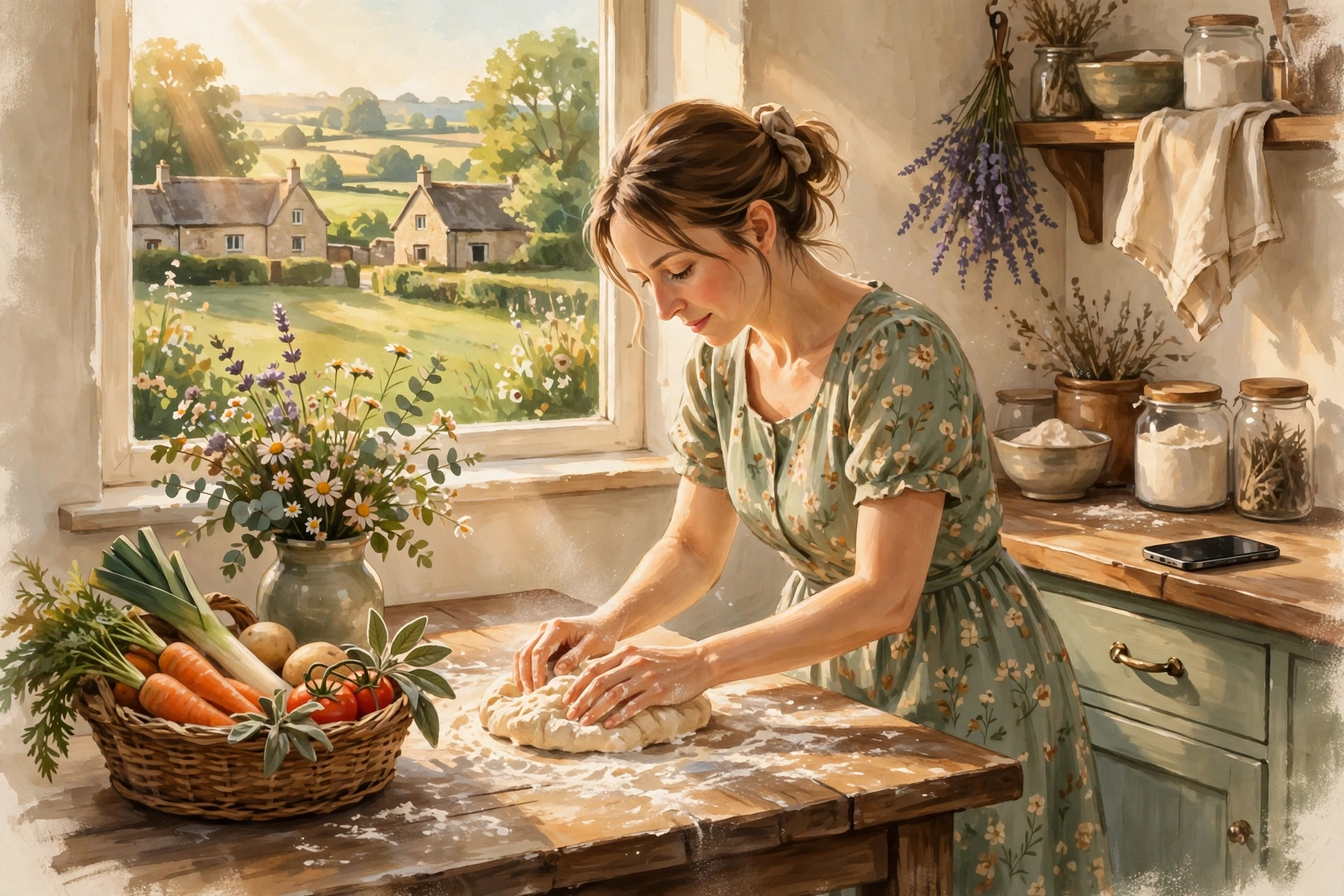
Poppy Jay Was Exhausted After Two Days as a Tradwife: The Psychology Behind the Trend
Reviewed by a Psychology Postgraduate (MA)
Two days was enough, said writer and broadcaster Poppy Jay, who tried living as a tradwife for a BBC documentary and told BBC News on 21 November 2026: “I was exhausted.” The story has reignited debate about tradwife psychology — why the traditional-wife lifestyle appeals online, and why reality can feel so different from the reel.
In short, the tradwife trend promises clarity, calm and belonging in an uncertain world, yet the reality is often relentless domestic labor with little time for rest. Poppy Jay’s two days show the gap between the glossy image and the lived experience — and that gap is where the psychology gets interesting.
Jay was filming the BBC One documentary Young, British and Tradwife, which aired on Monday 16 November. For three days, Molly and Aaron Edwards, Evangelical Christians with seven children, welcomed her into their Yorkshire home. On two days Jay took on Molly’s usual duties: cooking, homeschooling, gardening and braving the chicken coop in a long skirt. “What struck me was how hard Molly works — like any mum of seven,” Jay said, describing the “relentless pace” of her life. She disagreed with the lifestyle, she said, yet understood its appeal for Molly — and found submission hardest to accept.
What is tradwife psychology?
Tradwife psychology is the study of why the traditional-wife lifestyle appeals to some people, how social media shapes that appeal, and what happens to identity, autonomy and wellbeing when a polished ideal meets the daily reality of domestic labor.
“Tradwife” is short for traditional wife: women embracing traditional gender roles in the home — cooking, cleaning and child rearing — while their husbands are the breadwinners. Some describe it as a return to old-fashioned family values; critics say it reinforces inequality and limits women’s choices. This article takes neither side. The psychology is more interesting than the argument: what draws people in, and what it actually costs.
Why does the tradwife lifestyle appeal to so many people right now?
It appeals because it offers something modern life often does not: clear roles, a slower rhythm and belonging, especially when work, money and the future feel uncertain.
Picture Laura, 34, a project manager with no plans to be a tradwife. She leaves at seven, answers messages through lunch, collects the children, cooks and cleans. At eleven she is still scrolling when a video appears: sunlight, sourdough, a tidy kitchen, a woman who seems unhurried. Laura does not want the lifestyle. She wants the feeling — a day with edges, a job that ends, a calm home.
That is the heart of the appeal. Modern life asks many women to be everything at once: capable at work, present at home, interesting, fit, organized and endlessly available. A lifestyle that says “here is your role” can feel like a deep breath after years of holding it in. Nostalgia helps too: the past is remembered as simpler than it was. There is a quieter pull as well: being valued for care itself, work that is often invisible and unthanked.
Why does tradwife content look so effortless online, and feel so exhausting in real life?
Because social media shows the highlight reel, not the workload: a 30-second clip of bread rising hides hours of cooking, cleaning and childcare that never make it on camera.
The social psychologist Leon Festinger called this social comparison: online we compare our unedited reality with someone else’s edited best moments. A creator’s kitchen glows in golden light; yours has laundry on a chair.
Parasocial relationships add to the pull. The term, coined by researchers Horton and Wohl, describes the one-sided friendship we develop with people we watch regularly — so a creator soon feels like a trusted friend, and her advice lands differently from an advert.
Then there is the labor the camera never shows. The sociologist Arlie Hochschild called it the second shift: unpaid domestic work that begins when paid work ends. Molly Edwards reportedly does four loads of washing a day while homeschooling seven children. Jay’s exhaustion makes sense: not meaningless work, but a great deal of it, with no clocking-off time and little recognition — the classic signs of burnout.
The same gap appears everywhere online: the endless scroll trains us to expect tidy answers in seconds — how endless scrolling reshapes attention explains why the feed keeps us watching rather than telling the truth.
What does research say about clear roles, autonomy and belonging?
Research suggests clear roles can lower anxiety, but wellbeing also depends on autonomy, competence and connection — the three needs at the heart of self-determination theory.
Psychologists Edward Deci and Richard Ryan, who developed self-determination theory, found people flourish with real choice over their lives (autonomy), capability in what they do (competence), and closeness to others (relatedness). A defined role can support all three at once.
Strain appears when one need is squeezed out. Belonging is wonderful until it costs you every choice; competence satisfies until the workload passes what one person can carry. Autonomy lives in small freedoms too: an hour to yourself, a friend to call, a hobby nobody owns. Lose those, and exhaustion follows, however meaningful the role.
That is why setting boundaries without guilt matters in every household, traditional or not: a regular break, a shared chore, a protected bedtime. A short gratitude practice will not fix an overloaded week, but one good thing noticed a day keeps attention from narrowing to what went wrong.
How can you tell if a lifestyle trend is inspiring you or wearing you down?
A trend is inspiring you if it leaves you energized and more yourself; wearing you down if it leaves you tired, guilty or smaller. Your body usually notices first.
Try these five checks the next time a lifestyle trend catches your eye:
- Notice how you feel after scrolling, not during. Uplifted is a good sign; flat or envious afterwards is information, not failure.
- Try the smallest version first. Bake the bread once before reorganising your life.
- Count the invisible hours. Ask what it costs in time and energy, not only what it promises.
- Keep one thing that is only yours. A walk, a hobby, an hour a week of your own.
- Talk about it outside the algorithm. A friend can see what the feed hides — whether you need a new lifestyle or simply rest.
None of this argues for or against becoming a tradwife — only that the choice is truly yours, made with clear eyes about both the beauty and the workload.
Frequently Asked Questions
What is a tradwife? A tradwife, short for traditional wife, embraces traditional gender roles at home — cooking, cleaning and child rearing — while her husband is the main earner. The term spread on social media, where creators share idealized images of homemaking.
Why is the tradwife trend so popular on social media? It is visual and nostalgic: baking, gardening and tidy homes film beautifully and promise calm in uncertain times. Algorithms favor soothing, repeatable content, so it reaches far beyond those who live it.
Is the tradwife lifestyle bad for mental health? There is no single answer. Freely choosing a defined role with support and rest can feel satisfying; relentless invisible labor with little autonomy or recognition is linked to exhaustion and low mood. The risks sit in workload, choice and support, not the label.
What did Poppy Jay learn from her two days as a tradwife? Jay found it exhausting, describing the “relentless pace” of Molly Edwards’ life. She understood its appeal for Molly yet found submission hardest to accept: a lifestyle can look peaceful on screen and still be very hard work.
Try it on our site
Try one of these free tools:
- Thought Reframe — untangle a looping thought, such as “I am failing at everything”
- Mind Check-In — a quick check of how you are doing today
- Name Your Feeling — name what you are feeling, beyond just “tired”
- Burnout + Money-Stress Check — see whether exhaustion or money worry drives how you feel
Related reading: Signs of Burnout: How to Tell When You Are Running on Empty · How to Set Boundaries Without Guilt · Brain Rot and Attention: What Endless Scrolling Does to Your Mind
Key Takeaways
- Poppy Jay spent two days living as a tradwife for the BBC documentary Young, British and Tradwife: “I was exhausted.”
- Tradwife psychology asks why the lifestyle appeals, how social media shapes that appeal, and what happens when a polished ideal meets relentless domestic labor.
- The appeal is understandable: clear roles, a slower rhythm and belonging feel like shelter.
- Social comparison and parasocial bonds make the online version look effortless, while the real workload stays off camera.
- Wellbeing rests on autonomy, competence and connection — and a role offers all three only when rest, choice and support survive too.
This article is for education only and is not therapy, diagnosis or medical advice. If you are struggling, consider speaking to a licensed professional. In the UK you can call Samaritans free at 116 123, and in the US you can call or text 988.