
Understanding Addiction: What Psychology Actually Says
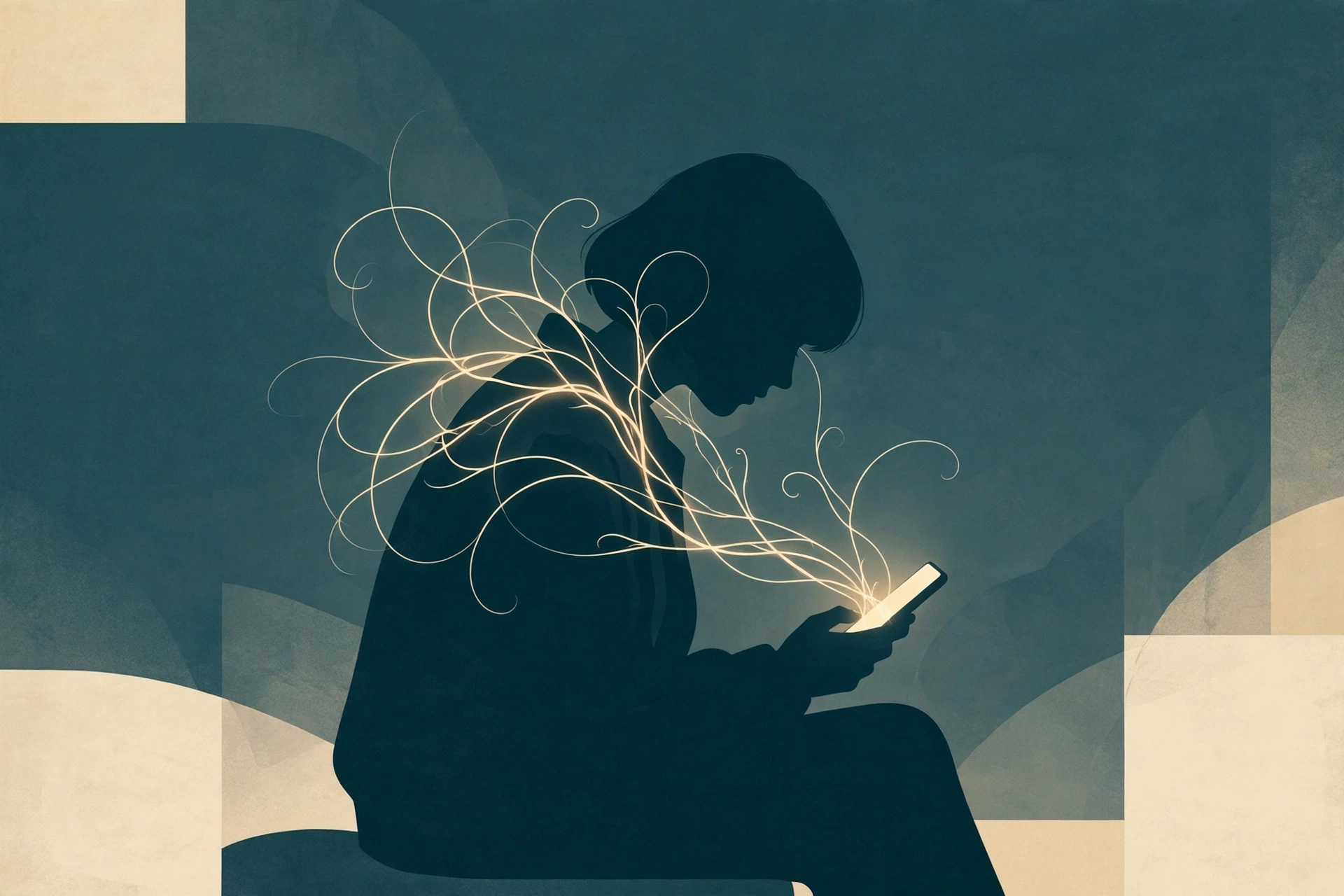
Addiction isn’t a character flaw. It’s a pattern — a loop your brain learns, then struggles to unlearn. Whether it’s sugar, alcohol, pornography, shopping, or the phone in your pocket, the underlying psychology is remarkably similar: a trigger, a craving, a behavior, and a reward that keeps the cycle spinning.
This hub brings together everything on Zentha Psychology about addictive patterns: in-depth articles, self-reflection check-ins, craving-management exercises, and games that train impulse control.
The Five Patterns We Cover
📱 Phone & Social Media
The infinite scroll, the phantom buzz, the “just five more minutes” that becomes an hour. Compulsive phone use hijacks the same reward circuits as other addictions.
- Read: Internet Addiction: 7 Signs You’re Hooked
- Read: How to Stop Doomscrolling
- Read: Social Media Addiction
- Try: Screen Time Check-In
🍪 Food & Sugar
Ultra-processed foods are engineered to override your brain’s “stop” signals. If you can’t stop at one cookie, it’s not weak willpower — it’s food science vs. your neurochemistry.
🍷 Alcohol
Somewhere between “I enjoy a drink” and “I need a drink” there’s a line — and it’s blurrier than most people think. Here’s how to see it clearly.
🔞 Pornography
Compulsive porn use thrives in secrecy and shame. An honest, non-judgmental look at why it happens and what actually helps.
🛒 Shopping
The rush of buying, the crash of regret, the packages you don’t remember ordering. How e-commerce is engineered to convert your impulses into revenue.
Tools for the Moment of Craving
When an urge hits, you don’t need a lecture — you need something to DO. These are built for exactly that moment:
- 🧘 Urge Surfing — ride out a craving like a wave (guided, 6 steps)
- 🌍 5-4-3-2-1 Grounding — pull yourself back to the present when a trigger hits
- ⏳ The Waiting Game — train delayed gratification (the core anti-craving skill)
- 🚦 Red Light, Green Light — train stopping an impulse mid-flight
When to Get More Help
Self-help has limits. If a pattern is causing real harm — to your health, finances, relationships, or daily functioning — professional support works, and there’s no shame in it.
- Alcohol/drug concerns: SAMHSA National Helpline 1-800-662-4357 (free, confidential, 24/7)
- Eating concerns: National Eating Disorders Association 1-800-931-2237
- Crisis: call or text 988 (US Suicide and Crisis Lifeline)
Reviewed by a Psychology Postgraduate (MA). This page is for educational purposes only and is not a substitute for professional advice, diagnosis, or treatment.