
Reviewed by a Psychology Postgraduate (MA)
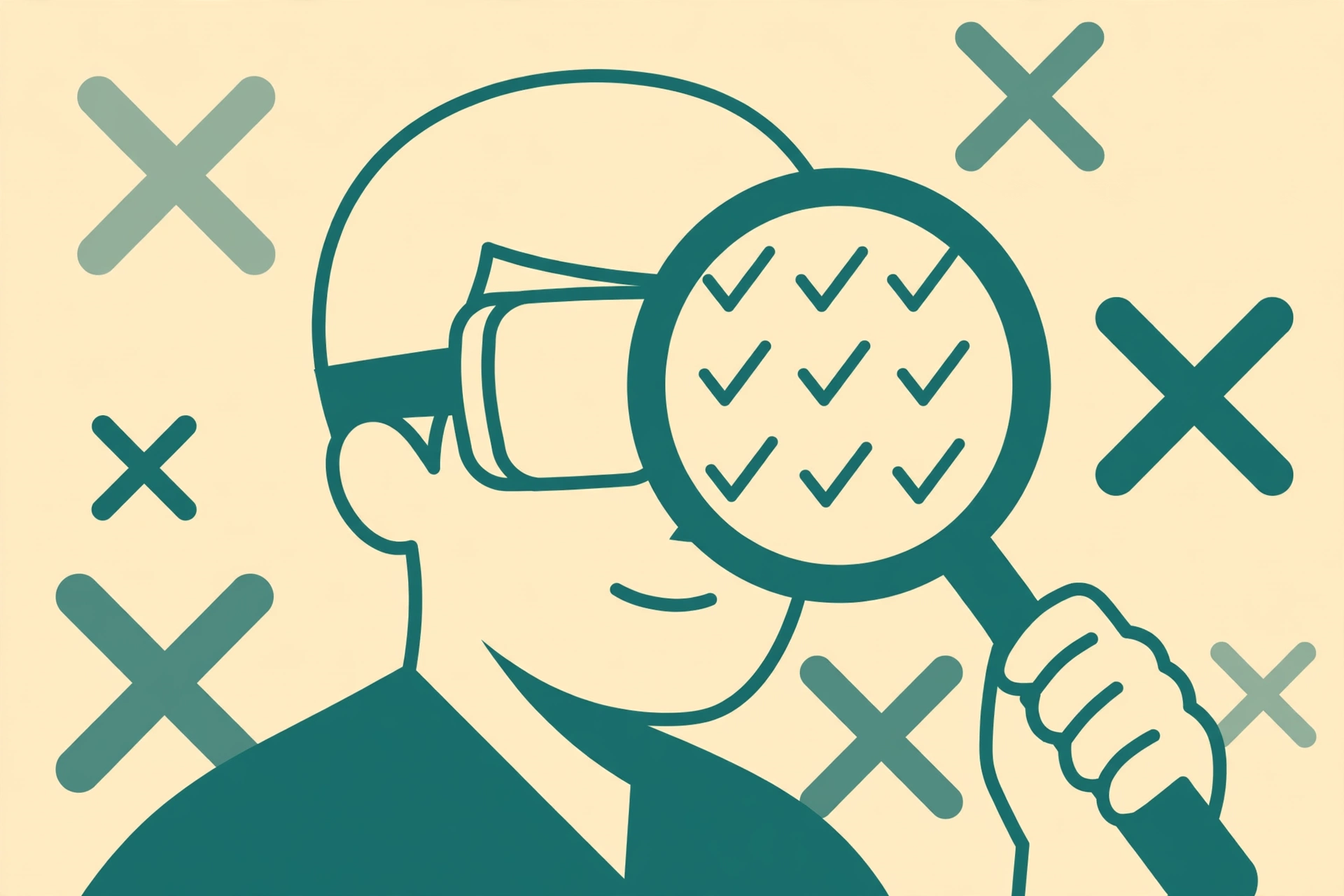
Two people read the same article. Both say “See? This proves I’m right.” Same article. Opposite conclusions. Neither is lying — both run confirmation bias: hunting evidence that confirms beliefs, discarding the rest. It’s behind every echo chamber and every argument that goes nowhere.
What it means in one sentence: Confirmation bias is seeking, noticing, and trusting information that confirms existing beliefs — while ignoring challenges.
In short: What is confirmation bias? It is seeking, noticing, and trusting information that confirms existing beliefs while ignoring challenges. It runs in four stages: biased seeking, biased noticing, biased remembering, and biased interpreting. It feels like objectivity, because you did look at evidence, but only the evidence you selected. The defense is actively seeking disconfirmation.
Confirmation Bias in Everyday Words
Your brain defends beliefs like possessions. Four stages: Biased seeking (Google “why I’m right”). Biased noticing (the one supporting study jumps out; ten contradicting blur past). Biased remembering (highlight reel of being right). Biased interpreting (same jobs report = “strong economy” AND “collapsing” — depends on your vote).
It feels like objectivity. “I looked at the evidence” — yes, the evidence you selected.
The Science Behind It
Wason’s 2-4-6 task (1960): given 2-4-6, most guessed “evens up by 2” and tested 8-10-12 — never disconfirming sequences like 2-4-5. The rule was just “ascending numbers.” The scientific move — try to prove yourself wrong — is profoundly unnatural.
Stanford (1979): opposing groups on capital punishment read the same two studies — both became more convinced. Biased assimilation: same evidence, both sides strengthened.
3 Examples From Real Life
Example 1 — Health rabbit hole: Maya believes carbs are poison. Joins forums, follows influencers — every post confirms. Doctor mentions complicating research: “big pharma.” She didn’t do research. She did confirmation.
Example 2 — Investor’s blind spot: James’s stock drops 20%. He reads bullish analyses, joins forums (“temporary!”), buys more. Bearish reports = “propaganda.” Company folds. He lacked disconfirming info — his brain filtered it.
Example 3 — Couple’s scorecard: After a fight, Lisa remembers every slight; kind moments blur. Tom does the mirror version. Both certain. Therapists widen the aperture: “Name three good things this month.” Anti-confirmation-bias homework.
🧠 Quick check: What is confirmation bias?
Why: Four-stage filter: biased seeking, noticing, remembering, interpreting — all tilted toward 'I was right.'
Try This Today
Disconfirmation drill: pick one belief. Spend 10 minutes steel-manning the other side — the strongest counterargument, written fairly. That discomfort is the bias resisting. You don’t have to change your mind. Just hold the other case accurately.
What People Get Wrong
Myth: “Show them the facts and they’ll change.”
Reality: Facts through confirmation bias strengthen false beliefs. What works: asking questions, affirming identity first, private reflection. You can’t fact-bomb a filter.
Why It Matters
The engine of polarization, bad investments, failed relationships, quackery. In the age of algorithmic feeds profiting from certainty, this isn’t a quirk — it’s a business model. Defense: actively seek disconfirmation. Follow smart people you disagree with. Ask “what would prove me wrong?”
🧠 Quick check: In Wason's 2-4-6 task, what did participants fail to do?
Why: Only confirming examples tested. Trying to prove yourself wrong is unnatural.
Frequently Asked Questions
What is confirmation bias?
Confirmation bias is the tendency to seek, notice, remember, and trust information that confirms what you already believe, while discounting or ignoring the rest. It powers echo chambers and arguments that go nowhere.
What is Wason's 2-4-6 task?
Participants given 2-4-6 guessed the rule was evens increasing by 2 and tested confirming sequences like 8-10-12, never disconfirming ones like 2-4-5. The real rule was simply ascending numbers. Trying to prove yourself wrong is profoundly unnatural.
Why don't facts change minds?
Because facts pass through the filter: opposing groups reading the same two studies on capital punishment both became more convinced. Biased assimilation means the same evidence strengthens both sides. Questions and private reflection work better than fact-bombing.
How do you fight confirmation bias?
Run a disconfirmation drill: steel-man the strongest counterargument to one belief, fairly, for ten minutes. Follow smart people you disagree with and ask what would prove you wrong. You do not have to change your mind, just hold the other case accurately.
Try It on Our Site
Try it now: Overthinking check-in — see if confirmation bias is fueling your mental loops. Start the check-in →
More tools for this topic:
Related reading: 15. Cognitive Biases · 17. Cognitive Dissonance · How to Stop Overthinking Everything
Tap when this one clicks — your progress is saved on this device.