
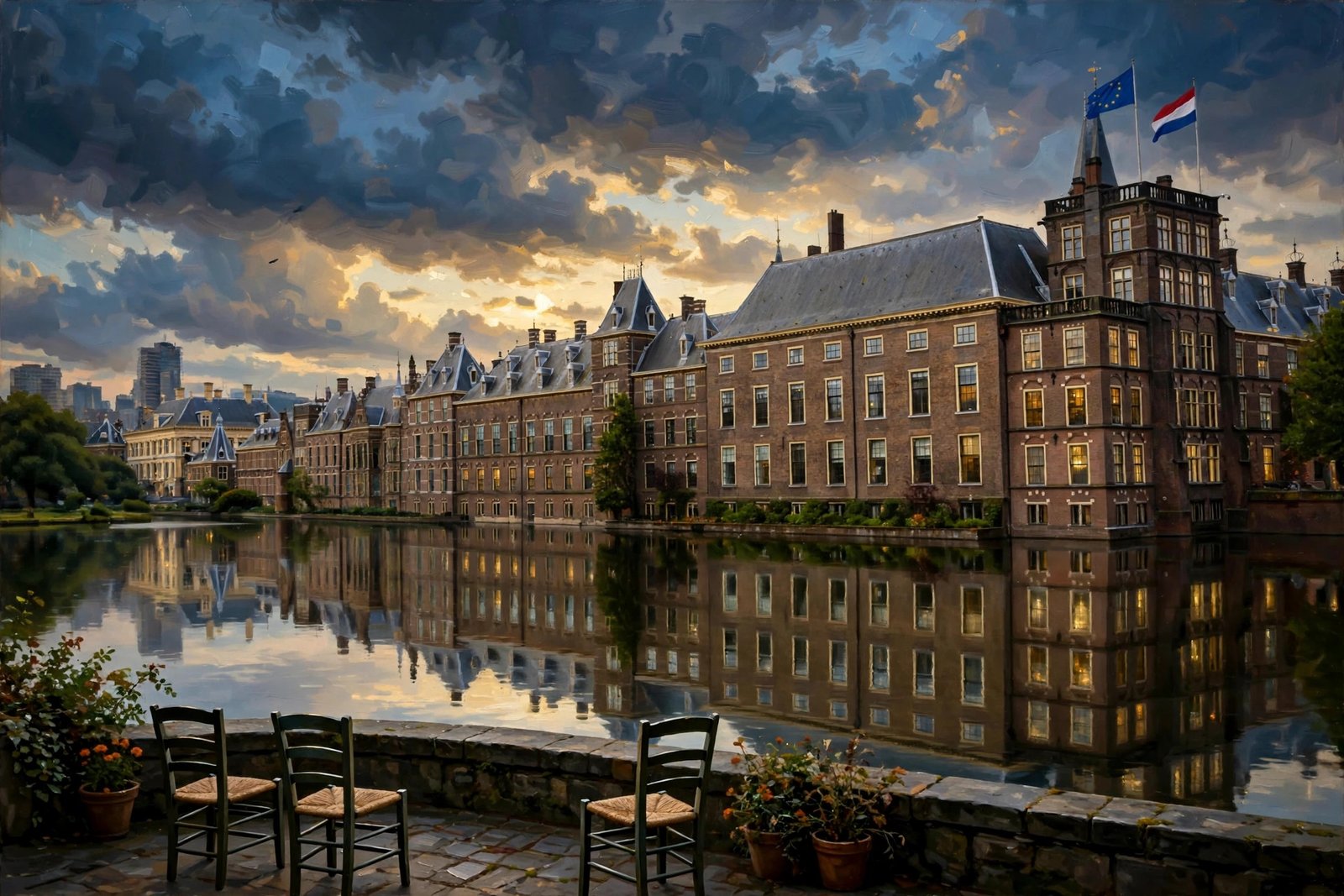
The Dutch Tax Vote Passed — But the Government May Still Fall: The Psychology of Political Limbo
Reviewed by a Psychology Postgraduate (MA)
This article is an update to our earlier piece on the Netherlands coalition collapse psychology, which looked at the strain inside Prime Minister Rob Jetten’s fragile minority government. The story has moved on — and the dutch government collapse psychology question is sharper than ever: what does it do to people when their government might fall, but nobody will say whether it will?
The short answer: On 12 November 2026 Dutch lawmakers narrowly approved a wealth-tax amendment the VVD had threatened to quit over, and the party has not yet said what it will do next. Living in that gap is political limbo, and the brain finds unfinished outcomes far harder to bear than clear ones.
What happened in the Netherlands on 11 and 12 November 2026?
On Wednesday 11 November 2026, Prime Minister Rob Jetten’s centrist D66 party and the centre-right Christian Democrats, the CDA, struck a deal with opposition parties PRO and Volt to shift about €1 billion in tax burden from income to wealth, as part of the 2027 tax plan. The amendment sets a 38.5 percent rate on returns above €60,000 a year and cuts the basic rate from 36 percent to 35.5 percent.
The coalition’s third party, the VVD, led by Deputy Prime Minister Dilan Yeşilgöz-Zegerius, was not part of the deal — and did not hide its anger. The party called it a breach of the coalition agreement and said it had been “ambushed”. The VVD threatened to quit the government if the amendment passed. That is a serious threat in any coalition, and an especially serious one here: the D66–VVD–CDA minority coalition holds only 66 of 150 seats in the lower house, so it already governs without a majority.
On Thursday 12 November, lawmakers narrowly approved the amendment, according to Bloomberg Law at 19:29 UTC that evening. And then — nothing. After the vote, it was not clear what the VVD would do next. The party had drawn its line in public, the line had been crossed, and the consequence was left hanging. Jetten, who was sworn in February 2026 as the Netherlands’ youngest and first openly gay prime minister, skipped the European Political Community summit in Dublin on 12 November to attend the debate. If the government falls, fresh elections next year would be the fifth general election in under a decade.
What is dutch government collapse psychology — and why does political limbo feel so personal?
Ambiguity intolerance is the discomfort some people feel when a situation has no clear answer, no firm outcome and no timetable for when one will arrive.
Political limbo is ambiguity intolerance at national scale. A government that has clearly fallen is a shock, but it is a finished shock: there is a timetable, an election date, a process. A government that might fall is unfinished. The mind keeps returning to it because the brain treats open questions as tasks that must be resolved — researchers call this the Zeigarnik effect, the tendency to remember incomplete things far better than completed ones. A coalition crisis that never quite resolves is, mentally speaking, a tab that never closes.
The second reason it feels personal is that politics is not abstract for most people. A wealth tax is not a debating topic for someone wondering whether their savings or their pension will be taxed differently next year. A government that might collapse is not a headline for someone waiting on a housing decision or a permit that depends on a ministry still functioning. The uncertainty reaches into ordinary plans, and ordinary plans are where a sense of control lives.
Consider two composite examples. Anna, a teacher in Utrecht, did not vote for any of the coalition parties, yet she spent her lunch break refreshing the news, trying to work out whether a new election would delay the school funding decision her headteacher has been waiting for since September. Then there is Tom, who runs a small bicycle shop in Eindhoven and had been planning to hire a second mechanic in January. The tax change itself barely touches him, but the possibility of months of caretaker government makes him want to wait. Neither is a political obsessive. Both are living with a question they cannot answer, and that is what makes it tiring.
Why does coalition trust break so fast?
Coalitions run on a currency that is easy to spend and slow to earn back: trust between partners who did not choose each other. The VVD, D66 and the CDA came together after a difficult formation, and a minority coalition of 66 out of 150 seats has almost no margin for error. In that setting, the word “ambushed” matters enormously, because it is not really about the tax rates. It is about the feeling of having been cut out of a decision that affects your voters, your ministers and your credibility — and once a partner starts asking “what will they do next?” instead of “was this a fair deal?”, every future negotiation is read through that suspicion.
Pause and ask yourself: When you catch yourself refreshing the news about a political crisis you cannot influence, what are you hoping the next headline will say? If the honest answer is “that it is over”, the checking is not informing you — it is soothing you.
Try the Challenge the Thought tool — practise testing a worrying thought about the future against what you actually know.
Why do we keep checking the news when there is nothing new to learn?
Because news-checking during a crisis works like any other habit loop: the cue is anxiety, the behaviour is refreshing, and the occasional reward is a new development. Most refreshes deliver nothing new, but the rare one that does — a resignation, a statement, a vote result — is rewarding enough to keep the loop going. The pattern is called intermittent reinforcement, and it is the same mechanism that keeps people scrolling social feeds. The reward is unpredictable, so the brain keeps trying. In the gap between real events, commentary fills the space with speculation, and reading ten guesses does not add up to one fact.
How do you live with political uncertainty you cannot fix?
Start by drawing a clear line between what the crisis changes for you and what it does not. A minority government in limbo is genuinely unsettling, but most of the decisions that shape an ordinary week are untouched by it. Writing down the one or two things that really are affected, such as a tax decision or a delayed permit, turns a vague dread into a short, manageable list.
Next, give the news a container instead of letting it run all day. Choose two short windows — late morning and early evening, say — to catch up properly, and keep the phone out of reach outside them. This is not about ignoring politics. It is about reading it once, well, instead of reading it twenty times badly.
Finally, remember that the Netherlands has been here before. Four general elections in under a decade is a lot of political churn, and it is tiring. But it is also evidence that the system keeps functioning through the churn: votes happen, governments form, daily life continues. Hold two thoughts at once — that the situation is genuinely uncertain, and that uncertainty, on its own, is survivable. If the waiting is weighing on you, a conversation with a trusted person, or with a licensed professional, can help you carry it. In the Netherlands, 113 Suicide Prevention can be reached on 0800-0113 if you are in crisis or feeling unsafe.
Frequently asked questions
What did the Dutch parliament vote for on 12 November 2026? Lawmakers narrowly approved an amendment to the 2027 tax plan, shifting about €1 billion in tax burden from income to wealth. It sets a 38.5 percent rate on returns above €60,000 a year and cuts the basic rate from 36 percent to 35.5 percent.
Why did the VVD call the tax deal an ambush? The deal was struck by D66 and the CDA with opposition parties PRO and Volt, without the VVD. The party called it a breach of the coalition agreement and threatened to quit if the amendment passed.
Has the Dutch government collapsed? Not at the time of writing. The amendment passed on 12 November 2026, and after the vote it was not clear what the VVD would do next.
Why does political uncertainty feel so stressful? The brain treats unfinished outcomes as open tasks that demand attention, a pattern called the Zeigarnik effect. When a government might fall but has not, the question stays open.
Try it on our site
If the political uncertainty is getting under your skin, these free tools can help — no signup needed:
- Challenge the Thought — test a worrying thought about the future against the evidence.
- Burnout + Money-Stress Check — check in on work and money pressure.
- Focus Room — timed focus sessions when the headlines will not let go.
- Daily Tracker — track mood, sleep and stress for a week.
Related reading: Netherlands Coalition Collapse Psychology · Dublin EPC Summit Psychology · Belgium Budget Deadlock and Burnout Psychology
Key Takeaways
- On 12 November 2026 Dutch lawmakers narrowly approved a wealth-tax amendment shifting about €1 billion from income tax to wealth tax.
- The VVD, left out of the deal, called it a breach of the coalition agreement and threatened to quit if it passed.
- After the vote it was not clear what the VVD would do next, leaving the 66-of-150 minority coalition in political limbo.
- Unfinished outcomes are harder to bear than clear ones: the mind keeps returning to open questions, a pattern called the Zeigarnik effect.
- Contain the news to two short windows a day and separate what the crisis actually changes from what it does not.
This article is educational, not therapy, diagnosis, or medical advice. If you are struggling, please consider speaking to a licensed mental health professional. In the Netherlands, 113 Suicide Prevention can be reached on 0800-0113.