
Reviewed by a Psychology Postgraduate (MA)
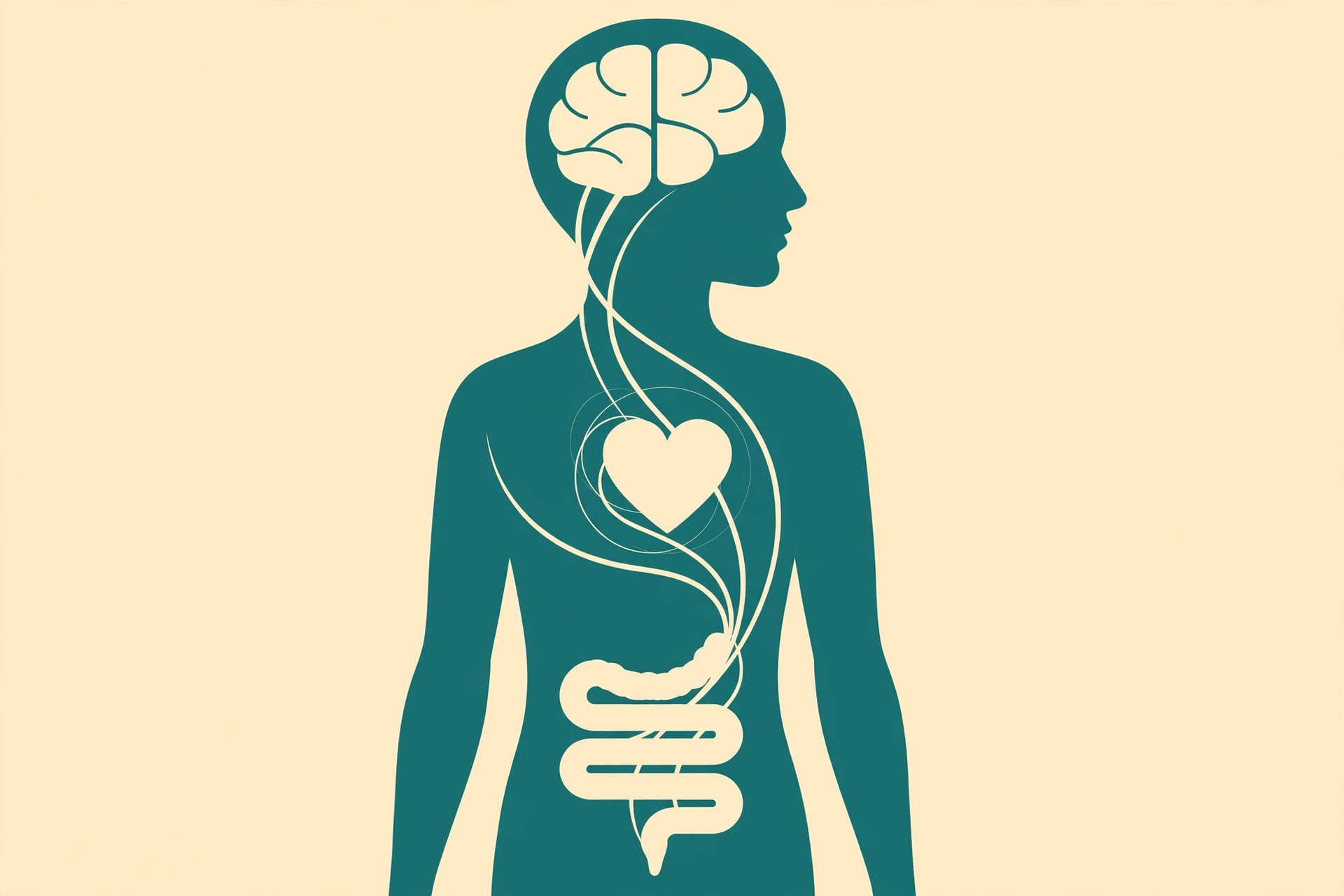
You’re nervous — stomach churns. You’re grieving — chest aches. You’re relaxed — pain fades. This isn’t imagination. It’s the mind-body connection: your thoughts and emotions physically shaping your body — via nerves, hormones, and immune signals. It’s not mystical. It’s mechanical. And you can use it.
What it means in one sentence: The mind-body connection is the bidirectional influence between mental states (thoughts, emotions, stress) and physical health — via the nervous, endocrine, and immune systems.
In short: The mind-body connection is the two-way link between thoughts, emotions, and physical health: stress tightens muscles and churns stomachs, while calm can ease pain. Nerves, hormones, and immune signals carry the messages. It is not mystical — it is mechanical — and practices like breathing, sleep, and movement let you use it deliberately.
The Mind-Body Connection in Everyday Words
Top-down (mind → body): Stress → cortisol → suppresses immunity, raises blood pressure, disrupts digestion. Chronic stress literally makes you sick. Emotions → body: anger tenses muscles, sadness drains energy, joy boosts immunity. Beliefs → healing: placebo — expecting improvement causes improvement (real neurochemistry, not imagination).
Bottom-up (body → mind): Exercise → reduces anxiety/depression. Posture → affects confidence (power posing debated, but slouching worsens mood). Gut → brain: the microbiome produces neurotransmitters; gut issues correlate with anxiety. Sleep → everything: deprivation mimics psychiatric symptoms.
It’s not mind over body — it’s mind with body. A loop, not a hierarchy.
The Science Behind It
Psychoneuroimmunology: Stress suppresses immune function (Kiecolt-Glaser: caregivers of dementia patients had slower wound healing, weaker vaccine response). Chronic stress → chronic inflammation → heart disease, diabetes, accelerated aging (telomere shortening).
The vagus nerve: The highway between brain and body. Stimulating it (deep breathing) activates the calm system — lowering heart rate, reducing inflammation. It’s anatomical, not metaphorical.
Placebo/nocebo: Believing a treatment works triggers real neurochemistry (endorphins, dopamine). Believing it harms (nocebo) creates side effects. The mind doesn’t just perceive health — it participates in it.
3 Examples From Real Life
Example 1 — The exam: You’re terrified. Stomach cramps, hands shake, mind blanks. Not “nerves” — it’s cortisol and adrenaline physically disrupting digestion, motor control, memory. The thought (“I’ll fail”) became biology. Calming the thought (reframing, breathing) calms the body — because they were never separate.
Example 2 — The caregiver: A woman cares for her husband with dementia. Years of chronic stress. She gets every cold, heals slowly, ages fast. Not weakness — it’s psychoneuroimmunology: chronic cortisol suppressing immunity. Support (respite care, friends) isn’t luxury — it’s medicine. The mind needs care to keep the body well.
Example 3 — The athlete: A runner visualizes the race: heart rate drops, muscles prime, confidence rises. Not magic — it’s top-down: mental imagery activates motor cortex, regulates arousal. Sports psychology uses the mind-body connection deliberately. What athletes do intentionally, you do accidentally — every worry is negative visualization. Flip it.
🧠 Quick check: What is the mind-body connection?
Why: Not mystical — mechanical. Stress → cortisol → immunity. Exercise → mood. Gut → brain. Vagus nerve is anatomical. Loop, not hierarchy.
Try This Today
Body scan (5 minutes). Lie down. Notice each body part — without fixing. Where’s tension? Tightness? Ease? Just observe. You’re reading what your mind has been writing on your body. Then breathe into the tense spot. You’re not imagining relaxation — you’re stimulating the vagus nerve. Mechanical.
What People Get Wrong
Myth: “Mind-body = ‘it’s all in your head’ / think positive and heal.”
Reality: It’s not “all in your head” — it’s in your nervous system, hormones, immune cells. And it’s not positive thinking curing cancer — it’s stress management supporting health. The mind-body connection is real but limited: it influences, doesn’t control. Use it wisely (stress reduction, healthy beliefs), not magically.
Why It Matters
You already live the mind-body connection — every stress headache, every nervous stomach, every exercise high. The question isn’t whether — it’s whether deliberately. Manage stress → protect immunity. Move body → lift mood. Believe wisely → harness placebo. You’re not a mind in a body. You’re a system. Treat it like one.
🧠 Quick check: How does chronic stress physically damage health?
Why: Psychoneuroimmunology: Kiecolt-Glaser showed caregivers had slower healing, weaker immunity. Chronic stress is biological, not just psychological.
Frequently Asked Questions
What is the mind-body connection?
The two-way link between mental states and physical health — stress churns your stomach, grief aches in your chest, calm eases pain. Nerves, hormones, and immune signals carry the conversation.
What are examples of the mind-body connection?
Blushing with embarrassment, nausea before a big event, tension headaches after a hard week, and the placebo effect — belief measurably changing the body.
Is the mind-body connection scientifically proven?
Yes. Psychoneuroimmunology documents how stress hormones suppress immunity and how practices like meditation shift measurable biomarkers. It is mechanical, not mystical.
How can I strengthen my mind-body connection?
Slow breathing, regular sleep, movement you enjoy, and noticing body signals without judgment. These practices give you deliberate access to a system that usually runs on autopilot.
Try It on Our Site
Try it now: Stress check-in — your body keeps the score — measure it. Start the check-in →
More tools for this topic:
Related reading: 14. Stress & Fight-or-Flight · 42. Mindfulness · 48. Sleep & the Brain
Tap when this one clicks — your progress is saved on this device.