
Reviewed by a Psychology Postgraduate (MA)
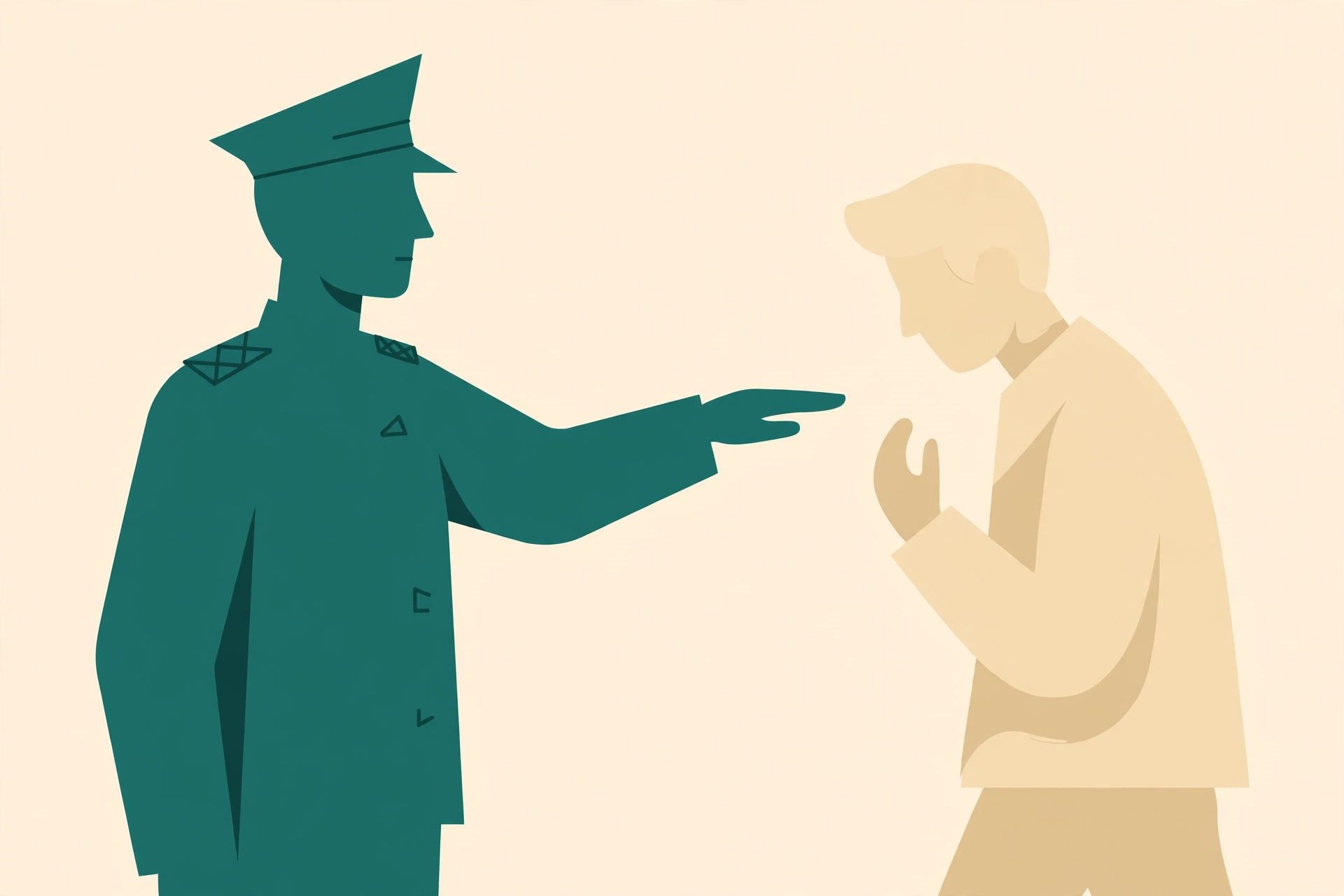
Lab coat says “please continue.” Volunteer keeps pressing — believing he’s delivering dangerous shocks to a screaming stranger. Sweating, trembling, protesting. But continues. 65% did. Not monsters. Teachers, nurses. This is obedience — and it’s about you.
What it means in one sentence: Obedience is following authority’s orders — even against conscience, values, judgment.
In short: The Milgram experiment showed that 65 percent of ordinary volunteers kept delivering what they believed were dangerous shocks when an authority figure said “please continue.” Participants were distressed, not eager. Milgram's explanation: an agentic state shifts responsibility upward, gradual steps remove any single line to stop at, and legitimate institutions short-circuit questioning.
The Milgram Experiment in Everyday Words
Milgram (1961): “teacher” gives shocks (15→450V) for wrong answers. Learner (actor) screams, begs, silent. Experimenter: “Please continue.” Predicted 1% max. 65% did. Not eager — distressed — but obeyed.
Why? Agentic state: shift responsibility upward (“he told me”). Feel like instruments, not agents. Gradual commitment: 15V steps — no single line to draw. Legitimacy: Yale, lab coat — institution short-circuits questioning. We obey uniforms.
The Science Behind It
Proximity: learner visible → 40%. Touching hand to plate → 30%. Distance enables cruelty. Phone orders → 20%. Peer rebellion: one refuser → 10%. Rundown office (not Yale) → 48%. Legitimacy matters.
Replicated across cultures/decades. Echoes: Abu Ghraib, corporate fraud, medical errors. Milgram revealed us, not Nazis.
3 Examples From Real Life
Example 1 — Nurse’s dilemma: Doctor orders dangerous dose. Nurse knows — but hierarchy, legitimacy. Studies: nurses frequently administer suspected-wrong drugs. Hospitals train graded assertiveness — scripted disobedience, because unscripted courage fails.
Example 2 — Corporate fraud: “Just sign. Everyone does.” Employee knows wrong — but authority, gradual steps, shared responsibility. Enron: not masterminds — obedient ordinary people. “Following orders” isn’t Nazi excuse. It’s corporate.
Example 3 — Uniform: Security uniform says “move along.” You obey — legitimacy unknown. We obey symbols: coats, titles, confidence. Con artists wear authority because levers work on perceived legitimacy.
🧠 Quick check: Milgram: % delivering max shock?
Why: Teachers, nurses, engineers. Obeyed while protesting. Authority overrode conscience in two-thirds.
Try This Today
Pre-decide your line. Trap was gradual — no moment to stop. Defense: decide in advance (“won’t sign false,” “will speak for patients”). Write it. Pre-commitment before pressure = only reliable shield.
What People Get Wrong
Myth: “I’d never — I’m good with strong values.”
Reality: Participants were good — that’s why they sweated. Values didn’t save; situation overrode. “I’d resist” = bias blind spot. Build structural defenses, not moral confidence.
Why It Matters
Explains atrocities, frauds, errors — not as evil, but authority + gradual + transferred responsibility. Defense: question uniforms (legitimate?), break gradualness (agree to final step directly?), keep learner visible, be the dissenter (frees others). Dark truth, but hands you the map.
🧠 Quick check: What is 'agentic state'?
Why: Moral weight transfers up. Not deciding — executing. Ordinary people, terrible things, no feeling terrible.
Frequently Asked Questions
What was the Milgram experiment?
In 1961, Stanley Milgram had volunteers act as “teachers” giving electric shocks (15 to 450 volts) for wrong answers, while the “learner” was an actor. The experimenter simply said “please continue” — and 65 percent delivered the maximum shock.
Why did so many people obey?
Three levers: the agentic state, feeling like an instrument rather than an agent, so responsibility shifts upward; gradual commitment, 15-volt steps with no single line to draw; and legitimacy, Yale and a lab coat short-circuiting questioning. We obey uniforms.
What reduced obedience in Milgram's variations?
Proximity: a visible learner dropped obedience to 40 percent, touching the learner's hand to the plate to 30 percent. Phone orders dropped it to 20 percent, and one peer refusing dropped it to 10 percent. Distance enables cruelty; a dissenter frees others.
What does Milgram teach us today?
That values alone do not protect you — participants were good people, which is why they sweated. The reliable defense is structural: pre-decide your line in advance, use graded assertiveness scripts, and keep the people affected visible.
Try It on Our Site
Try it now: Boundaries check-in — can you say no to authority? Measure it. Start the check-in →
More tools for this topic:
Related reading: 29. Conformity · 32. The Bystander Effect · 34. Groupthink
Tap when this one clicks — your progress is saved on this device.
Have modern replications of Milgram’s experiment found the same obedience?
Yes — when researchers have rerun Milgram’s setup as far as modern ethics rules allow, obedience has barely dropped. People in the 2000s and 2010s kept pressing the switches at rates close to those in 1961, which suggests Milgram was measuring something durable about humans and authority, not something unique to his era.
The best-known rerun is Jerry Burger’s 2009 partial replication at Santa Clara University. Ethics rules meant Burger had to stop at 150 volts — the point where Milgram’s learner first demanded to be released, and the moment that best predicted whether someone would go all the way. Even so, 70 percent of Burger’s participants were willing to continue past that point, statistically close to the 82.5 percent who passed it in Milgram’s comparable group. A 2017 Polish replication by Dariusz Dolinski and colleagues found similarly high obedience, with most participants pressing the highest switches their version allowed.
Modern researchers also read the original result differently. Social psychologists Alexander Haslam and Stephen Reicher argue, from Milgram’s own records, that participants were not blindly obeying orders at all. They call it engaged followership: people continued because they identified with the experimenter and believed they were serving a worthy scientific cause — and, tellingly, they stopped most often when the experimenter gave direct orders rather than appeals to science. That reading is in some ways more unsettling than blind obedience. Harm was done not by people switching their conscience off, but by people who thought they were helping something important.
You can see the everyday version in a hospital ward or an office. A junior employee is asked to skip one small safety check “just this once, for the team.” Each next skip is easier, because she is not thinking of herself as cutting corners — she is thinking of herself as loyal, helpful, on board with the mission. The framing of helping is exactly what makes the gradual slide so hard to notice from the inside.
Two quick questions
Were Milgram’s participants tricked, and were they harmed?
The shocks were fake and the learner was an actor, but participants believed the situation was real, and many showed intense stress — sweating, shaking, nervous laughter. All were debriefed, and Milgram reported that most later said they were glad to have taken part; the study still reshaped research ethics rules permanently.
Why did some participants laugh during the experiment?
Not from enjoyment. Milgram himself noted the nervous laughter as a sign of extreme tension — an involuntary stress release in people who felt trapped between the experimenter’s instructions and the learner’s apparent suffering.