
Reviewed by a Psychology Postgraduate (MA)
Short answer: Is the NFL Paris game going ahead? Yes. The NFL Paris game between the Pittsburgh Steelers and the New Orleans Saints will go ahead on Sunday, October 25, 2026, at Stade de France, despite unrest, cancelled fan events, and a United States security alert advising caution in Paris.
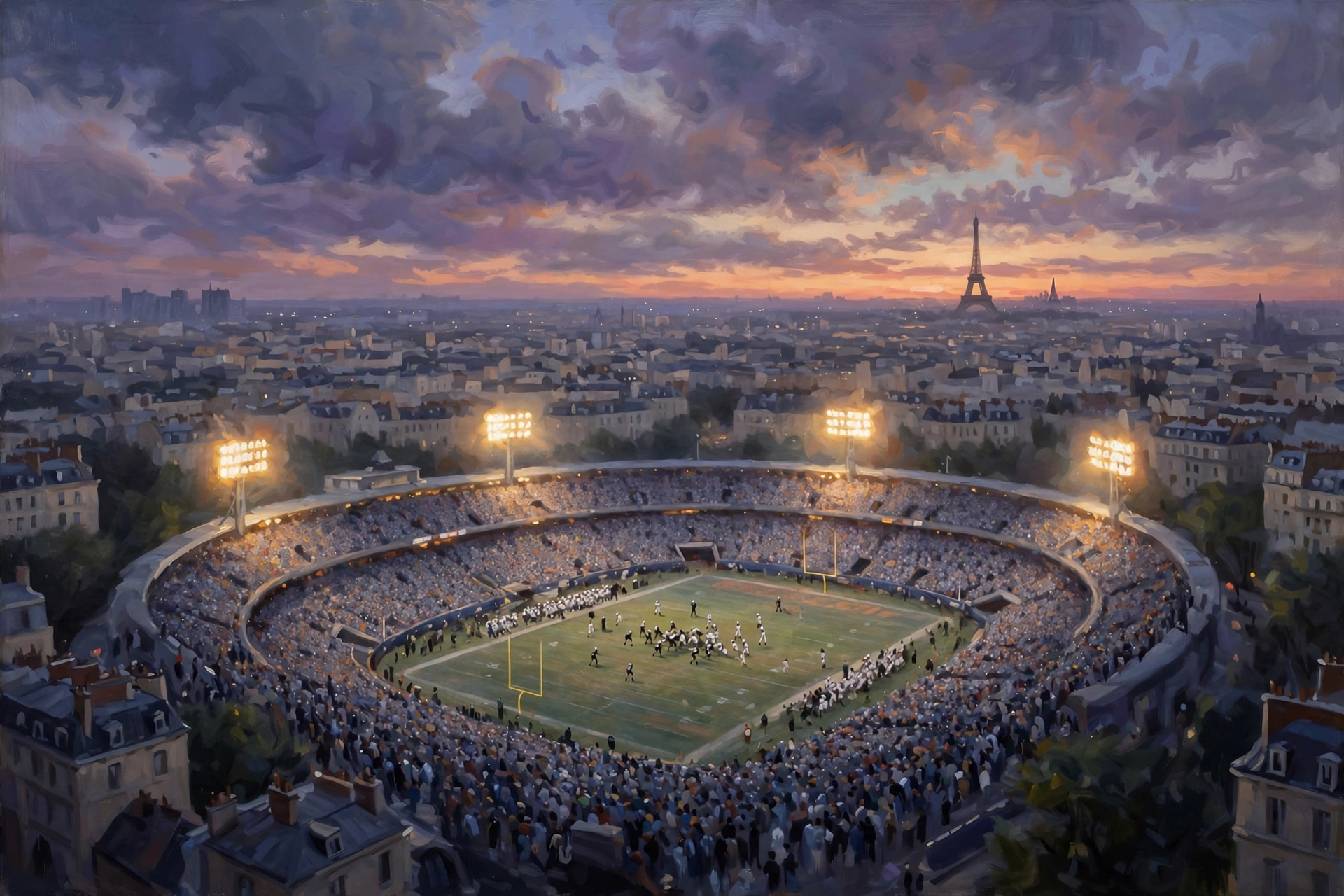
On Sunday afternoon in Paris, American football makes history in France. The Pittsburgh Steelers meet the New Orleans Saints at Stade de France in Saint-Denis, in the first regular-season NFL game ever played in France. Kickoff is 9:30am Eastern Time, or 2:30pm Paris time.
This is not a normal debut. The game falls the day after a national protest day, after a tense week of heavy security, cancelled fan events, bad weather, and an official security alert.
What is the NFL Paris game?
The NFL Paris game is the league’s first regular-season game in France. The Steelers are the designated home team against the Saints at Stade de France, seating more than 80,000 people. For fans, a game abroad is more than a match: it is a trip and a shared memory.
What happened in the days before the game?
The weekend follows a turbulent period. On October 17, 2026, protests drew an estimated 500,000 to 800,000 marchers, with rioting and looting on the sidelines. October 24 was another national protest day, with around 70,000 security personnel deployed nationwide.
- Thursday night, October 22, 2026: The United States State Department issued a security alert noting planned protests on Saturday, October 24, and advising Americans in Paris for the game to exercise caution, avoid demonstrations and areas of unrest, and note that routes can change at short notice. No specific threat against the game or its spectators was identified.
- Thursday, October 22, 2026: The Steelers informed fans that a Steelers House fan event in the Bastille neighborhood would not go ahead.
- Friday, October 23, 2026: The NFL cancelled a Friday fan event. The Steelers’ Friday morning practice at Stade de France was cancelled due to wind and light rain, while the Saints, based in Versailles, had no media viewing at practice because of wind and rain. Meteo-France issued orange alerts for the northwest, including Paris, as Storm Austen passed.
- Friday, October 23, 2026: Steelers quarterback Aaron Rodgers said: “I definitely think that the NFL is alert to what’s going on… If it was unsafe, then I’m sure we wouldn’t be here.”
Is the game safe, and what is known versus unconfirmed?
The confirmed facts are clear. The game is going ahead at the scheduled time and venue. The NFL has increased security, with its team in France coordinating with Paris and national authorities. League executive Peter O’Reilly said, according to the Associated Press in October 2026: “We’re confident in our security plans” and “We’re being very vigilant.” The league said the game was never at risk of being moved.
Also confirmed are the alert, the cancelled events, and the weather disruption. What is not confirmed is any specific threat to the game itself. A general warning about unrest is not the same as a warning about an attack on a stadium. Still, routes can change at short notice, so the weekend around an event that is on and guarded remains unpredictable.
Why do fans travel into uncertainty for a team?
To an outsider, flying thousands of miles into a city under a security alert for a football game can look irrational. To a psychologist, it looks familiar, because fandom is about identity, not only entertainment. Social identity theory, developed by Henri Tajfel and John Turner in the 1970s, proposes that people derive part of their sense of self from their groups, and a team can be a powerful one.
Wearing the colors and traveling with fellow supporters declares belonging, and the trip becomes part of the identity itself: I was there when the Steelers first played in Paris. Research finds highly identified fans feel results more strongly. Cancelling therefore feels like missing a chapter of your own story.
Why do official reassurance and official alerts pull in opposite directions?
Fans have received two messages that seem to contradict each other. The NFL says it is confident and vigilant. The State Department says exercise caution. Both can be true, but the brain does not process them evenly.
Anticipatory anxiety is the unease felt before an uncertain event, driven more by imagined outcomes than by present danger.
Anticipatory anxiety thrives on uncertainty. When information is incomplete, the mind fills gaps with worst cases. A vague warning lingers because it is hard to act on, while reassurance is easy to discount because it does not remove the unknown. Psychologists Daniel Kahneman and Amos Tversky showed that people judge risk partly by how easily vivid examples come to mind, a shortcut called the availability heuristic.
Pause and reflect
Think about a time you traveled for something that mattered to you when plans changed at the last minute. What bothered you most: the change itself, or the loss of the build-up you had imagined?
Does visible security calm people down, or remind them of danger?
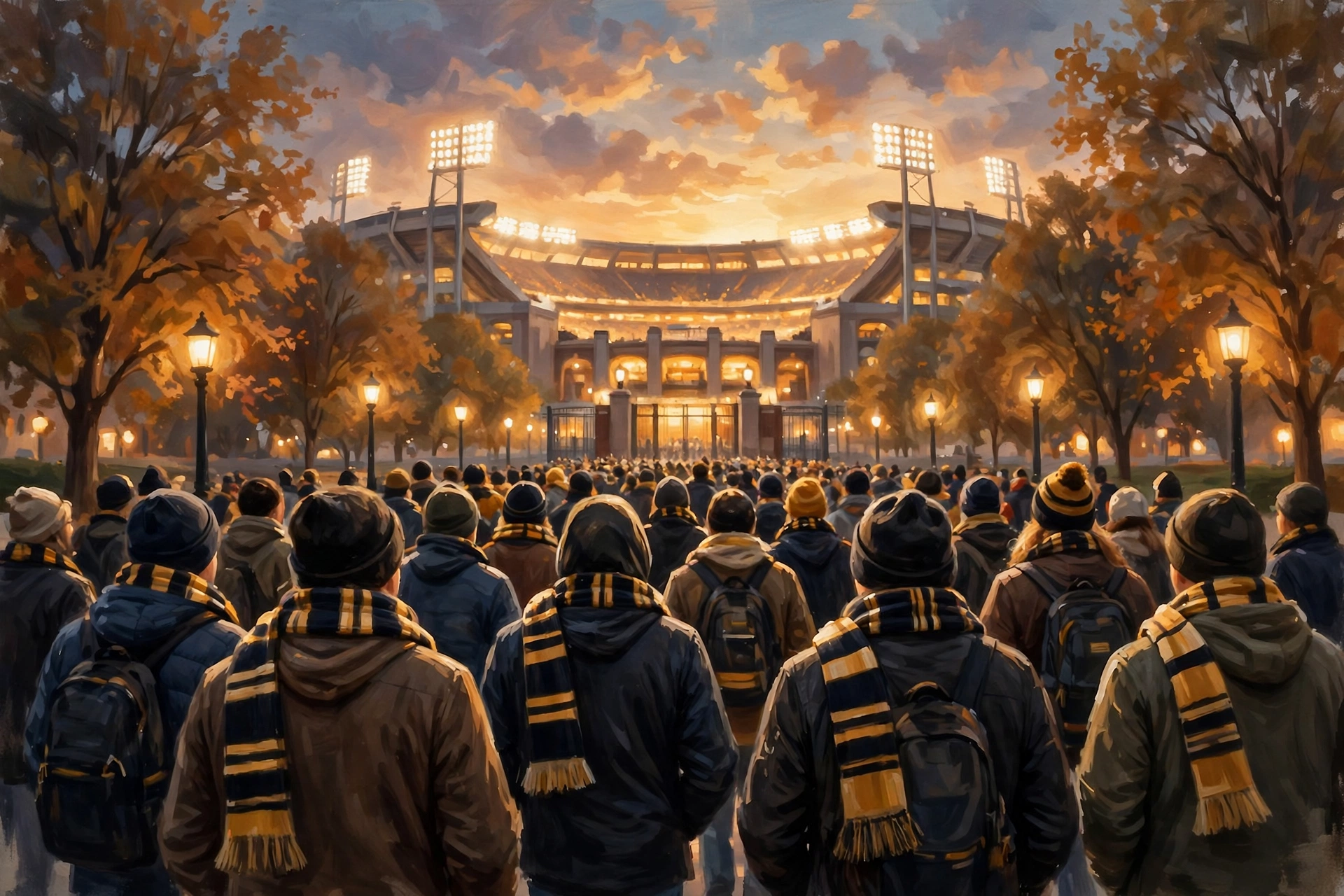
Stade de France will be visibly guarded, as major stadiums always are, and more so during a tense period. Psychologists sometimes call this security theatre: visible measures, such as bag checks and patrols, designed to deter threats and reassure the public.
For some, visible security signals preparation and control. For others, it reminds them a threat was considered serious enough to require it. Explained, courteous security tends to reassure; chaotic security tends to alarm.
What is the show must go on effect?
Major events often proceed through disruption, partly because cancelling involves broadcasters, sponsors, and thousands of ticket holders, and partly because proceeding states that normal life continues. The sociologist Emile Durkheim gave the crowd side a name: collective effervescence is the shared energy and emotional intensity produced when a crowd gathers and acts together.
That shared intensity helps explain why a crowd under tension can feel electrifying rather than merely frightening. When thousands cheer in unison, emotion is amplified and bonds strengthen. That energy cuts both ways, so gatherings need clear exits and instructions.
Why does cancelling a fan event hurt so much?
A cancelled fan gathering may look minor beside the game itself, but for fans it rarely feels minor, because the build-up, the planning, and the meet-ups, is part of the reward. Fans lose a moment of belonging and a story they expected to tell.
Research on affective forecasting, how people predict future feelings, suggests people often overestimate how long disappointment will last. The sting usually fades faster than expected once the game replaces it.
How can fans stay calm at a big event during unrest?
Anxiety before a big event is information, not weakness. The goal is to keep it proportionate and useful:
- Separate general warnings from specific threats. In Paris, no specific threat against the game or its spectators has been identified.
- Make a simple plan. Agree a meeting point if phones fail, and check transport routes on game morning.
- Follow official guidance, not rumors. Avoid demonstrations and check organizer updates before setting out.
- Arrive early and unhurried. Extra time turns a checkpoint into a routine.
- Use grounding when anxiety spikes. Breathe slowly, notice five things you can see, and focus on the next step.
- Look after the basics. Sleep, food, water, and phone charge matter, since tiredness amplifies anxiety.
- Know where to get help. Note stadium staff locations and embassy details in advance.
If distress feels overwhelming, or if thoughts of self-harm arise, seek help promptly. In France, the crisis line is 3114.
What does this weekend mean beyond football?
Paris 2026 will be remembered as the weekend the NFL arrived in France, and as a case study in how people behave when a celebration and a crisis share a weekend. It shows how identity pulls us toward groups, how uncertainty inflates fear, and how resilience often looks like quiet adaptation. For broader context, see our earlier pieces on the psychology behind riots and looting and on strike disruption and anxiety.
Key Takeaways
- Steelers versus Saints goes ahead on Sunday, October 25, 2026, at Stade de France, at 9:30am Eastern Time and 2:30pm Paris time.
- The game was never at risk of being moved, according to the league, which increased security with Paris and national authorities.
- Fan events were cancelled and a practice was lost to weather, but no specific threat against the game or its spectators was identified.
- Fandom is rooted in identity and belonging, which is why fans travel for shared experiences even when conditions are uncertain.
- Anticipatory anxiety grows from uncertainty and vivid images, not confirmed danger.
- Visible security can both reassure and alarm, while shared crowd energy strengthens bonds when an event is well organized.
- A calm plan, official updates, and early arrival best manage travel anxiety at a mega-event.
Frequently Asked Questions
Is the NFL Paris game still going ahead?
Yes. Steelers versus Saints will be played on Sunday, October 25, 2026, at Stade de France. The NFL has said the game was never at risk of being moved.
What time does the NFL Paris game start?
Kickoff is 9:30am Eastern Time, which is 2:30pm Paris time, on Sunday, October 25, 2026.
Why were some NFL Paris fan events cancelled?
The Steelers said on October 22, 2026, that a Steelers House event in the Bastille neighborhood would not go ahead, and the NFL cancelled a Friday, October 23, 2026, fan event.
Is it safe to travel to Paris for the game?
No specific threat against the game or its spectators has been identified, but the State Department advised Americans in Paris to exercise caution and avoid demonstrations.
Try it on our site
If this weekend has stirred up travel anxiety, try one of our free tools. Take the Anxiety check-in or try Name Your Feeling. Both are free and anonymous. Explore them on our Wellness Tools page.
Educational disclaimer: This article is for general education only. It is not medical advice, diagnosis, or treatment, and it is not a substitute for professional support. In France, the national crisis line is 3114.