
Reviewed by a Psychology Postgraduate (MA)
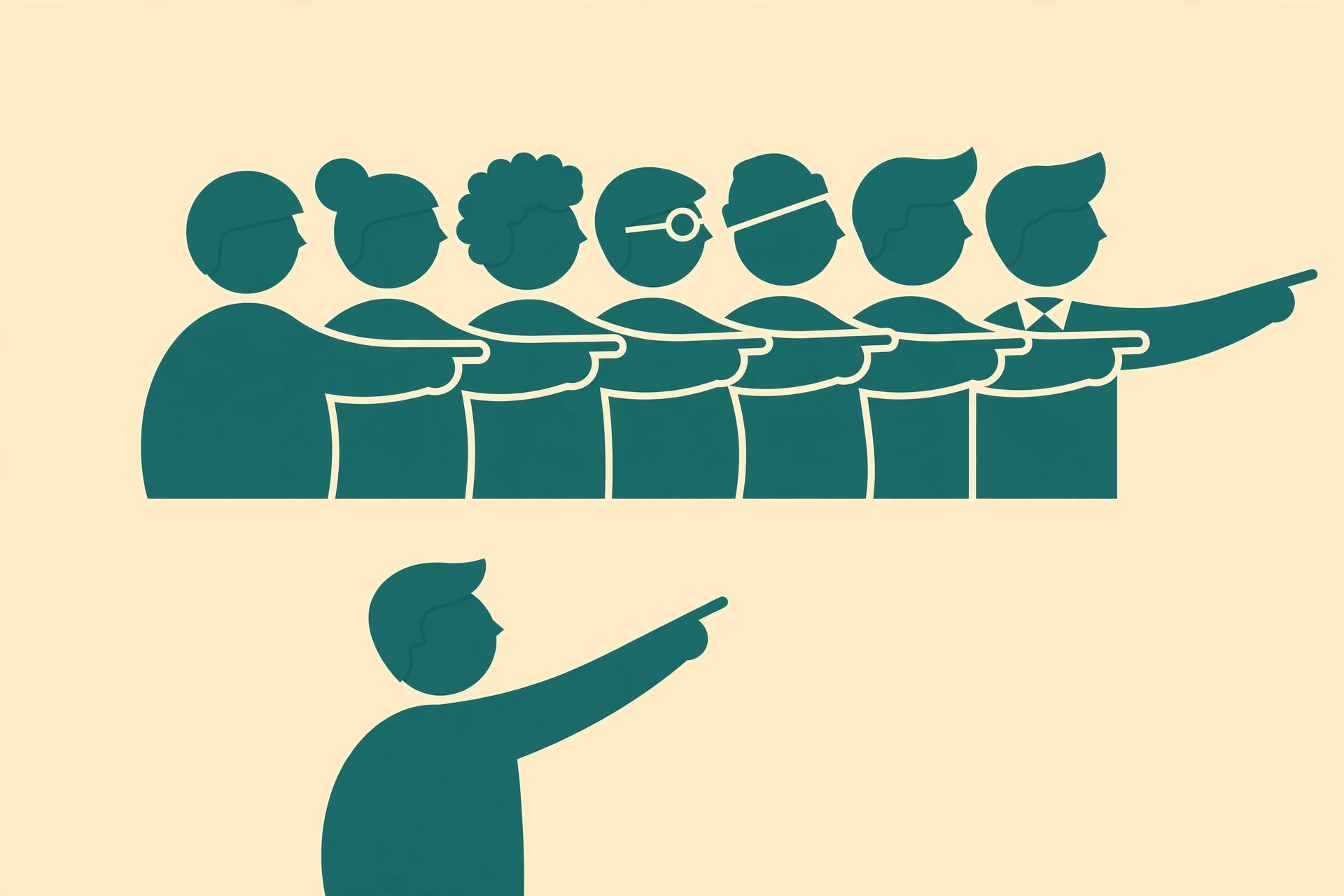
Two restaurants. One empty, one packed with a line. Better food? You pick packed — without tasting either. That’s social proof: if everyone’s doing it, must be right. Why you read reviews, follow trends, laugh harder full theater. Most exploited principle in marketing.
What it means in one sentence: Social proof is using others’ behavior to decide what’s correct — crowd knows something you don’t, especially when uncertain.
In short: Social proof is using other people's behavior to decide what is correct, especially when uncertain: we pick the packed restaurant, the 4.8-star product, the trending opinion. Cialdini showed it is strongest when we are uncertain, the others seem similar to us, and there are many of them. It is useful data, but only when the crowd's choices are independent, not copied from each other.
Social Proof in Everyday Words
Uncertain → outsource to group. Don’t know restaurant? Follow crowd. Product? Check stars. How to act? Watch room. Others = data.
Cialdini: strongest when uncertain (lost → look most), similar (“people like you”), numerous (10,000 reviews beat 10). But crowd isn’t always right — just confident-looking. Laugh tracks make shows seem funnier. “Bestseller” creates bestsellers — self-fulfilling.
The Science Behind It
fMRI: social proof activates reward — agreeing feels good neurologically. Not just strategy; chemistry.
Dark twin: pluralistic ignorance — everyone looks to everyone, nobody acts on private beliefs. Bystander effect (#32) = social proof lethal: all see inaction → “not emergency.” Works with independent info. Fails when all just copy each other — cascade, no source.
3 Examples From Real Life
Example 1 — Reviews: 4.8 stars (2,000 reviews) vs. 5.0 (3 reviews). Pick 4.8 — more proof beats perfect. We want validated. Fake reviews work — detector counts quantity, not authenticity.
Example 2 — Laugh track: Same sitcom with canned laughter: funnier. Without: flat. Humor = socially calibrated. Clubs seat tightly — laughter contagious; density amplifies. Proof system got louder, not show funnier.
Example 3 — Bubble: Everyone buying crypto. You buy — not analysis, proof. Price rises because buying because rising — no fundamentals. Then crash. Bubbles = social proof eating itself. Tulips to tokens, same mechanism.
🧠 Quick check: When is social proof strongest?
Why: Cialdini: uncertainty × similarity × numbers. Why testimonials say 'people like you.'
Try This Today
Audit one crowd decision. Restaurant, product, opinion — evidence or proof? “Would I choose if zero had?” If wobbles, you’re on social proof. Sometimes fine (crowded restaurant is better). Sometimes bubble. Check: independent reasons, or mere mirroring?
What People Get Wrong
Myth: “Crowd wise — trust it.”
Reality: Wise only with independent decisions. Copying-everyone = information cascade — confidence without source. “10,000 can’t be wrong” — they can, if 9,999 followed the first.
Why It Matters
Drives purchases, beliefs, behavior, investments. Exploited: seeded tip jars, fake reviews, “bestseller,” laugh tracks, influencers. Defense: ask why crowd chose — independent reasons (try) or mirroring (skip)? Crowds are data. Data needs auditing — especially when someone profits from following.
🧠 Quick check: What is 'pluralistic ignorance'?
Why: Each thinks only doubter. Bystander effect lethal version: all see inaction → 'not emergency.' Mirroring, not wisdom.
Frequently Asked Questions
What is social proof?
Social proof is using others' behavior as evidence of what is correct — if everyone is doing it, it must be right. It is one of Cialdini's six principles of persuasion and one of the most exploited in marketing.
When is social proof strongest?
When three conditions hold: uncertainty (you do not know, so you look to the crowd), similarity (“people like you” are doing it), and numbers (10,000 reviews beat 10). A packed restaurant beats an empty one without you tasting either.
How is social proof different from conformity?
They overlap, but social proof is about information — the crowd as data for what is correct — while conformity is about social pressure to match the group. Social proof can operate even when nobody is watching you.
How do marketers exploit social proof, and how do you defend?
With seeded tip jars, fake reviews, “bestseller” labels, and laugh tracks that make shows seem funnier. The defense: ask why the crowd chose — independent reasons (trust it) or mere mirroring (skip it). Crowds are data, and data needs auditing.
Try It on Our Site
Try it now: Comparison Trap check-in — how much are others’ choices choosing for you?. Start the check-in →
More tools for this topic:
Related reading: 29. Conformity · 33. Persuasion (Cialdini) · Why You Keep Checking Your Phone
Tap when this one clicks — your progress is saved on this device.
What Is the Difference Between What People Do and What People Approve Of?
Researchers separate two kinds of norms. Descriptive norms describe what most people actually do. Injunctive norms describe what most people approve of. You follow both — and confusing one for the other can make well-meaning messages backfire.
This distinction comes from Robert Cialdini’s focus theory of normative conduct: behavior follows whichever norm is in sharpest focus at the moment of decision. The danger of descriptive norms showed up in a well-known energy study by Schultz and colleagues (2007). Households were told how their electricity use compared with the neighborhood average. Above-average users cut back — the intended effect. But below-average users actually increased their usage, drifting up toward the norm. The researchers called this the boomerang effect. Adding one small injunctive signal — a smiley face on the bill for low users, signaling approval — was enough to stop the boomerang and keep them low.
The lesson reaches far beyond energy bills. Any campaign that announces “everyone is doing it” — littering, binge drinking, skipping a protective habit — quietly gives the well-behaved minority permission to join the majority. What people do is powerful data, but it carries no opinion. Sometimes the crowd needs to hear not just what is common, but what is approved.
Example — Imagine your energy provider mails you a cheerful report: “You use 20 percent less electricity than your neighbors.” Instead of feeling proud, part of your brain files a dangerous conclusion: there is room to relax. The air-conditioning creeps up. Nobody pressured you. A descriptive norm simply told you where the middle was — and pulled you toward it.
Frequently Asked Questions
Why do hotel towel signs mention the other guests?
Because it works. In a field experiment by Goldstein, Cialdini, and Griskevicius (2008), a sign saying most guests reuse their towels produced more reuse than a standard environmental appeal — and the effect grew stronger when the sign named guests who had stayed in that same room. Similarity sharpens proof.
Is social proof the same as peer pressure?
No. Peer pressure is direct: real people you know push you to comply. Social proof is quieter — nobody pushes at all. You infer what is correct from what others appear to do, often strangers you will never meet, which is why it operates just as well on an empty restaurant or a review page.