
Reviewed by a Psychology Postgraduate (MA)
You’re in line for coffee. The wait will be maybe ninety seconds. Your hand is already in your pocket, thumb already moving, and before the barista calls your name you’ve checked three apps and absorbed absolutely nothing. You weren’t bored enough to justify it. You weren’t expecting a message. You just… checked. Because that’s what the hand does now.
That reflex — the “just checking” twitch — is the signature move of social media addiction. Not the dramatic kind. The quiet kind, where the feed has become the default texture of your idle moments, and you’re not sure you’d know what to do with a boring ninety seconds anymore.
In short: What is social media addiction? It is compulsive feed use driven by validation loops, comparison, and the just-checking reflex: scrolling past the point of enjoyment, losing time, and feeling worse after. The feed is engineered to hook you, which means a reset plan beats willpower.
The Validation Loop: Why Likes Hit Like a Drug
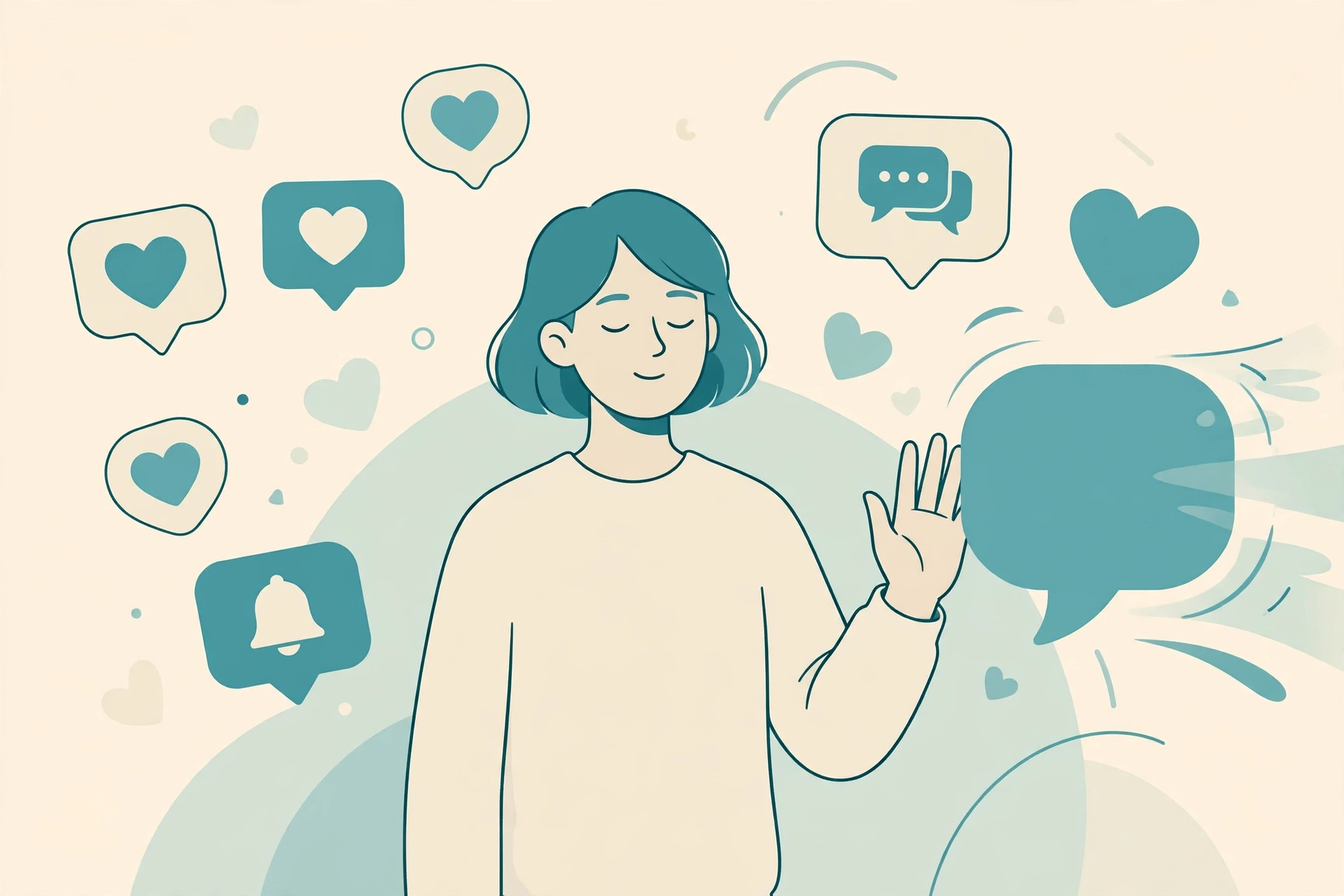
Post a photo. Wait. Refresh. Three likes. Refresh. Seven likes — including one from her. That little rush? It’s dopamine, the same neurochemical behind every reward your brain cares about. And social media delivers it on the most addictive schedule known to psychology: unpredictably.
Sometimes a post blows up. Sometimes it flops. You never know which, so you keep checking — the same variable-reward machinery that keeps gamblers at slot machines. The platforms didn’t stumble into this. The like button, the follower count, the little red badge on the app icon — every one of them is a tiny pellet dispenser, and you’re the lab rat who installed it voluntarily.
Here’s what makes it stickier than most habits: the reward is social. It’s not points in a game; it’s proof that people see you, like you, approve of you. That taps into one of the deepest human needs there is. Of course it’s hard to put down.
The Comparison Trap
Nobody posts their ordinary Tuesday. They post the promotion, the vacation, the engagement ring, the body at its best angle in its best light. You know this intellectually. Your nervous system does not care what you know intellectually.
Scroll for twenty minutes and you’ve absorbed a highlight reel of fifty lives, each one apparently better than yours at this exact moment. The result is a specific, gnawing feeling: everyone else has figured something out that you haven’t. Researchers have a bleak little finding for this — the more time people spend on social platforms, the worse they tend to feel about their own lives, even when they know the content is curated. Knowing it’s fake doesn’t inoculate you. The comparison happens faster than the rational override.
Watch for the telltale sign: you open the apps feeling fine and close them feeling vaguely worse about yourself, without being able to name why. That’s the comparison tax, and you’re paying it several times a day.
The “Just Checking” Reflex
This is the one to watch, because it’s the engine of the whole thing. Not the long sessions — the micro-checks. The thirty-second glances, fifty times a day. Unlock, scan, lock. Unlock, scan, lock.
Each check is tiny, so it never feels like a problem. But add them up: fifty checks at thirty seconds is twenty-five minutes, and that’s before the checks that accidentally become twenty-minute sessions. More importantly, the reflex fragments your attention into confetti. Deep work, real conversation, even just being somewhere — all of it gets interrupted by a hand with a mind of its own.
Try counting your pickups tomorrow. Most phones track this in screen time settings. The number is almost always double what people guess — and seeing the real count is often the moment the reflex stops feeling harmless.
When It’s More Than a Habit
Let’s be honest with each other for a second. A habit is something you do. A compulsion is something you can’t not do. Signs you’ve crossed from one to the other:
- You’ve tried to cut back — deleted apps, set limits — and blown past your own rules within days.
- You feel genuinely anxious or irritable when you can’t check, like something bad might be happening without you.
- You’re choosing the feed over sleep, work you care about, or people right in front of you — and you notice yourself doing it.
- The apps are your main tool for handling bad moods: lonely, bored, stressed, sad → scroll.
None of this makes you broken. It makes you a normal human with a normal brain going up against systems refined by thousands of engineers. This article is for general education, not a diagnosis — and if your social media use ever feels truly out of control, a licensed professional can help you work through it. For the everyday version of the problem, though, there’s a lot you can do yourself.
The Reset Plan: A Weekend Detox That Actually Works
Forget the month-long digital detox retreats influencers sell. Here’s a realistic 48-hour reset that breaks the reflex without requiring monk-level discipline:
Friday night: set the stage (20 minutes)
Delete the social apps from your phone — not your accounts, just the apps. Turn off all notifications except calls and texts from real humans. Tell one person what you’re doing (“phone’s going quiet this weekend, text me if you need me”) so FOMO has nowhere to hide. Charge your phone outside the bedroom. Write down three things you’ll do instead when the itch hits — a walk, a book, cooking something slightly ambitious.
Saturday: ride out the itch
The first day is the weird one. You’ll reach for your phone maybe thirty times before lunch. That’s fine — that’s the reflex dying, and every time you notice it and don’t open the app, you’re weakening it. Expect a specific discomfort around mid-afternoon: a restless, itchy feeling like you’re missing something. You’re not. That’s withdrawal from the variable rewards, and it peaks and fades within a few hours. Fill the day with things that use your hands and attention: cook, clean something, see a person in real life.
Sunday: notice what changed
By day two, most people report the same three things: time feels slower (in a good way), their attention span is noticeably longer, and they’re slightly bored — the healthy kind of bored that used to precede every good idea they ever had. Pay attention to what you did with the empty moments. That’s your life without the feed filling every gap. Decide what you want to keep.
Monday: reinstall with rules
Here’s the part most detoxes skip: the re-entry plan. Reinstall one app if you want — but with new rules. No apps on the home screen (bury them in a folder on the last page). Notifications stay off permanently. One scheduled check window per day, twenty minutes, timer set. The goal was never abstinence; it was turning a compulsion back into a choice. If you want the bigger framework for this, our pillar guide on internet addiction covers the full psychology of the hook and the break-free playbook.
Long-Term: Redesign the Relationship
After the reset, a few structural changes keep the feed in its place:
- Curate like your mood depends on it — because it does. Unfollow every account that makes you feel worse about your life. Keep the ones that teach, delight, or genuinely connect. Mute freely; nobody gets notified.
- Never start the day with the feed. The first hour sets your brain’s baseline for novelty-seeking. Give it quiet, movement, or real human contact instead, and the whole day’s checking urge drops noticeably.
- Make posting deliberate, browsing bounded. Posting a photo for friends is social. Forty minutes of stranger-content is not. Keep the first, schedule the second.
- Watch the late-night slot. Tired brains have the weakest impulse control, which is why the worst scrolling happens after 11 p.m. Phone out of the bedroom is the single highest-leverage change most people can make. (The doomscrolling loop lives in that same slot — same fix applies.)
Frequently Asked Questions
What is social media addiction?
Social media addiction is compulsive feed use: checking and scrolling past the point of enjoyment, losing track of time, and feeling worse afterward. It runs on validation loops, comparison, and the just-checking reflex.
Why do likes feel like a drug?
Likes deliver variable social rewards, and variable rewards are the most habit-forming kind. Your brain keeps checking because the next scroll might bring approval, which is the same mechanism behind slot machines.
What is the comparison trap?
The comparison trap is judging your behind-the-scenes life against other people's highlight reels. Upward comparison reliably lowers mood and self-esteem, even when you know the feed is curated.
Does a social media detox actually work?
A short detox works best as a reset, not a cure. A weekend off reveals how much the reflex runs you, but lasting change comes from redesigning the relationship: rules, friction, and replacement activities.
The Bottom Line
Social media isn’t evil, and you’re not weak. You’re a social animal carrying a validation slot machine in your pocket, designed by people who profit from your attention. Noticing the machinery is half the battle. The other half is friction, scheduled windows, and one honest weekend to remember what your attention feels like when it’s yours.
Start with the smallest possible move: move the apps off your home screen tonight. It takes ten seconds, and your thumb will thank you tomorrow.
Key Takeaways
- Likes and notifications run on variable rewards — the same unpredictable-payoff machinery as slot machines — which is why “just checking” is so hard to stop.
- The comparison trap is real: curated highlight reels reliably make people feel worse about their own lives, even when they know the content is staged.
- Watch the micro-checks, not just the long sessions — fifty thirty-second glances fragment your attention more than one long scroll.
- A 48-hour weekend detox (delete apps Friday, ride out the itch Saturday, notice the difference Sunday) breaks the reflex without requiring extreme discipline.
- Reinstall with rules: apps off the home screen, notifications off permanently, one scheduled 20-minute check window per day.
- Protect the vulnerable slots — first hour of the day and the phone-out-of-bedroom rule do more than any willpower ever will.
TRY IT NOW
How Hooked Are You, Really?
A 2-minute interactive check-in that scores your screen habits and gives you a clear, honest picture — no judgment, just a starting point.
Take the check-in →
2 thoughts on “Social Media Addiction: When the Feed Starts Running You”